Discover Cabeceiras de BastoFree independent guide
ViveCabeceirasYOUR GUIDE TO CABECEIRAS
ENEnglish
SearchSaved

Story

Choose a story to start with. You can change the subject or fine tune the search.

11 stories · Time travel · Search: feira

Time travel

Documents, details and traditions: there is more to discover than a date on a stone.

Choose a story · 11
Tâmega · service memory line in 1984

The goods had a marked day

The Tâmega Line also carried goods.

Includes an activity to try →
Read here and view sources

Numa publicação de agosto de 2025, o Museu recorda o serviço de mercadorias que circulava à quarta-feira na Linha do Tâmega, em 1984. Era associado à locomotiva E 165, fabricada pela Henschel & Sohn em 1908. A imagem postal usada pelo Museu foi feita em Celorico de Basto: documenta a linha, não a estação do Arco.

The support is a postcard from the Portuguese Association of Friends of the Iron Paths, dated 1984. There are three times to distinguish: the construction of the machine, the service remembered in the postcard and the publication of the Museum. The document does not describe the load of each trip.

Source and context

Basto Land Museum — The “Modern Market”, 2025-08-27

Accessed: . Editorial summary; the date of consultation is not the date of the facts.
Documentary memory · 1758

Olela had days of meeting

The story was also made between banks and buyers.

Read here and view sources

In the relationship of Santa Senhorinha of 1758, Olela appears as a place of fairs in December, February and March. The parish priest refers payments for settlement and rights. It is a window on local exchanges of that time, not the calendar of markets today. The text specifies the days: 14 and 15 December, 24 and 25 February and 27 March. The dates belong to the account of 1758.

Getting to know the parish
Source and context

Municipality — Parish memories of Santa Senhorinha, 1758
Accessed:

Municipality — Memória de Santa Senhorinha, 23/05/1758, replies 15, 19 and 20; transcription of José Viriato Capela (2003)
Accessed:

Editorial summary; the date of consultation is not the date of the facts.

Saint Lady · celebrations at 1758

When the parishes met

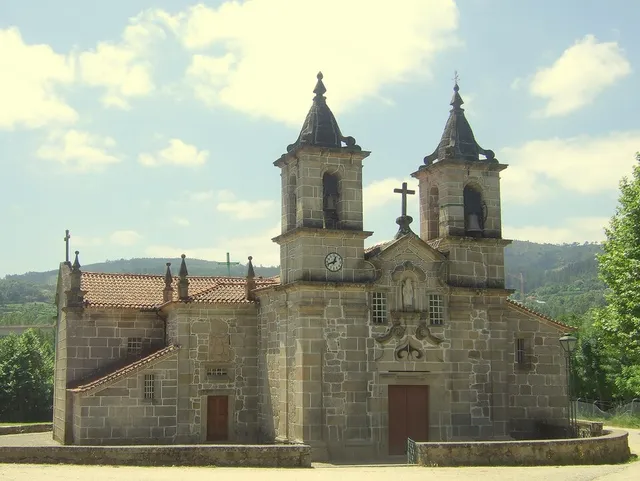
Facade of Igreja de Santa Senhorinha of Basto, with its two towers
Igreja de Santa Senhorinha · heritage context of the parish, not a record of the 1758 celebration© Bocacheteⓘ

A celebration also gathered the territory.

Explore: What made a community meet? →
Read here and view sources

In 1758, the procession of the Body of God gathered in Santa Senhorinha the Chamber and representatives of the nearby parishes, with crosses and ecclesiastics. The memory mentions expenses with wax and sermon: behind the celebration there was preparation, objects and work.

The Abbot also describes separately the triduum of the forty hours, with music and sermons for three days. Distinguishing the two references helps to realize the religious calendar of that time. The document is a testimony of 1758, not the agenda of the current feasts.

Words in this story: see explanations →Getting to know the parish
Source and context

Municipality — Parish Memoirs of Santa Senhorinha (1758)

Accessed: . Editorial summary; the date of consultation is not the date of the facts.

Alvite · Couto organisation in 1758

One land, two skills

In 1758, not all issues were decided by the same power.

Includes an activity to try →Explore: The territory seen by different rules →
Read here and view sources

The account of St. Pedro of Alvite distinguishes the civil subjects, linked to the Abbot and the convent of Refojos, from the criminals, attributed to the municipality judge of Cabeceiras. The Couto thus had an organization that is not limited to a line on the map. It's a historical description, no correspondence with the current administration. There is an important territorial distinction: the answer places Petimão in the term of Celorico of Basto. The skills of the Couto are described for other places, avoiding reading the entire parish as a single jurisdiction.

Getting to know the parish
Source and context

Basto Land Museum — Parish Memories of 1758: Alvite

Municipality — Alvite Parish Memories, 1758; transcription of José Viriato Chapel (2003)

Accessed: . Editorial summary; the date of consultation is not the date of the facts.

Faia · settlement described in 1758

A parish told by sixteen places

In 1758, the Faia appears as a network of small places.

Includes an activity to try →Explore: A parish distributed by places →
Read here and view sources

In memory of 23 May 1758, the abbot João de Lima Lobo de Noronha enumerates sixteen places. The enumeration includes Covilhã, Augueiros, Presas, Nogueira, Candedo, Ribeiro, Outeiro, Porcarice, Faia, Togais, Souto, Ribeira, Tuesdays, Breia, Casa Nova and Joio. Situa the church out of place and describes the parish on a northern slope.

The list helps to think of a territory distributed by small cores, and not just around the matrix. Names belong to historical transcription; they are not a current administrative list or allow to draw the boundaries of each place by themselves.

The same testimony presents two counts: 99 neighbors and 418 people. The document separates them; they should not add or read “neighbours” as another total of inhabitants. It also distinguishes scales: when speaking of the municipality, the abbot refers to eighteen parishes, but declares not knowing the number of its neighbors. Knowing what the author did not tell is as useful as knowing the numbers he left.

Ribeiro and Ribeira appear as different entries. Outeiro is here in the list of places of Faia: the coincidence with the name of another parish does not authorize to shift this reference on the map. The complete list allows to compare names, while chapels help to perceive some relations between places and houses.

Source and context

Municipality — Memory of Faia, 23/05/1758; transcript of José Viriato Chapel (2003)

Accessed: . Editorial summary; the date of consultation is not the date of the facts.

Faia · communications in 1758

The letters had days of arrival

Before instant messages, the week was also organized in the mail.

Read here and view sources

In the reply of 1758, the abbot of Faia notes that the mail arrived on Tuesday and left on Thursday. A brief information reveals the pace of communications in a rural community. The document does not identify here the building where the letters were received; these days belong to the old account, not to the current postal services. The abbot placed Braga at eight leagues and Lisbon at sixty. The recorded distances, without conversion to current kilometers, add scale waiting for the news.

The answer is inserted in a questionnaire that also asked for distances, fairs and aspects of local life. In the same memory, the abbot distinguishes the São Miguel fair from the Olela fairs and the monthly fair in the head of the municipality. Mail and fair are two examples of rhythms that help to perceive a community; the text does not say that the letters were delivered in these markets.

Source and context

Municipality — Memory of Faia, 23/05/1758; transcript of José Viriato Chapel (2003)

Accessed: . Editorial summary; the date of consultation is not the date of the facts.

Faia · parochial memory 1758

At Faia, the abbot recorded no ruins

The same event left different accounts in the parishes.

Read here and view sources

In the memory signed in 23 May 1758, the Abbot of Faia declared that there was no ruin caused by the earthquake. It is a counterpoint to the testimony of Alvite, who described damage to the crosses of a chapel. The absence of ruins in the account does not demonstrate that the earthquake was not felt: it shows what was recorded in that answer. Reading the two documents brings the general history of local experiences closer.

It is useful to notice who writes and when: the answer is from João de Lima Lobo de Noronha, abbot of Faia, and arises in a set of questions that also covers places, crops, fairs and mail. The earthquake is one of the subjects of this local portrait. The signature of 1758 dates the testimony, not the event that he recalls.

Source and context

Municipality — transcription of the Parish Memories of Faia, 23/05/1758

Accessed: . Editorial summary; the date of consultation is not the date of the facts.

Pereiras, Refojos · old uses of the House

From jail to music

A building can change paper in the community.

Explore: The Pereiras beyond a building →
Read here and view sources

In the Pereiras, the building of the former House of the House continued to serve as a chain until 1972, according to the Museum of Lands of Basto. After recovered, received Casa da Música. A municipal news of July 2010 already included it among the spaces proposed to know the municipality. The Museum article needs the change from the House to the Monastery in 1835 and the inauguration of the Casa da Música in 2003: the building continued to change its function after not receiving the municipal administration.

The story of the building begins before the chain that remained in memory. The article of the Museum assigns the editor João Gil de Abreu Castelo Branco the order to build the House of the House in 1586. It then admits a reconstruction in the 18th century, in place of the previous building.

The two floors shared functions: jail in the first, Chamber and hearings in the second. This organization gathered administration and justice in the same space. When the House left, the prison remained; when it closed, the building did not disappear. The inauguration as Casa da Música, in 2003, added another use to a construction with several chapters.

Source and context

Basto Land Museum — The place of the Pereiras of Refojos de Basto, 28/07/2024

Municipality — visits to see the municipality, news of 29/07/2010

Accessed: . Editorial summary; the date of consultation is not the date of the facts.

Pereiras, Refojos · football in the 20th century

When football won the field

The Pereiras are also part of sports memory.

Includes an activity to try →Explore: The Pereiras had several lives →
Read here and view sources

In Pereiras, the memory of the municipality also passes through football. The Basto Land Museum identifies the field inaugurated in 1925 as the first of Cabeceiras de Basto. It served from home to different sports communities, linking the place to the practice of the game and the meetings of those who accompanied it.

In 1982, the construction of the National Road 311 led to the move of the countryside to another location. A sports equipment can thus help count the transformation of a settlement: space changes, but memory preserves the connection to the previous place.

The Museum article, published in July 2024, places the field in a place that had trade, school and fairs. The bibliography includes The Journal of Cabeceiras, of 20 September 1925, and Ecos of Cabeceiras, of 15 August of that year. They are references indicated by the Museum, without reproducing here the contents of these newspapers.

Source and context

Basto Land Museum — The place of the Pereiras of Refojos de Basto, 28/07/2024

Accessed: . Editorial summary; the date of consultation is not the date of the facts.

Santa Senhorinha · landscape described in 1758

A valley full of names

In 1758, the parish also counted for its seats.

Includes an activity to try →
Read here and view sources

The parish report places Santa Senhorinha in a valley between the Gatiras and the Ladario. It lists places such as Rendufe, Soutelo, Outeiro Seco, Olela, Devesa and Vila Garcia, among many others. The church is described outside the village, in the middle of a field. This portrait allows you to imagine a community distributed across several cores, but retains the names and perspective of the document of 1758, without functioning as a current map.

The author also lists villages that were seen, distinguishing the position in the valley of the look from the Ladário. Visibility was part of the way of presenting the territory. A place could be described by what surrounded it and by what could be seen from a higher point, beyond its limits and names.

Source and context

Municipality — Parish Memories of Santa Senhorinha (1758), replies 4 and 6; transcription of José Viriato Chapel (2003)

Accessed: . Editorial summary; the date of consultation is not the date of the facts.

Cavez · settlement and devotion in 1758

Eight places and six chapels

In Cavez, an ancient list draws relations between villages, residents and monasteries.

Includes an activity to try →
Read here and view sources

In 25 of May 1758, the vicar Manuel Pacheco da Cunha numbered eight places: Cavez, Vila Franca, Ponte, Arosa, Rabiçais, Moimenta, Revorça and Parada. He located the church in the middle of the parish and described six chapels. Names help to recognize a hammock; they are not a current list of administrative places.

São Gregório, in Vila Franca, São Mamede, in Arosa, and Santa Maria Magdalena, in Moimenta, were attributed to the abbot of Pombeiro, with its maintenance linked to the Benedictine congregation of Tibães. São Bartolomeu, on the Bridge, had as patron João Correia, of Guimarães. In São Caetano, in Raviceis at the passage of the chapels, and Santa Luzia, in Revorça, the charge was for the residents. The transcription itself uses the variants Rabiçais and Raviceais.

The report also describes five altars in the matrix and a brotherhood of the Souls. The parish appears as a space of worship and collective organization, with distinct responsibilities. The pilgrimage of São Bartolomeu is mentioned for 23 and 24 of August; they are dates of historical testimony, without functioning as current agenda.

The parish links went beyond the chapels. The vicar wrote that Cavez did not have their own mail and resorted to Raposeira, which was located to a league. He also indicated the absence of fair in the parish. They are clues to think where news arrived and where services were concentrated at that time; they do not describe the current offer nor allow automatically to convert the league into a road distance.

Getting to know the parish See Fact sheet: Capela de São Bartolomeu de Cavez See Fact sheet: Igreja de São João de Cavez e cruzeiro
Source and context

Municipality of Cabeceiras de Basto — Parish memories of 1758: Cavez

Accessed: . Editorial summary; the date of consultation is not the date of the facts.

YOUR LOCAL GUIDE

What would you like to discover?

Take a closer look.