The bread kept the next batch alive
ⓘ
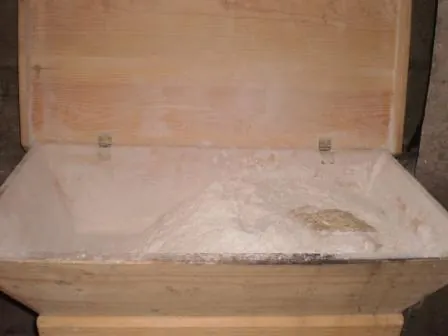
Flour and a portion of dough in the kneading trough — mixed-grain bread sequence documented by the Museum in Recovos, Pedraça.
Source: Museu das Terras de Basto
Photograph date not stated.
Individual photographer and reuse licence not stated by the source.
ⓘ
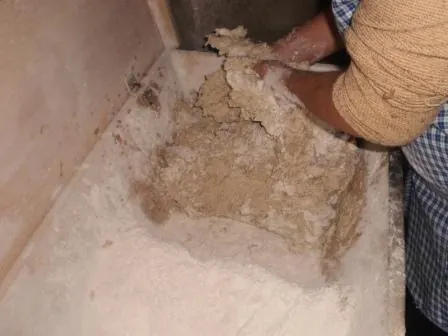
Working the dough by hand — mixed-grain bread sequence documented by the Museum in Recovos, Pedraça.
Source: Museu das Terras de Basto
Photograph date not stated.
Individual photographer and reuse licence not stated by the source.
ⓘ
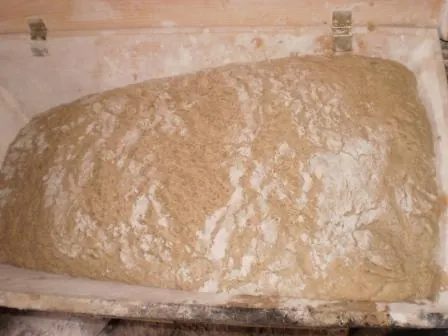
Dough in the trough before baking — mixed-grain bread sequence documented by the Museum in Recovos, Pedraça.
Source: Museu das Terras de Basto
Photograph date not stated.
Individual photographer and reuse licence not stated by the source.
A small piece of dough linked one batch to the next.
Text size
Your choice is saved only in this browser.
In an account recorded in March 2011, Maria da Conceição remembered bread being baked every eight days. A piece of dough from the previous batch was kept in a bowl with a little salt, inside the wooden kneading trough. On the eve of the next baking day, warm water and flour were added. The account from Recovos, Pedraça, also describes an adaptation: when baking became less frequent, yeast bought from the bakery was used.
This change is part of a family history. Maria da Conceição was born in Cavez and had learned to make maize broa from her grandmother. When she was interviewed, at the age of 69, she also made mixed-grain broa. The account does not present an unchanging tradition: it shows learning, choices and an adapting routine.
The baking calendar extended to the community too. In the 2011 account, batches of bread were associated with annual celebrations, a longing for homemade bread, the feast of Santa Marinha and Christmas and maize-husking events organised by the Associação D. Nuno Álvares in Pedraça. Keeping dough for the following week made sense in a weekly routine; occasional baking created different needs. These are practices remembered in that account, not a current programme of festivities.
The kneading trough, bowl and piece of dough form a small chain between two batches. In this memory, keeping something meant more than storing finished bread: it meant saving the start of the next loaf. A household object reveals its full function when we understand the home’s routine.
Explore further: words and activities
Explore this story
Three ways to look at the same dough
Open an option and choose the story.
Realize why mass grows
There are fungi that do not have hat →Know the collection ingredients
This bread mixture rye and wheat →Follow the signs to the oven
The oven gave a sign →
One bookmark per reading journey, saved in this browser.
Source and context
Museum — Mixed-grain bread, published 12/05/2011; fieldwork in March 2011 in Recovos, Pedraça
Accessed:
Basto Land Museum — food and food: collections of February and March 2011
Accessed:
Editorial summary; the date of consultation is not the date of the facts.