Discover Cabeceiras de BastoFree independent guide
ViveCabeceirasYOUR GUIDE TO CABECEIRAS
ENEnglish
SearchSaved
4 STORIES · CONTINUOUS READING

The town changes roles

A square, a school, a music house and a history of rescue show how places change with community needs.

All stories in the order of the route. You can print this page by the browser; sources and credits follow the reading.

Things to try1 exploração interativa
Cabeceiras de Basto · recent history

The town grew beyond the monastery
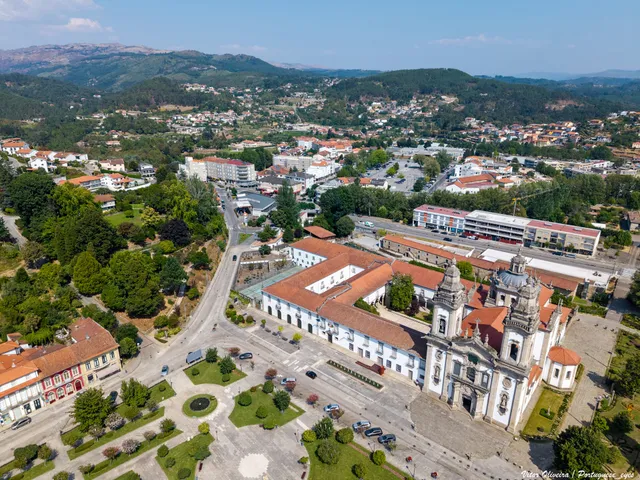
Aerial view of the Monastery of São Miguel and Praça da República in Refojos
The Monastery of Refojos and the square, in a current view.© Vitor Oliveira from Torres Vedras, PORTUGALⓘ

Campo do Seco and new streets tell another century of Cabeceiras.

The monastery dominates the view, but the town acquired other spaces and functions. The municipal urban regeneration study from 2016 recalls the acquisition of Campo do Seco in 1923. Public facilities, including a school and fire station, were subsequently established there. Buying the land and installing those facilities were separate stages, not works all completed in 1923.

Praça da República holds another connection with the wider world. The same study links the architecture of its nineteenth-century ensemble with returning brasileiros, emigrants connected with Brazil. Houses help show how experiences and resources from elsewhere could leave marks on the town. This interpretation of the ensemble does not identify every owner’s biography.

In the late 1970s, Avenida Francisco Sá Carneiro opened a route behind the monastery. Later, the detailed plan of 1998 addressed the eastern part of the former estate. Looking at the town means following overlapping periods: monastery, square, public facilities and streets that changed how people moved.

Source and context

Município — PARU, abril de 2016, pp. 9–12: praça, Campo do Seco e expansão urbana

Accessed: . Editorial summary; the date of consultation is not the date of the facts.

Back to index ↑
Cabeceiras de Basto · recent history

School changed the town too

Aerial view of the Monastery of São Miguel and Praça da República in Refojos
Current view of the Monastery of Refojos and the square; it is not an image of the nineteenth-century uses.© Vitor Oliveira from Torres Vedras, PORTUGALⓘ

In 1971, Casa do Barão opened a new chapter in education.

Casa do Barão belongs to more than architectural history. In 1971 it received the Calouste Gulbenkian preparatory school, a milestone in education in Cabeceiras. António Queirós’s municipal biography identifies him as chiefly responsible for establishing it. The building is now known as the Casa Municipal da Cultura.

Born in Chacim in 1925, António Queirós received his primary education from his father, also a teacher. He completed teacher training in 1949 and enrolled in Law at the University of Coimbra in 1953. His career combined teaching and legal practice, showing how continued study could accompany professional life.

In 2013 the municipality named three school libraries after António Queirós, Artur de Sousa Barroso and Bernardino Queirós. All three teachers were born in Refojos. Behind a name on a plaque lie stories of village schools, training outside the municipality and a return to local teaching. Education’s history can also be discovered by following those people between buildings with different uses.

Source and context

Município — biografias de Artur Barroso, Bernardino Queirós e António Queirós, 17/06/2013

Accessed: . Editorial summary; the date of consultation is not the date of the facts.

Back to index ↑
Pereiras, Refojos · former uses of the town hall

From prison to music

A building can change its role in the community.

In Pereiras, the former town hall continued to serve as a prison until 1972, according to the Museu das Terras de Basto. After restoration, it became the Casa da Música. A municipal news item from July 2010 already listed it among places to discover in the municipality. The Museum’s article dates the town hall’s move to the Monastery to 1835 and the opening of the Casa da Música to 2003: the building continued changing roles after municipal administration left.

The building’s story begins before the prison preserved in local memory. The Museum’s article attributes the order to build the town hall in 1586 to the magistrate João Gil de Abreu Castelo Branco. It then suggests an 18th-century reconstruction on the site of the earlier building.

Its two storeys divided the functions: prison on the lower level, town council and hearings above. This arrangement brought administration and justice together. When the council left, the prison remained; when the prison closed, the building survived. Opening as the Casa da Música in 2003 added another use to a building with many chapters.

The Pereiras beyond a building

Open an option and choose the story.

  1. School, trade and workA street also guards trades →
  2. The rhythm of the fairsThe Thirty Fair had a meeting day →
  3. The football field and the roadWhen football won field →
  4. The monastery also changed functionsAfter the monks, other lives →
It links the uses of the House to the collective life of the place.
Source and context

Basto Land Museum — The place of the Pereiras of Refojos de Basto, 28/07/2024

Municipality — visits to see the municipality, news of 29/07/2010

Accessed: . Editorial summary; the date of consultation is not the date of the facts.

Back to index ↑
Cabeceiras de Basto · recent history

A history of rescue and community

Aerial view of the Monastery of São Miguel and Praça da República in Refojos
The Monastery of Refojos and the square, in a current view.© Vitor Oliveira from Torres Vedras, PORTUGALⓘ

Firefighters have been part of Cabeceiras since 1949.

A place’s history is also written in how people organise to help. The Associação Humanitária dos Bombeiros Voluntários Cabeceirenses was established in 1949. Its mission combines firefighting and rescue in accidents and other emergencies with transport for sick and injured people.

In April 2023, the seventy-fourth anniversary brought firefighters, members and other organisations together in a celebration spanning the monastery church and fire station. A gym was also inaugurated. The municipal account of that moment shows an institution continuing to adapt its spaces to training and service needs.

This history complements the monuments. A fire station has vehicles and equipment, but also represents people, learning and collective commitment. Between an association’s foundation and each new generation of volunteers lies a continuity that a street photograph may not show. Getting to know Cabeceiras also means recognising these ways of caring for the community.

Source and context

Município — Associação Humanitária dos Bombeiros Voluntários Cabeceirenses, fundação em 1949

Município — aniversário dos Bombeiros Cabeceirenses, 26/04/2023

Accessed: . Editorial summary; the date of consultation is not the date of the facts.

Back to index ↑
YOUR LOCAL GUIDE

What would you like to discover?

Take a closer look.