Discover Cabeceiras de BastoFree independent guide
ViveCabeceirasYOUR GUIDE TO CABECEIRAS
ENEnglish
SearchSaved
10 STORIES · CONTINUOUS READING

There's life in and out of the river

Ten stories link the trees from the margins to the animals and moisture. Compare the otter and the water mole, follow the relationship with the aquatic insects and discover the water lizard. Each text distinguishes general biology, regional references and documented records; it is a path of reading, not sighting.

All stories in the order of the route. You can print this page by the browser; sources and credits follow the reading.

Things to try7 activities · 9 interactive explorations · 8 questions
Middle and upper Tâmega basin · landscape studied in 2016–2017

The river has a woodland too

Trees along the banks are part of the waterscape.

The 2016–2017 report describes riverside woodland in the middle and upper Tâmega basin with alders, ashes and willows, and birches along smaller waterways. It notes that these strips are often narrow, constrained by cultivated land. This is the regional description from that study, which covers Cabeceiras and other municipalities.

Bank, water and riverbed are connected but offer different conditions. The gold-striped salamander depends on damp environments and reproduces in water; young freshwater mussels live buried in the riverbed and need oxygen. The diagram explores these general relationships without representing a place where all these species have been observed together.

Read a riverbank photograph in three bands: tree crowns, ground beside the water and riverbed. Choose a species from these readings and consider which band it needs at each life stage. One landscape can contain different shelter, food and breeding places. That combination makes a river worth observing slowly.

IT WORKS A RIVER FOR THE FRONT

Open a zone and follow the connections between environments.

  1. 1 · Margins and vegetation

    The salamander-lusitan uses humid environments near the streams.

    Meet the salamander →
  2. 2 · In water

    Salamander larvae develop in the water before metamorphosis.

    Follow transformation →
  3. 3 · At the bottom of the river

    Young mussels live buried and need oxygen.

    Discover life in bed →
Simplified ecological relations, without a scale.
Return to observation proposal ↑
Source and context

Biosphere / Iberdrola, APA file — Monitoring of ichthyofauna 2016–2017, February 2018; pp. 5, 35 and 40, station record 22 on p. 175 PDF
Accessed:

Link to Nature Protection — Salamander-lusitan
Accessed:

ICNF — Margaritifera margaritifera, ecology, reproduction and threats, pp. 2–3
Accessed:

Editorial summary; the date of consultation is not the date of the facts.

Back to index ↑
General botany · understanding willow names

One willow, many possibilities

A common name is a starting point, not the end of identification.

In Flora-On, Salix is a genus containing several species. Listed names include Salix atrocinerea, Salix salviifolia and Salix viminalis. A reference simply to “willows” therefore cannot select one of these species. Keep this distinction when reading the description of woods in the Tâmega basin: the regional source mentions the group without identifying each tree here.

Scientific names also have different levels. In Flora-On’s list, Salix salviifolia appears with the subspecies salviifolia and australis. Salix names the genus; Salix salviifolia names the species; subsp. adds the subspecies level. When comparing an old source, a photograph and a botanical profile, retain the name each actually provides rather than completing an identification that was never made.

A name, a plant, a landscape

Open an option and choose the story.

  1. Willows in the regional picture of the marginsThe river also has a forest →
  2. A ashtray with local photographyA fruit with wing →
  3. The fibers in the memory of the basketsBaskets that keep knowledge →
Compares what each source allows to know: a group of trees, a species and a artisanal use.
Source and context

Sociedade Portuguesa de Botânica — Flora-On, genus Salix
Accessed:

Biosphere / Iberdrola, APA file — Monitoring of ichthyofauna 2016–2017, February 2018; pp. 5, 35 and 40, station record 22 on p. 175 PDF
Accessed:

Editorial summary; the date of consultation is not the date of the facts.

Back to index ↑
General botany · alder

Seeds that travel by water

Alder has a close relationship with rivers.

In the University of Évora profile published under the name Alnus glutinosa, alder seeds have air-containing tissues that aid dispersal by water. The tree tolerates long periods with submerged roots. Woods dominated by alder are known in Portuguese as amiais.

Its connection with water thus extends from growing along banks to the journey of its seeds. There is also a naming change to understand: Flora-On uses Alnus lusitanica for native Portuguese alders, citing a 2017 study. Here each name remains linked to its source; the story does not identify a particular tree in the municipality.

The profile published as Alnus glutinosa describes a deciduous tree, which loses foliage for part of the year. The leaves are alternate with doubly toothed edges; the bark, smooth when young, becomes darker and cracked. These features concern different plant parts and different stages of its life.

That source gives December to February as the flowering period. Male flowers appear in elongated groups called catkins, while female groups have a different shape. Winter can therefore reveal details hidden on a visit when the crown is full of leaves. This calendar belongs to the consulted description and may vary with local conditions; it does not announce flowering for a particular tree in Cabeceiras.

The tree, the river and the craft

Open an option and choose the story.

  1. A tree in a margin forestThe river also has a forest →
  2. What happens next to the rootsThe alder has partners in the roots →
  3. The wood in the history of punchesBefore the punch, a piece of alder →
It continues through three different relationships of the alder: ecology of the margins, roots and use of wood.
Source and context

University of Évora — Alnus glutinous, breeding and habitat

Portuguese Society of Botany — Flora-On, Alnus: ecology, symbiosis and taxonomic note

Accessed: . Editorial summary; the date of consultation is not the date of the facts.

Back to index ↑
Local observation · União das freguesias de Gondiães e Vilar de Cunhas · general botany

Buckthorn fruits change colour

Riverbanks have shrubs worth getting to know too.

Flora-On describes alder buckthorn, Frangula alnus, in riverside woods and scrub, hedges and damp places. The Arouca Geopark profile highlights alternate, deciduous leaves and rounded fruits that turn from yellow to red and then black. This change shows that a shrub does not always look the same.

Alternate leaves do not grow in pairs at the same point on a branch. Deciduous means they fall during part of the year: observing in winter may give a different impression from seeing the plant in leaf. Alongside watersides, Flora-On mentions hedges and oak woodland cover, always in moist conditions. The Portuguese name “de-água” therefore does not mean the shrub necessarily lives in the river.

The photograph by João Lima, recorded on 2025-07-15, shows this species in União das freguesias de Gondiães e Vilar de Cunhas. Open the observation to compare visible details with the botanical description. The record documents that encounter; it does not mean the plant will always be visible in the same place.

Return to observation proposal ↑
Source and context

Portuguese Society of Botany — Flora-On, Frangula alnus: names and ecology

Arouca Geopark — Frangula alnus, botanical description

iNaturalist — Frangula alnus, João Lima observation in 2025-07-15

Accessed: . Editorial summary; the date of consultation is not the date of the facts.

Back to index ↑
Species biology · record in Rio Douro

A small frog with a strong connection to water

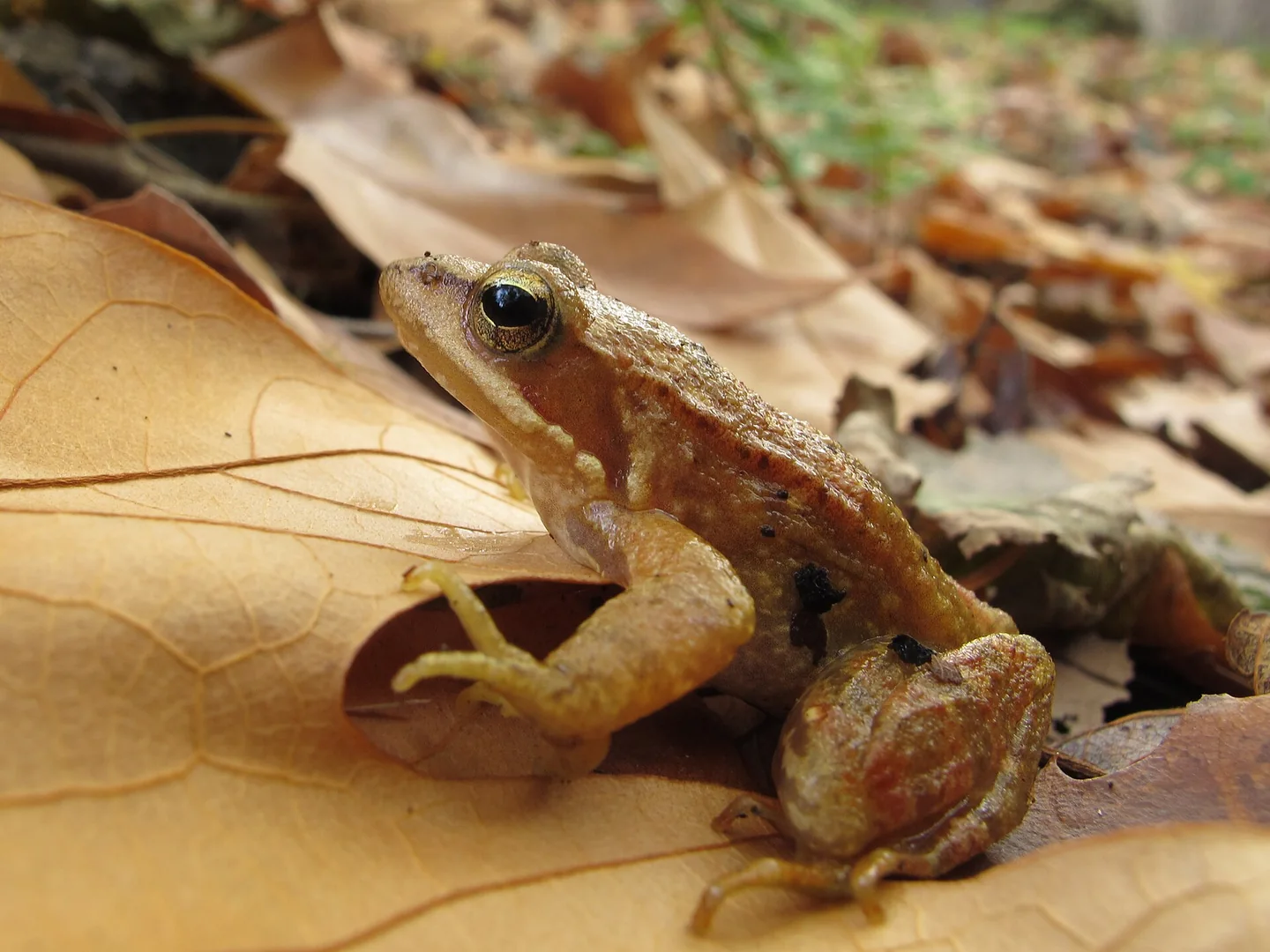
Iberian frog among leaves.
Iberian frog among leaves.Illustrative photograph
jacilluch
ⓘ

Iberian frog among leaves.

Photography: jacilluch · CC BY-SA 2.0

View source

Date given at source: .

Request removal or correct the photo credit

Some lives depend on the bank as much as the stream.

The Iberian frog naturally lives in the Iberian Peninsula: that is what it means to be endemic to this territory. With a slender body and pointed snout, it can reach about 5.5 centimetres. Reproduction takes place in water, and the species prefers mountain streams with vegetation along the banks and rocky beds.

The photograph recorded in Rio Douro opens a window onto this discreet life. On its own, it does not demonstrate water quality: pollution and changes to riverside habitats are among the threats described by the University of Évora.

The description also highlights a dark stripe crossing the eye area, with a narrower pale stripe beneath. These are details to appreciate in a photograph without handling the animal.

One photograph opens other questions

Open an option and choose the story.

  1. What changes between larva and adult?The tail gives a clue →
  2. What does the skin do?A skin that also breathes →
  3. How do you evaluate a river?The life of the river also tells a story →
The register of Rio Douro documents this frog. The following readings explain biology and study methods; they do not document other animals in the same place.
Return to observation proposal ↑
Source and context

University of Évora — Virtual Museum of Biodiversity

Accessed: . Editorial summary; the date of consultation is not the date of the facts.

Back to index ↑
Species biology · with a local record

A small bird that dives

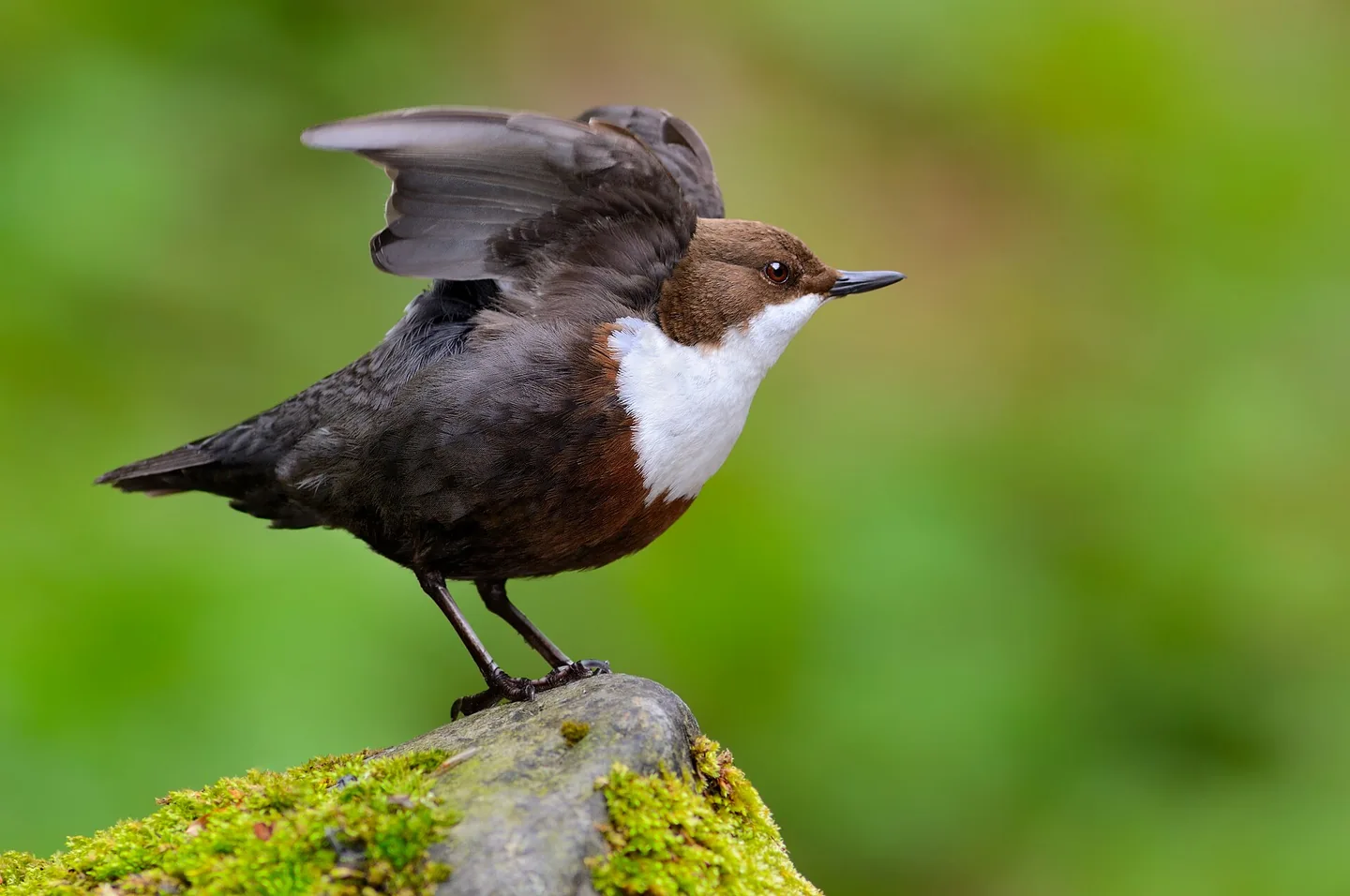
White-throated dipper with open wings.
White-throated dipper with open wings.Illustrative photograph
Олексій Карпенко
ⓘ

White-throated dipper with open wings.

Photography: Олексій Карпенко · CC BY-SA 4.0

View source

Date given at source: .

Request removal or correct the photo credit

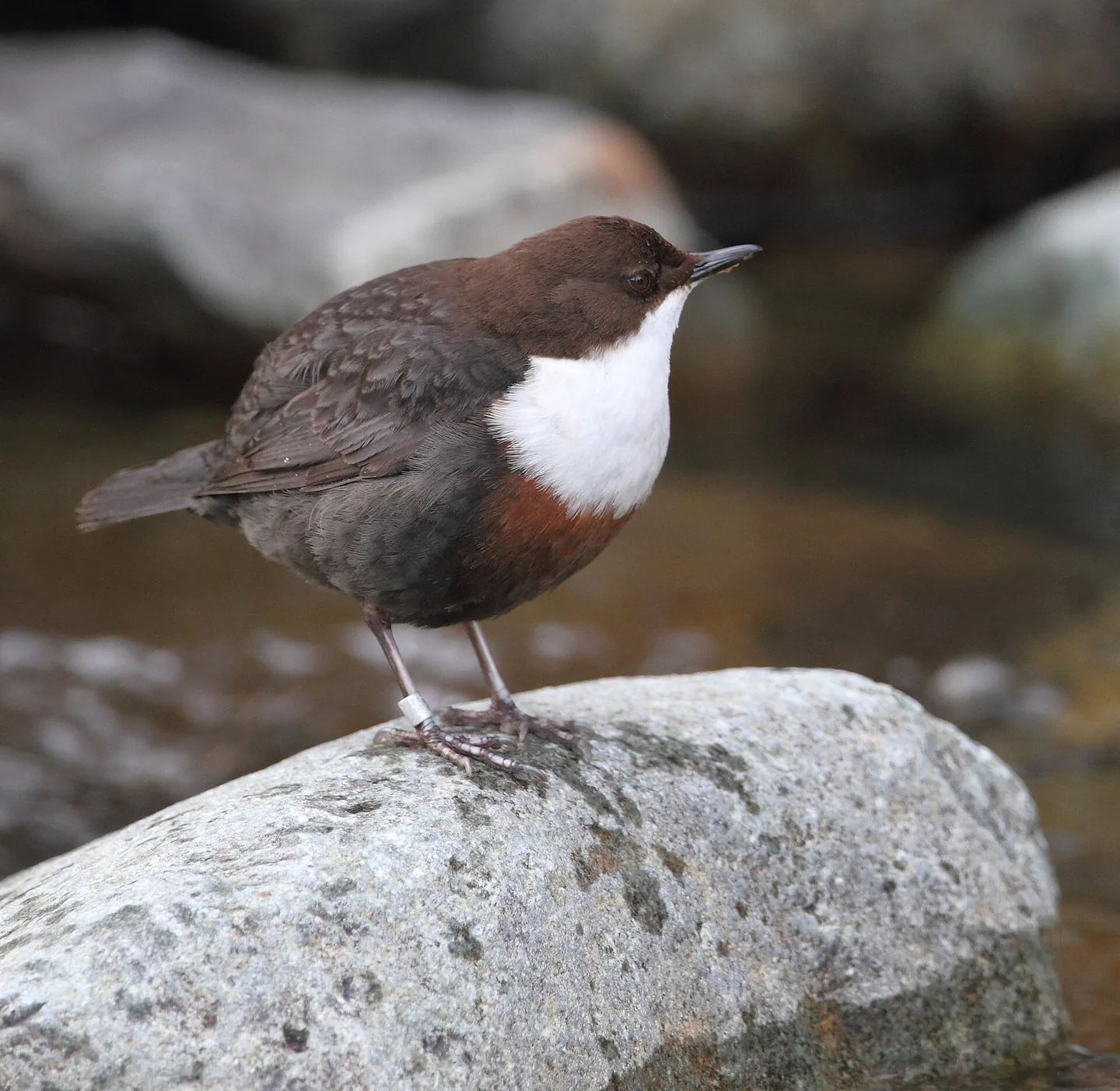
The white breast of a dipper.
The white breast of a dipper.Illustrative photograph
Alun Williams333
ⓘ

The white breast of a dipper.

Photography: Alun Williams333 · CC BY-SA 4.0

View source

Date given at source: .

Request removal or correct the photo credit

The white-throated dipper brings birdwatching into the current.

A compact body, short tail and white breast in adults offer clues to Cinclus cinclus, the white-throated dipper. This bird can dive and is associated with fast-flowing streams, especially in mountains. The gallery includes a local record; the photograph shows the bird in a hand, not the diving behaviour described here. Aves de Portugal describes fast, direct flight and classifies the species as resident: it may remain in breeding areas throughout the year. That general trait does not confirm a continuous presence at the local record’s location.

Underwater, the food it seeks includes small invertebrates. The BTO describes the bird entering the current from rocks or flying low to another perch. The stream is therefore a feeding space, not simply a backdrop where the bird appears.

Age also changes its appearance: juveniles are greyer and more mottled than white-breasted adults. This biological comparison does not assign an age to the photographed bird. A record shows an encounter; understanding what a species does requires bringing together other observations and sources.

The stream is more than water

Open an option and choose the story.

  1. Small animals with their own sheltersSmall shelters underwater →
  2. The vegetation accompanying the currentThe river also has a forest →
  3. How Life Helps to Study RiversThe life of the river also tells a story →
These relationships explain the environment; they do not confirm that animals from different readings share the same point.
Return to observation proposal ↑
Source and context

Birds of Portugal — Watermelon, identification, habits and distribution

British Trust for Ornithology — BirdFacts: Dipper, Cinclus cinclus

Accessed: . Editorial summary; the date of consultation is not the date of the facts.

Back to index ↑
Serra da Cabreira · regional reference and species biology

The otter wears its diving suit

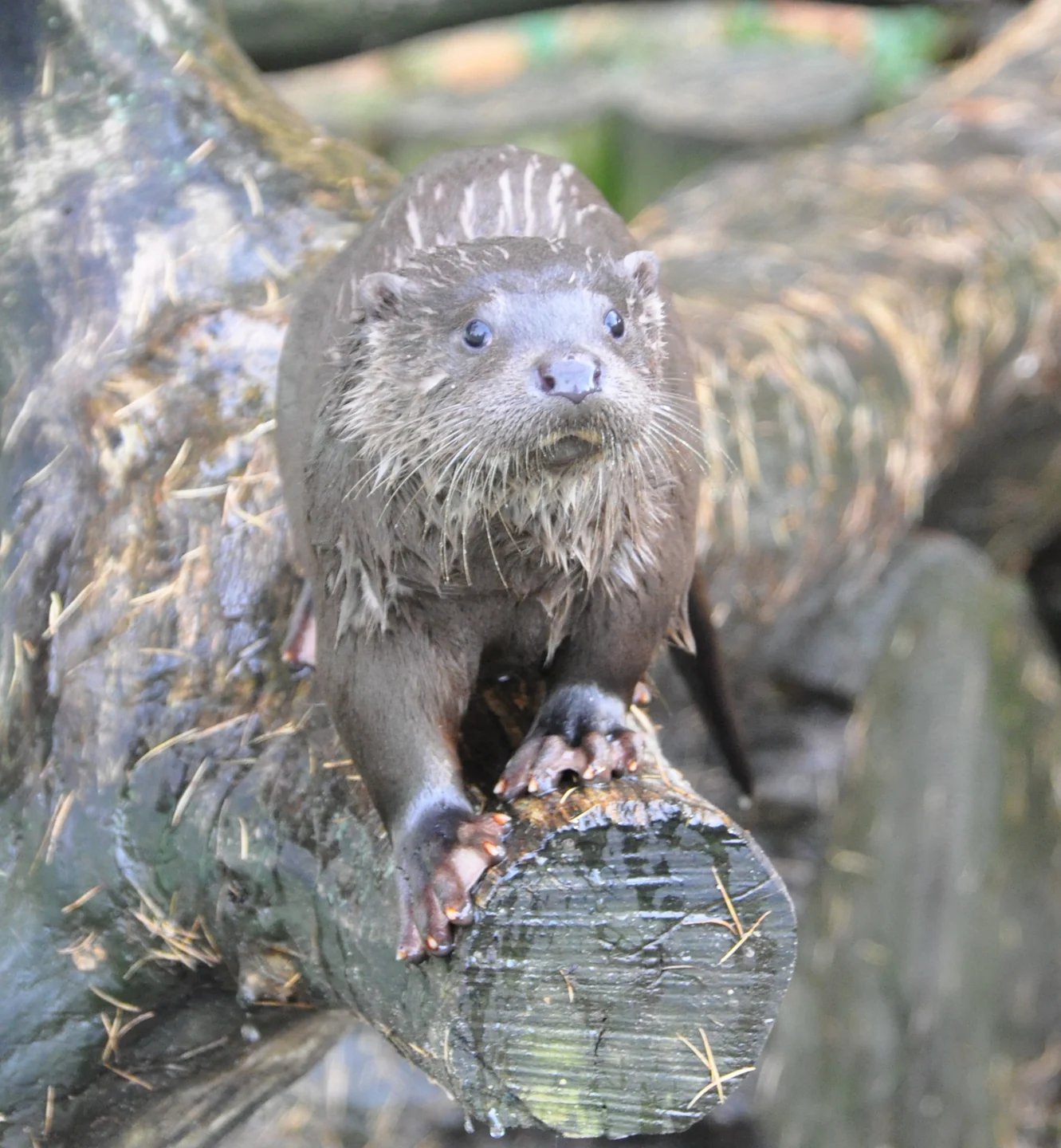
Otter front view over wood, with snout, mustaches and visible paws.
European otter at the Lüneburg Heath fauna park, Germany, in 2009. Animal in fauna park; it is not a record of Cabeceiras.Illustrative photograph · outside the municipality
Quartl
ⓘ

European otter at the Lüneburg Heath fauna park, Germany, in 2009. Animal in fauna park; it is not a record of Cabeceiras.

Photography: Quartl · CC BY-SA 3.0

View source

Date given at source: .

Request removal or correct the photo credit

Waterproof fur and feet that help it swim.

The Eurasian otter, Lutra lutra, has webbed feet and a thick coat that protects it in water. Its life connects the river with its banks: vegetation offers shelter and roots can hide dens. It is mainly active at dusk and at night.

Vieira do Minho’s municipal website includes the otter among Cabreira’s mammals. This regional reference helps introduce the species but does not identify a sighting location.

The University of Évora’s description also mentions a long tail tapering at the tip and a muzzle with long whiskers. Otters do not depend only on rivers: the species also uses reservoirs, estuaries and, less often, the marine coast. These features help us get to know the animal without turning the story into a sighting point.

Body and environment

Open an option and choose the story.

  1. Other current-linked mammalA mole connected to the current →
  2. The vegetation accompanying the riverThe river also has a forest →
  3. Compare with an underground shelterA house under the ground →
Compare described characteristics and illustrative photographs. Links do not confirm that these species have been observed in the same place.
Source and context

University of Évora — Virtual Museum of Biodiversity, Lutra lutra; David Germano
Consultations: ,

Vieira Tourism of Minho — fauna of Serra da Cabreira, regional reference
Accessed:

Editorial summary; the date of consultation is not the date of the facts.

Back to index ↑
Serra da Cabreira · regional reference and species biology

A desman’s life in the current

Cold water has its own inhabitants too.

The Pyrenean desman, Galemys pyrenaicus, is associated with cold, clear, well-oxygenated water, often in fast-flowing mountain rivers. The University of Évora also mentions the use of slower water, such as canals and lakes: a preference is not exclusivity. Its natural range is limited to the Iberian Peninsula and the Pyrenees. Conservation involves vegetated banks, shelters and connected habitats; the profile identifies silting and isolation among the threats. The municipal description of Cabreira’s fauna mentions the species, but this story has no geolocated record in the municipality.

Its elongated snout, shaped like a small trunk, helps it search for invertebrate larvae underwater, according to the Generalitat of Catalonia’s description. The technical profile hosted by ICNF highlights riverbed invertebrates as its food base, including caddisflies, stoneflies, mayflies and true flies. Small animals that may seem like details of the river are part of a mammal’s diet.

The ICNF profile adds a qualification for Portugal: it considers still-water habitats, such as reservoirs and small high-altitude lakes, unfavourable. The general reference to slower water should not become an invitation to search for the species in any lake. Suitable habitat also involves food, bank shelters and connections with other river sections.

The river is also a pantry

Open an option and choose the story.

  1. Tricopters: larvae with sheltersSmall shelters underwater →
  2. Compare two water mammalsThe otter takes the dress diving suit →
  3. The shores are also part of the houseThe river also has a forest →
  4. Realising the link between habitatsA landscape needs connections →
General eating relationships of the species. The groups of insects cited do not confirm a meal or occurrence in a local river.
Source and context

University of Évora — Virtual Museum of Biodiversity, Galemys pyrenaicus

Vieira Tourism of Minho — fauna of Serra da Cabreira, regional reference

ICNF — Galemys pyrenaicus, ecology and nutrition (historical references)

Generalitat de Catalunya — Iberian Desmán, description of snout and feeding

Accessed: . Editorial summary; the date of consultation is not the date of the facts.

Back to index ↑
Species biology · documentary reference in the municipality

A mussel begins by travelling with a fish

Two lives connected beneath the surface.

The larvae of Margaritifera margaritifera, called glochidia, attach themselves to the gills of salmonids such as trout. The fish acts as a host and carries them while they develop.

After their transformation, they detach and settle on the bottom. Success at this stage also depends on where they land: dispersal and finding conditions for survival are different things. The diagram summarises general biology, not reproduction observed in the municipality.

This journey does not immediately produce an adult capable of reproducing. The ICNF profile places sexual maturity between seven and twenty years and describes a long lifespan. These are general values from that source, not ages measured in specimens from Cabeceiras. The presence of adults and the arrival of new generations are therefore different questions when studying a population.

This relationship changes how we see a river. The place occupied by an adult does not explain every life stage: there is also the host fish and the bed where the juvenile settles. It is a story of connections between living things and habitats, much of it happening out of sight.

A TRAVEL IN THREE MOMENTS

  1. 1 · Fixing on fish

    The larvae are attached to the gills.

  2. 2 · Travel and transformation

    The host moves as the larvae develop.

  3. 3 · Arrival at the bottom

    They let go and pass to the riverbed.

Open every moment to follow history. Simplified scheme, without temporal scale; does not represent a local observation.
Source and context

ICNF — Margaritifera margaritifera, ecology, reproduction and threats, pp. 2–3
Accessed:

PDM — Environmental Assessment, p. 50
Accessed:

Editorial summary; the date of consultation is not the date of the facts.

Back to index ↑
Reptiles · general biology, without a confirmed local record in this profile

A lizard between sun and moisture

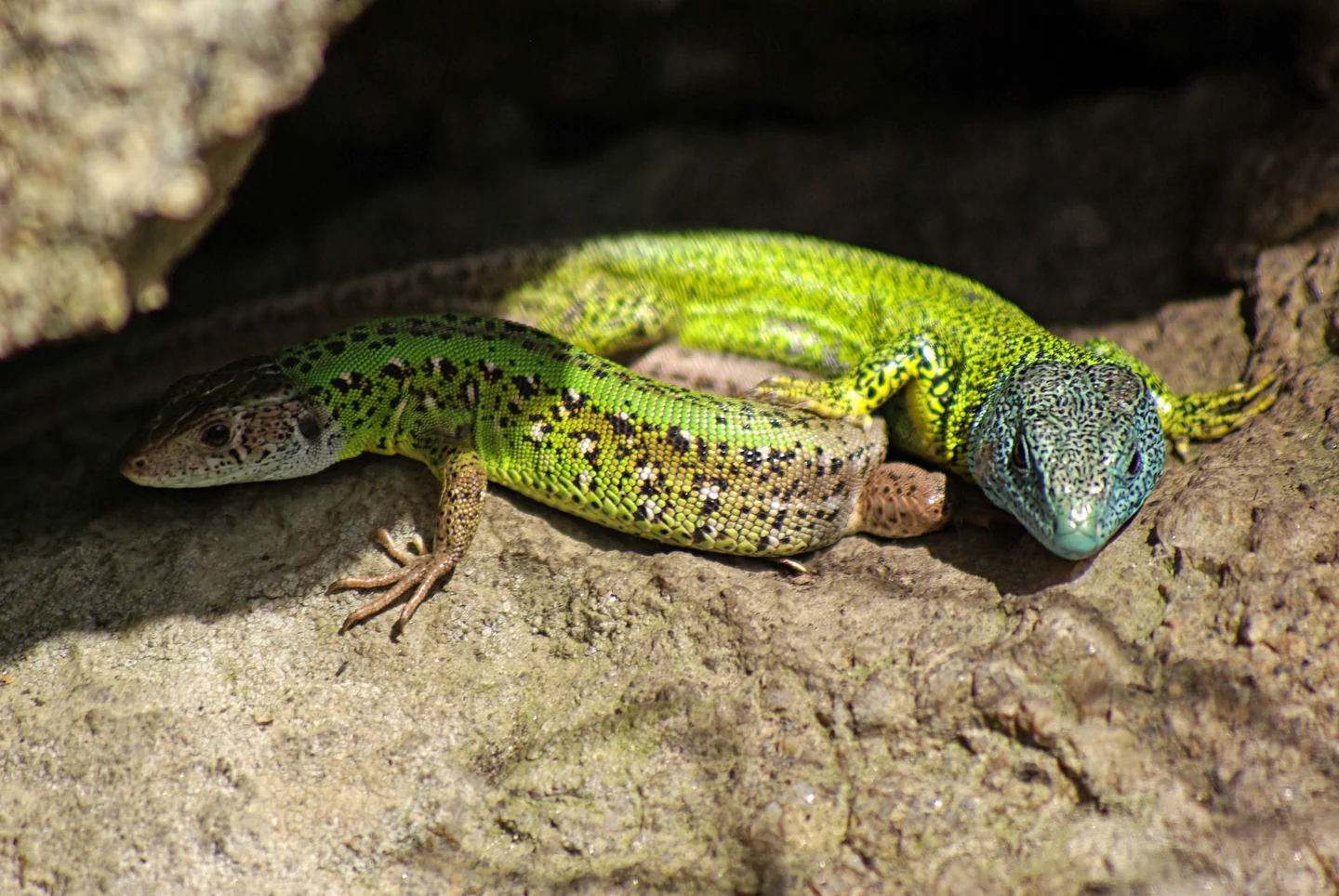
Two lizards on stone, one in the foreground and the other in the back, with green coloring and dark spots.
Water lizards photographed in Candelario, Salamanca, Spain, in 2013. Illustration of the species; it is not a record of Cabeceiras.Illustrative photograph · outside the municipality
David Perez (DPC)
ⓘ

Water lizards photographed in Candelario, Salamanca, Spain, in 2013. Illustration of the species; it is not a record of Cabeceiras.

Photography: David Perez (DPC) · CC BY3.0

View source

Date given at source: .

Request removal or correct the photo credit

Needing warmth does not mean living far from water.

Schreiber’s green lizard, Lacerta schreiberi, is associated with damp habitats, riverside vegetation, walls and brambles. The description published in Ambienta explains that it uses the sun’s warmth for activity but shelters during summer’s hottest hours. Being close to water and choosing somewhere to warm up are parts of the same life.

It feeds mainly on invertebrates, including insects and arachnids. Colour varies too: males’ throats can turn intense blue during the breeding season. These general features do not confirm the species of an animal glimpsed in passing. The consulted source is not a Cabeceiras record.

Age also changes the spaces it seeks. The Charcos com Vida project distinguishes adults needing shelters among rocks and dense scrub from juveniles associated with herbaceous vegetation. A varied bank can offer different refuges rather than acting as a uniform strip.

According to the same profile, reproduction takes place between spring and midsummer. Females lay between six and seventeen eggs, with incubation generally lasting two to three months. These ranges describe the species, not a clutch monitored in the municipality.

The lizard both hunts small invertebrates and provides food for other animals. The source names birds of prey, genets and otters among its predators. This is another connection between bank vegetation, water and the food web.

Grow and feed by the water

Open an option and choose the story.

  1. Other reptile, other feedingA snake can have more than one drawing →
  2. The otter between earth and waterThe otter takes the dress diving suit →
  3. The importance of river vegetationThe river also has a forest →
General relations described in the sources without stating joint comments in Cabeceiras.
Source and context

Khris Valero — Lacerta schreiberi, magazine Ambienta, January 2004, pp. 61–62; archive of the Spanish Ministry MAPA

Charcoals with Life — Water Lizard, habitat and life cycle

Accessed: . Editorial summary; the date of consultation is not the date of the facts.

Back to index ↑
YOUR LOCAL GUIDE

What would you like to discover?

Take a closer look.