Discover Cabeceiras de BastoFree independent guide
ViveCabeceirasYOUR GUIDE TO CABECEIRAS
ENEnglish
SearchSaved
9 STORIES · CONTINUOUS READING

The green also has calendar

Nine stories to accompany leaves, flowers and fruits throughout the year. Compare local photographs of black oak, medronho and mistletoe with the descriptions of its cycles. Draw contours, look for clues and discover what a single station photograph leaves unaccounted for.

All stories in the order of the route. You can print this page by the browser; sources and credits follow the reading.

Things to try6 activities · 7 interactive explorations · 7 questions
Botany · general features, no confirmed local observation

It looks like a leaf, but it is a stem
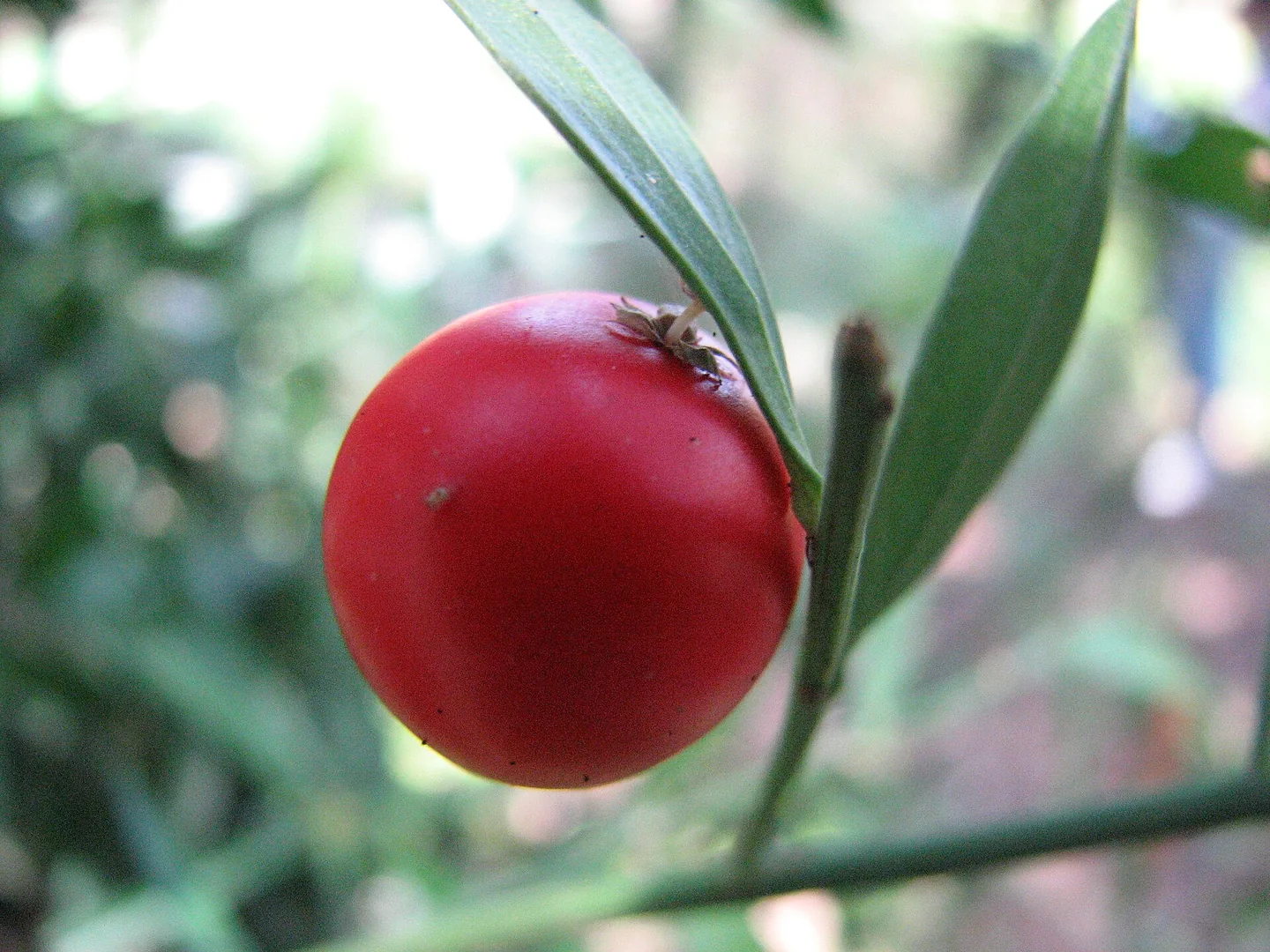
Red fruit of butcher’s broom.
Red fruit of butcher’s broom.Illustrative photograph
Vista~commonswiki
ⓘ

Red fruit of butcher’s broom.

Photography: Vista~commonswiki · CC BY-SA 3.0

View source

Photograph date not stated.

The source attributes authorship to Vista~commonswiki based on the copyright claim, without machine-readable confirmation.
Request removal or correct the photo credit

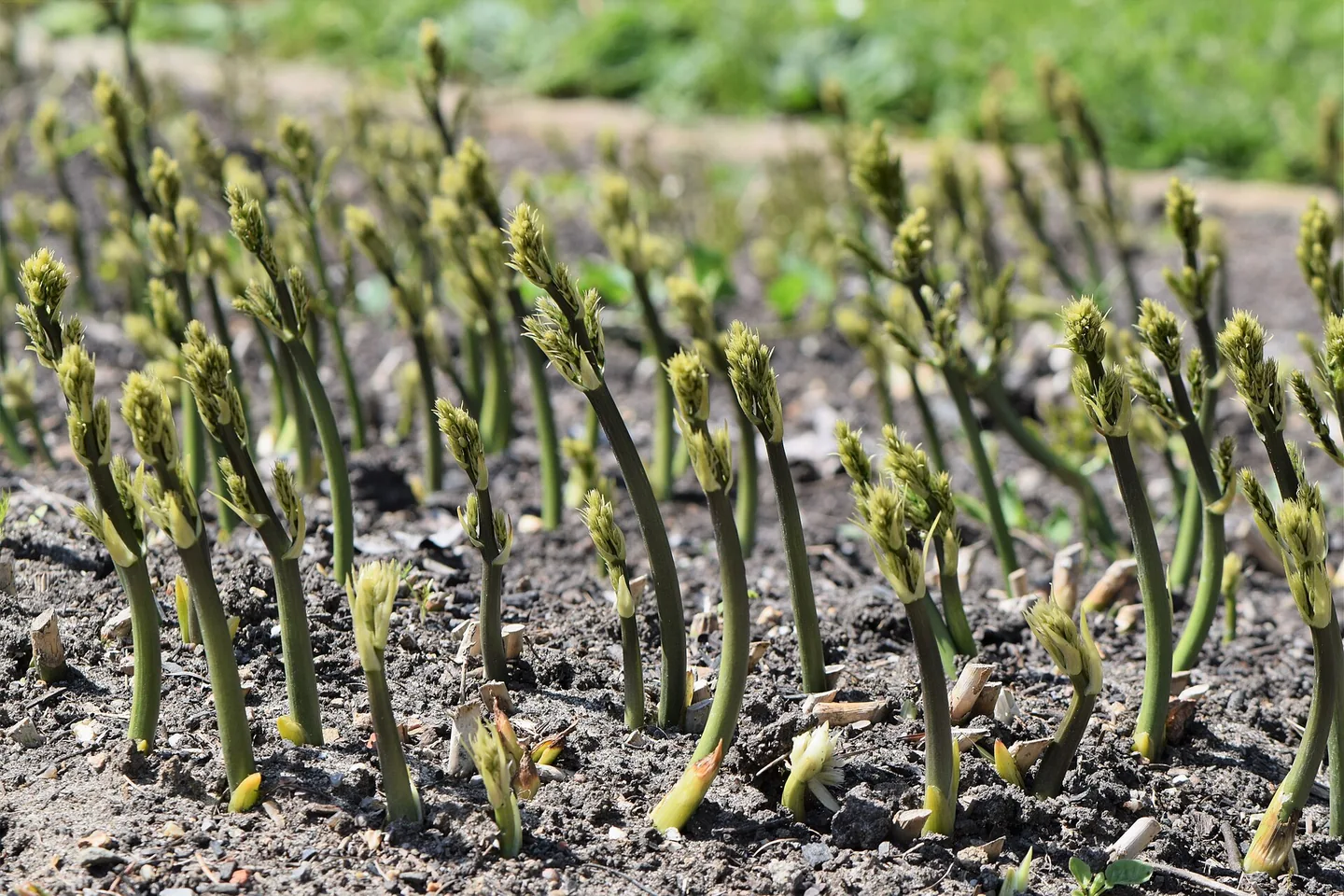
Butcher’s broom shoots.
Butcher’s broom shoots.Illustrative photograph

Butcher’s broom hides a small trick of shape.

In Ruscus aculeatus, the true leaves are small scales. Gaia Biological Park explains that the flat green structures resembling leaves are stems called cladodes. The ripe fruits are red and inedible. The species prefers shady places with cool, deep soil. This botanical description does not confirm its presence at a location in Cabeceiras; it helps explain a plant’s form without picking or tasting it.

The University of Évora profile adds a surprising detail: greenish flowers appear in the centre of the cladodes. Later these structures support rounded fruits. What looks like a leaf with a berry attached is actually a specialised stem.

The plant stays green throughout the year and has a rhizome from which branched stems develop. The cladodes are stiff and pointed, ending in a spine. The source places fruit ripening between August and March; this is general botanical guidance, not confirmation of fruits at a place or on a visiting date.

Look at the whole plant

Open an option and choose the story.

  1. The holly has true leavesNot all leaves sting in the same way →
  2. Another way to look at the stemsIn the carqueja, stems also work →
  3. Getting to know the forest environmentsThe thimble likes the banks of the forest →
Compare shapes, cycles and environments; links do not add local records.
Source and context

Gaia Biological Park — Gilbardeira (Ruscus aculeatus)

University of Évora — Biodiversity of Mitra, Ruscus aculeatus

Accessed: . Editorial summary; the date of consultation is not the date of the facts.

Back to index ↑
Local observation · União das freguesias de Gondiães e Vilar de Cunhas · general botany

An oak can keep its dry leaves

Falling in autumn is not a leaf’s only possible fate.

The University of Évora describes Quercus pyrenaica, Pyrenean oak, as having deciduous to marcescent leaves depending on local conditions. On marcescent plants, leaves dry and remain on the branches through the unfavourable season. The book A Vegetação em Portugal highlights this behaviour in young plants of the species. This is a general explanation: it does not automatically identify an oak observed in the municipality.

Other clues complete the portrait: young branches and leaves have a covering of hairs, denser on the underside of leaves. Male flowers appear in catkins; female flowers may occur alone or in small groups. The acorn completes that reproductive cycle.

The profile associates Pyrenean oak with siliceous substrates, including granite and schist, mainly on acidic soils. It also describes differences in leaf behaviour with local moisture conditions. Understanding a tree therefore means combining observations of its crown with its growing environment. One dry leaf attached to a branch reveals neither the tree’s identity nor its state of health on its own.

The photograph by João Lima, recorded on 2025-07-15, shows this species in União das freguesias de Gondiães e Vilar de Cunhas. Open the observation to compare visible details with the botanical description. The record documents that encounter; it does not mean the plant will always be visible in the same place.

Return to observation proposal ↑
Source and context

University of Évora — Virtual Museum of Biodiversity, Quercus pyrenaica

National Press — Vegetation in Portugal, semi-ducifolia and marcescent leaves

iNaturalist — Quercus pyrenaica, João Lima observation in 2025-07-15

Accessed: . Editorial summary; the date of consultation is not the date of the facts.

Back to index ↑
General botany · bay laurel

Bay laurel has more than leaves

A tree familiar from cooking also has flowers.

Bay laurel, Laurus nobilis, keeps foliage throughout the year. The Lisbon School of Education describes small pale-yellow flowers and insect pollination. It is dioecious: male and female flowers occur on different plants. Its leaves are used as a seasoning, but this story is not a guide to identifying plants for consumption. The description is general, with no local observation assigned.

The school’s profile places flowering in Portugal between February and April. The small flowers invite attention to a part of the tree beyond its aromatic leaves. Entomophilous pollination means that insects help transport pollen. This calendar is a general reference, not a prediction for an individual tree in Cabeceiras.

The leaf is simple and has pinnate venation: one main vein forms an axis for lateral veins, in a feather-like pattern. Leaf shape, flowers and reproductive organisation are different clues. A plant can retain its foliage and still change appearance when flowering.

What changes a tree?

Open an option and choose the story.

  1. Dry leaves remainingAn oak can store dried leaves →
  2. The work of flower visitorsFrom flower to flower, a shared task →
  3. Other portrait of leaves and reproductionNot all leaves sting in the same way →
Comparing general botanical characteristics, without using these readings as identification for consumption.
Source and context

Lisbon High School of Education — Laurus nobilis

Accessed: . Editorial summary; the date of consultation is not the date of the facts.

Back to index ↑
Local observation · União das freguesias de Arco de Baúlhe e Vila Nune · general botany

Flowers and fruit on the same branch

Strawberry tree branches and fruit.
Strawberry tree branches and fruit.Illustrative photograph
Jules Verne Times Two
ⓘ

Strawberry tree branches and fruit.

Photography: Jules Verne Times Two · CC BY-SA 4.0

View source

Date given at source: .

Request removal or correct the photo credit

Strawberry tree leaves and fruit.
Strawberry tree leaves and fruit.Illustrative photograph
Robert Flogaus-Faust
ⓘ

Strawberry tree leaves and fruit.

Photography: Robert Flogaus-Faust · CC BY 4.0

View source

Date given at source: .

Request removal or correct the photo credit

The strawberry tree’s seasons overlap.

The strawberry tree, Arbutus unedo, keeps glossy dark-green leaves throughout the year. Small white bell-shaped flowers appear in autumn. Its fruits take about a year to ripen, so ripe fruit can coincide with the next flowering season.

The Lisbon School of Education’s profile distinguishes two encounters with animals: insects, especially bees, take part in pollination, while birds eating the fruits help transport seeds. These are different roles in the plant’s life cycle.

The leaves offer clues beyond their colour: their edges are toothed, and secondary veins branch from a central vein. The plant ranges from a shrub to a small tree. The Lisbon Polytechnic profile mentions tolerance of dry climates and different soils, showing that its fruiting calendar is not its only interesting feature.

Food uses include fresh fruit, jams and jellies. The same source places the tradition of strawberry-tree fruit drinks in the Algarve and other Mediterranean areas; that information does not make them a documented speciality of Cabeceiras.

The photograph by migr, recorded on 2025-08-29, shows this species in União das freguesias de Arco de Baúlhe e Vila Nune. Open the observation to compare visible details with the botanical description. The record documents that encounter; it does not mean the plant will always be visible in the same place.

Fruits with different stories

Open an option and choose the story.

  1. A fruit inside a chestnut burrWhat is hidden in the hedgehog? →
  2. Many small fruits in a setA blueberry is a small set →
  3. A wing for scatteringA fruit with wing →
  4. On the pisco, a menu that changes with the stationA red chest, a menu that changes →
Compares duration, structure and relationship with animals.
See the plants photographed in the municipality
Return to observation proposal ↑
Source and context

Lisbon Polytechnic — form Arbutus unedo

iNaturalist — Arbutus unedo, migr observation in 2025-08-29

Accessed: . Editorial summary; the date of consultation is not the date of the facts.

Back to index ↑
General botany · ivy

Not all flowers arrive in spring

Ivy brings flowers to autumn too.

The Hedera hibernica profile places its small greenish-yellow flowers in September and October. It mentions the importance of flowers and fruits for insects and birds, and the plant’s use as nesting shelter. This shows how one climber can take part in several ecological relationships.

The profile also explains how the plant occupies space. Ivy is woody and perennial; its long, flexible branches have roots that cling to surfaces. With support it climbs trees, rocks or walls; without a vertical surface it can spread over the ground. Climbing and ground cover are thus two growth forms of the same species.

The described leaves may be oval or have three to five lobes. Compare leaf shape with branch position, but do not use a single detail to name the plant. To follow the seasons, record leaves, flowers and fruits separately: keeping leaves all year does not mean flowering every month.

Source and context

University of Évora — BioMontado, chips Fraxinus angustifolia and Hedera hibernica

Accessed: . Editorial summary; the date of consultation is not the date of the facts.

Back to index ↑
Species botany · with a local observation

White flowers, small red fruits

Hawthorn changes its appearance through the reproductive cycle.

Hawthorn, Crataegus monogyna, is a deciduous shrub or small tree. Its leaves are simple, alternate and lobed; its thorns explain the Portuguese name espinheiro-branco. In the description from the University of Porto’s Natural History and Science Museum, the white flowers have five petals.

The small red fruits are pomes, and the profile mentions one seed per fruit. Leaves, flowers and fruits let us compare different stages of the plant. The local photographic record linked to this story documents one observation, not every phase of the cycle or the species’ distribution across the municipality.

The botanical family offers another comparison: hawthorn and bramble both belong to the rose family, despite their different leaves and fruits. A hawthorn’s simple leaf has a blade divided into lobes; a bramble’s compound leaf is divided into leaflets. Belonging to the same family does not mean having the same shape.

The University of Porto collection associates hawthorn with understorey and scrub on well-drained soils. Its stated distribution extends across Europe, Asia and North Africa. This context is broader than the local record: a photograph in Cabeceiras documents an encounter, while the botanical profile describes the species.

A simple leaf or a set of folioli?

Open an option and choose the story.

  1. In silva, parts of the same leafA blueberry is a small set →
  2. In the medron, a serrated marginFlowers and fruits in the same branch →
  3. In oak, other clippings on the bankA leaf drawn in waves →
Opens comparisons to know different structures; descriptions do not replace the observation of the plant.
Return to observation proposal ↑
Source and context

University of Porto — living botanical collection, Crataegus monogyna

University of Évora — Rubus ulmifolius, leaves and fruits

Accessed: . Editorial summary; the date of consultation is not the date of the facts.

Back to index ↑
General botany · birch

A tree with pale bark

Birch catches the eye before you even look at its leaves.

The Betula celtiberica profile describes a deciduous tree with a silvery-white trunk and leaves ranging from oval to triangular, with toothed edges. The species is associated with moist environments, including watercourse banks, and needs plenty of light.

The Gulbenkian Garden presentation places flowering in April and May and describes small winged fruits dispersed by wind. Bark, leaves and reproductive structures offer different clues throughout the year. This information concerns the species; it does not confirm its presence in a parish or guarantee the same dates everywhere.

Male and female flowers occur on the same tree but in different structures. Gulbenkian describes male flowers grouped in greenish-yellow catkins and female structures that are upright at first. A flower does not always have large, showy petals: observing a tree may require attention to discreet structures.

The profile also highlights shallow, horizontally spreading roots and the ability to produce shoots from the stump. The visible trunk is only part of the plant; growing from seed and producing new shoots are distinct processes. These are features from the Betula celtiberica profile, without attributing a particular tree to Cabeceiras.

Discreet flowers, different strategies

Open an option and choose the story.

  1. Male and female structures in pineNeedles come in pairs →
  2. How to distribute the flowers on the laurelThe laurel has more than leaves →
  3. Another tree, another journey of fruitSeeds that travel through water →
  4. Return to the same tree in another seasonA tree, several visits →
Comparing structures and processes described in the botanical charts.
Source and context

Calouste Gulbenkian Foundation — Celtic betula, trunk and leaves

Accessed: . Editorial summary; the date of consultation is not the date of the facts.

Back to index ↑
Local observation · Rio Douro · general botany

Not every leaf is equally prickly

Even on a single holly tree, leaves can differ.

Mentioned for Cabreira by Visit Cabeceiras, Ilex aquifolium has evergreen leaves. The Gulbenkian profile describes spiny edges, sometimes smooth on older branches or plants. Red fruits appear on female plants and are toxic. Observe them without picking or tasting them. According to Gulbenkian, flowering generally takes place from April to June; fruits ripen in late summer and can remain through winter.

The small white flowers are less conspicuous than the fruits. Holly is dioecious: there are male and female plants. This distinction helps explain why not every plant bears red fruit.

It is a slow-growing shrub that can live for more than a century. Gulbenkian describes it in oak woods and scrub, often on shady, damp slopes with slightly acidic soils rich in organic matter. Observing the plant therefore also means looking at its surroundings, as well as its leaf outlines.

The photograph by DVG, recorded on 2026-04-03, shows this species in Rio Douro. Open the observation to compare visible details with the botanical description. The record documents that encounter; it does not mean the plant will always be visible in the same place.

Look at the whole plant

Open an option and choose the story.

  1. Compare two red fruitsIt looks like a leaf, but it is a branch →
  2. Other persistent leavesThe laurel has more than leaves →
  3. Observe change throughout the yearA tree, several visits →
Compare shapes, cycles and environments; links do not add local records.
Return to observation proposal ↑
Source and context

Visit Cabeceiras — natural heritage of Serra da Cabreira
Accessed:

Calouste Gulbenkian Foundation — Ilex aquifolium, characteristics and habitat
Accessed:

iNaturalist — Ilex aquifolium, DVG observation in 2026-04-03
Accessed:

Editorial summary; the date of consultation is not the date of the facts.

Back to index ↑
Observation · general activity through the seasons

One tree, several visits

Returning to the same place is another way to read the seasons.

The book A Vegetação em Portugal distinguishes leaves that remain functional through the unfavourable season from marcescent leaves, already dry but still hanging in the crown. Observing the same tree at different times helps reveal change. Record what you see before naming the species: green leaves, attached dry leaves, bare branches and new shoots do not all tell the same story.

To compare visits, choose a specific part of the tree: a branch visible from the same spot or the entire crown. Keep the date and record green leaves, attached dry leaves, flowers and fruits separately. If you cannot see something, write “not observed”; that differs from saying it does not exist on the tree.

The ginkgo and dawn redwood stories let you begin comparing on screen: both lose their leaves, but their shapes differ. Ash adds another question: are you looking at a whole leaf or one of its leaflets? Repeated observations and carefully chosen comparisons reveal more than immediately guessing a species name.

Choose a way to look

Open an option and choose the story.

  1. A whole leaf in fan

    The ginkgo leaf is simple; the division into lobes does not transform it into a composite leaf.

    A tree with fan leaves →
  2. A leaf with several folioli

    In the ash, several narrow parts belong to the same composite sheet.

    A fruit with wing →
  3. A conifer loses her foliage

    The metasequoia has leaves, buds and branches in opposite pairs and deciduous foliage.

    A conifer who undresses in autumn →
  4. Dried leaves that get stuck

    He knows marcescence and compares it to the persistence of green leaves.

    An oak can store dried leaves →
Botany descriptions, a photographic record, and a crop story have different range.
Source and context

National Press — Vegetation in Portugal, semi-ducifolia and marcescent leaves

Calouste Gulbenkian Foundation — Ginkgo

Cambridge University Botanic Garden — Metasequoia glyptostroboides, deciduous foliage and layout of leaves

Calouste Gulbenkian Foundation — Straits leaves, fruit and habitat

Accessed: . Editorial summary; the date of consultation is not the date of the facts.

Back to index ↑
YOUR LOCAL GUIDE

What would you like to discover?

Take a closer look.