Discover Cabeceiras de BastoFree independent guide
ViveCabeceirasYOUR GUIDE TO CABECEIRAS
ENEnglish
SearchSaved
7 STORIES · CONTINUOUS READING

Bread, oil and names of the vineyard

Seven stories link the mill, measures, transport and table to the bread and castes of Basto. Try to calculate capabilities, choose the container for each task and open the documented Recovos recipe. A path of reading between objects, ingredients and people.

All stories in the order of the route. You can print this page by the browser; sources and credits follow the reading.

Things to try3 activities · 5 interactive explorations · 5 questions · 1 recipe
Alvite · mill inventory in 2008

From the Petimão to the olive press

A water channel brought power to the Casa do Ramil.

The municipal survey of 2 March 2008 describes the olive press at Casa do Ramil in Alvite, supplied by the Levada do Vale do Moinho with water diverted from the Petimão stream. A granite structure called a cubo channelled the water to the rodízio waterwheel. The building had two presses, and the inventory recorded that it had stopped operating in 2005. This account documents the connection between water, buildings and olive processing. It is private property: the historical survey confirms neither public access nor the equipment’s current condition.

Compare it with Covas, in Peio, where the inventory describes a wooden channel. In both cases, follow the connection between the water channel and the mechanism without assuming all olive presses used the same solution.

Source and context

Municipality — inventory of olive oil mills, record L.A.1, withdrawal of 02/03/2008

Accessed: . Editorial summary; the date of consultation is not the date of the facts.

Back to index ↑
Material culture · Museum inventory

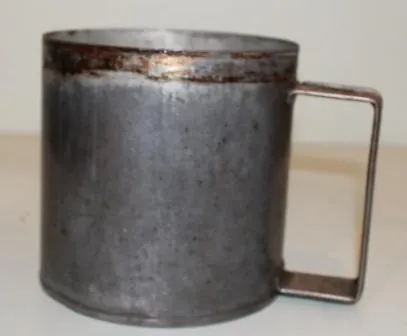
How much did a quartilho hold?

Olive oil measure L 95 — two litres
ⓘ

Olive oil measure L 95 — two litres

Source: Museu das Terras de Basto

View source

Photograph date not stated.

Individual photographer and reuse licence not stated by the source.

Request removal or correct the photo credit

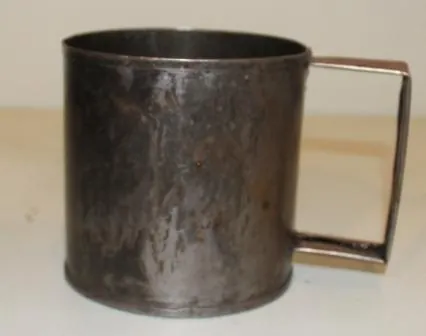
One-litre olive oil measure L 96
ⓘ

One-litre olive oil measure L 96

Source: Museu das Terras de Basto

View source

Photograph date not stated.

Individual photographer and reuse licence not stated by the source.

Request removal or correct the photo credit

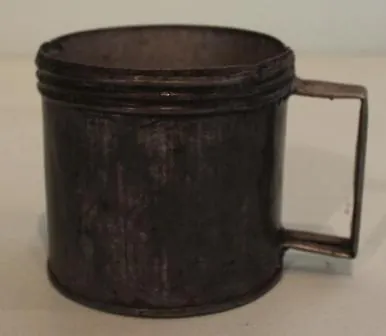
Half-litre olive oil measure L 97
ⓘ

Half-litre olive oil measure L 97

Source: Museu das Terras de Basto

View source

Photograph date not stated.

Individual photographer and reuse licence not stated by the source.

Request removal or correct the photo credit

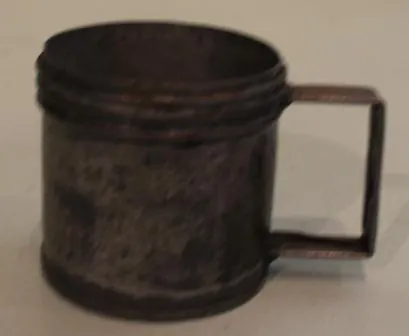
Quarter-litre measure L 98
ⓘ

Quarter-litre measure L 98

Source: Museu das Terras de Basto

View source

Photograph date not stated.

Individual photographer and reuse licence not stated by the source.

Request removal or correct the photo credit

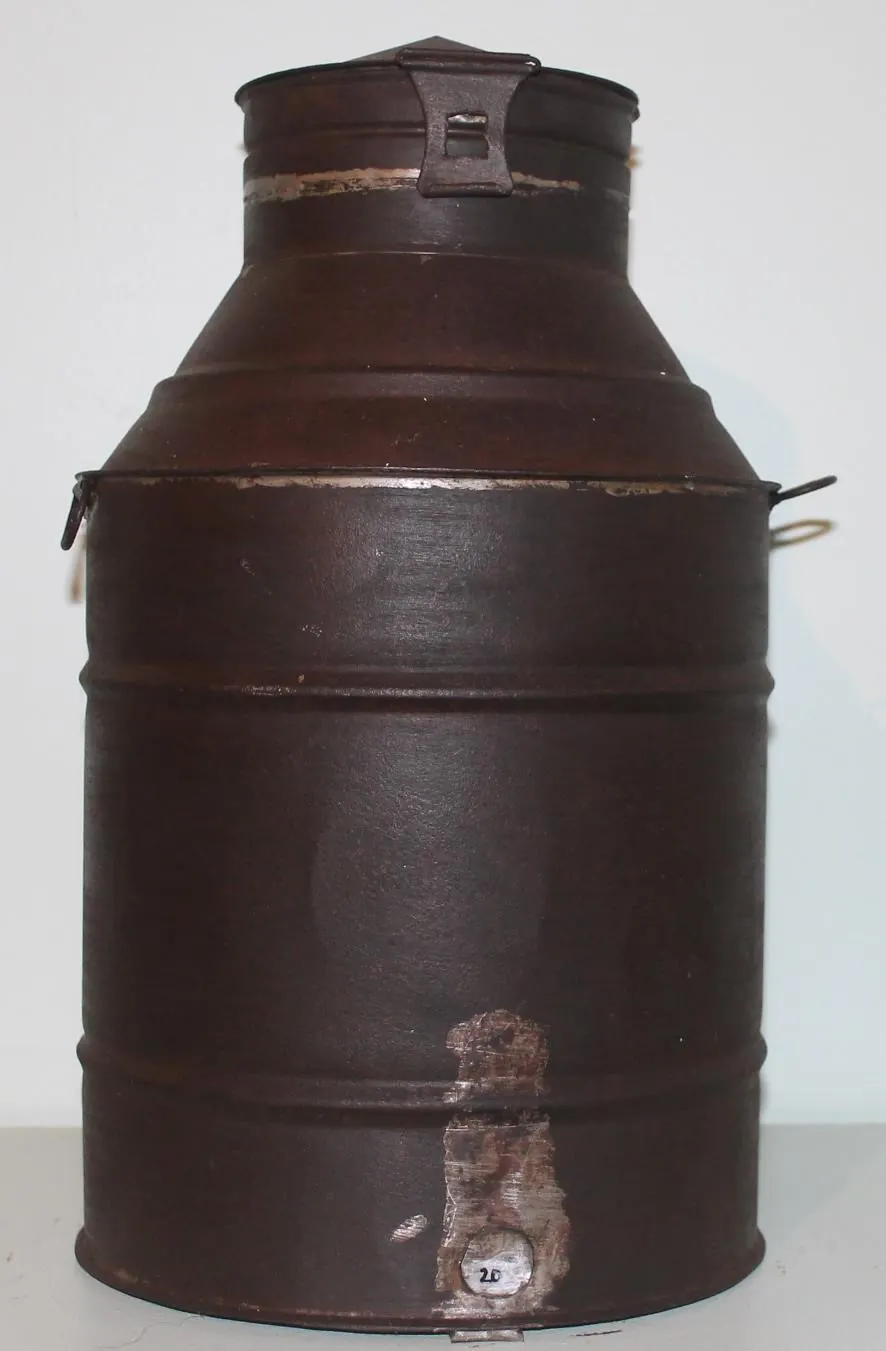
Olive oil measure L 93 — ten litres
ⓘ

Olive oil measure L 93 — ten litres

Source: Museu das Terras de Basto

View source

Photograph date not stated.

Individual photographer and reuse licence not stated by the source.

Request removal or correct the photo credit

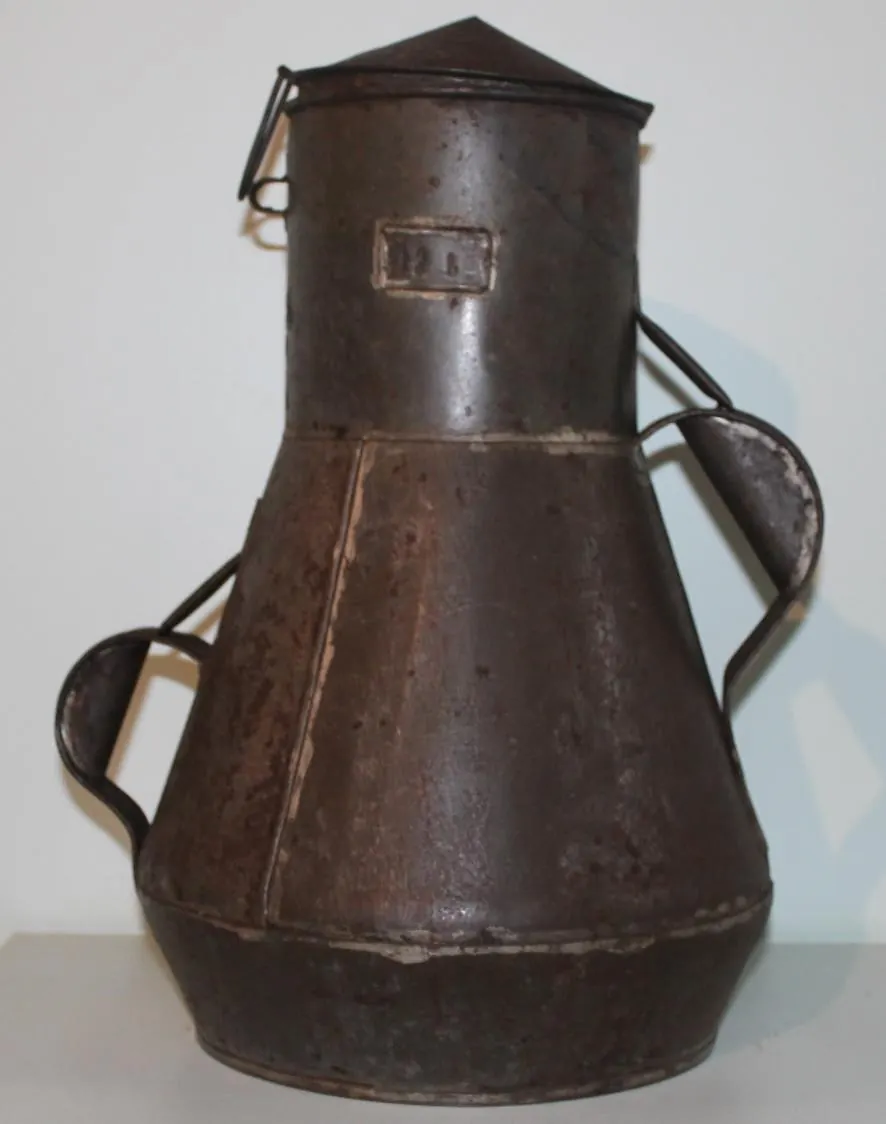
Olive oil measure L 92 — five litres
ⓘ

Olive oil measure L 92 — five litres

Source: Museu das Terras de Basto

View source

Photograph date not stated.

Individual photographer and reuse licence not stated by the source.

Request removal or correct the photo credit

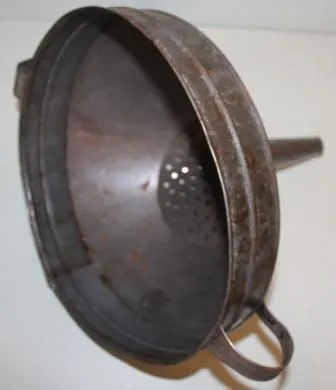
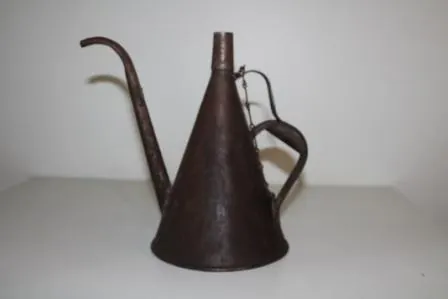
Olive oil funnel L 103
ⓘ

Olive oil funnel L 103

Source: Museu das Terras de Basto

View source

Photograph date not stated.

Individual photographer and reuse licence not stated by the source.

Request removal or correct the photo credit

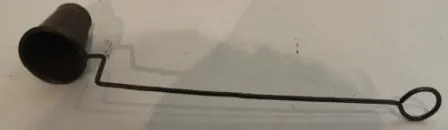
Olive oil scoop L 2
Olive oil scoop L 2
ⓘ

Olive oil scoop L 2

Source: Museu das Terras de Basto

View source

Photograph date not stated.

Individual photographer and reuse licence not stated by the source.

Request removal or correct the photo credit

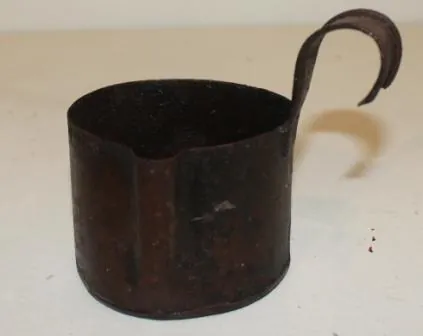
Olive oil tasting ladle L 1
ⓘ

Olive oil tasting ladle L 1

Source: Museu das Terras de Basto

View source

Photograph date not stated.

Individual photographer and reuse licence not stated by the source.

Request removal or correct the photo credit

Containers were also tools for measuring.

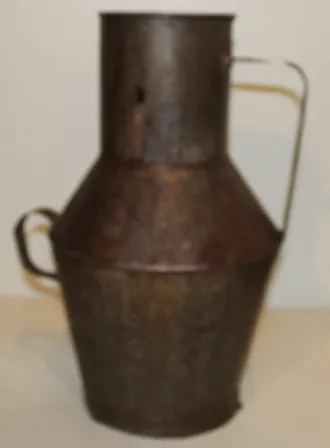
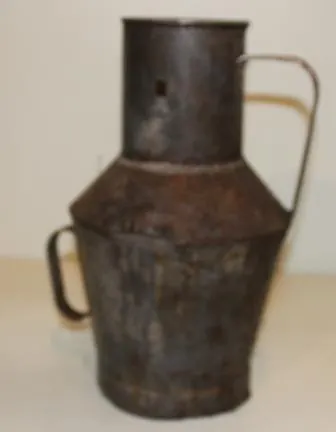
In the Museum’s tinsmithing inventory, a set of olive-oil measures includes a two-litre canada, a litre measure, a half-litre quartilho and a quarter-litre meio quartilho. These capacities belong to the documented pieces; they do not mean that old measures were the same in every region.

Try reading the pieces as a set: two quartilhos make one litre; four fill the canada recorded here. Moving between containers changes the number of fills, not the total quantity. The diagram lets you compare these relationships before following the olive oil to its carrying container and the piece used to serve it at the table.

FROM MEIO QUARTILHO TO CANADA

Compare the bars and open each measure to discover an equivalent.

  1. Meio quartilho · 0.25 L

    L 98: Four of these measures make one litre.

  2. Quartilho · 0.5 L

    L 97: Two quartilhos make one litre.

  3. Litre · 1 L

    L 96: Two litres equal the canada in this set.

  4. Canada · 2 L

    L 95: Eight meio quartilhos fill this capacity.

Capacities of pieces L95–L98 in the Museum inventory. Bars share one scale; they do not represent the containers’ size or shape. These values are not a universal conversion of historical measures.
Source and context

Basto Land Museum — Latoaria, Teresa Soeiro text and inventory of pieces

Accessed: . Editorial summary; the date of consultation is not the date of the facts.

Back to index ↑
Museu das Terras de Basto collection · carrying olive oil

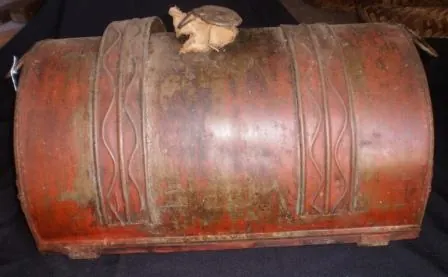
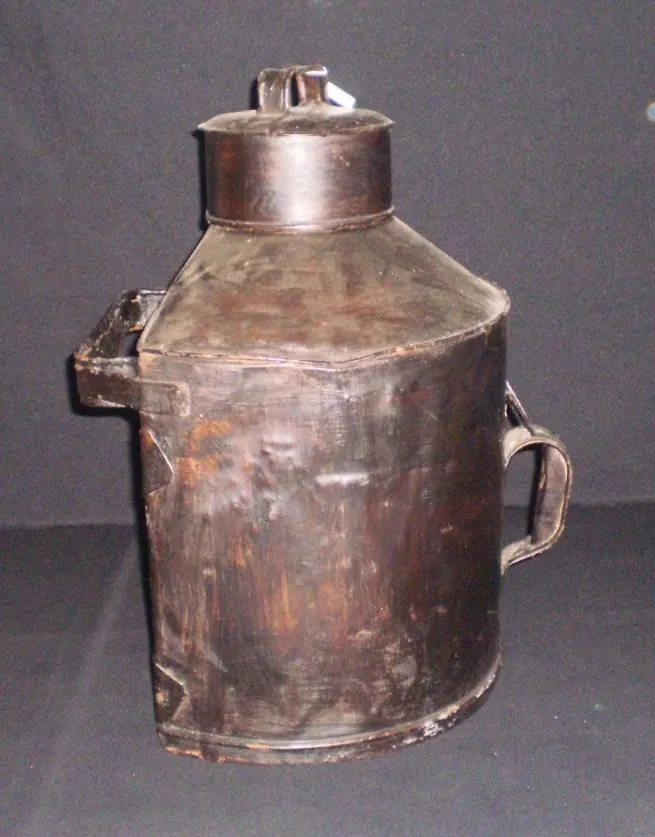
Olive oil travelled in this case

Olive oil case MTB 341 (2/2)
ⓘ

Olive oil case MTB 341 (2/2)

Source: Museu das Terras de Basto

View source

Photograph date not stated.

Individual photographer and reuse licence not stated by the source.

Request removal or correct the photo credit

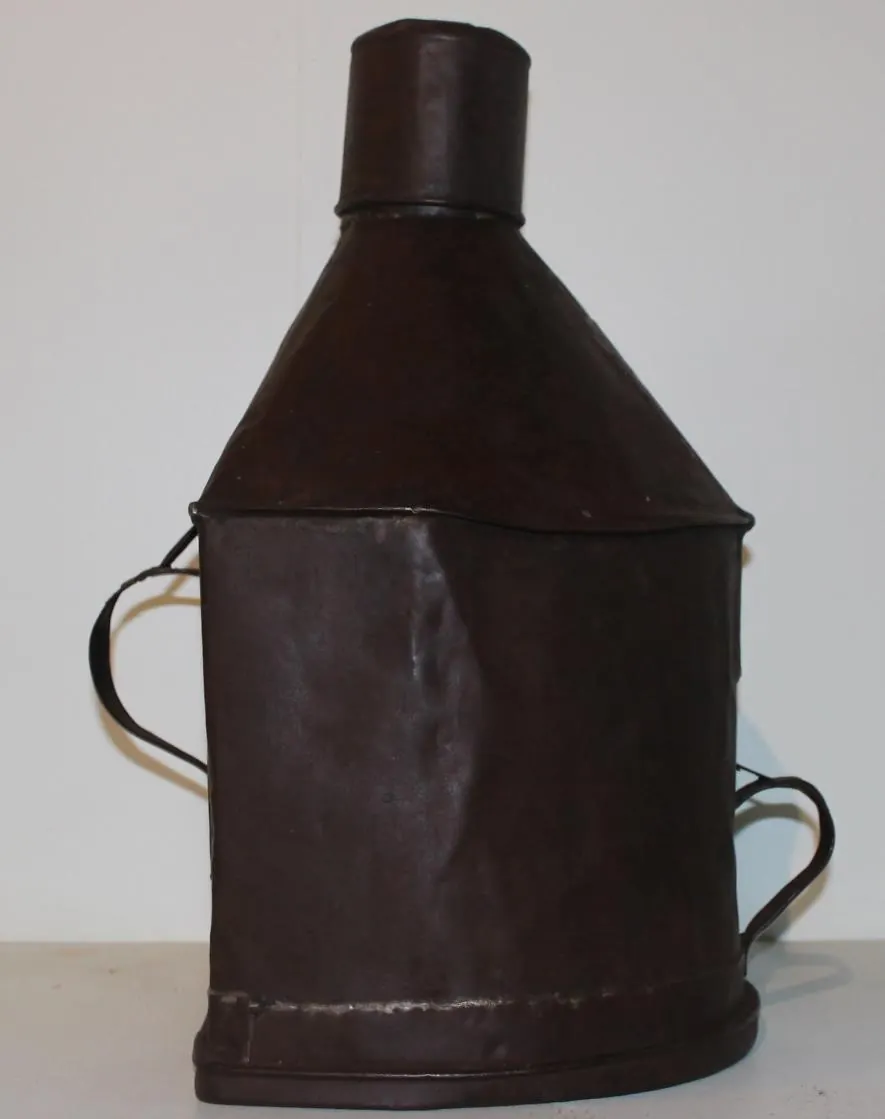
Olive oil container L 102
ⓘ

Olive oil container L 102

Source: Museu das Terras de Basto

View source

Photograph date not stated.

Individual photographer and reuse licence not stated by the source.

Request removal or correct the photo credit

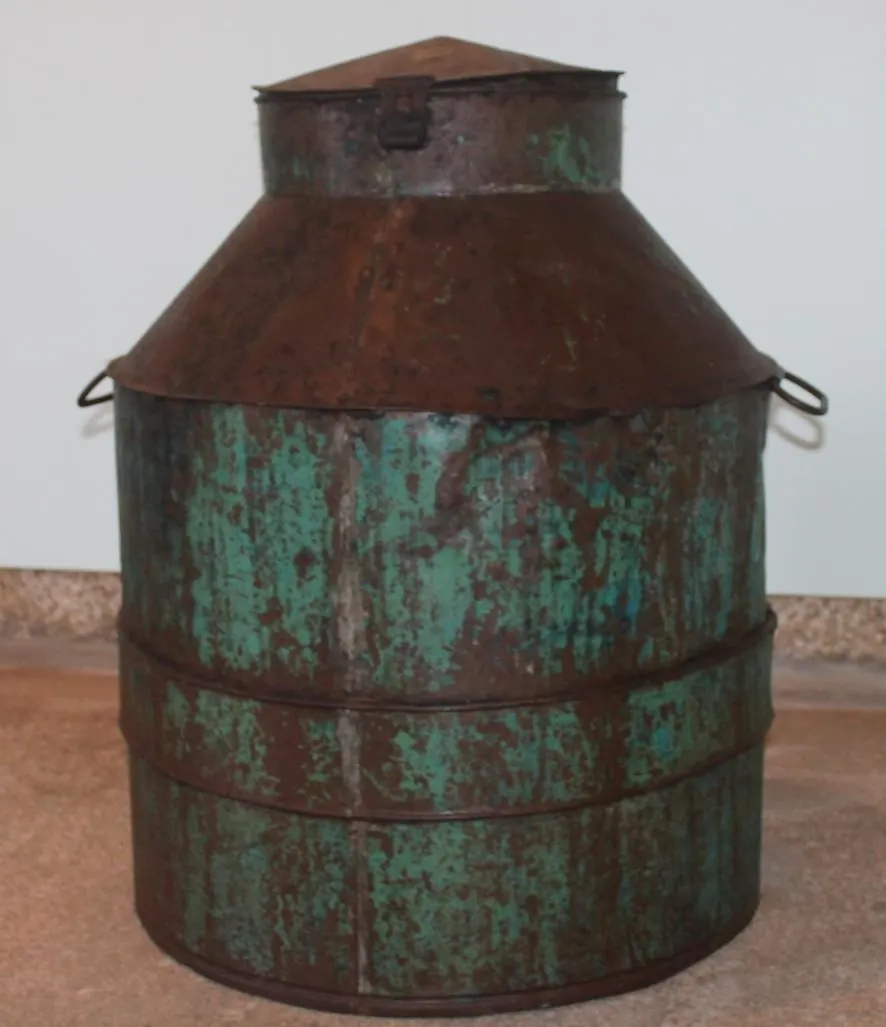
Olive oil container L 15
ⓘ

Olive oil container L 15

Source: Museu das Terras de Basto

View source

Photograph date not stated.

Individual photographer and reuse licence not stated by the source.

Request removal or correct the photo credit

Olive oil container L 20
ⓘ

Olive oil container L 20

Source: Museu das Terras de Basto

View source

Photograph date not stated.

Individual photographer and reuse licence not stated by the source.

Request removal or correct the photo credit

Olive oil container L 42
ⓘ

Olive oil container L 42

Source: Museu das Terras de Basto

View source

Photograph date not stated.

Individual photographer and reuse licence not stated by the source.

Request removal or correct the photo credit

Olive oil container MTB 372
ⓘ

Olive oil container MTB 372

Source: Museu das Terras de Basto

View source

Photograph date not stated.

Individual photographer and reuse licence not stated by the source.

Request removal or correct the photo credit

An object’s name does not always reveal its contents.

Case MTB 341 (2/2), recorded by the Museu das Terras de Basto, was used to carry olive oil. It combines painted sheet zinc and wood; the lid includes cork wrapped in hessian. The paint is rust red. Imagine it beside a travel suitcase: materials, closure and function tell different stories. The inventory does not confirm where the piece is displayed today.

Source and context

Basto Land Museum — Latoaria, inventory of objects

Accessed: . Editorial summary; the date of consultation is not the date of the facts.

Back to index ↑
Refojos · inventoried heritage

Olive oil had a table vessel too

Oil cruet MSRM 88 — inventory presented by the Terras de Basto Museum.
Oil cruet MSRM 88
ⓘ

Oil cruet MSRM 88 — inventory presented by the Terras de Basto Museum.

Source: Museu das Terras de Basto

View source

Photograph date not stated.

Individual photographer and reuse licence not stated by the source.

Request removal or correct the photo credit

From carrying case to cruet, the container changes with the task.

Cruet MSRM88, recorded as belonging to the Igreja de São Miguel de Refojos, is described by the Museum as a metal piece for serving olive oil at the table. The 2016 record distinguishes that function from carrying or measuring. This is an inventory description: it neither confirms the piece’s current display nor allows a particular meal to be reconstructed.

One way to explore the collection is to follow the same product through different tasks: measuring, carrying and serving. The cruet belongs to the serving stage; the measures and olive-oil case let you continue the comparison.

The same product, three tasks

Open an option and choose the story.

  1. Measure: how much does it fit?How much was in a quarter? →
  2. Transport: a different suitcaseIn this suitcase I traveled olive oil →
  3. Fall back until processing in the millFrom Petimão to olive oil press →
Choose a story to continue. Each reading preserves its time, place and source.
Source and context

Basto Land Museum — Latoaria in Cabeceiras de Basto V (18/01/2016), L63, L18 and MSRM88

Accessed: . Editorial summary; the date of consultation is not the date of the facts.

Back to index ↑
Pedraça · testimony collected in March 2011

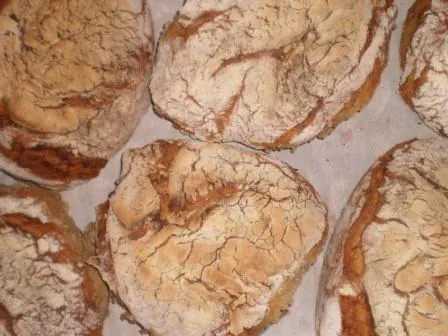
This broa blends rye and wheat

The mixed-grain bread after baking — mixed-grain bread sequence documented by the Museum in Recovos, Pedraça.
ⓘ

The mixed-grain bread after baking — mixed-grain bread sequence documented by the Museum in Recovos, Pedraça.

Source: Museu das Terras de Basto

View source

Photograph date not stated.

Individual photographer and reuse licence not stated by the source.

Request removal or correct the photo credit

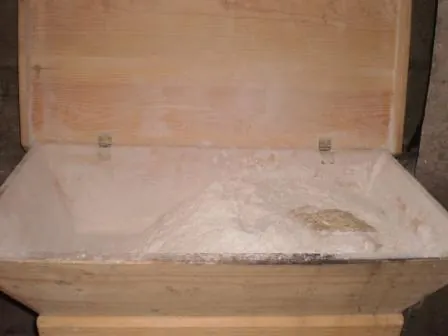
Flour and a portion of dough in the kneading trough — mixed-grain bread sequence documented by the Museum in Recovos, Pedraça.
ⓘ

Flour and a portion of dough in the kneading trough — mixed-grain bread sequence documented by the Museum in Recovos, Pedraça.

Source: Museu das Terras de Basto

View source

Photograph date not stated.

Individual photographer and reuse licence not stated by the source.

Request removal or correct the photo credit

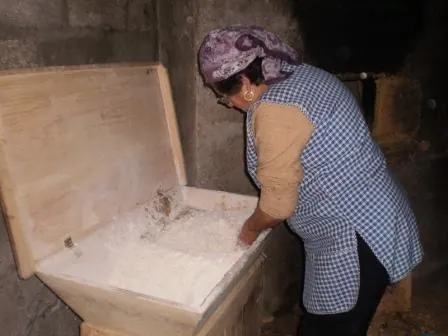
Preparing dough in the kneading trough — mixed-grain bread sequence documented by the Museum in Recovos, Pedraça.
ⓘ

Preparing dough in the kneading trough — mixed-grain bread sequence documented by the Museum in Recovos, Pedraça.

Source: Museu das Terras de Basto

View source

Photograph date not stated.

Individual photographer and reuse licence not stated by the source.

Request removal or correct the photo credit

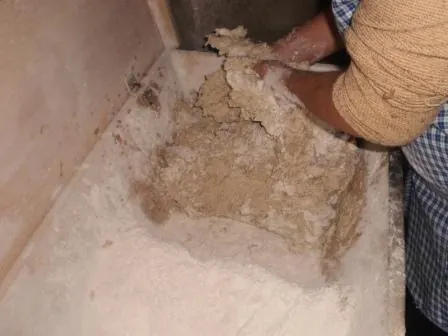
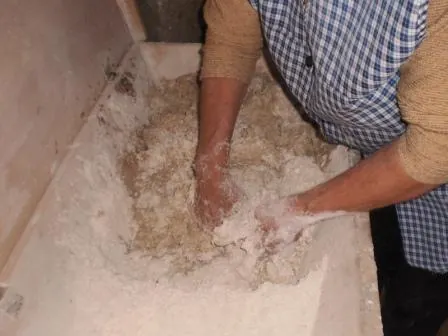
Working the dough by hand — mixed-grain bread sequence documented by the Museum in Recovos, Pedraça.
ⓘ

Working the dough by hand — mixed-grain bread sequence documented by the Museum in Recovos, Pedraça.

Source: Museu das Terras de Basto

View source

Photograph date not stated.

Individual photographer and reuse licence not stated by the source.

Request removal or correct the photo credit

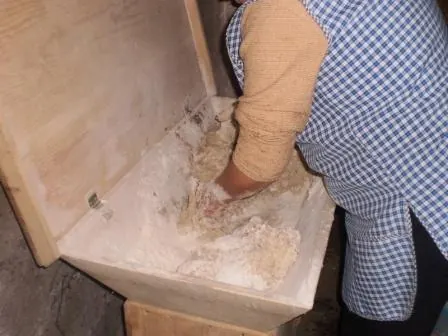
Kneading in the wooden trough — mixed-grain bread sequence documented by the Museum in Recovos, Pedraça.
ⓘ

Kneading in the wooden trough — mixed-grain bread sequence documented by the Museum in Recovos, Pedraça.

Source: Museu das Terras de Basto

View source

Photograph date not stated.

Individual photographer and reuse licence not stated by the source.

Request removal or correct the photo credit

A closer look at dough preparation — mixed-grain bread sequence documented by the Museum in Recovos, Pedraça.
ⓘ

A closer look at dough preparation — mixed-grain bread sequence documented by the Museum in Recovos, Pedraça.

Source: Museu das Terras de Basto

View source

Photograph date not stated.

Individual photographer and reuse licence not stated by the source.

Request removal or correct the photo credit

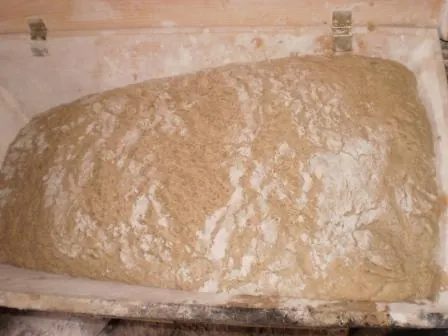
Dough in the trough before baking — mixed-grain bread sequence documented by the Museum in Recovos, Pedraça.
ⓘ

Dough in the trough before baking — mixed-grain bread sequence documented by the Museum in Recovos, Pedraça.

Source: Museu das Terras de Basto

View source

Photograph date not stated.

Individual photographer and reuse licence not stated by the source.

Request removal or correct the photo credit

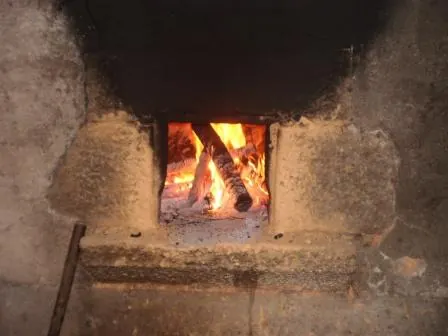
Fire in the wood-fired oven — mixed-grain bread sequence documented by the Museum in Recovos, Pedraça.
ⓘ

Fire in the wood-fired oven — mixed-grain bread sequence documented by the Museum in Recovos, Pedraça.

Source: Museu das Terras de Basto

View source

Photograph date not stated.

Individual photographer and reuse licence not stated by the source.

Request removal or correct the photo credit

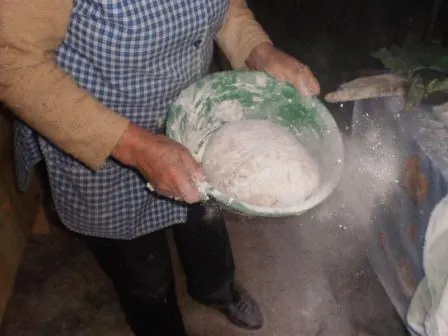
Shaping the loaf in a bowl — mixed-grain bread sequence documented by the Museum in Recovos, Pedraça.
ⓘ

Shaping the loaf in a bowl — mixed-grain bread sequence documented by the Museum in Recovos, Pedraça.

Source: Museu das Terras de Basto

View source

Photograph date not stated.

Individual photographer and reuse licence not stated by the source.

Request removal or correct the photo credit

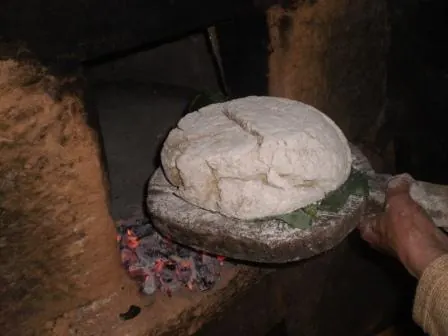
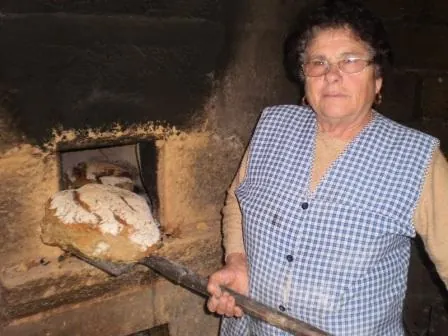
Placing the loaf in the oven with a peel — mixed-grain bread sequence documented by the Museum in Recovos, Pedraça.
ⓘ

Placing the loaf in the oven with a peel — mixed-grain bread sequence documented by the Museum in Recovos, Pedraça.

Source: Museu das Terras de Basto

View source

Photograph date not stated.

Individual photographer and reuse licence not stated by the source.

Request removal or correct the photo credit

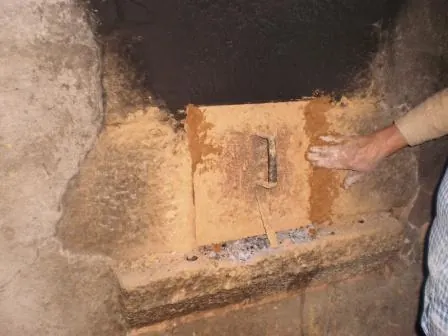
Closing the wood-fired oven — mixed-grain bread sequence documented by the Museum in Recovos, Pedraça.
ⓘ

Closing the wood-fired oven — mixed-grain bread sequence documented by the Museum in Recovos, Pedraça.

Source: Museu das Terras de Basto

View source

Photograph date not stated.

Individual photographer and reuse licence not stated by the source.

Request removal or correct the photo credit

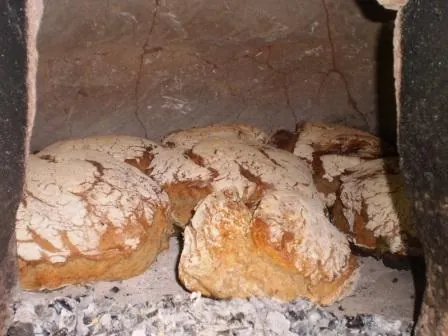
Baked loaves in the oven — mixed-grain bread sequence documented by the Museum in Recovos, Pedraça.
ⓘ

Baked loaves in the oven — mixed-grain bread sequence documented by the Museum in Recovos, Pedraça.

Source: Museu das Terras de Basto

View source

Photograph date not stated.

Individual photographer and reuse licence not stated by the source.

Request removal or correct the photo credit

The batch of bread and the work behind it — mixed-grain bread sequence documented by the Museum in Recovos, Pedraça.
ⓘ

The batch of bread and the work behind it — mixed-grain bread sequence documented by the Museum in Recovos, Pedraça.

Source: Museu das Terras de Basto

View source

Photograph date not stated.

Individual photographer and reuse licence not stated by the source.

Request removal or correct the photo credit

Not every memory of broa begins with maize.

In the recipe recorded by the Museu das Terras de Basto in March 2011, Maria da Conceição Gonçalves Mouta, who lived in Recovos, Pedraça, combined light rye, dark rye and wheat. The account distinguishes the maize broa she learned from her grandmother from the mixed-grain broa she began making later. Tradition changes even within one kitchen. In the same account, she says she no longer baked weekly: she made bread for celebrations and when she missed homemade broa. She also prepared it for Santa Marinha and for Christmas and maize-husking events at the Associação D. Nuno Álvares in Pedraça. Bread connected the kitchen with community gatherings.

The rhythm of baking also changed the leavening. When bread was baked frequently, dough was kept from the previous batch; in the preparation described in 2011, she used baker’s yeast prepared the day before. The change in ingredients accompanied a change in the calendar, from weekly bread to bread for gatherings.

Mixed-grain broa — a batch from Recovos

Tick off ingredients as you gather them. Checkmarks last only on this page. Any time shown for the reading journey is reading time, not cooking time.

Go to preparation ↓

Ingredients

Method at a glance

Back to ingredients ↑

Tick off each step as you finish it. You can untick it; checkmarks last only on this page.

Maria da Conceição Gonçalves Mouta; account recorded by Maria de Fátima Carvalho in March 2011. The source announces eight loaves, gives portions of 1.5 kg and does not explain the difference from the total weight of ingredients. The documented values are retained without recalculating the yield or adapting the recipe to a domestic oven.

Read the original recipe →

Choose another recipe →

The batch continues in other stories

Open an option and choose the story.

  1. What were you saving for next time?

    The dough of a batch connected the one-day bread to the next week.

    The bread kept the next batch →
  2. What was in before the bread?

    Compares another preparation associated with the oven and the cooking sequence.

    Before the bread, this cake would enter →
  3. When bread comes to dessert

    In the scrambles collected in Pedraça, the bread is added to the honey and dried fruits.

    The bread also made the feast →
It compares recipes and memories, maintaining the authorship and time of each collection.
Source and context

Museum — Mixed-grain bread, published 12/05/2011; fieldwork in March 2011 in Recovos, Pedraça
Accessed:

Basto Land Museum — food collections, 2010 and 2011
Accessed:

Editorial summary; the date of consultation is not the date of the facts.

Back to index ↑
Sub-region Basto · vine cultivation

Batoca: a grape variety that likes company

A name particularly associated with the Basto sub-region.

The wine commission describes Batoca as a grape variety grown mainly in Basto. It produces large bunches, but yields are irregular. It usually appears in white blends with Arinto or Azal and is rarely used on its own. A bottle can therefore bring together different varieties. This regional connection does not identify the varieties planted on a particular estate in Cabeceiras.

The profile describes a large, pale leaf with a reddish area where the veins begin. It gives a medium ripening time; Azal, by contrast, ripens late. Sharing a region does not mean sharing a calendar. That is why knowing several varieties makes the vineyard landscape more interesting than a simple patch of green.

Names travel too: the profile records Alvaraça in the Douro, Espadeiro Branco in Lousada and Sedouro or Sá Douro in the south of the region. These are not additional varieties in the blend, but names for Batoca in different places.

Compare three varieties of Basto

Open an option and choose the story.

  1. Arinto: names and curlsPé de Perdiz, but in the vineyard →
  2. Azal: green even when matureA ripe grape can continue green →
  3. The weather behind maturationSummer also chooses grapes →
Choose a clue: local names, calendar or caste combination.
Source and context

CVRVV — Technical data sheets of the varieties Batoca and Azal

Accessed: . Editorial summary; the date of consultation is not the date of the facts.

Back to index ↑
Sub-region Basto · characteristics of Azal

A ripe grape can still be green

With Azal, colour does not tell the whole story.

Azal is a late-ripening white grape variety adapted to dry, well-exposed land in the inland Vinho Verde region, including Basto. The technical profile describes compact bunches that retain a greenish colour even when ripe. Colour alone is not enough to decide whether harvest time has arrived.

The mature leaf is rounded and thick, with regular teeth and plenty of hairs on the underside. The bunch has a side branch described as a wing. These clues show why a variety’s description brings together leaves, bunches and stages of development rather than focusing only on grape colour.

Azal has a long growing cycle: the profile distinguishes early flowering from late ripening. One stage starting early does not mean all the others do too. The variety can be used alone or in blends with Arinto, Batoca and Loureiro; recognising a variety in the landscape and knowing a wine’s composition remain different questions.

One vineyard, several clues

Open an option and choose the story.

  1. Arinto and its local namesPé de Perdiz, but in the vineyard →
  2. Cheat: other leaf and other calendarCheat: a variety that likes company →
  3. The role of summer in BastoSummer also chooses grapes →
It compares names, leaves and maturation phases without identifying a portion by appearance.
Source and context

CVRVV — Technical data sheets of the varieties Batoca and Azal

Accessed: . Editorial summary; the date of consultation is not the date of the facts.

Back to index ↑
YOUR LOCAL GUIDE

What would you like to discover?

Take a closer look.