Discover Cabeceiras de BastoFree independent guide
ViveCabeceirasYOUR GUIDE TO CABECEIRAS
ENEnglish
SearchSaved
10 STORIES · CONTINUOUS READING

A kitchen, lots of voices

Ten stories, ten recipes and the names of those who shared them. Open the ingredients, copy what is missing and mark the steps while accompanying the preparation. The quantities omitted in the collections remain identified; each form connects to the original source.

All stories in the order of the route. You can print this page by the browser; sources and credits follow the reading.

Things to try6 activities · 10 interactive explorations · 6 questions · 10 recipes
Cabeceiras and neighboring municipalities · food memory

Maize the size of rice

Mílheros tell a story of rural food.

The Museum describes mílheros as maize crushed in a mill into small grains. In everyday meals, beans, cabbage shoots or cod bones could be added for flavour. Pork appeared on festive days or in households with more resources. This explains the distinction between “rich” and “poor” mílheros. The 2019 publication places this tradition in Cabeceiras and neighbouring municipalities.

In the Museum’s recipe for mílheros ricos, pork ribs, morcela, salpicão and linguiça accompany the grain. The difference between versions also helps us understand living conditions and occasions for eating them. The same ingredient could sustain a simple meal or form part of a more abundant table.

Mílheros ricos: the Museum’s method

Tick off ingredients as you gather them. Checkmarks last only on this page. Any time shown for the reading journey is reading time, not cooking time.

Go to preparation ↓

Ingredients

Method at a glance

Back to ingredients ↑

Tick off each step as you finish it. You can untick it; checkmarks last only on this page.

Summary of the recipe published by the Museum in 2019. No quantities, yield or times are defined. Maize appears in the description and steps but not in the original ingredient list.

Read the original recipe →

Have a photograph of this dish? Suggest a photo
Include the photographer’s name and the source. Contributions are reviewed before appearing on the website.

Choose another recipe →

A cereal, different transformations

Open an option and choose the story.

  1. From field to milling

    The Abadim utensils help follow the cereal between the field, milling and oven.

    Before the bread, there was a field →
  2. The preparation of the popes

    In Gondiães, white maize flour is part of a collective preparation documented in 2012.

    The popes begin before dawn →
  3. Mix cereals in dough

    In the recipe collected in Pedraça, the bread combines rye and wheat: the cereal changes, and also the processing.

    This bread mixture rye and wheat →
It continues for the people, the ingredients and the occasions described in the sources.
Source and context

Land Museum of Basto — Millions (2019)

Accessed: . Editorial summary; the date of consultation is not the date of the facts.

Back to index ↑
Pedraça · 2011 collection

Before the bread, this bolo went in

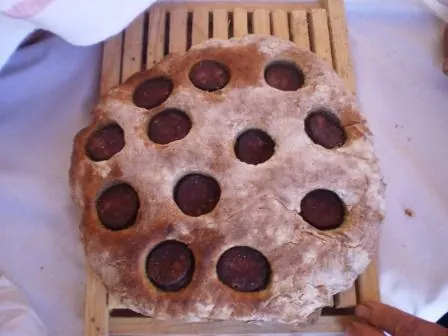
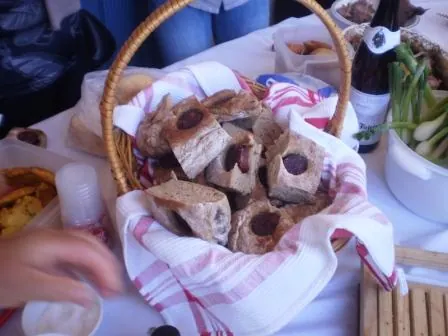
Bolo entre lenha in photographs accompanying the recipe published by the Museum in 2015.
ⓘ

Bolo entre lenha in photographs accompanying the recipe published by the Museum in 2015.

Source: Museu das Terras de Basto

View source

Photograph date not stated.

Individual photographer and reuse licence not stated by the source.

Request removal or correct the photo credit

Bolo entre lenha in photographs accompanying the recipe published by the Museum in 2015.
ⓘ

Bolo entre lenha in photographs accompanying the recipe published by the Museum in 2015.

Source: Museu das Terras de Basto

View source

Photograph date not stated.

Individual photographer and reuse licence not stated by the source.

Request removal or correct the photo credit

The same dough could have another destination.

In Pedraça, Maria da Conceição Mouta recalled a bolo made from the broa dough itself. It was topped with small sardines or chouriço and went into the oven before the loaves. More wood then had to be added.

The account recorded in 2011 and published by the Museum in 2015 connects the bolo’s name with the organisation of baking day. The recipe preserves the techniques of a traditional oven, to explore alongside the history of bread.

Bolo entre lenha: ingredients and techniques

Tick off ingredients as you gather them. Checkmarks last only on this page. Any time shown for the reading journey is reading time, not cooking time.

Go to preparation ↓

Ingredients

Method at a glance

Back to ingredients ↑

Tick off each step as you finish it. You can untick it; checkmarks last only on this page.

Maria da Conceição Mouta’s recollection, recorded in 2011. The preparation refers to a traditional oven and gives no temperature or adaptation for a domestic oven.

Read the original recipe →

Choose another recipe →

One batch, several gestures

Open an option and choose the story.

  1. What dough was the cake made from?This bread mixture rye and wheat →
  2. What was left for the next batch?The bread kept the next batch →
  3. How did you recognize the heat from the oven?The oven gave a sign →
Choose a step to know the bread, yeast and oven signals.
Source and context

Basto Land Museum — Cake between sardine or chorizo wood (2015)

Accessed: . Editorial summary; the date of consultation is not the date of the facts.

Back to index ↑
Refojos · kitchen memory collected by the Museum

Sunday was for cabidela

A recipe from Refojos also preserves a weekly custom.

Sunday was the day for cabidela in the kitchen described by Isabel Sousa, who was born and lived in Refojos. In the version she shared, chicken accompanies rice; onion, garlic, bay and parsley provide seasoning alongside white wine, blood and vinegar. The publication also preserves words used during preparation, such as estrugido and testo.

Conceição Magalhães recorded the recipe in 2013, and the Museum published it in October 2014. The mention of Sunday places the dish in a family calendar, but does not establish a rule for the whole municipality. This is the voice of an identified cook, with an occasion and her own way of describing what she made.

Cabidela: open Isabel’s recipe

Tick off ingredients as you gather them. Checkmarks last only on this page. Any time shown for the reading journey is reading time, not cooking time.

Go to preparation ↓

Ingredients

Method at a glance

Back to ingredients ↑

Tick off each step as you finish it. You can untick it; checkmarks last only on this page.

Isabel Sousa, Refojos, account recorded in 2013. No servings or quantities of rice, blood or vinegar are fixed. This is a summary of the preparation; consult the original account.

Read the original recipe →

Have a photograph of this dish? Suggest a photo
Include the photographer’s name and the source. Contributions are reviewed before appearing on the website.

Choose another recipe →

At the table of who told the recipe

Open an option and choose the story.

  1. Another testimony from Refojos

    Helena describes a party-related learning; Isabel recalls family Sunday.

    A recipe learned at parties →
  2. From meal to snack

    The collection of Ana Peneda, Arco de Baúlhe, holds another occasion and other words of cooking.

    Pataniscas also went to lunch →
  3. Who comes to know?

    In Pedraça, the collections identify the grandmother and mother-in-law as transmitters of different dishes.

    A recipe also has those who teach it →
Follow the testimonies and compare places, ingredients and occasions in the sources of each story.
Source and context

Basto Land Museum — The hanger was held on Sunday, publication of 10/10/2014

Accessed: . Editorial summary; the date of consultation is not the date of the facts.

Back to index ↑
Arco de Baúlhe · kitchen memory collected by the Museum

Pataniscas went along for the snack too

Ana Peneda shared a version from Arco de Baúlhe.

In the account recorded by Conceição Magalhães in 2014, Ana Peneda, who was born and lived in Arco de Baúlhe, describes cod pataniscas with eggs, wheat flour, parsley and onion. The Museum associates this preparation with snacks and also records a detail of vocabulary: the frying pan, sertã, was also called tacho. The memory of a recipe preserves ingredients, occasions and words.

Ana Peneda’s pataniscas

Tick off ingredients as you gather them. Checkmarks last only on this page. Any time shown for the reading journey is reading time, not cooking time.

Go to preparation ↓

Ingredients

Method at a glance

Back to ingredients ↑

Tick off each step as you finish it. You can untick it; checkmarks last only on this page.

Version recorded by Conceição Magalhães from Ana Peneda in Arco de Baúlhe in 2014. The source gives no yield or frying time. Oil appears in the steps although it is absent from the initial ingredient list.

Read the original recipe →

Have a photograph of this dish? Suggest a photo
Include the photographer’s name and the source. Contributions are reviewed before appearing on the website.

Choose another recipe →

A snack also has context

Open an option and choose the story.

  1. Another meal memory

    Compare a preparation taken to the snack with another memory of this pause to eat.

    A snack with bread still hot →
  2. When you had your first meal

    The word lunch could designate a meal at nine in the morning, linked to agricultural work.

    Lunch at nine in the morning? →
  3. Who taught how to cook

    Recipes also allow you to follow those who taught, those who remembered and those who recorded the testimony.

    A recipe also has those who teach it →
It continues for the people, the ingredients and the occasions described in the sources.
Source and context

Basto Land Museum — Pataniscas also went to lunch, published in 26/08/2014

Accessed: . Editorial summary; the date of consultation is not the date of the facts.

Back to index ↑
Refojos · kitchen memory collected by the Museum

A recipe learned at celebrations

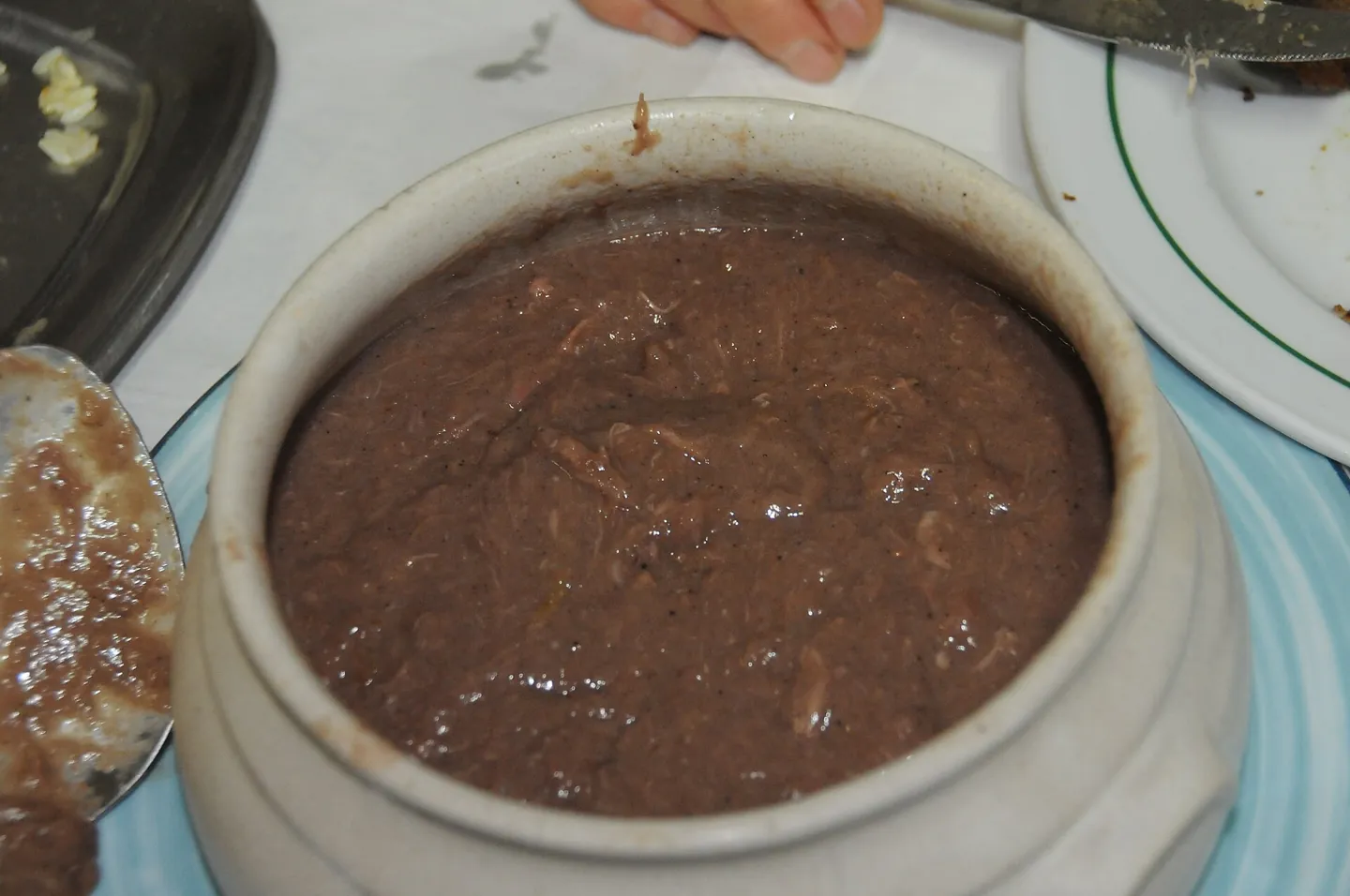
Papas de sarrabulho in a dish. Illustration of the food, not Maria Helena’s recipe.
Joseolgon
ⓘ

Papas de sarrabulho in a dish. Illustration of the food, not Maria Helena’s recipe.

Photography: Joseolgon · CC BY-SA 4.0

View source

Date given at source: .

Request removal or correct the photo credit

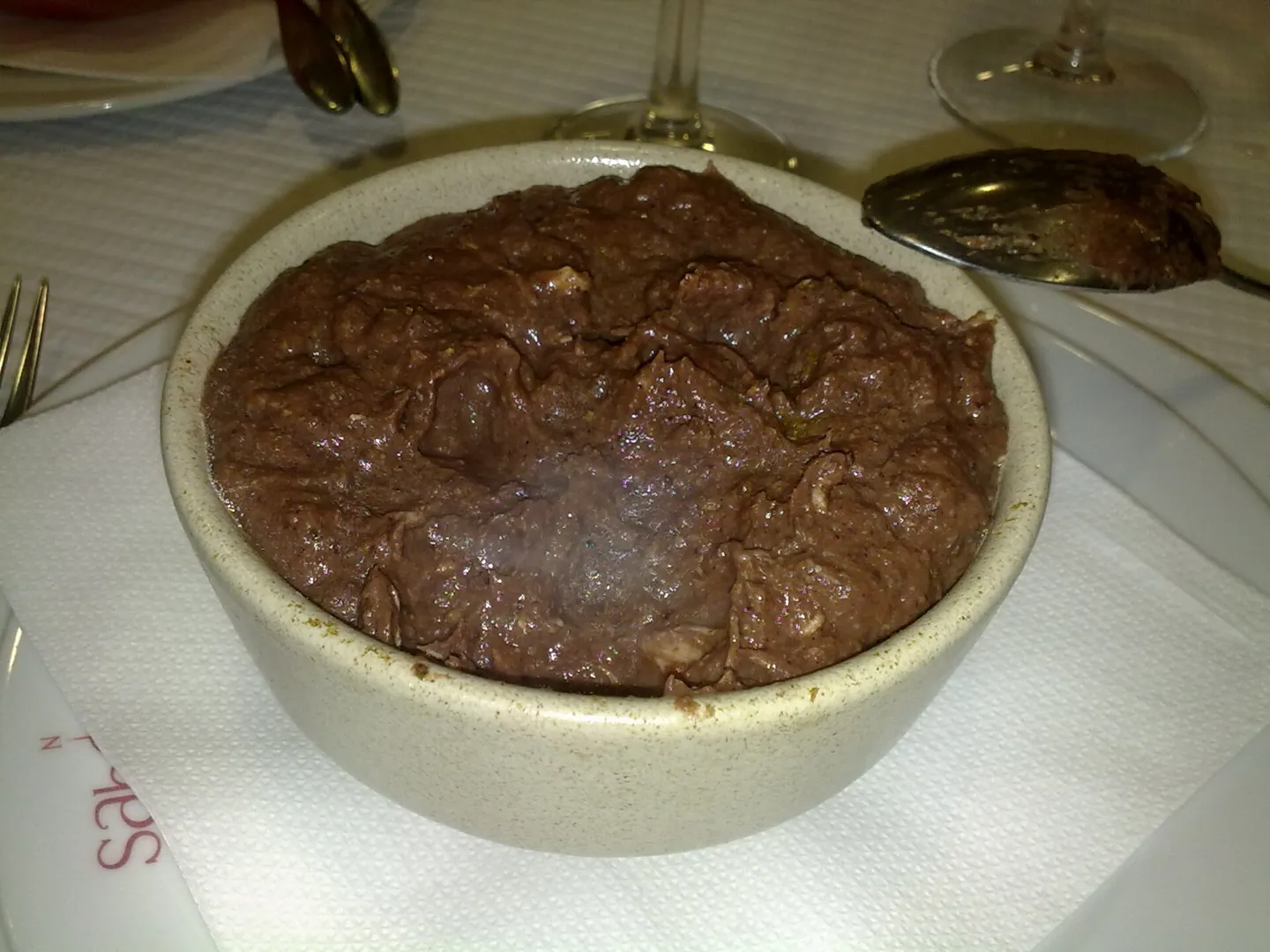
Papas de sarrabulho photographed near Porto. Comparison image, not a meal in Cabeceiras.
Adriao
ⓘ

Papas de sarrabulho photographed near Porto. Comparison image, not a meal in Cabeceiras.

Photography: Adriao · CC BY3.0

View source

Date given at source: .

Request removal or correct the photo credit

Papas de sarrabulho also tell us how knowledge is passed on.

Maria Helena da Mota Lopes da Silva Almeida, who had lived in Refojos since childhood, said she learned to make these papas at the beginning of the twenty-first century. Her teacher was a cook from Porto who came to Cabeceiras to work at baptisms and weddings. Celebrations were also places to learn techniques and recipes.

The version recorded in June 2011 combines different meats, maize flour, cooked pork blood, red wine and cumin. The account places its preparation in winter, up to the end of March. The publication, from July of the same year, documents how knowledge was passed on and the usual season for the dish; it does not describe a menu available today.

The account distinguishes shredding the meats from finely chopping the heart, tongue and liver. Flour, wine and cooked blood form a separate mixture. These details show that a recipe also preserves movements and textures.

To collect a kitchen memory, first ask who taught the recipe and on what occasions it was made. Then ask for a gesture that is difficult to explain in writing. Record the speaker’s words and the conversation date: a family recipe gains context when it preserves the voice passing it on.

Sarrabulho: open Helena’s recipe

Tick off ingredients as you gather them. Checkmarks last only on this page. Any time shown for the reading journey is reading time, not cooking time.

Go to preparation ↓

Ingredients

Method at a glance

Back to ingredients ↑

Tick off each step as you finish it. You can untick it; checkmarks last only on this page.

Helena Almeida, Refojos, June 2011: five people. Quantities follow the account; several seasonings are left to the cook’s taste.

Read the original recipe →

Choose another recipe →

The word popes holds differences

Open an option and choose the story.

  1. The popes of the feast of Gondiães

    Corn flour also appears here, but the collective preparation described is not sarrabulho.

    The popes begin before dawn →
  2. When corn stays on small grains

    Compares the form of the cereal: in the mills, the mill leaves small grains; in these flour enters.

    Maize with rice size →
  3. Another recipe, another occasion

    Elizabeth's memory sits on Sunday, while Helena associates these popes with winter.

    The hanger was held on Sunday →
Follow the testimonies and compare places, ingredients and occasions in the sources of each story.
Source and context

Basto Land Museum — A recipe learned at parties, publication of 06/07/2011
Consultations: ,

Editorial summary; the date of consultation is not the date of the facts.

Back to index ↑
Pedraça · testimony collected in 2011

Bread joined the celebration too

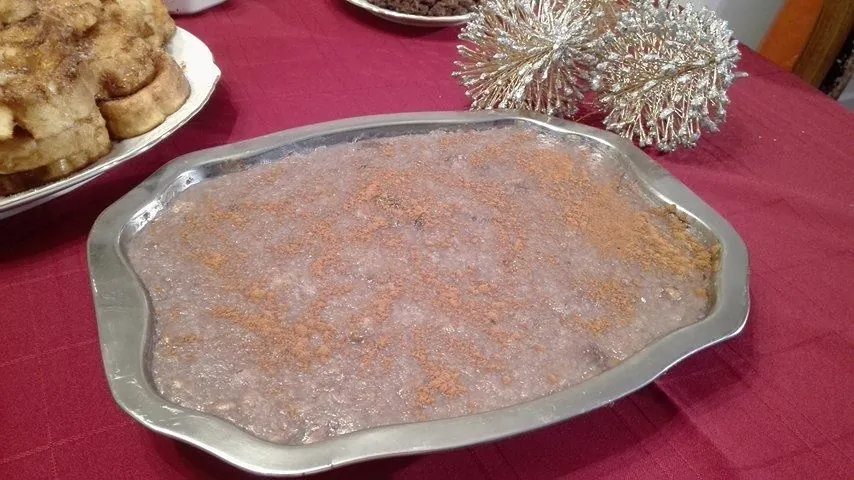
Mexidos: photograph accompanying the recipe recorded in Pedraça and published by the Museum.
ⓘ

Mexidos: photograph accompanying the recipe recorded in Pedraça and published by the Museum.

Source: Museu das Terras de Basto

View source

Photograph date not stated.

Individual photographer and reuse licence not stated by the source.

Request removal or correct the photo credit

With mexidos, dessert takes shape in the cooking pot.

A bread dessert for Christmas and New Year, with honey, nuts, dried fruit and Port wine.

Fátima Magalhães recorded this version in 2011 from Maria da Conceição Gonçalves Mouta, who was born in Cavez and lived in Pedraça. The Museum published it in 2016.

The order of preparation gives bread the leading role: added in small pieces after the nuts and dried fruit, it thickens the mixture as it is stirred. Lemon peel and a cinnamon stick join the water and honey at the beginning; ground cinnamon finishes the dessert on the serving dish.

This version keeps different kinds of measurements: litres, a small glass and quantities left to the cook’s taste. The recipe preserves that distinction. The account gives no serving numbers or weights for every ingredient, so those gaps have been retained instead of guessing precise measurements.

Mexidos: open the recorded recipe

Tick off ingredients as you gather them. Checkmarks last only on this page. Any time shown for the reading journey is reading time, not cooking time.

Go to preparation ↓

Ingredients

Method at a glance

Back to ingredients ↑

Tick off each step as you finish it. You can untick it; checkmarks last only on this page.

Maria da Conceição Mouta’s version, recorded in 2011. The source leaves several quantities to the cook’s taste and does not give a number of servings.

Read the original recipe →

Choose another recipe →

Three Ways to Bring Bread to the Feast

Open an option and choose the story.

  1. Honey in another dessert

    Compares the preparation of French toast with the bread that thickens the scrambled.

    Honey also sweetens French toast →
  2. Another voice, another place

    The collection of Outeiro allows to discover a variant with red wine.

    The red wine also reached the sweet →
  3. The kitchen is also part of the party

    The utensils and the place of the fire hold another dimension of the food memory.

    At Christmas, he turned to the fireplace →
It compares recipes and memories, maintaining the authorship and time of each collection.
Source and context

Land Museum of Basto — Scrambled (2016; collection of 2011)

Accessed: . Editorial summary; the date of consultation is not the date of the facts.

Back to index ↑
Refojos · family memory published in 2020

A recipe that crossed continents

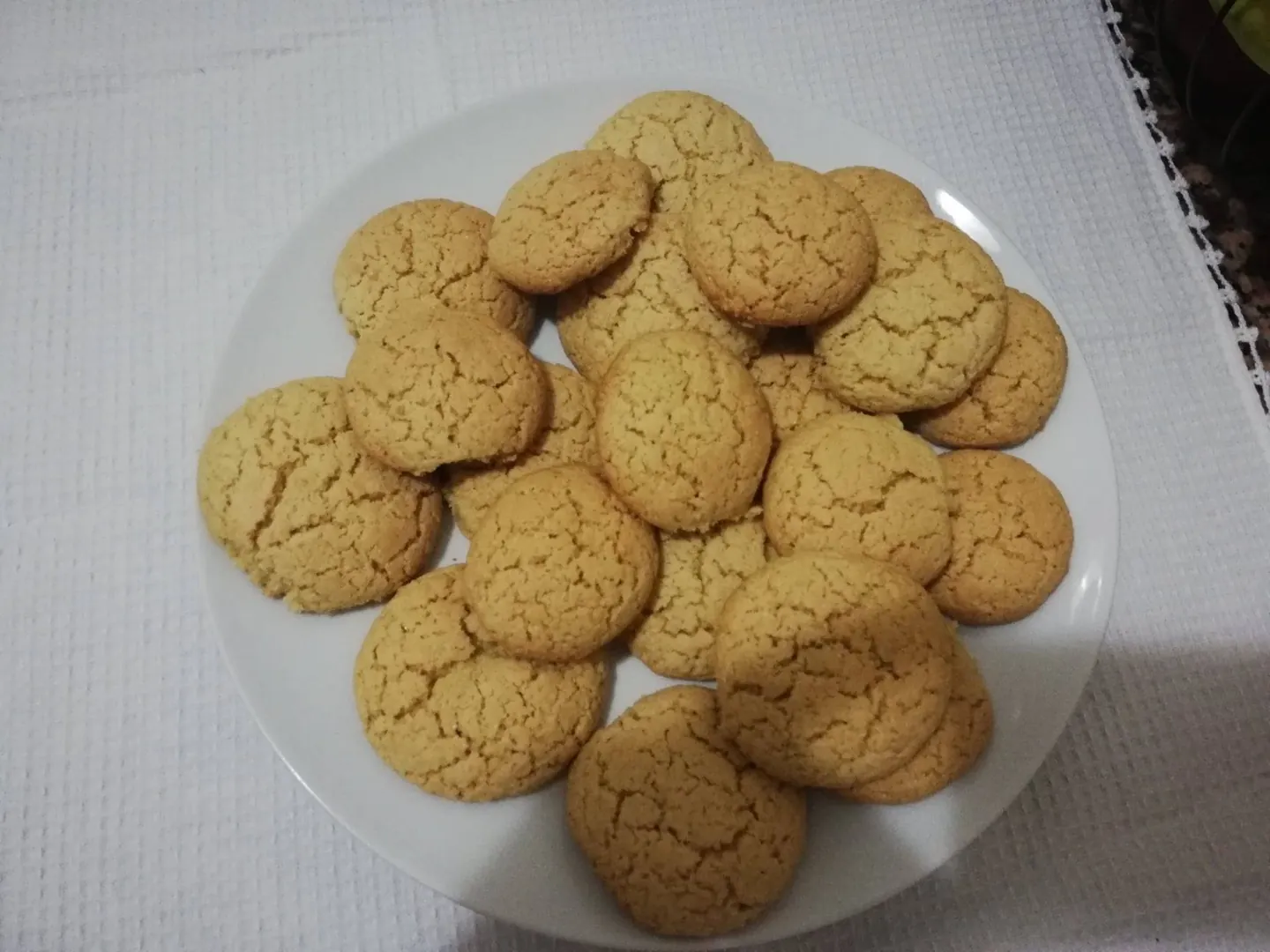
The lemon biscuits arrived with a family story.

Alcina Teixeira found recipes from Cabeceiras in a Portuguese magazine during her years in Mozambique. The biscuits reached the Museum through her son Mário, who lived in Refojos, and were published in 2020.

The family also kept the recipes for honey cake and cassianos. Comparing them lets us follow knowledge on its journey from a magazine to a family kitchen and then to the wider public.

Lemon biscuits: the preserved recipe

Tick off ingredients as you gather them. Checkmarks last only on this page. Any time shown for the reading journey is reading time, not cooking time.

Go to preparation ↓

Ingredients

Method at a glance

Back to ingredients ↑

Tick off each step as you finish it. You can untick it; checkmarks last only on this page.

Recipe supplied by Alcina Teixeira. Olive oil is listed among the ingredients, but the text omits when to add it. No oven temperature, baking time or quantity of flour is given.

Read the original recipe →

Have a photograph of this dish? Suggest a photo
Include the photographer’s name and the source. Contributions are reviewed before appearing on the website.

Choose another recipe →

Three sweets, a family memory

Open an option and choose the story.

  1. Honey and spices in a chimney formHoney meets cinnamon and fennel →
  2. Lemon and butter in small ballsCassians: small shapes, a long journey →
  3. How do you transmit a recipe?A recipe also has those who teach it →
It compares ingredients, shapes and details kept by Alcina Teixeira.
Source and context

Basto Land Museum — Lemon biscuits Cabeceiras (2020)

Accessed: . Editorial summary; the date of consultation is not the date of the facts.

Back to index ↑
Refojos · February 2016 collection

Honey meets cinnamon and aniseed

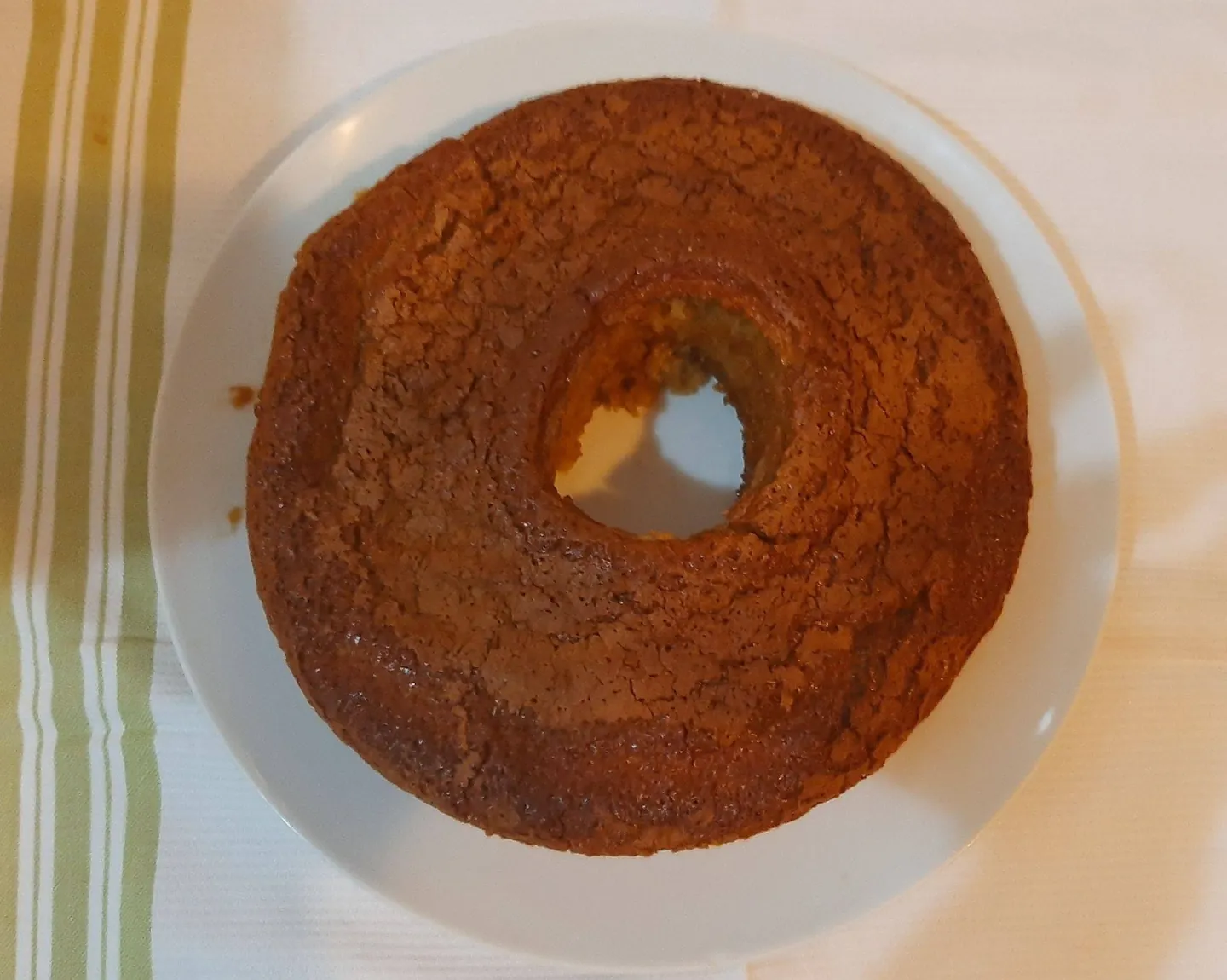
Honey cake in the Terras de Basto Museum’s publication.
ⓘ

Honey cake in the Terras de Basto Museum’s publication.

Source: Museu das Terras de Basto

View source

Photograph date not stated.

Individual photographer and reuse licence not stated by the source.

Request removal or correct the photo credit

A recipe has ingredients, and it also has a voice.

Alcina Teixeira, who lived in Refojos, shared this cake in 2016. She remembered finding it in a magazine by Maria Odette Cortes Valente around 1966, when she was living in Mozambique.

Honey, cinnamon and aniseed meet in this family memory. The age recalled by the interviewee does not establish a proven date of origin.

The account identifies a family practice: Alcina made cakes for celebrations and looked for recipes in magazines. The cake combines honey with sugar and includes olive oil, milk, walnuts and spices. The ring tin belongs to the preparation as recorded. These details help identify this version without presenting it as the only way of making honey cake in Cabeceiras.

Honey cake: open the recorded recipe

Tick off ingredients as you gather them. Checkmarks last only on this page. Any time shown for the reading journey is reading time, not cooking time.

Go to preparation ↓

Ingredients

Method at a glance

Back to ingredients ↑

Tick off each step as you finish it. You can untick it; checkmarks last only on this page.

The publication lists walnuts but does not say when to add them. It also gives no oven temperature or baking time. These gaps in the account have been retained.

Read the original recipe →

Choose another recipe →

A memory, lots of sweets

Open an option and choose the story.

  1. Follow the journey of Alcina

    The chronology links Mozambique, the magazine and family sharing in Cabeceiras.

    Cassians: small shapes, a long journey →
  2. Swap the honey for the lemon

    Another recipe from the same set of memories allows you to compare ingredients and shapes.

    A recipe that has crossed continents →
  3. Return to the landscape of honey

    Discover the link between honey and vegetation, without assigning a floral origin to the honey of this recipe.

    The landscape also reaches the honey →
It compares recipes and memories, maintaining the authorship and time of each collection.
Source and context

Basto Land Museum — Honey cake Cabeceiras de Basto (2016)

Accessed: . Editorial summary; the date of consultation is not the date of the facts.

Back to index ↑
Refojos · family memory published in 2020

Cassianos: small shapes, a long journey

Cassianos from Cabeceiras in the Museum’s December 2020 publication.
ⓘ

Cassianos from Cabeceiras in the Museum’s December 2020 publication.

Source: Museu das Terras de Basto

View source

Photograph date not stated.

Individual photographer and reuse licence not stated by the source.

Request removal or correct the photo credit

Another sweet from Cabeceiras preserved in Alcina’s memories.

Alcina Teixeira shared these small cakes through Mário Teixeira, who lived in Refojos. The Museum’s 2020 publication connects them with recipes she found in a Portuguese magazine during her years in Mozambique.

Cassianos belong to the same collection of memories as the lemon biscuits and honey cake. The source describes their shape as small balls, but does not explain the origin of the name.

The account traces a family journey: Alcina, born in Penafiel, moved to Vila de Manica in Mozambique at fifteen. There she met Alexandre Teixeira from Cavez, who worked on the railways. Alcina ran a maize mill and a shop, and made cakes for family celebrations. The magazine in which she found the recipes connected her with flavours from Cabeceiras before the family moved to the municipality. The story follows the recipe’s transmission; it does not establish who created it.

Cassianos: what the recipe records

Tick off ingredients as you gather them. Checkmarks last only on this page. Any time shown for the reading journey is reading time, not cooking time.

Go to preparation ↓

Ingredients

Method at a glance

Back to ingredients ↑

Tick off each step as you finish it. You can untick it; checkmarks last only on this page.

Recipe shared by Alcina Teixeira. The text mentions water in the method but omits it from the ingredient list and gives no quantity. This gap has been preserved without inventing a measure.

Read the original recipe →

Choose another recipe →

A recipe crosses places and generations

It opens every moment and discovers what the date represents.

  1. About 1966 · Find in the magazine

    In Mozambique, Alcina meets Cassians, lemon cookies and honey cake in a regional cuisine publication.

  2. After April 25 · Come to Cabeceiras

    The family comes to live in Cabeceiras de Basto, according to the account.

  3. 11 December 2020 · Share in the Museum

    The Museum publishes the recipe provided by Alcina, through Mário Teixeira.

The chronology follows the memory published by the Museum; approximations and publication dates keep different meanings.
Source and context

Basto Land Museum — Cassians Cabeceiras, 11/12/2020

Accessed: . Editorial summary; the date of consultation is not the date of the facts.

Back to index ↑
Outeiro · 2013 collection

Red wine reached dessert too

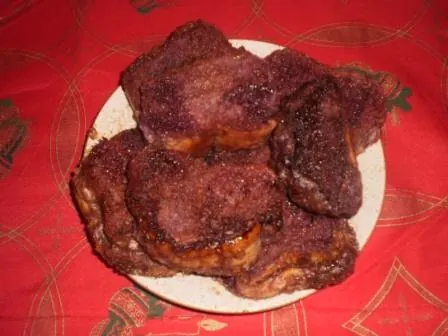
Wine-soaked rabanadas accompanying the recipe published by the Museum in 2014.
ⓘ

Wine-soaked rabanadas accompanying the recipe published by the Museum in 2014.

Source: Museu das Terras de Basto

View source

Photograph date not stated.

Individual photographer and reuse licence not stated by the source.

Request removal or correct the photo credit

A version of rabanadas preserved in Outeiro.

In Dídia Teixeira’s version from Paneladas, the bread is dipped in red Vinho Verde and egg before being fried. Sugar and cinnamon accompany the layers on the serving dish.

Fátima Magalhães recorded the recipe in 2013; the Museum published it in 2014, associating it with Christmas and New Year. This version is identified with the person who shared it, without being presented as the recipe of every household in Outeiro.

Wine rabanadas: open the recorded recipe

Tick off ingredients as you gather them. Checkmarks last only on this page. Any time shown for the reading journey is reading time, not cooking time.

Go to preparation ↓

Ingredients

Method at a glance

Back to ingredients ↑

Tick off each step as you finish it. You can untick it; checkmarks last only on this page.

Recipe from Dídia Teixeira, of Paneladas, recorded in 2013. The publication gives no fixed quantities or servings. Oil is mentioned in the method.

Read the original recipe →

Choose another recipe →

The bread also arrives for dessert

Open an option and choose the story.

  1. Bread in pot: moved from PedraçaThe bread also made the feast →
  2. Other combination: French toast with honeyHoney also sweetens French toast →
  3. Who taught you the recipe?A recipe also has those who teach it →
Compare documented versions and people who transmitted them.
Source and context

Basto Land Museum — Wine French toast (2014; 2013)

Accessed: . Editorial summary; the date of consultation is not the date of the facts.

Back to index ↑
YOUR LOCAL GUIDE

What would you like to discover?

Take a closer look.