Discover Cabeceiras de BastoFree independent guide
ViveCabeceirasYOUR GUIDE TO CABECEIRAS
ENEnglish
SearchSaved
8 STORIES · CONTINUOUS READING

Water: memory, work and life

From the wooden bridge to the seeds of the alder: eight readings link ancient testimonies, rural work and life on the shores. Each story indicates its time and scope. It is a sequence to read, not a pedestrian itinerary.

All stories in the order of the route. You can print this page by the browser; sources and credits follow the reading.

Things to try6 activities · 7 interactive explorations · 4 questions
Saint Nicholas and Painzela · testimony of 1758

A bridge for loaded carts

Three springs and a crossing connected two parishes.

In 1758, the parish priest describes a small river rising from three springs on the hills of Lapela and Celeiró. It entered Painzela through Vilarinho, where a wooden bridge supported loaded carts. The testimony does not identify a crossing that can be visited today.

The same river also powered mills and supplied an irrigation channel for the fields of Casal. The author recalls two other diversions linked to the Taipa estate, one already ruined when the account was written.

This description brings together transport, milling and irrigation. A bridge allowed crossing; a channel diverted some water to another use. Their functions were not equivalent, although they belonged to the same working landscape. The reference to a ruined structure also shows that the document records changes and losses alongside what was working.

Pass, water and grind

Open an option and choose the story.

  1. The levadas and the farm mill

    The water could serve the fields, mills and the production of olive oil at different points of the net.

    Water watered and made oil →
  2. The encounter of the waters in the Ranha

    After the springs and crossings, it follows the encounter of the watercourses described in 1758.

    Two rivers, a meeting in Ranha →
  3. How to organize a mill

    Compares the historical account with the organization of the building and the grinding mechanism.

    Above, the grinding; below, the movement →
Compare the tasks described in the reports and inventories.
Source and context

Basto Land Museum — St Nicholas Parish Memories, 22 May 1758

Accessed: . Editorial summary; the date of consultation is not the date of the facts.

Back to index ↑
Saint Nicholas · rivers in 1758

Bridges put to the winter test

Crossing the river was part of everyday life.

The São Nicolau account of 1758 describes three wooden bridges. It says that winter waters sometimes covered the two higher ones and even swept some bridges away. This is historical testimony about floods and routes, not a way to assess the safety of today’s crossings. The document names Sendim, Cerdeiró and Ponte do Gado: these crossings helped connect the church with settlements in the parish.

The description goes beyond the force of floods. It mentions a watercourse with many falls, difficult to ford and, in some stretches, even difficult to follow along its banks. The bridges answered that challenge of the terrain.

The Sendim bridge lay on the route from the church to that settlement; the Cerdeiró bridge served the direction of Breia. Ponte do Gado was lower than the other two and gave its name to the point where the branches from Bucos entered. These details connect paths with waterways without fixing every structure’s position on a modern map.

Cross, sail or water?

Open an option and choose the story.

  1. Rio Douro: many uses, no boatsIn summer, the water took other paths →
  2. Santa Senhorinha: a quiet chainThe river entered the life of the fields →
  3. Vilarinho: loaded car ticketA bridge for loaded cars →
Compares the descriptions of three parishes in the answers of 1758. The form of the river conditioned different uses.
Getting to know the parish
Source and context

Basto Land Museum — St Nicholas Parish Memories (1758)

Accessed: . Editorial summary; the date of consultation is not the date of the facts.

Back to index ↑
São Nicolau · 1758 account

Water irrigated fields and made olive oil

One river, different kinds of work.

In 1758, the parish priest of São Nicolau described irrigation channels serving fields and water powering an olive-oil mill at Quinta da Taipa. One channel served Gondarém, Frágua, Penedo and Lamelas. The account helps us imagine the link between river, irrigation and production. It distinguishes three continuous channels: one for those settlements and two for the estates of Bouças and Taipa. It also mentions mills supplied by weirs.

The description includes a smaller watercourse to the west, originating in springs on the hills of Lapela and Celeiró. On this river, the rector mentions mills and a channel serving the fields of Casal. He recalls two others intended for Quinta da Taipa, one of them ruined. The water-use network therefore included structures in use and others that no longer worked as before.

This detail helps us understand water-powered heritage as ongoing work: a channel’s existence in an old account does not guarantee its use in another period. The source also distinguishes settlements’ shared uses from estate channels, allowing comparison of different relationships between water, fields and owners.

Getting to know the parish
Source and context

Basto Land Museum — St Nicholas Parish Memories (1758)

Accessed: . Editorial summary; the date of consultation is not the date of the facts.

Back to index ↑
Painzela · irrigation documented in 2008

Seven users shared the channel

In Terreiros, irrigation left a trace in the ground.

The inventory of 3 May 2008 describes the Levada da Rebouta in Terreiros, Painzela, as a channel in natural ground. It received water from a small tributary of the Painzela stream, starting at Granja, and belonged collectively to seven shared users. The record noted that it had fallen out of use in the 1990s. This trace helps explain past irrigation arrangements, without assuming that the channel remains usable or accessible.

The water had different jobs

Open an option and choose the story.

  1. Move a millThe stream put the mill to work →
  2. Draw a gardenThe water draws the garden of Piellas →
  3. Organize water useThe water had its turn →
Choose a link to continue reading. Each story distinguishes its time and available sources.
Source and context

Municipality — inventory of levadas, Rebouta, fiche L39 (03/05/2008)

Accessed: . Editorial summary; the date of consultation is not the date of the facts.

Back to index ↑
Saint Nicholas · environmental history of 1758

Fish that entered the written record

An old document also describes life in the rivers.

The São Nicolau account lists trout and fish called bogas and escalos in the main river, in small numbers. In the smaller watercourse, it mentions small trout. These are names used in the 1758 document, not scientific identifications or confirmation of present populations.

Domingos Camelo de Sousa distinguishes the watercourses before discussing fish. The main one received two branches from Bucos near Ponte do Gado; the smaller one rose in springs on the hills of Lapela and Celeiró and continued to Painzela. This location gives context to the animal names. The account also comments on the fishes’ taste, revealing a view connected with food rather than the method of a biological survey.

Three Ways to Know a River

Open an option and choose the story.

  1. Read memory upstreamTwo rivers lost their name →
  2. Discover water usesWater watered and made oil →
  3. Observe a record of aquatic lifeA small bird that dives →
Each reading identifies the time and source of the information. Choose a link to continue.
Source and context

Basto Land Museum — St Nicholas Parish Memories, 22 May 1758

Accessed: . Editorial summary; the date of consultation is not the date of the facts.

Back to index ↑
Middle and upper Tâmega basin · landscape studied in 2016–2017

The river has a woodland too

Trees along the banks are part of the waterscape.

The 2016–2017 report describes riverside woodland in the middle and upper Tâmega basin with alders, ashes and willows, and birches along smaller waterways. It notes that these strips are often narrow, constrained by cultivated land. This is the regional description from that study, which covers Cabeceiras and other municipalities.

Bank, water and riverbed are connected but offer different conditions. The gold-striped salamander depends on damp environments and reproduces in water; young freshwater mussels live buried in the riverbed and need oxygen. The diagram explores these general relationships without representing a place where all these species have been observed together.

Read a riverbank photograph in three bands: tree crowns, ground beside the water and riverbed. Choose a species from these readings and consider which band it needs at each life stage. One landscape can contain different shelter, food and breeding places. That combination makes a river worth observing slowly.

IT WORKS A RIVER FOR THE FRONT

Open a zone and follow the connections between environments.

  1. 1 · Margins and vegetation

    The salamander-lusitan uses humid environments near the streams.

    Meet the salamander →
  2. 2 · In water

    Salamander larvae develop in the water before metamorphosis.

    Follow transformation →
  3. 3 · At the bottom of the river

    Young mussels live buried and need oxygen.

    Discover life in bed →
Simplified ecological relations, without a scale.
Return to observation proposal ↑
Source and context

Biosphere / Iberdrola, APA file — Monitoring of ichthyofauna 2016–2017, February 2018; pp. 5, 35 and 40, station record 22 on p. 175 PDF
Accessed:

Link to Nature Protection — Salamander-lusitan
Accessed:

ICNF — Margaritifera margaritifera, ecology, reproduction and threats, pp. 2–3
Accessed:

Editorial summary; the date of consultation is not the date of the facts.

Back to index ↑
General botany · alder

Seeds that travel by water

Alder has a close relationship with rivers.

In the University of Évora profile published under the name Alnus glutinosa, alder seeds have air-containing tissues that aid dispersal by water. The tree tolerates long periods with submerged roots. Woods dominated by alder are known in Portuguese as amiais.

Its connection with water thus extends from growing along banks to the journey of its seeds. There is also a naming change to understand: Flora-On uses Alnus lusitanica for native Portuguese alders, citing a 2017 study. Here each name remains linked to its source; the story does not identify a particular tree in the municipality.

The profile published as Alnus glutinosa describes a deciduous tree, which loses foliage for part of the year. The leaves are alternate with doubly toothed edges; the bark, smooth when young, becomes darker and cracked. These features concern different plant parts and different stages of its life.

That source gives December to February as the flowering period. Male flowers appear in elongated groups called catkins, while female groups have a different shape. Winter can therefore reveal details hidden on a visit when the crown is full of leaves. This calendar belongs to the consulted description and may vary with local conditions; it does not announce flowering for a particular tree in Cabeceiras.

The tree, the river and the craft

Open an option and choose the story.

  1. A tree in a margin forestThe river also has a forest →
  2. What happens next to the rootsThe alder has partners in the roots →
  3. The wood in the history of punchesBefore the punch, a piece of alder →
It continues through three different relationships of the alder: ecology of the margins, roots and use of wood.
Source and context

University of Évora — Alnus glutinous, breeding and habitat

Portuguese Society of Botany — Flora-On, Alnus: ecology, symbiosis and taxonomic note

Accessed: . Editorial summary; the date of consultation is not the date of the facts.

Back to index ↑
Species biology · with a local record

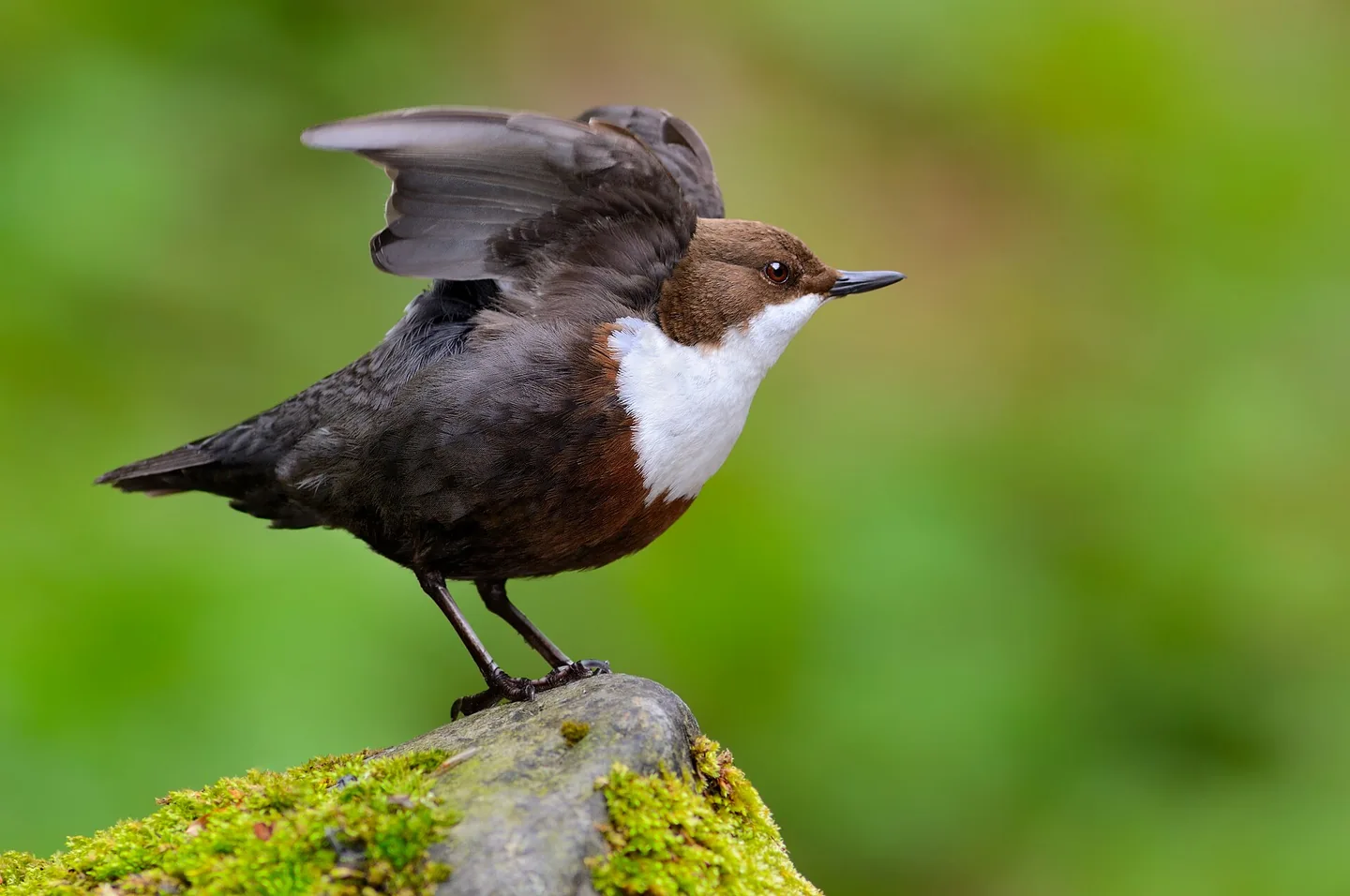
A small bird that dives

White-throated dipper with open wings.
White-throated dipper with open wings.Illustrative photograph
Олексій Карпенко
ⓘ

White-throated dipper with open wings.

Photography: Олексій Карпенко · CC BY-SA 4.0

View source

Date given at source: .

Request removal or correct the photo credit

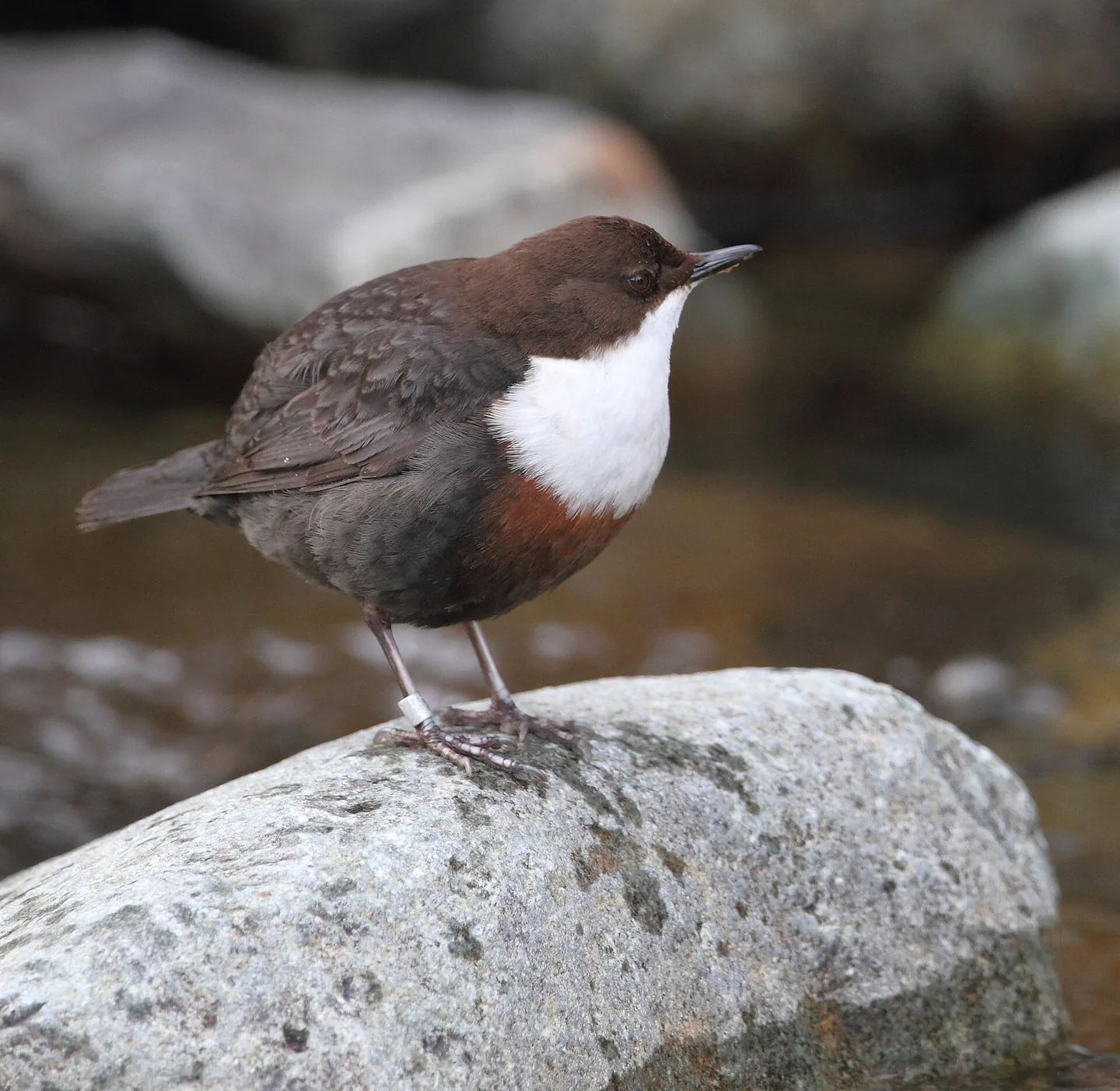
The white breast of a dipper.
The white breast of a dipper.Illustrative photograph
Alun Williams333
ⓘ

The white breast of a dipper.

Photography: Alun Williams333 · CC BY-SA 4.0

View source

Date given at source: .

Request removal or correct the photo credit

The white-throated dipper brings birdwatching into the current.

A compact body, short tail and white breast in adults offer clues to Cinclus cinclus, the white-throated dipper. This bird can dive and is associated with fast-flowing streams, especially in mountains. The gallery includes a local record; the photograph shows the bird in a hand, not the diving behaviour described here. Aves de Portugal describes fast, direct flight and classifies the species as resident: it may remain in breeding areas throughout the year. That general trait does not confirm a continuous presence at the local record’s location.

Underwater, the food it seeks includes small invertebrates. The BTO describes the bird entering the current from rocks or flying low to another perch. The stream is therefore a feeding space, not simply a backdrop where the bird appears.

Age also changes its appearance: juveniles are greyer and more mottled than white-breasted adults. This biological comparison does not assign an age to the photographed bird. A record shows an encounter; understanding what a species does requires bringing together other observations and sources.

The stream is more than water

Open an option and choose the story.

  1. Small animals with their own sheltersSmall shelters underwater →
  2. The vegetation accompanying the currentThe river also has a forest →
  3. How Life Helps to Study RiversThe life of the river also tells a story →
These relationships explain the environment; they do not confirm that animals from different readings share the same point.
Return to observation proposal ↑
Source and context

Birds of Portugal — Watermelon, identification, habits and distribution

British Trust for Ornithology — BirdFacts: Dipper, Cinclus cinclus

Accessed: . Editorial summary; the date of consultation is not the date of the facts.

Back to index ↑
YOUR LOCAL GUIDE

What would you like to discover?

Take a closer look.