Discover Cabeceiras de BastoFree independent guide
ViveCabeceirasYOUR GUIDE TO CABECEIRAS
ENEnglish
SearchSaved

Animals

Choose a story to start with. You can change the subject or fine tune the search.

24 stories · Life you do not always see · Search: rios

Life you do not always see

Knowing animals begins by perceiving the territory and respecting the distance.

Choose a story · 24
Occurrence mentioned in the environmental document

The riverbed is a home too

Freshwater mussels depend on more than surface water.

Read here and view sources

The municipal environmental document mentions Margaritifera margaritifera in the municipality. The ICNF profile explains why the riverbed matters: young mussels live buried in the substrate and need oxygen. The species prefers flowing water and avoids conditions poor in oxygen.

It feeds by filtering particles from the water. Protecting this life means considering the riverbed, the water and the fish involved in reproduction. The municipal reference does not identify a current observation point.

There is a difference between having water and having the habitat this animal needs. The profile distinguishes flowing from still water and describes how river alteration and habitat fragmentation can harm the species. Filtering particles for food does not make the mussel resistant to pollution: oxygen availability and riverbed conditions remain essential.

Words in this story: see explanations →
Source and context

PDM — Environmental Assessment, p. 50
Accessed:

ICNF — Margaritifera margaritifera, ecology, reproduction and threats, pp. 2–3
Accessed:

Editorial summary; the date of consultation is not the date of the facts.
Santa Senhorinha · fauna mentioned in 1758

Trout, nase and chub in the river’s memory

Fish names were written into local history too.

Read here and view sources

In the memory of Santa Senhorinha of 1758, the abbot mentions trouts, echelons and bogas in the river he describes. The text combines observation of water and appreciation of fish as food. These common names are a historical clue: they do not accurately identify all species or prove their current presence. The old reference to fishing also does not define today's rules.

Source and context

Municipality — Memória de Santa Senhorinha, 23/05/1758; transcript of José Viriato Chapel (2003)

Accessed: . Editorial summary; the date of consultation is not the date of the facts.
Cavez · record from 2016–2017 and general biology

Not every river fish came from here

The pumpkinseed tells a story of introduction.

Explore: The same river, different ways of living →
Read here and view sources

Sunshine, Lepomis gibbosus, is originally from North America. The Interpretation Center of the River of Águeda describes it as an exotic species, of high body and flattened laterally, which lives in still waters but also in rivers. In breeding season, males may hinder access by juveniles of native species to the shore shelters. It was registered in Cavez in 2016–2017; this record does not measure its local impact.

The bluish bands from the head to the flanks and a dark spot on the tip of the pearl are part of the description. In juveniles, the pattern is simpler, on a greenish or olivaceous background. Age also changes appearance.

The menu includes insects, crustaceans, sea snails, and fish larvae. This diversity helps to realize that food is not limited to a single prey. The chart also distinguishes lentic environments, such as albufeiras, from exotic environments, such as rivers and streams: the species can use both. The geographical origin, presence in a survey and the effect on other species are different information.

Words in this story: see explanations →
Source and context

Águeda River Interpretation Center — Sun Loss
Accessed:

Biosphere / Iberdrola, APA file — Monitoring of ichthyofauna 2016–2017, February 2018; pp. 5, 35 and 40, station record 22 on p. 175 PDF
Accessed:

Editorial summary; the date of consultation is not the date of the facts.

General ecology · how a river is studied

River life tells a story too

Looking at water clarity is not enough.

Includes an activity to try →Explore: Read the river through different lanes →
Read here and view sources

To study a river, it is interesting to know which organisms live in it and in what abundance. The Portuguese Environment Agency includes benthic invertebrates among the elements used in biological evaluation, together with other groups, such as fish and plants.

The evaluation also considers chemical, physicochemical and hydromorphological aspects. It is necessary to combine observations, sampling and analysis: transparent water or a single animal is not enough to classify a river. This explanation does not attribute a current state to watercourses of Cabeceiras.

Words in this story: see explanations →
Source and context

APA — Rivers and albufeiras: benthic invertebrates and biological evaluation

APA — Environmental State Report: Water status assessment

Accessed: . Editorial summary; the date of consultation is not the date of the facts.

Rio Douro · an account of fauna from 1758

Fish in an old portrait

Trout and other freshwater fish appear in Rio Douro’s historical accounts.

Read here and view sources

Trout, bogas and escalos are the fish names recorded by the vicar of Rio Douro in 1758. He describes trout as the most numerous and distinguishes winter from summer fishing. These are impressions from the account, without counts that would allow abundance to be measured.

The testimony connects fauna with water use and village life. Old common names do not amount to complete scientific identifications; the practices described do not establish today’s fishing rules either.

Getting to know the parish
Source and context

Municipality of Cabeceiras de Basto — Parish memories of 1758: Rio Douro

Accessed: . Editorial summary; the date of consultation is not the date of the facts.

Cavez · record from 2016–2017 and general biology

A fish can migrate without going to sea

The common barbel makes its journey within the river.

Explore: The same river, different ways of living →
Read here and view sources

The Mora Fluviary describes the breeding migration of the common barb, Luciobarbus bocagei, to shallow and well-oxygenated waters, on sand, gravel or gravel. It is a trip in fresh water. It feeds on small animals from the bottom, plant matter and debris. The barb was registered in Cavez in the 2016–2017 campaign; the description of its behavior is general biology, not a migration observed at this point.

The trip does not contradict the preference for areas of weaker current and moderate temperature. The place used to live and feed may differ from the one chosen for reproduction. The Fluviary file places the latter between May and June, as a general description of the species.

The barbo is omnivorous: besides the invertebrates of the bottom and vegetable matter, it can occasionally eat small fish. The same source says it can reach about one meter. It is a possible dimension of the species, not the size measured in the specimens of Cavez.

Words in this story: see explanations →
Source and context

Mora Fluviary — Barbo-common, biology of the species
Accessed:

Biosphere / Iberdrola, APA file — Monitoring of ichthyofauna 2016–2017, February 2018; pp. 5, 35 and 40, station record 22 on p. 175 PDF
Accessed:

Editorial summary; the date of consultation is not the date of the facts.

Cavez · record from 2016–2017 and general biology

A small fish, many tiny prey

The gudgeon links river life with invertebrates.

Read here and view sources

The Gaia Biological Park describes Gobio lozanoi as a freshwater river fish that feeds on small invertebrates and usually measures about 12 centimeters. It is a usual dimension indicated in this chart, not the size of all individuals nor a measure collected in Cabeceiras.

In the survey of Cavez of 2016–2017, the gobium is among the six registered species. Adding this evidence to the description of the feed helps to ask a question about the river: which small animals support the fish? The record does not identify the prey consumed at that point or prove a relationship with each insect presented on this site.

Source and context

Gaia Biological Park — Gobio, Gobio lozanoi: habitat, food and size
Accessed:

Biosphere / Iberdrola, APA file — Monitoring of ichthyofauna 2016–2017, February 2018; pp. 5, 35 and 40, station record 22 on p. 175 PDF
Accessed:

Editorial summary; the date of consultation is not the date of the facts.

Serra da Cabreira · regional reference and species biology

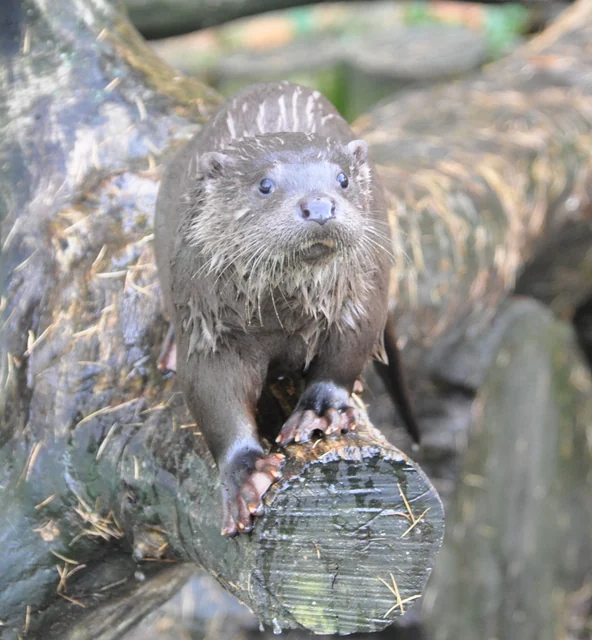
The otter wears its diving suit

Otter front view over wood, with snout, mustaches and visible paws.
European otter at the Lüneburg Heath fauna park, Germany, in 2009. Animal in fauna park; it is not a record of Cabeceiras.
Photography: Quartl · CC BY-SA 3.0
About this photograph

Date given at source: . Source consulted in 2026-11-07. EXIF orientation, proportional resizing and WebP conversion of the current version in Commons; no retouching or additional clipping.

Request removal or correct the photo credit

Waterproof fur and feet that help it swim.

Includes an activity to try →Explore: Body and environment →
Read here and view sources

The European otter, Lutra lutra, has membranes between its fingers and a thick coat that protects it in the water. Its life connects the river to its banks: vegetation offers shelter and roots can hide burrows. It is mainly active at dusk and at night.

The municipal portal of Vieira do Minho includes the otter among the mammals of the Cabreira. This regional reference allows to know the species, but does not indicate a spot of sighting.

The description of the University of Évora also refers to the long tail, tapered at the tip, and the snout with long mustaches. The otter does not depend only on rivers: the species also uses albufeiras, estuaries and, less often, the sea coast. These characteristics help to know the animal without converting the reading into a spot.

Source and context

University of Évora — Virtual Museum of Biodiversity, Lutra lutra; David Germano
Consultations: ,

Vieira Tourism of Minho — fauna of Serra da Cabreira, regional reference
Accessed:

Editorial summary; the date of consultation is not the date of the facts.

Species biology · documentary reference in the municipality

A mussel begins by travelling with a fish

Two lives connected beneath the surface.

Includes an activity to try →Explore: The mussel ride with the fish →
Read here and view sources

The larvae of Margaritifera margaritifera, called glochidia, attach themselves to the gills of salmonids such as trout. The fish acts as a host and carries them while they develop.

After their transformation, they detach and settle on the bottom. Success at this stage also depends on where they land: dispersal and finding conditions for survival are different things. The diagram summarises general biology, not reproduction observed in the municipality.

This journey does not immediately produce an adult capable of reproducing. The ICNF profile places sexual maturity between seven and twenty years and describes a long lifespan. These are general values from that source, not ages measured in specimens from Cabeceiras. The presence of adults and the arrival of new generations are therefore different questions when studying a population.

Words in this story: see explanations →
Source and context

ICNF — Margaritifera margaritifera, ecology, reproduction and threats, pp. 2–3
Accessed:

PDM — Environmental Assessment, p. 50
Accessed:

Editorial summary; the date of consultation is not the date of the facts.

Cavez · monitoring in 2016–2017

Six species beneath the surface

A sampling survey offers a small portrait of the Tâmega at Cavez.

Includes an activity to try →Explore: You know the six fish from the lift →
Read here and view sources

At station 22, the 2016–2017 report recorded six fish: barbo-comum, boga-do-Norte, escalo-do-Norte, bordalo, góbio and perca-sol, using their Portuguese common names. The station profile places it in Cavez. These results document that survey; they are neither a current inventory nor directions to fishing spots.

The six names open six ways of looking at the river. The barbel leads to migration within fresh water; the nase to differences between young and adult fish; the chub to scale patterns. The bordalo and gudgeon help explore diet. The pumpkinseed introduces geographical origin. Open the cards to choose a clue and reach the species explanation.

Sampling surveys and biological profiles serve different purposes. The survey documents fish recorded at that place and time. The profiles explain general species characteristics, without demonstrating that all these behaviours were observed in Cavez. Read both together while keeping that distinction.

Getting to know the parish
Source and context

Biosphere / Iberdrola, APA file — Monitoring of ichthyofauna 2016–2017, February 2018; pp. 5, 35 and 40, station record 22 on p. 175 PDF
Accessed:

Mora Fluviary — Barbo-common, biology of the species
Accessed:

Municipality of Santa Maria da Feira — Northern Boga, fauna catalogue
Accessed:

Arouca Geopark — Northern scale, Squalius carolitertii: description and biology
Accessed:

ICNF — embroidery, ecology and riverside vegetation, pp. 2–3 (bibliography up to 2005)
Accessed:

Gaia Biological Park — Gobio, Gobio lozanoi: habitat, food and size
Accessed:

Águeda River Interpretation Center — Sun Loss
Accessed:

Editorial summary; the date of consultation is not the date of the facts.

Species biology · with a local record

A small bird that dives

The white-throated dipper brings birdwatching into the current.

Includes an activity to try →Explore: The stream is more than water →
Read here and view sources

A compact body, short tail and white breast in adults offer clues to Cinclus cinclus, the white-throated dipper. This bird can dive and is associated with fast-flowing streams, especially in mountains. The gallery includes a local record; the photograph shows the bird in a hand, not the diving behaviour described here. Aves de Portugal describes fast, direct flight and classifies the species as resident: it may remain in breeding areas throughout the year. That general trait does not confirm a continuous presence at the local record’s location.

Underwater, the food it seeks includes small invertebrates. The BTO describes the bird entering the current from rocks or flying low to another perch. The stream is therefore a feeding space, not simply a backdrop where the bird appears.

Age also changes its appearance: juveniles are greyer and more mottled than white-breasted adults. This biological comparison does not assign an age to the photographed bird. A record shows an encounter; understanding what a species does requires bringing together other observations and sources.

Words in this story: see explanations →
Source and context

Birds of Portugal — Watermelon, identification, habits and distribution

British Trust for Ornithology — BirdFacts: Dipper, Cinclus cinclus

Accessed: . Editorial summary; the date of consultation is not the date of the facts.

Species biology · record in Rio Douro

A small frog with a strong connection to water

Some lives depend on the bank as much as the stream.

Includes an activity to try →Explore: One photograph opens other questions →
Read here and view sources

The Iberian frog naturally lives in the Iberian Peninsula: that is what it means to be endemic to this territory. With a slender body and pointed snout, it can reach about 5.5 centimetres. Reproduction takes place in water, and the species prefers mountain streams with vegetation along the banks and rocky beds.

The photograph recorded in Rio Douro opens a window onto this discreet life. On its own, it does not demonstrate water quality: pollution and changes to riverside habitats are among the threats described by the University of Évora.

The description also highlights a dark stripe crossing the eye area, with a narrower pale stripe beneath. These are details to appreciate in a photograph without handling the animal.

Source and context

University of Évora — Virtual Museum of Biodiversity

Accessed: . Editorial summary; the date of consultation is not the date of the facts.

Serra da Cabreira · regional reference and species biology

A desman’s life in the current

Cold water has its own inhabitants too.

Explore: The river is also a pantry →
Read here and view sources

The water mole, Galemys pyrenaicus, is associated with cold, clear and well-oxygenated waters, often in rapid mountain rivers. The University of Évora also refers to the use of slower waters, such as canals and lakes: preference is not exclusive. Its natural distribution is limited to the Iberian Peninsula and the Pyrenees. In conservation, there are vegetation margins, shelters and habitat continuity; the chart identifies silting and isolation between threats. The municipal description of the fauna of Cabreira mentions the species, but this reading does not have a geolocalized register in the municipality.

The prolonged snout in a small trunk helps to search for larvae of invertebrates underwater, according to the description of the Generalitat of Catalonia. The technical file housed by ICNF highlights the invertebrates from the bottom of the river as a food base, including groups of tricopters, plecopters, ephemeropters and dipteres. The small animals that look like details of the river are part of the feeding of a mammal.

The profile of the ICNF presents a caveat for Portugal: it considers unfavourable the habitats of standing water, such as albufeiras and small lagoons of altitude. We should not turn the general reference to slow waters into an invitation to search for the species in any lake. Adequate habitat also involves food, shelters on the banks and connection to other sections of the river.

Words in this story: see explanations →
Source and context

University of Évora — Virtual Museum of Biodiversity, Galemys pyrenaicus

Vieira Tourism of Minho — fauna of Serra da Cabreira, regional reference

ICNF — Galemys pyrenaicus, ecology and nutrition (historical references)

Generalitat de Catalunya — Iberian Desmán, description of snout and feeding

Accessed: . Editorial summary; the date of consultation is not the date of the facts.

Cavez · record from 2016–2017 and general biology

A preferred current changes with age

For a young nase, a calm stretch can make a difference.

Explore: The same river, different ways of living →
Read here and view sources

The Northern boga, Pseudochondrostoma duriense, is a species of the Iberian Peninsula. Santa Maria da Feira's municipal record describes adults in sections of strong current and juveniles that prefer waters of lower current and thin backgrounds. It also refers to upstream movements before reproduction. The Cavez record of 2016–2017 confirms the species in that sample; it does not describe the age or behavior of the specimens.

There is a clue in the mouth: the lower lip is right and has a well developed corneal blade. The body may have small dark spots. These features complement the history of the habitat; they do not replace a careful identification of the fish.

The municipal source places migrations upstream between March and June and indicates an approximate longevity of six years. Amount means moving towards the spring. The calendar and life span describe the species in general, without dating a shift or determining the age of the fish sampled at Tâmega.

Words in this story: see explanations →
Source and context

Municipality of Santa Maria da Feira — Northern Boga, fauna catalogue
Accessed:

Biosphere / Iberdrola, APA file — Monitoring of ichthyofauna 2016–2017, February 2018; pp. 5, 35 and 40, station record 22 on p. 175 PDF
Accessed:

Editorial summary; the date of consultation is not the date of the facts.

Cavez · record from 2016–2017 and general biology

A fish’s menu can include insects

Feeding connects life in and out of the water.

Includes an activity to try →Explore: Who feeds on what? →
Read here and view sources

The chart of the ICNF describes the embroidery, complex Squalius alburnoids, as a consumer mainly of insect larvae. In summer and early autumn, it refers to higher consumption of terrestrial insects. It is a small link between the river and its margins. The embroidery appears in the study of Cavez of 2016–2017 under the name Iberocypris alburnoides; the local study did not analyze this seasonal change in feeding.

The same chart describes the use of rivers and streams with diverse characteristics, including small and shallow courses with emerging aquatic vegetation. The habitat is not only water: shelters, vegetation and alternation of zones with different current speeds enter history.

Therefore, a margin totally devoid of vegetation changes more than the view. The chart associates the loss of riverside vegetation with the reduction of shade, shelter and feeding sites. These general ecological relationships help to interpret the river; they are not a current evaluation of a section of Cavez. The local record of 2016–2017 and the biological explanation answer different questions: where the fish was documented and how it relates to the environment.

Source and context

ICNF — embroidery, ecology and riverside vegetation, pp. 2–3 (bibliography up to 2005)
Accessed:

Biosphere / Iberdrola, APA file — Monitoring of ichthyofauna 2016–2017, February 2018; pp. 5, 35 and 40, station record 22 on p. 175 PDF
Accessed:

Editorial summary; the date of consultation is not the date of the facts.

Amphibians · general biology

Skin that breathes too

In amphibians, skin does more than cover the body.

Explore: From body to environment →
Read here and view sources

The naked and permeable skin of amphibians participates in breathing. The Vasco da Gama Aquarium explains that respiratory changes can also involve gills and lungs, according to the phase of life. This permeability helps to perceive the sensitivity of these animals to changes in the environment. It is general biology to better know the frogs, salamanders and newts presented in this collection.

Body temperature follows the conditions of the environment: they are ectothermal animals. This characteristic is different from the permeability of the skin, although both help to understand the relationship with the place where they live. It is also not enough to protect only water: many species use terrestrial environments in other stages of life.

Words in this story: see explanations →
Source and context

Vasco da Gama Aquarium — Thematic Sheets: Amphibians, 2th cycle, pp. 1–2

Accessed: . Editorial summary; the date of consultation is not the date of the facts.

General biology · dragonflies and damselflies, without a confirmed local record

Resting wings offer a clue

Dragonflies and damselflies do not rest in the same way.

Includes an activity to try →Explore: Wings, water and food →
Read here and view sources

The Tagis guide describes dragonflies with two pairs of similar wings, usually closed or slightly open vertically when they land. Dragonflies keep them open horizontally. It is a first observation clue, not a species identification. Dragonflies adults can move away from the watercourses thanks to their flight capacity.

Both groups belong to the Odonata order. The guide highlights the compound eyes, the short antennas and jaws used to capture other animals. Among the prey are flies and mosquitoes: these wings are part of a history of predators, not just colors.

Connection to water also changes with the phase of life. Dragonflies need it to complete the cycle, but adults can hunt in sunny clearings, far from the river where they were born. Seeing an adult on a path does not allow them to locate their breeding point. Compare the position of the wings, behavior and environment without turning an isolated clue into an identification.

Source and context

Tagis — Insects in Order, Odonata, dragonflies, dragonflies and friganiums (pp. 39–43 and 74)

Accessed: . Editorial summary; the date of consultation is not the date of the facts.

General biology · aquatic insects, without a local species inventory

Tiny shelters beneath the water

Some larvae use sand and plant fragments.

Includes an activity to try →
Read here and view sources

The larvae of the friganiums, or tricopters, live in the water; many build shelters with sand or vegetable fragments. They integrate the food chains of rivers and streams, serving as food for fish, birds and amphibians. Tagis' guide highlights its usefulness as ecological indicators. Finding a copy, however, does not alone certify the quality of the water.

The underwater shelter is only a part of the story. The adult has hair-covered wings, thin antennas and when he lands, he has wings like a small roof over the body. He may remember a butterfly, but these have scales on the wings. The adult friganiums usually fly at nightfall and live near fresh water masses.

Nor does there exist a single menu for all larvae: according to the group, they can consume algae, plants, organic remains or other invertebrates. They are consumers and, at the same time, food from other animals. A food network better describes these relationships than a row with only one food for each species.

Words in this story: see explanations →
Source and context

Tagis — Insects in Order, Odonata, dragonflies, dragonflies and friganiums (pp. 39–43 and 74)

Accessed: . Editorial summary; the date of consultation is not the date of the facts.

Soil life · general ecology

Beneath our feet, a world of mixtures

Soil contains water and air too.

Includes an activity to try →Explore: From the ground to the water, follow the connections →
Read here and view sources

The ground is not a compact block: mineral particles and organic matter share space with water, air and organisms. The rock, climate and living beings participate in the formation of the soil.

Looking only at the surface leaves much life undiscovered. This explanation helps to explore gardens and forests, but does not replace a soil analysis of Cabeceiras.

Life is not distributed equally. FAO describes areas of intense activity near the roots, where plant remains accumulate and on the walls of earthworm galleries. The immediate vicinity of a root has a name: rhizosphere. Thinking about these small areas helps to understand why two portions of nearby land can offer different conditions to organisms.

There are inhabitants that we will hardly see on a walk. Bacteria participate in the transformation of organic matter; some are associated with roots and contribute to nitrogen fixation. Fungi also decompose remains and can establish relationships with plants. Not all do the same work: the soil gathers activities that intersect, from the food to the transformation of materials.

A cover of leaves is not only a finish of the forest. It is a matter that can feed this community. In the interview published by Gulbenkian, researchers recommend keeping part of the dead blanket in green spaces and avoiding often moving the soil in depth. They are general conservation guidelines, not an evaluation or recipe for each land of the municipality.

Words in this story: see explanations →
Source and context

Calouste Gulbenkian Foundation / Wilder — Cristina Cruz, Teresa Dias and Silvana Munzi (FCUL), 26/03/2024

FAO — What is soil biodiversity?

Accessed: . Editorial summary; the date of consultation is not the date of the facts.

Rio Douro · animals mentioned in 1758

Animals remembered in the mountains

A list from 1758 combines encounters, abundance and passing visitors.

Read here and view sources

The vicar of Rio Douro names rabbits, hares, partridges, wolves, foxes and badgers when describing the mountains in 1758. Adds mountain pigs of passage and places the partridges only in some parts. These language differences are part of the testimony and deserve to be preserved.

The report describes cold, windy and snowy mountains in winter. It brings animals and landscape closer, but does not present counts, observation methods or a scientific inventory. It does not allow to conclude that all the mentioned species continue in the same places today.

Source and context

Municipality — Parish Memoirs of Rio Douro, António Carneiro da Costa, 22/05/1758

Accessed: . Editorial summary; the date of consultation is not the date of the facts.

Reptiles · general biology, without a confirmed local record in this profile

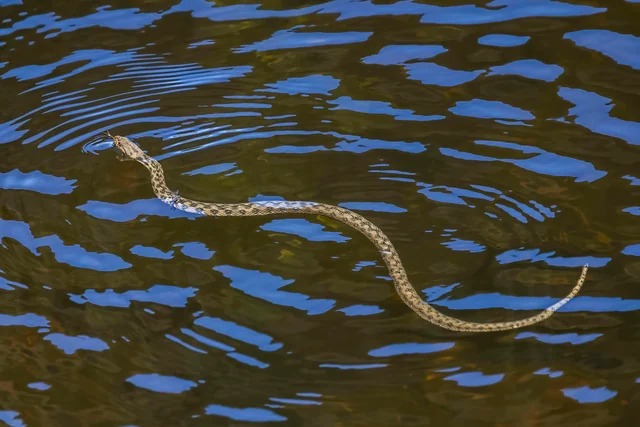
One snake can have different patterns

Snake with the body wavy to the surface of the water, between blue reflexes and small ripples.
Viperine water snake swimming in Extremadura, Spain, in 2022. Illustration of the species; not a record of Cabeceiras.
Photography: Charles J. Sharp · CC BY-SA 4.0
About this photograph

Date given at source: . Source consulted in 2026-11-07. EXIF orientation, proportional resize and WebP conversion; no retouching or new clipping of file obtained in Commons.

Request removal or correct the photo credit

The viperine snake’s back does not always have the same pattern.

Includes an activity to try →Explore: The same environment, different ways of life →
Read here and view sources

Natrix maura may present a zigzag stripe, but also a pattern of two clear longitudinal lines. The Spanish biodiversity inventory still describes variation in body tones. A single design does not summarize all individuals of the species.

The chart of the Northern Coastal Natural Park explains the connection to rivers, ponds, streams and other aquatic environments, without excluding displacements on land. It is a general context about the species: it is not an observation in Cabeceiras. Reading compares variation and habitat; it is not a key to identifying snakes found in the field.

The Charcos com Vida project describes a feed mainly in water: invertebrates, larvae and adults of amphibians and small fish enter the menu. The aquatic environment is, thus, a feeding space, besides displacement. The same snake can be preyed on birds and mammals; taking the place of predator does not remove it from the food network.

It is usually daytime, but in summer it can maintain activity at dusk or during the night. Behavior also changes before a threat: the record refers to the expansion of the head and other defensive signs that contribute to the similarity with a viper and to the common name. This explanation of the name does not allow to decide the species or safety of a meeting by the shape of the head.

Words in this story: see explanations →
Source and context

Inventory Español del Patrimonio Natural y la Biodiversidad — Natrix maura, description of the species

Co-management of the Northern Coastal Natural Park — Reptiles and amphibians, record of the viperine water snake

Lived Chargings — Viperine Water Cobra, Feeding and Behaviour

Accessed: . Editorial summary; the date of consultation is not the date of the facts.

Cavez · record from 2016–2017 and general biology

A fish with a network of scales

Dark scale edges create a pattern on the northern Iberian chub.

Includes an activity to try →
Read here and view sources

The record of Arouca Geopark describes Squalius carolitertii with elongated body, large and rounded head and scales of darker margins, which create a cross-linked appearance. It presents it as an Iberian endemism: its natural distribution belongs to the Iberian Peninsula, not only to Cabeceiras.

The description refers to mountain and plain rivers, remembering that a species can occupy different contexts along the river network. They are general characteristics, useful to know the fish; they are not enough to identify a specimen from a distance.

The local link comes from another source: the Northern scale is included in the Cavez sampling of 2016–2017. The report documents this survey without establishing current presence or abundance.

Geopark’s chart points to a maximum length of 25 cm and a breeding season between April and June. In the description of the fins, the dorsal has a straight profile and the anal, convex profile. These are details for comparison in an appropriate illustration or photograph, not dimensions or dates measured in the Cavez campaign. The fusiform body — wider in the central area and tapered at the ends — completes this small reading of the shape.

Words in this story: see explanations →
Source and context

Arouca Geopark — Northern scale, Squalius carolitertii: description and biology
Accessed:

Biosphere / Iberdrola, APA file — Monitoring of ichthyofauna 2016–2017, February 2018; pp. 5, 35 and 40, station record 22 on p. 175 PDF
Accessed:

Editorial summary; the date of consultation is not the date of the facts.

Birds · general biology in Portugal

An acrobat among the leaves

The blue tit even searches for food upside down.

Read here and view sources

A blue cap and wings, white cheeks and a dark line beside the eyes help identify Cyanistes caeruleus. Its yellowish breast adds to the contrast. But watch how it moves too: the University of Évora describes this small bird hopping along branches and hanging upside down as it feeds.

Among the leaves, it searches for insects and spiders. In autumn and winter, fruits and seeds may also form part of its diet. Its food is therefore not a fixed list for every season: what it finds in the landscape changes.

The blue tit is resident and occurs across mainland Portugal. The Gulbenkian profile describes a range of wooded habitats, from woods and riverside trees to orchards, hedges and gardens. A garden and a wooded riverbank offer different settings in which to learn about this bird. These sources explain the species in Portugal; they do not document an encounter in a parish of Cabeceiras.

Words in this story: see explanations →
Source and context

University of Évora — Biodiversity of Mitra: Cyanistes caeruleus

Calouste Gulbenkian Foundation / João E. Rabaça — Blue Chapim

Accessed: . Editorial summary; the date of consultation is not the date of the facts.

Cavez · local record and general biology

A long tail beside the water

The grey wagtail brings curiosity to the riverbank.

Includes an activity to try →Explore: The riverbank has many stories →
Read here and view sources

In David Matos’s photograph, the bird is perched beside water and a rocky surface. The record, dated 12 August 2024, is located in Cavez when its public point is compared with CAOP2025, and is identified as Motacilla cinerea. The long tail and yellow underside are details visible in this image.

The BTO describes a species associated mainly with fast-flowing water, which also uses slower rivers and the edges of lakes and ponds as it searches for aquatic insects. The habitat is more than a backdrop: it can provide food. The local photograph does not show a capture, so it cannot tell us what this bird ate during that encounter.

Compare it with the white-throated dipper: two birds associated with watercourses can find food in very different ways.

Source and context

British Trust for Ornithology — Grey Wagtail

Accessed: . Editorial summary; the date of consultation is not the date of the facts.

YOUR LOCAL GUIDE

What would you like to discover?

Take a closer look.