Discover Cabeceiras de BastoFree independent guide
ViveCabeceirasYOUR GUIDE TO CABECEIRAS
ENEnglish
SearchSaved

Animals

Choose a story to start with. You can change the subject or fine tune the search.

10 stories · Life you do not always see · Search: patas

Life you do not always see

Knowing animals begins by perceiving the territory and respecting the distance.

Choose a story · 10
Reptiles · general biology, without a confirmed local record in this profile

No legs, but not a snake
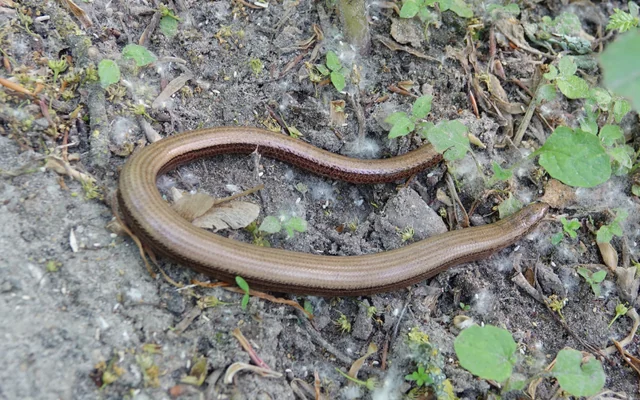
Licran of elongated brown body, bent on the ground between leaves and small plants.
Licensing photographed in Wyhl am Kaiserstuhl, Germany, in 2024. Illustration of the species; it is not a record of Cabeceiras.
Photography: Gzen92 · CC BY-SA 4.0
About this photograph

Date given at source: . Source consulted in 2026-11-07. EXIF orientation, proportional resize and WebP conversion; no retouching or new clipping of file obtained in Commons.

Request removal or correct the photo credit

A slow worm’s silhouette does not tell the whole story.

Includes an activity to try →Explore: Body and Way of Life →
Read here and view sources

The licraço, Anguis fragilis, is a lizard without paws. The guide of agrarian biodiversity of the Xunta de Galicia describes it in cool and humid places, such as meadows and walls, where it feeds on slugs and insects. The elongated form may remind a small serpent, but this similarity does not determine the group to which it belongs.

This explanation serves to compare forms and ways of life. The guide refers to the Galician agrarian landscape; it does not prove an occurrence in Cabeceiras or allows to identify an animal only by an unclear photograph.

There is more to observe than the absence of paws. The Wildlife Trusts highlights the movable eyelids, which allow the licranço to blink, and the ability to loosen the tail. The female keeps the eggs inside the body until the birth of the cubs. They are general characteristics of Anguis fragilis, without a local record associated with this reading.

The pace also changes throughout the year. The organization describes a state of winter dormancy, called mist. The timing presented by the source concerns the UK: it is not transferred to Cabeceiras. To know the species, it is appropriate to distinguish the shape of the body, behavior and geographical context of the information.

Words in this story: see explanations →
Source and context

Xunta de Galicia — Guía for the conservation of biodiversity in Galicia, Anguis fragilis, p. 54

The Wildlife Trusts — Slow worm (Anguis fragilis), general biology; British context

Accessed: . Editorial summary; the date of consultation is not the date of the facts.
Pollinators · general biology

Small loads on tiny legs

Pollen can travel in plain sight.

Includes an activity to try →Explore: From flower to next discovery →
Read here and view sources

In honeybees and bees, pollen can accumulate in a rear-legged area suitable for transport. Other bees use sets of hair on their paws or under their abdomen. The entomologists heard by Gulbenkian explain that during visits to the flowers, part of the grain is on the way. The transport of food to the offspring is thus linked to pollination. It is a general explanation, without identifying an insect observed in the municipality. The color of the load also varies: experts refer to yellow, red or blue pollen, according to the plant of origin.

The scope is this set of hairs that works as a transport brush. The source also refers to groups that carry pollen in one part of the digestive tract and others that use the nests of other bees. Therefore, not all the relationship between a bee and pollen is presented as a visible load on the paws. What you see in a visit to the flower is only part of the story.

Words in this story: see explanations →
Source and context

Calouste Gulbenkian Foundation — explanations of entomologists Renata Santos and Albano Soares, 07/06/2022

Accessed: . Editorial summary; the date of consultation is not the date of the facts.
Serra da Cabreira · regional reference and species biology

The otter wears its diving suit

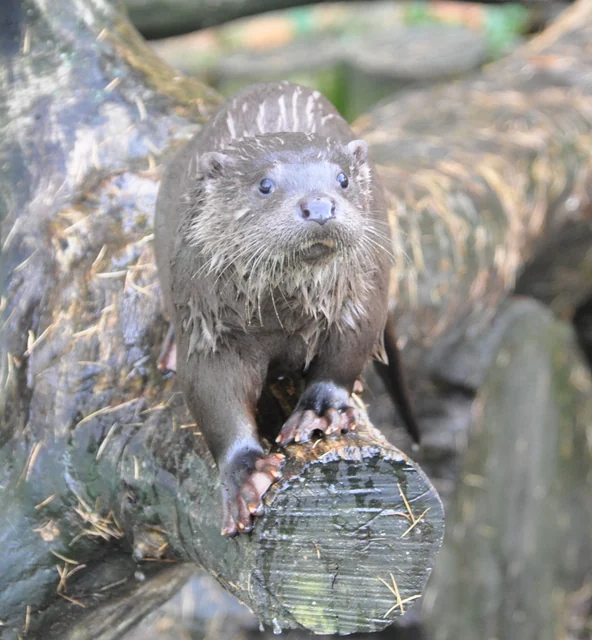
Otter front view over wood, with snout, mustaches and visible paws.
European otter at the Lüneburg Heath fauna park, Germany, in 2009. Animal in fauna park; it is not a record of Cabeceiras.
Photography: Quartl · CC BY-SA 3.0
About this photograph

Date given at source: . Source consulted in 2026-11-07. EXIF orientation, proportional resizing and WebP conversion of the current version in Commons; no retouching or additional clipping.

Request removal or correct the photo credit

Waterproof fur and feet that help it swim.

Includes an activity to try →Explore: Body and environment →
Read here and view sources

The European otter, Lutra lutra, has membranes between its fingers and a thick coat that protects it in the water. Its life connects the river to its banks: vegetation offers shelter and roots can hide burrows. It is mainly active at dusk and at night.

The municipal portal of Vieira do Minho includes the otter among the mammals of the Cabreira. This regional reference allows to know the species, but does not indicate a spot of sighting.

The description of the University of Évora also refers to the long tail, tapered at the tip, and the snout with long mustaches. The otter does not depend only on rivers: the species also uses albufeiras, estuaries and, less often, the sea coast. These characteristics help to know the animal without converting the reading into a spot.

Source and context

University of Évora — Virtual Museum of Biodiversity, Lutra lutra; David Germano
Consultations: ,

Vieira Tourism of Minho — fauna of Serra da Cabreira, regional reference
Accessed:

Editorial summary; the date of consultation is not the date of the facts.
Serra da Cabreira · species biology

A tail longer than the body

The gold-striped salamander’s life is closely tied to moisture.

Read here and view sources

The gold-striped salamander, Chioglossa lusitanica, is mentioned by Visit Cabeceiras for Serra da Cabreira. It has a slender body, a tail longer than its body and two golden or orange stripes along its dark back.

According to LPN, vegetation influences how it uses space: in farmland and forests of exotic species it tends to stay closer to streams, while in native woodland it may move farther from water. The bank is therefore part of this amphibian’s story. This is species biology, not a sighting point.

It is endemic to the Iberian Peninsula and is nocturnal. Its front feet have four toes and its hind feet five: details that help us learn about the species without handling it.

Parque Biológico de Gaia describes a terrestrial life beside watercourses, abundant vegetation and high humidity, with a diet of small invertebrates. Being associated with streams does not mean spending its whole life swimming. When reading about eggs and larvae, compare the life stage with the habitat used: the relationship with water changes during development.

Source and context

Visit Cabeceiras — natural heritage of Serra da Cabreira
Accessed:

Gaia Biological Park — Chioglossa lusitanica
Accessed:

Link to Nature Protection — Salamander-lusitan
Accessed:

Editorial summary; the date of consultation is not the date of the facts.

Species biology · record in Rio Douro

A small frog with a strong connection to water

Some lives depend on the bank as much as the stream.

Includes an activity to try →Explore: One photograph opens other questions →
Read here and view sources

The Iberian frog naturally lives in the Iberian Peninsula: that is what it means to be endemic to this territory. With a slender body and pointed snout, it can reach about 5.5 centimetres. Reproduction takes place in water, and the species prefers mountain streams with vegetation along the banks and rocky beds.

The photograph recorded in Rio Douro opens a window onto this discreet life. On its own, it does not demonstrate water quality: pollution and changes to riverside habitats are among the threats described by the University of Évora.

The description also highlights a dark stripe crossing the eye area, with a narrower pale stripe beneath. These are details to appreciate in a photograph without handling the animal.

Source and context

University of Évora — Virtual Museum of Biodiversity

Accessed: . Editorial summary; the date of consultation is not the date of the facts.

Serra da Cabreira · regional reference and species biology

A newt between water and land

Its skin also changes with its surroundings.

Includes an activity to try →Explore: From egg to change of environment →
Read here and view sources

The orange triton, Lissotriton boscai, has smoother skin in the aquatic phase and more rough in the terrestrial phase. To reproduce it can use ponds, streams of little current and even tanks. Out of water finds refuge in moist places, between roots, stones and trunks. The orange belly helps explain the name.

It is mentioned among the amphibians of the Cabreira by the municipal portal of Vieira do Minho, without an associated observation point.

The description of the University of Évora refers to four fingers on the front legs and five on the back, besides a flattened tail laterally. They are characteristics of the species, not a reason to remove it from the water. The same source indicates a total length up to nine centimeters and females usually larger and more robust than males.

Also the mating season can change the look. The University of Évora describes a small crest on the tail and, in males, a whitish longitudinal strip, more marked next to the end. Compare two images therefore requires attention to sex and the phase of the year, besides the name of the species. Not all visible differences mean animals of different species.

Food follows the change of environment. According to the Charcos with Life project, larvae and aquatic adults capture small invertebrates from the water; on land, adults eat mostly soft-body animals, such as worms and slugs. The female lays eggs individually on aquatic plants or leaves, over several days. The scheme below connects these phases without assigning them dates of occurrence in the Cabreira.

Source and context

University of Évora — Virtual Museum of Biodiversity, Lissotriton boscai

Vieira Tourism of Minho — fauna of Serra da Cabreira, regional reference

Charcoals with Life / CIIMAR — Orange belly triton, life cycle and feeding

Accessed: . Editorial summary; the date of consultation is not the date of the facts.

Serra da Cabreira · regional reference and species biology

Some newts spend another winter in water

In the cold of higher ground, development can take longer.

Read here and view sources

In the palmed triton, or spalmed paw triton, Lissotriton helveticus, mating takes place in the water of ponds. Gaia Biological Park explains that, in higher and colder areas, larvae can cross winter before completing metamorphosis the following year. It feeds on small invertebrates. The municipal description of the Cabreira mentions this species; the cycle here counted is general biology, not the observation of reproduction in a local pond.

Two different times ago. The biological park record indicates about fifteen days to a month between posture and hatching; metamorphosis comes later. hatching is the egg exit, not the completion of larval development. The possibility of crossing another winter in the water shows why a single calendar does not serve all conditions.

Words in this story: see explanations →
Source and context

Gaia Biological Park — Spanked Triton, Lissotriton helveticus

Vieira Tourism of Minho — fauna of Serra da Cabreira, regional reference

Accessed: . Editorial summary; the date of consultation is not the date of the facts.

Amphibians · comparing groups

A tail offers a clue

Compare an adult frog with an adult salamander.

Includes an activity to try →
Read here and view sources

The frogs and frogs belong to the anurans: in adulthood they have no tail and the hind legs are developed for the jump. In the urodeles, such as salamanders and tritons, the tail remains in adulthood. The life stage matters in this comparison: a tadpole has a tail. This distinction between groups is not enough to identify a species.

The comparison should begin at the same stage of life. A tadpole and an adult frog are not two different groups; they are forms of development. The comparison between an adult frog and an adult triton allows us to appreciate the difference between anurans and urodels. The Vasco da Gama Aquarium also describes the members of the urodels as fit for gait, in contrast to the developed hind legs of the anurans.

Source and context

Vasco da Gama Aquarium — Thematic Sheets: Amphibians, 2th cycle, pp. 1–2

Accessed: . Editorial summary; the date of consultation is not the date of the facts.

Badger · general biology

A home beneath the ground

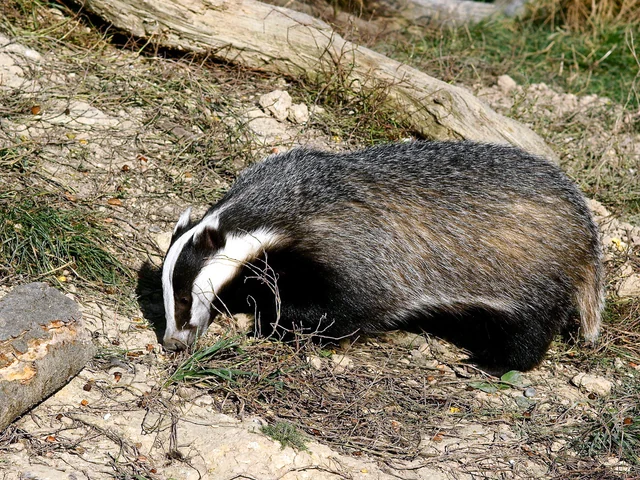
Badger with gray body and head with light and dark bands, next to the ground.
Badger at the British Wildlife Centre in Newchapel, Surrey, UK, in 2011. Animal in fauna park; not a record of Cabeceiras.
Photography: Peter Trimming · CC BY 2.0
About this photograph

Date given at source: . Source consulted in 2026-11-07. EXIF orientation, proportional resizing and WebP conversion of the current version in Commons; no retouching or additional clipping.

Request removal or correct the photo credit

Badgers spend much of their lives out of our sight.

Includes an activity to try →Explore: For the thorns and life in the water →
Read here and view sources

The badger (Meles meles) has mainly nocturnal activity and shelters in extensive underground burrows. The two dark bands on the white head are a striking visual clue; the short legs have strong claws. The Virtual Museum of Biodiversity describes its presence in forests, forests and agricultural landscapes with vegetation. This chart explains the species in mainland Portugal; it does not document an observation in Cabeceiras de Basto. The claws are long and not retractable: they do not collect like those of the cats. The tail is short and clear, another contrast with the fox's long tail. These details help compare descriptions without searching or disturbing burrows.

Source and context

University of Évora — Virtual Museum of Biodiversity: Meles meles

Accessed: . Editorial summary; the date of consultation is not the date of the facts.

Hedgehog · general biology

Winter is not one unbroken sleep

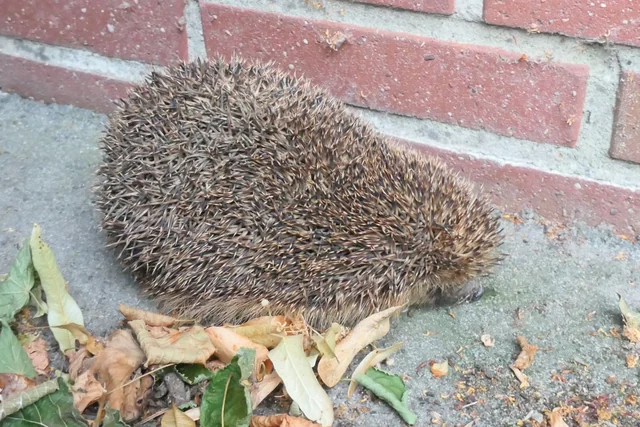
Hedgehog next to a brick wall, with visible thorns and little head exposed.
Goldfish in Kalkar, Germany, in 2025. Illustration of the species; it is not a record of Cabeceiras.
Photography: Pieter Delicaat · CC BY-SA 4.0
About this photograph

Date given at source: . Source consulted in 2026-11-07. EXIF orientation, proportional resizing and WebP conversion of the current version in Commons; no retouching or additional clipping.

Request removal or correct the photo credit

Hedgehogs can become active again when temperatures rise.

Includes an activity to try →
Read here and view sources

According to FCT NOVA, the hibernation of the hedgehog (Erinaceus europaeus) can be interrupted for warmer periods. This nocturnal and solitary mammal eats, among other foods, insects, worms, snails and fruit. Faced with a threat, he curls up and exposes the thorns. Woods, hedges, meadows and gardens are part of their habitats. This is general biology: the source does not confirm a register in the municipality. The short legs have five fingers and there is a small tail under the thorns. FCT NOVA also mentions the ability to climb and move in the water. These are general characteristics of the species, not proposed to test the capabilities of an animal found.

Source and context

FCT NOVA — FCT VIVA: Erinaceus europaeus

Accessed: . Editorial summary; the date of consultation is not the date of the facts.

YOUR LOCAL GUIDE

What would you like to discover?

Take a closer look.