Discover Cabeceiras de BastoFree independent guide
ViveCabeceirasYOUR GUIDE TO CABECEIRAS
ENEnglish
SearchSaved

Story

Choose a story to start with. You can change the subject or fine tune the search.

3 stories · Time travel · Search: levadas

Time travel

Documents, details and traditions: there is more to discover than a date on a stone.

Choose a story · 3
Abadim · history of grinding

The flour also yielded to the king
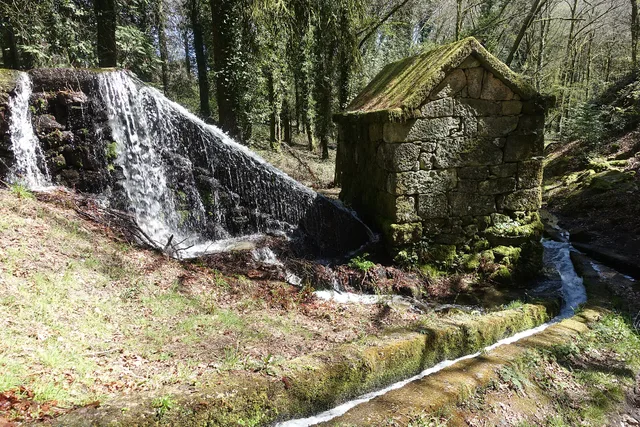
Granite mill served by Levada de Víbora, in all Moinhos de Rei, with waterfall and canal in the wooded surroundings. Register 2025.
Moinhos de Rei · the place of grinding© Joseolgonⓘ

Moinhos de Rei keeps a history of water, cereal and income.

Read here and view sources

In the historical narrative published by the Municipality, these community mills belonged to the Crown and half of the income was destined to the King. The same description refers to the later passage to a symbolic tax. The name of the place thus opens a window on the economic organization of the milling.

The income mentioned concerns the economic activity of the mill. It should not be converted, without further information, into a rule according to which each person delivers half of the cereal bag to the king. The presentation does not indicate accounts, milled quantities or the date of transition to symbolic tax.

When visiting the history of the Moinhos de Rei, you can ask two different questions: how did water reach the mill and how were the benefits of grinding distributed? The lead helps to follow the first; the reference to the Crown opens the second. Technique, organization and income are part of the same work landscape.

See Fact sheet: Moinhos de Rei
Source and context

Municipality — Moinhos de Rei, historical account of milling and the Crown

Accessed: . Editorial summary; the date of consultation is not the date of the facts.

Heritage of Outeiro · account published in 2012

A Medieval Image Found On Earth

Wood can keep centuries of memory.

Includes an activity to try →Explore: Three moments, different dates →
Read here and view sources

A municipal report of 2012 highlights a sculpture of Santa Maria belonging to the church of Outeiro, dating from the 13th or 14th century. The Virgin appears crowned, seated on a throne, with the Child on his knees. The account says that the play was found buried in the place known as Mata da Santa and taken by parishioners to church. The news doesn't date the discovery. This story allows to know the path of the image, without confirming where it is currently exposed.

Words in this story: see explanations →See Fact sheet: Igreja de Santa Maria Maior de Outeiro
Source and context

Municipality — Parish of Outeiro exposes acquis No Núcleo de Arte Sacra, 09/10/2012

Accessed: . Editorial summary; the date of consultation is not the date of the facts.

Vila Nune · historical look to the margin of Atei

The work was on the other side

A memory of Vila Nune also looks at Atei.

Includes an activity to try →
Read here and view sources

In describing the Tâmega in 1758, the vicar refers mills that worked in the summer, in front of the parish, in the limits of São Pedro de Atei. He also recalls traces of attempts to build levadas and dams in the neighborhoods.

The reference shows how the report crosses the river. The mentioned mills are on the bank of Atei: this reading does not transform them into patrimony located in Cabeceiras or confirms traces visitable today.

Source and context

Municipality — Parish Memoirs of Vila Nune, 23/05/1758

Accessed: . Editorial summary; the date of consultation is not the date of the facts.

YOUR LOCAL GUIDE

What would you like to discover?

Take a closer look.