Discover Cabeceiras de BastoFree independent guide
ViveCabeceirasYOUR GUIDE TO CABECEIRAS
ENEnglish
SearchSaved

Stories of Cabeceiras

Choose a story to start with. You can change the subject or fine tune the search.

3 leituras · Todos os temas · Pesquisa: foral

Time travel

Documents, details and traditions: there is more to discover than a date on a stone.

Escolher uma história · 3
Documented history · 1514

Two outcasts, seven days

October 1514 left two marks on the territory.

Inclui uma atividade para experimentar →Explorar: Abadim: documentos e marcas no lugar →
Read here and consult sources

Manuel I granted the foral of Cabeceiras in 5 October 1514 and that of Vadym, today Abadim, in 12 October. Seven days separate the documents: the administrative history of the territory goes through more than one place.

But what was the point of reviewing the outsiders? The Tombo Tower exhibition explains the general context: there were complaints about outdated charges, coins and weights and old texts difficult to interpret. Manueline reform sought to review these documents. Local dates of 1514 belong to this broader movement; it does not mean that the settlements began to exist that year.

The work also required registration and preservation. The same exhibition describes the preparation in triplicate: one copy for the chamber, one for the landlord of the rights and another for the Tower of the Tombo. This general explanation helps to understand why an administrative document could have several copies. It does not identify here the whereabouts of each copy of the two local forals.

In 5 October 2024, Casa do Tempo received a tertulia over the 510 years of the foral, with José Viriato Chapel and Porfirio Correia. The municipal news recalls the two documents and their importance for the administrative organization. The celebration is a gateway to history; it does not replace the reading of the forals themselves.

Palavras desta história: ver explicações →
Source and context

Municipality — celebration of fora, published in 07/10/2024

DGLAB / Torre do Tombo and Casa de Bragança Foundation — O Foral Novo: records that tell stories, pp. 2 and 4 PDF

Accessed: . Editorial summary; the date of consultation is not the date of the facts.
Heritage of Abadim

A star in the pillory

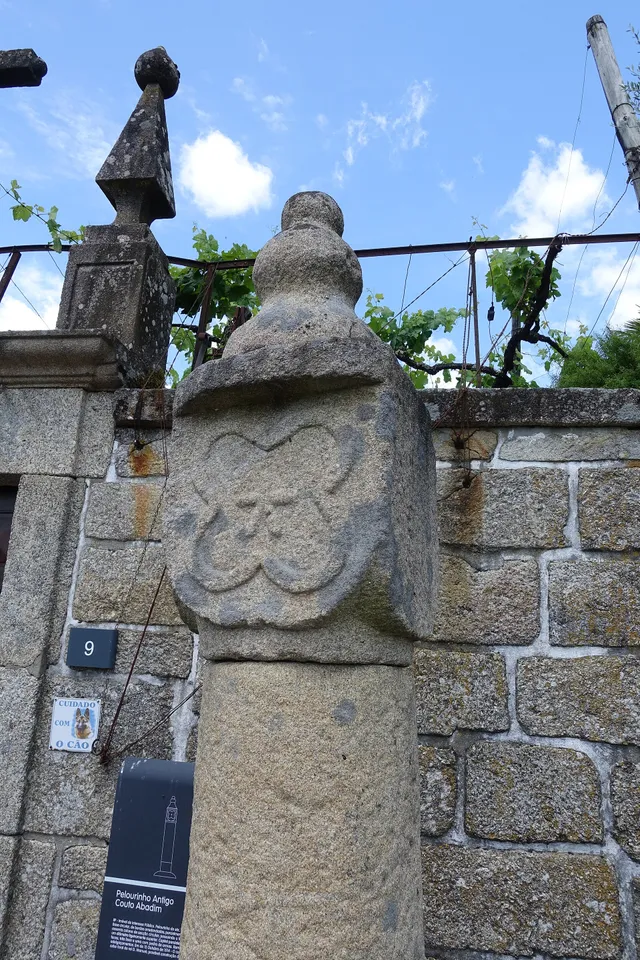
Details of the Pelourinho de Abadim in granite
Details of Pelourinho de Abadim. The star described in the text is not visible on this face.© Joseolgonⓘ

A small monument holds a history of autonomy.

Read here and consult sources

The pillory of Abadim seems simple at first glance: a smooth column of granite, a cubic capite and a pear-shaped shot. But on one side you find a five-pointed star inside a four-lobe frame. The Museum links the monument to the administrative and judicial autonomy of the former Couto, extinguished in 1836. The Museum brings its construction closer to the foral of 1514, but the record of the Cultural Heritage warns that dating is difficult and that the piece can be quite later. The detail of the star invites you to look again at a piece that would easily go unnoticed.

The official record describes four faces on the capital: three undecorated and one with the star. This helps to understand why a photograph from another side may not show the best known reason. The record places the monument next to the portal of the House of Tower of Tronco and documents the classification as Public Interest Property in 1933. The date of protection is not the date of construction.

The foral, the stone age and the patrimonial classification answer different questions. Instead of automatically assigning ‘1514’ to the entire monument, compare the described form, the proposals for dating and the documents that changed its status.

Palavras desta história: ver explicações →See Fact sheet: Pelourinho de Abadim
Source and context

Basto Land Museum / António P. Dinis — Pelourinho de Abadim, 26/01/2018
Accessed:

Cultural heritage — Pelourinho de Abadim, record 341971, historical-artistic note
Accessed:

Editorial summary; the date of consultation is not the date of the facts.
Heritage of Abadim

A tower to look slowly

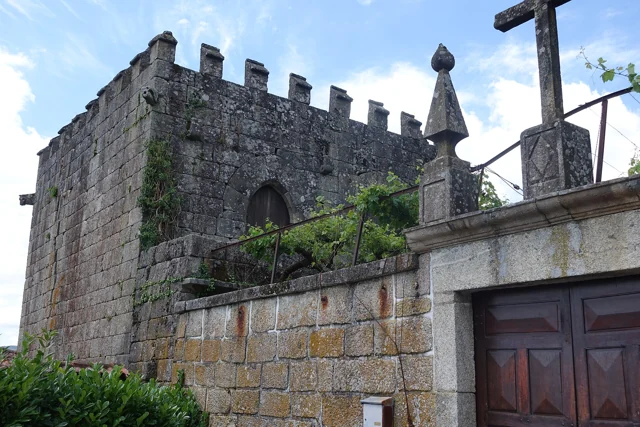
Tower of Abadim, with yellow crowning and stone constructions around.
Tower of Abadim · yellow crowning and surrounding constructions.© Joseolgonⓘ

History is also read in windows and corners.

Explorar: Lê as marcas do poder e do tempo →
Read here and consult sources

The Tower of Abadim has battlements at the top and gargoyles with animal shapes in the corners. António P. Dinis highlights the settery, the broken arch doors and, inside, conversationals next to the windows. It proposes a construction of the sixteenth century, perhaps from the foral period, without setting an exact date.

The memory of 1758 places the tower in the middle of the Village of the Tower and states that it did not suffer ruin in the earthquake of 1755. The same document describes Abadim with ordinary judge and Chamber, in an organization proper to the former Couto. Reading architecture and administration together helps to understand the importance of the building; the interior description does not confirm current access.

The text of António P. Dinis distinguishes the probable place of the medieval manor from the quintentist construction described today. It is not necessarily the same building preserved without change. The designation Casa do Tronco accompanies the hypothesis that here the justice and the chain of trust functioned.

In the memory of 1758, the election of the ordinary judge and of the House was presided over by the donate. The document also refers to the intervention of the Guimarães magistrate in correction or new scope. Thus, the existence of own organs should not be confused with an administration without relations with other authorities.

Palavras desta história: ver explicações →See Fact sheet: Torre de Abadim / Casa do Tronco
Source and context

Basto Land Museum / António P. Dinis — Tower of Abadim, 17/01/2018

Municipality — Parish memories of Abadim, José Antunes, 22/05/1758

Accessed: . Editorial summary; the date of consultation is not the date of the facts.

YOUR LOCAL GUIDE

What would you like to discover?

Take a closer look.