Discover Cabeceiras de BastoFree independent guide
ViveCabeceirasYOUR GUIDE TO CABECEIRAS
ENEnglish
SearchSaved
8 STORIES · CONTINUOUS READING

Small lives, big surprises

It looks at nature on the scale of details: leaves, insects, a shell with bands and a slug with spots. It compares shapes and experiences the activities, distinguishing local photographs from general explanations about the species.

All stories in the order of the route. You can print this page by the browser; sources and credits follow the reading.

Things to try8 activities · 6 interactive explorations · 4 questions
Middle and upper Tâmega basin · landscape studied in 2016–2017

The river has a woodland too

Trees along the banks are part of the waterscape.

The 2016–2017 report describes riverside woodland in the middle and upper Tâmega basin with alders, ashes and willows, and birches along smaller waterways. It notes that these strips are often narrow, constrained by cultivated land. This is the regional description from that study, which covers Cabeceiras and other municipalities.

Bank, water and riverbed are connected but offer different conditions. The gold-striped salamander depends on damp environments and reproduces in water; young freshwater mussels live buried in the riverbed and need oxygen. The diagram explores these general relationships without representing a place where all these species have been observed together.

Read a riverbank photograph in three bands: tree crowns, ground beside the water and riverbed. Choose a species from these readings and consider which band it needs at each life stage. One landscape can contain different shelter, food and breeding places. That combination makes a river worth observing slowly.

IT WORKS A RIVER FOR THE FRONT

Open a zone and follow the connections between environments.

  1. 1 · Margins and vegetation

    The salamander-lusitan uses humid environments near the streams.

    Meet the salamander →
  2. 2 · In water

    Salamander larvae develop in the water before metamorphosis.

    Follow transformation →
  3. 3 · At the bottom of the river

    Young mussels live buried and need oxygen.

    Discover life in bed →
Simplified ecological relations, without a scale.
Return to observation proposal ↑
Source and context

Biosphere / Iberdrola, APA file — Monitoring of ichthyofauna 2016–2017, February 2018; pp. 5, 35 and 40, station record 22 on p. 175 PDF
Accessed:

Link to Nature Protection — Salamander-lusitan
Accessed:

ICNF — Margaritifera margaritifera, ecology, reproduction and threats, pp. 2–3
Accessed:

Editorial summary; the date of consultation is not the date of the facts.

Back to index ↑
Species biology · with a local record

A small bird that dives

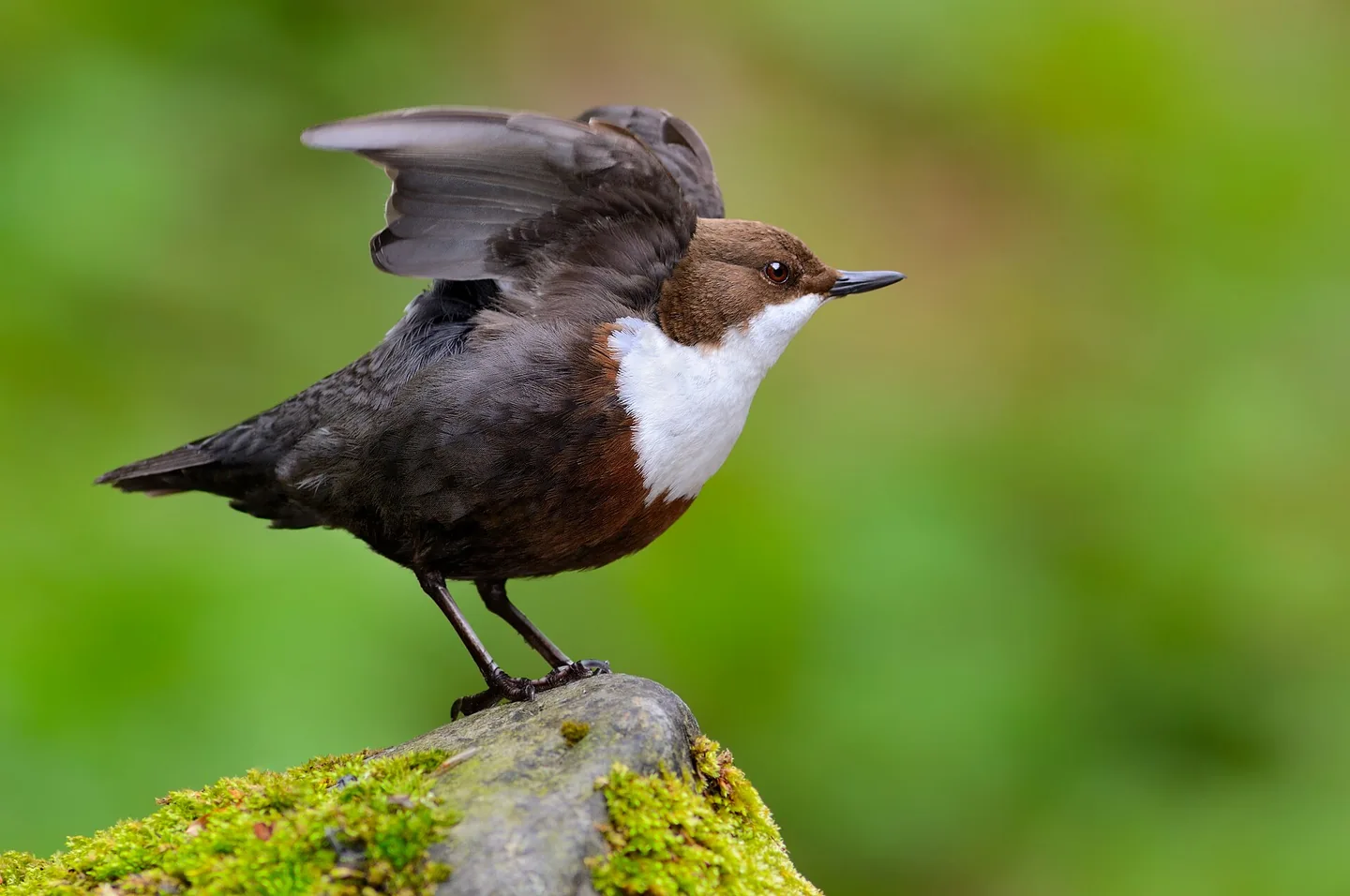
White-throated dipper with open wings.
White-throated dipper with open wings.Illustrative photograph
Олексій Карпенко
ⓘ

White-throated dipper with open wings.

Photography: Олексій Карпенко · CC BY-SA 4.0

View source

Date given at source: .

Request removal or correct the photo credit

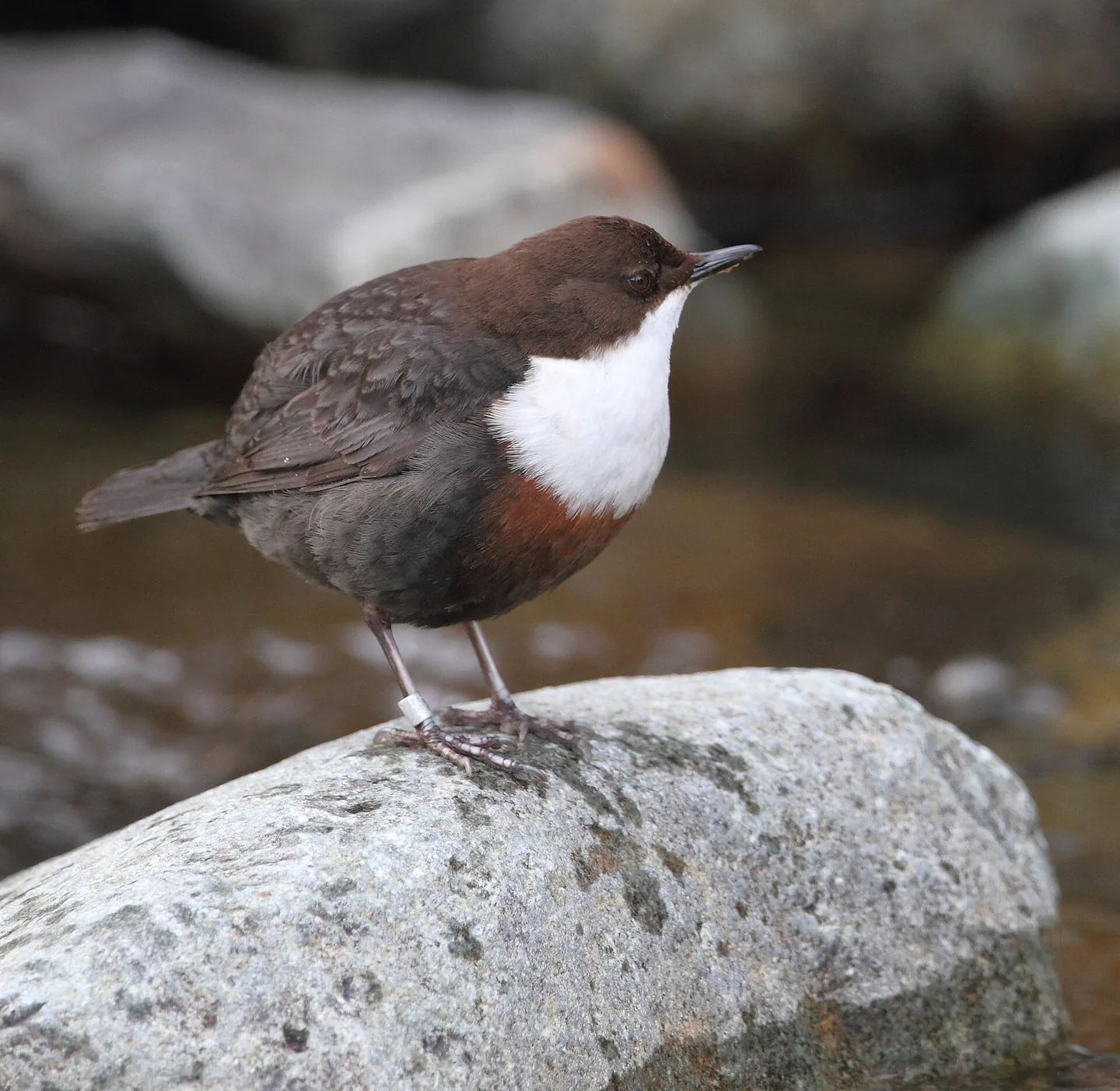
The white breast of a dipper.
The white breast of a dipper.Illustrative photograph
Alun Williams333
ⓘ

The white breast of a dipper.

Photography: Alun Williams333 · CC BY-SA 4.0

View source

Date given at source: .

Request removal or correct the photo credit

The white-throated dipper brings birdwatching into the current.

A compact body, short tail and white breast in adults offer clues to Cinclus cinclus, the white-throated dipper. This bird can dive and is associated with fast-flowing streams, especially in mountains. The gallery includes a local record; the photograph shows the bird in a hand, not the diving behaviour described here. Aves de Portugal describes fast, direct flight and classifies the species as resident: it may remain in breeding areas throughout the year. That general trait does not confirm a continuous presence at the local record’s location.

Underwater, the food it seeks includes small invertebrates. The BTO describes the bird entering the current from rocks or flying low to another perch. The stream is therefore a feeding space, not simply a backdrop where the bird appears.

Age also changes its appearance: juveniles are greyer and more mottled than white-breasted adults. This biological comparison does not assign an age to the photographed bird. A record shows an encounter; understanding what a species does requires bringing together other observations and sources.

The stream is more than water

Open an option and choose the story.

  1. Small animals with their own sheltersSmall shelters underwater →
  2. The vegetation accompanying the currentThe river also has a forest →
  3. How Life Helps to Study RiversThe life of the river also tells a story →
These relationships explain the environment; they do not confirm that animals from different readings share the same point.
Return to observation proposal ↑
Source and context

Birds of Portugal — Watermelon, identification, habits and distribution

British Trust for Ornithology — BirdFacts: Dipper, Cinclus cinclus

Accessed: . Editorial summary; the date of consultation is not the date of the facts.

Back to index ↑
Serra da Cabreira · flora and habitat

A carnivorous plant in the mountains

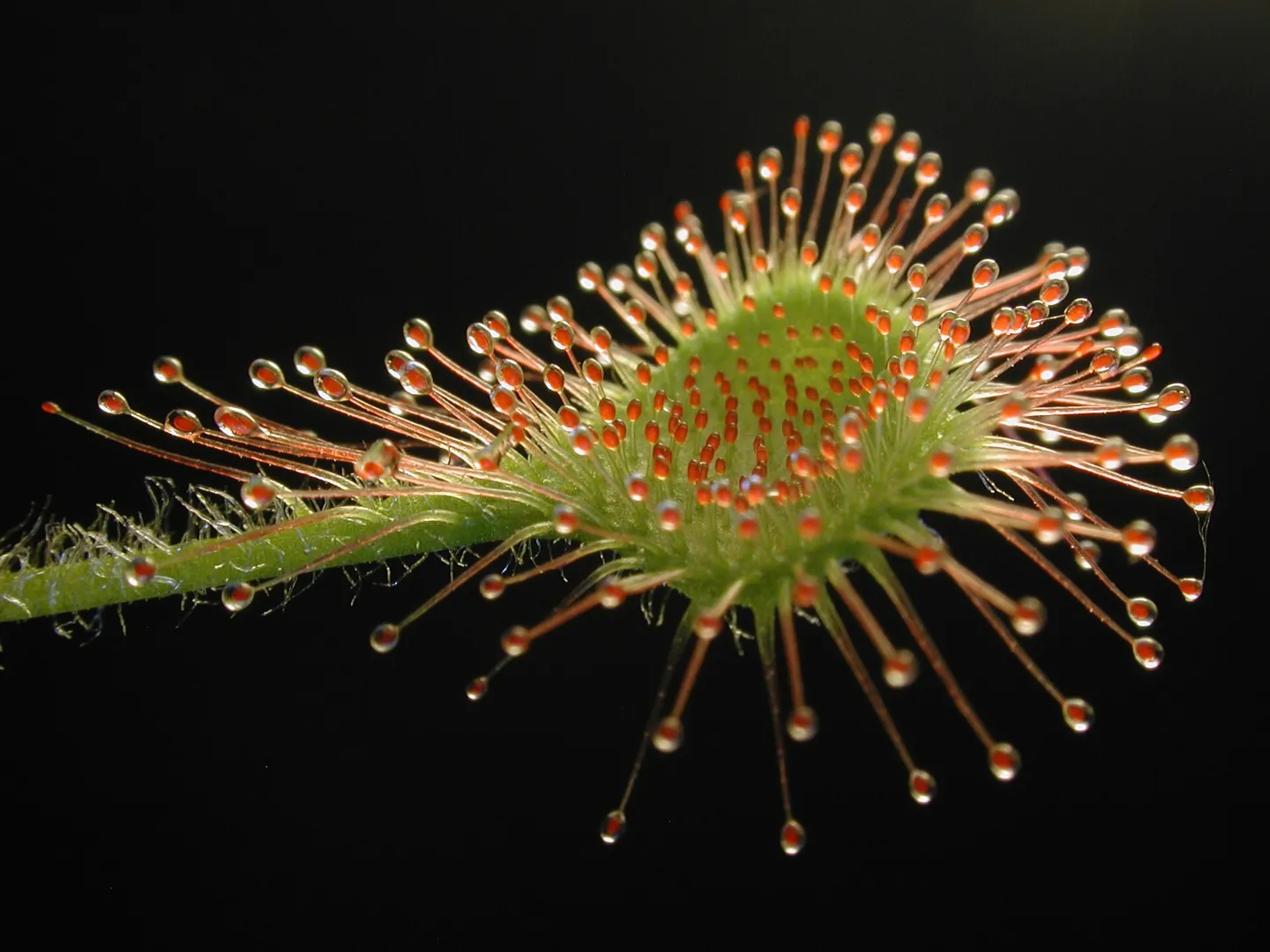
Drosera rotundifolia leaf with tentacles and droplets. Species photograph, not located in the Cabreira.
Petr Dlouhý
ⓘ

Drosera rotundifolia leaf with tentacles and droplets. Species photograph, not located in the Cabreira.

Photography: Petr Dlouhý · CC BY-SA 3.0

View source

Photograph date not stated.

Request removal or correct the photo credit

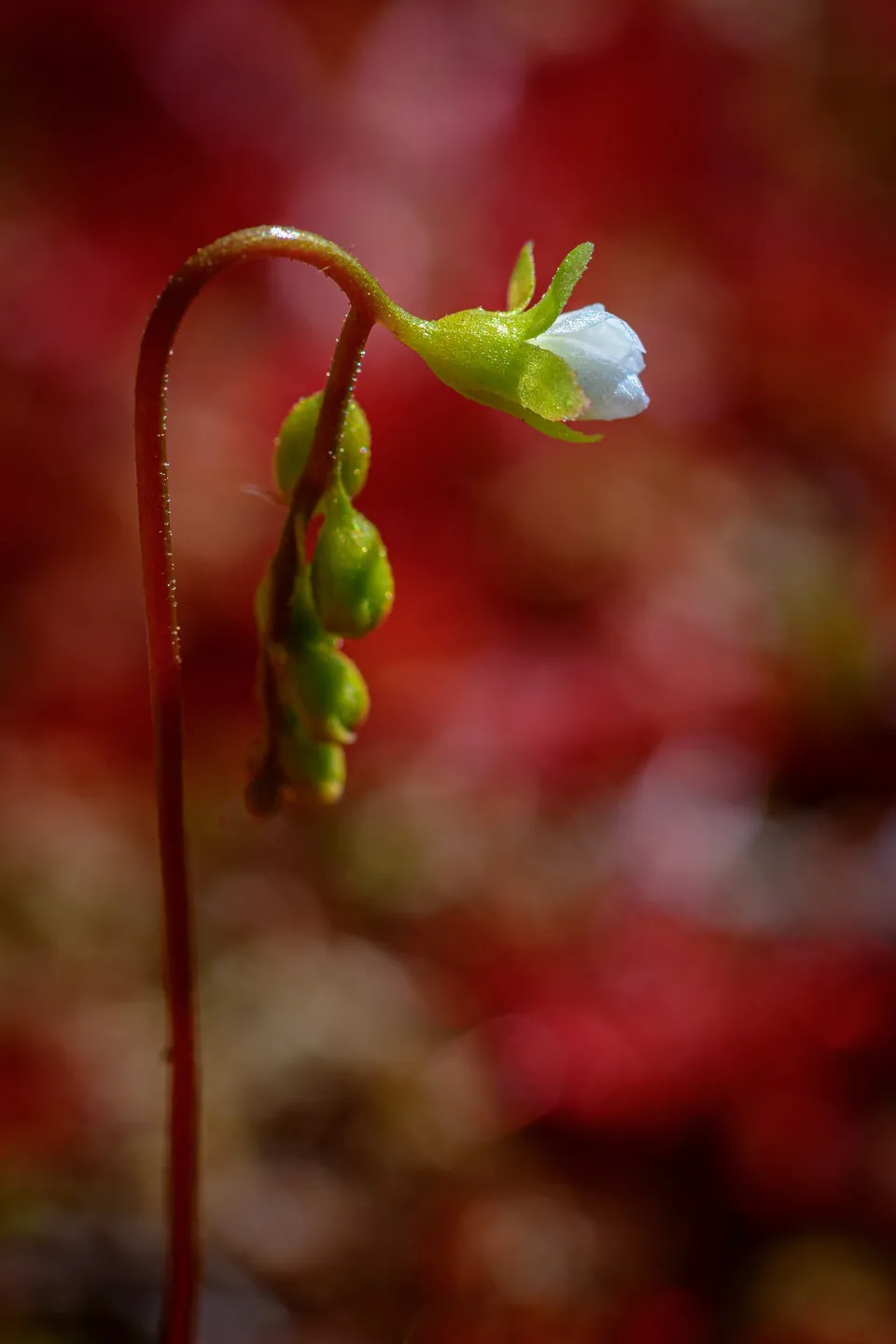
Drosera rotundifolia flower. Species illustration, not a local observation.
Stephan Sprinz
ⓘ

Drosera rotundifolia flower. Species illustration, not a local observation.

Photography: Stephan Sprinz · CC BY 4.0

View source

Date given at source: .

Request removal or correct the photo credit

Sundew is one of Cabreira’s small surprises.

Visit Cabeceiras includes Drosera rotundifolia in the mountain flora. Flora-On describes its habitat as waterlogged meadows, marshes and peat bogs with Sphagnum mosses, generally in mountain areas. The reference concerns Cabreira as a whole; it does not identify an observation point in this guide.

A review by the US Forest Service helps explain this connection with water: it describes continuously moist conditions and soils that are often acidic and poor in nutrients. The plant tolerates prolonged dry spells poorly. This explanation concerns the species in general, rather than measurements of soil or water in Cabreira.

Knowing a plant also means knowing the habitat it depends on. A photograph shows its shape; a habitat description explains why looking for a similar flower on any hillside is not enough. Moisture is a key clue here. Observe differences between habitats without entering waterlogged areas or removing plants for comparison.

Moisture connects these stories

Open an option and choose the story.

  1. A sticky leafIt looks dew, but it is a trap →
  2. The world of mossA small carpet full of life →
  3. Wet grasslandsA reed tells a history of moisture →
Exploits general characteristics of plants and habitats; these links do not indicate collection or sighting sites.
Source and context

Visit Cabeceiras — natural heritage of Serra da Cabreira
Accessed:

Portuguese Botany Society — Flora-On, Drosera rotundifolia
Accessed:

USDA Forest Service — Robin F. Matthews, Drosera rotundifolia, February review, 1994
Accessed:

Editorial summary; the date of consultation is not the date of the facts.

Back to index ↑
Ecology · general context for observation

From flower to flower, a shared task

Pollination involves far more than honeybees.

When visiting flowers, insects can carry pollen between plants. Bees, beetles and wasps take part, explain entomologists Renata Santos and Albano Soares. Many bees live alone, without a hive. This general explanation helps us look more closely at flowers; species present in Cabeceiras need local records.

Pollen exchange between individuals contributes to plants’ genetic diversity. The explanation published by the Gulbenkian links pollinators with both wild plants and food crops, including apple trees, almond trees and strawberry plants.

Flowers also attract less familiar visitors: hoverflies, butterflies, moths and some beetles. Watching who arrives, how long they stay and where they go next is one way to begin. Recording a visit alone, however, does not demonstrate that the insect transferred pollen.

Choose what you want to follow

Open an option and choose the story.

  1. How does pollen travel?Small loads on the legs →
  2. Is it a bee or a fly?It looks like a wasp, but it can be a fly →
  3. Which plants enter the history of wings?The wings have a history of plants →
  4. How is a blueberry made?A blueberry is a small set →
A visit to the flower opens several questions. Each story distinguishes the general characteristics of local records.
Return to observation proposal ↑
Source and context

Calouste Gulbenkian Foundation — explanations of entomologists Renata Santos and Albano Soares, 07/06/2022

Accessed: . Editorial summary; the date of consultation is not the date of the facts.

Back to index ↑
General ecology · wood and biodiversity

A log can be a little home

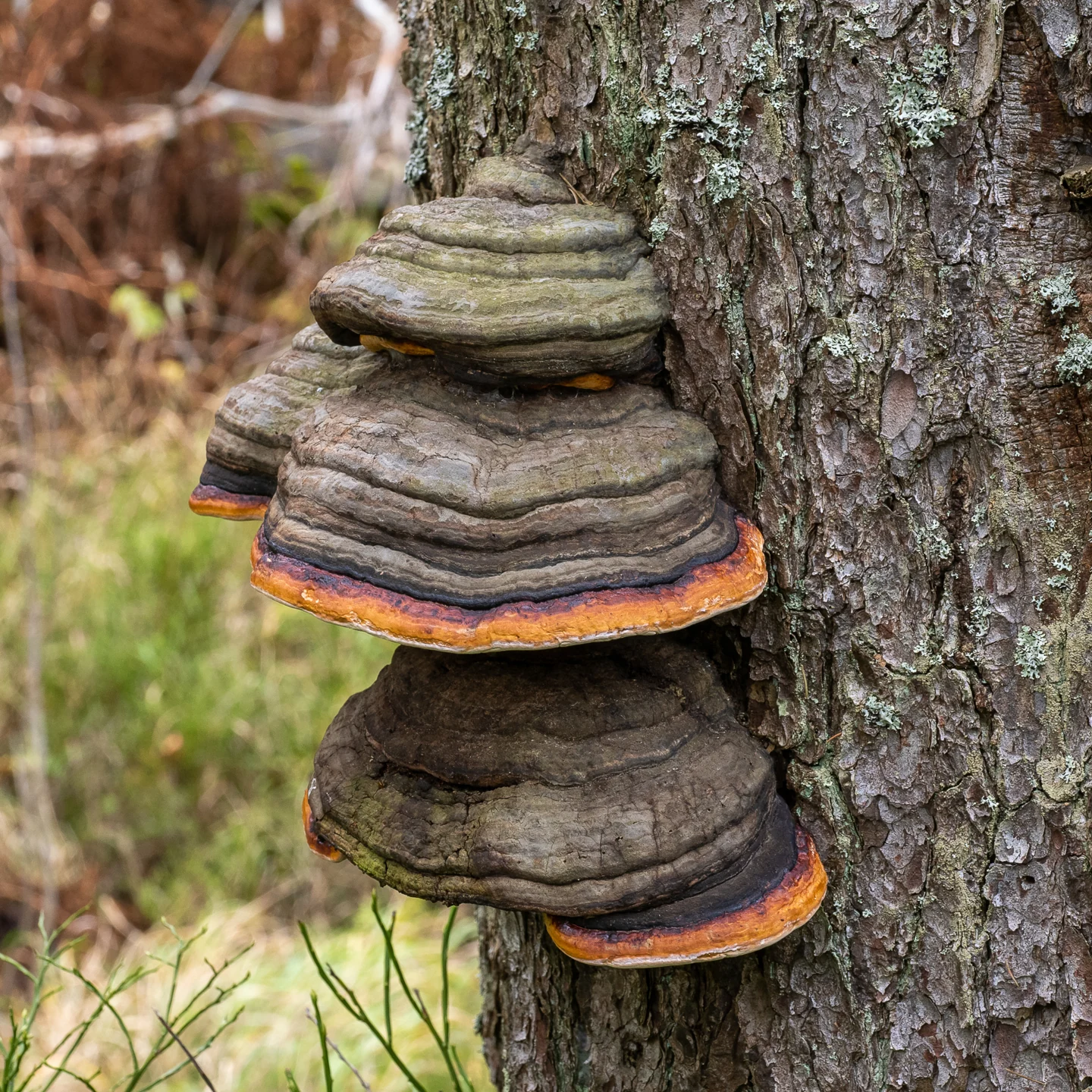
Fomitopsis pinicola on a tree trunk.
Fomitopsis pinicola on a tree trunk.Illustrative photograph
Piotr Lukasik
ⓘ

Fomitopsis pinicola on a tree trunk.

Photography: Piotr Lukasik · CC BY 4.0

View source

Date given at source: .

Request removal or correct the photo credit

Decaying wood is still full of connections.

A fallen log remains part of woodland life. Fungi break down its wood, which also supports other organisms, including insect larvae. Researcher Susana Gonçalves explains that some tree cavities result from fungal activity and can later shelter animals. A standing tree with cavities and a log on the ground offer different things to observe. In green spaces, retaining veteran trees requires assessment and monitoring of the risk of falling. This ecological explanation does not confirm a connection between the beetle photographed in Cabeceiras and a particular tree.

But wood does not always decay in the same way. In white rot, fungi break down lignin and cellulose; the wood may become pale, fibrous or spongy. In brown rot, decay mainly affects cellulose and hemicellulose, leaving a brownish residue rich in lignin. Wood may become brittle and break into small blocks. The University of California distinguishes these processes by their effects on wood components.

White and brown describe the decay, not the colour of a mushroom cap. They are not species names either. A visible reproductive structure on a trunk reveals only part of the story: decay may extend upwards or downwards and remain hidden. A photograph cannot measure that extent or assess a tree’s stability.

A log opens several stories

Open an option and choose the story.

  1. How to get foodA meal prepared outside →
  2. Larvae and woodAn old trunk still feeds life →
  3. The importance of sheltersA different house throughout the year →
  4. An example of brown decompositionShelf growing in a trunk →
  5. From wood to leaves on the groundA fallen leaf still has way →
These relationships are explanations of general ecology; they do not demonstrate who occupies a concrete tree.
See local fungal records
Return to observation proposal ↑
Source and context

Gulbenkian Garden — ecology of fungi, with Susana Gonçalves (17/04/2023)

University of California — Wood Decay Fungi in Landscape Trees (revised August 2019)

Accessed: . Editorial summary; the date of consultation is not the date of the facts.

Back to index ↑
Species recorded in the municipality · general ecology

An old trunk still nourishes life

For beetle larvae, decaying wood can be both home and food.

The larvae of Dorcus parallelipipedus live and feed in decaying wood, according to The Wildlife Trusts. The catalogue photograph documents an adult observed in the municipality; it does not show larvae or confirm the tree in which they developed. Connect this story with wood fungi: an ageing trunk can support different forms of life. There is no need to dismantle an animal’s shelter to observe it. In adults, The Wildlife Trusts highlights the broad head, jaws and entirely black wing cases. These are clues to compare with the available photograph, without concluding that every dark beetle belongs to this species.

A photograph, several phases of history

Open an option and choose the story.

  1. Why do you change the texture of the wood?

    Wood can sustain different organisms throughout decomposition.

    A log can be a small house →
  2. How the fungi get food

    The fungi transform the food out of the body before absorbing it.

    A meal prepared outside →
  3. Decomposition continues on the ground

    Fallen leaves and branches continue to be part of the life of the ground.

    A fallen leaf still has way →
The adult was photographed in the municipality. Links explain ecological relationships; they do not identify the wood where this individual grew up.
Return to observation proposal ↑
Source and context

The Wildlife Trusts — Lesser stag beetle, Dorcus parallelipipedus
Consultations: ,

Editorial summary; the date of consultation is not the date of the facts.

Back to index ↑
Cavez · local record and general biology

One shell, many patterns

Snails of the same species do not all wear the same pattern.

João Lima photographed this snail on 15 May 2024. The record is identified as Cepaea nemoralis, and comparing its published point with the CAOP2025 boundaries places it in Cavez. In the image, dark bands follow the shell’s whorls among wet leaves.

The Carnegie Museum of Natural History describes a shell that can have bands of different widths or no bands at all. The lip of the opening is usually brown, but not always. The species can also be confused with Cepaea hortensis. Colour, pattern and shape need to be considered together; a photograph that hides the opening leaves some clues out of sight.

Try following the spiral with your eyes. You do not need to move the animal to discover a pattern.

Return to observation proposal ↑
Source and context

Carnegie Museum of Natural History — Cepaea nemoralis

Accessed: . Editorial summary; the date of consultation is not the date of the facts.

Back to index ↑
Arco de Baúlhe e Vila Nune · local record and general biology

A slug with a leopard pattern

Discreet animals deserve a place in the municipality’s portrait too.

Mauro’s photograph shows a slug with dark markings and extended tentacles on stone. The record, dated 17 September 2021, is identified as Limax maximus. Comparing the published point with CAOP2025 places it in Arco de Baúlhe e Vila Nune.

The Royal Horticultural Society includes this species in its comparison of large patterned slugs, noting its nocturnal behaviour. The local photograph records an encounter; it cannot predict when the animal will appear in the same place again. Its body pattern offers a good question to begin with: where do you see separate spots, and where do they seem to form lines?

Alongside the photograph of the Cavez snail, it offers two different ways to discover land molluscs: the spiral of a shell and the pattern of an elongated body.

Return to observation proposal ↑
Source and context

Royal Horticultural Society — slug research and comparison with Limax maximus

Accessed: . Editorial summary; the date of consultation is not the date of the facts.

Back to index ↑
YOUR LOCAL GUIDE

What would you like to discover?

Take a closer look.