Discover Cabeceiras de BastoFree independent guide
ViveCabeceirasYOUR GUIDE TO CABECEIRAS
ENEnglish
SearchSaved
7 STORIES · CONTINUOUS READING

A walk with another look

Seven readings to move from interpretation spaces to small details of nature: moss, wings, aquatic insects, leaves and wood. Explore links and observation proposals; it is a reading sequence, without mandatory itinerary or promise of sightings.

All stories in the order of the route. You can print this page by the browser; sources and credits follow the reading.

Things to try6 activities · 6 interactive explorations · 5 questions
Refojos de Basto · history and mission of an educational centre

A green space can teach us too
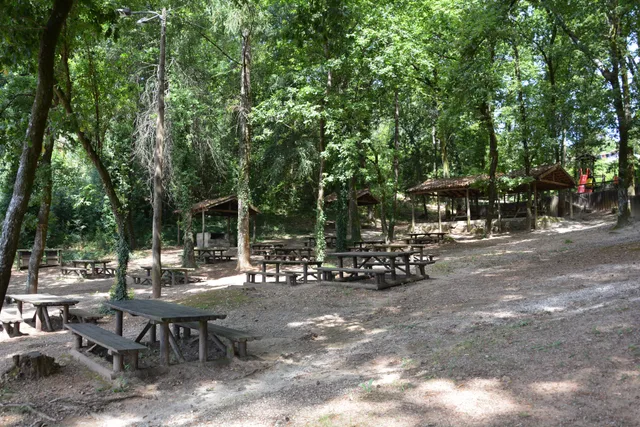
Landscape at Vinha de Mouros.
Lunch park of Vinha de Mouros. The image shows this area of the equipment; it is not an inventory of fauna or flora.ⓘ

At Vinha de Mouros, leisure meets environmental education.

The Vinha de Mouros Environmental Education Centre opened on 10 August 2001. In the municipal presentation, conserving and promoting local flora and fauna is part of its mission, alongside educational work with schools. The space was designed to bring different audiences closer to the municipality’s natural heritage.

The same presentation brings together different functions: picnic areas, play spaces, minigolf, a fitness circuit and support for the educational programme. A visit can therefore begin with a break and continue with questions about the landscape. The practical profile distinguishes facilities and conditions of use; this story does not announce a scheduled guided activity.

A useful question separates what we see from what we infer. A photograph of the park shows trees and tables, but does not identify every plant or demonstrate that an animal species lives freely there. The following stories help us look at leaves, soil and relationships between living things, without turning examples of general biology into an inventory of Vinha de Mouros.

Choose what you want to observe

Open an option and choose the story.

  1. How do you change a tree throughout the year?A tree, several visits →
  2. What's under your feet?Underfoot, a mixed world →
  3. Who visits the flowers?From flower to flower, a shared task →
General biology to prepare questions; these links do not confirm species in this park.
See Fact sheet: Vinha de Mouros
Source and context

Municipality — Centro de Educação Ambiental of Vinha de Mouros: origin and objectives

Accessed: . Editorial summary; the date of consultation is not the date of the facts.

Back to index ↑
Interpretation centre

A first encounter at Moinhos de Rei

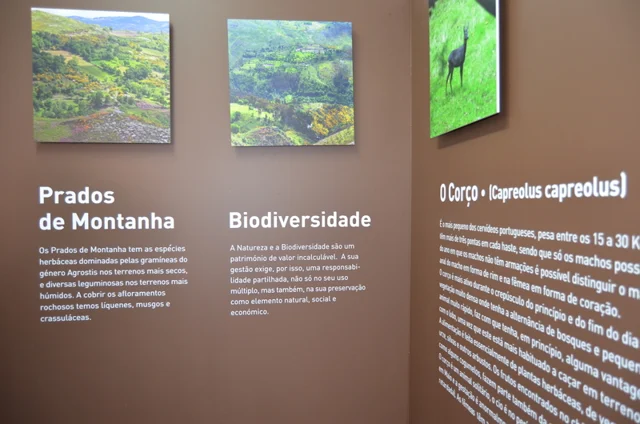
Painéis do Núcleo Interpretativo de Vida Selvagem sobre prados de montanha, biodiversidade e corço.
Interpretation panels at the wildlife core.ⓘ

Learn about Cabreira before heading into the countryside.

The Núcleo Interpretativo de Vida Selvagem opened on 31 August 2013 in Abadim. The municipal presentation explains its connection with the fauna and flora of Serra da Cabreira and with raising awareness of the forest. Consult the place profile to prepare your visit.

The building has a history too: the municipal presentation places the centre in a small annex previously used by the Social Services. Its new role brought learning about animals and plants together with an appreciation of the forest and local customs.

It is a starting point for asking questions about the landscape: how are scrub, trees and animals connected? The following stories let you continue exploring at home. Learning about a species or habitat does not guarantee a sighting during a visit.

The municipality connects forest protection with local customs. This offers a view of the Cabreira as an inhabited landscape, where learning about plants and animals also helps us consider people’s relationship with the mountains.

Before opening another story, choose a question: where does an animal find food, where does it shelter, or how does the place change during the year? Keep that question and look for an answer in two different readings. A beautiful image can be just the start of discovery.

From interpretation to discovery

Open an option and choose the story.

  1. The woods: more than an empty spaceMedronheiro, carqueja e tojo →
  2. The wolf: know before searchingIberian wolf →
  3. How environments connectA landscape needs connections →
It's still in the landscape stories.
See Fact sheet: Núcleo Interpretativo de Vida Selvagem
Source and context

Municipality — Núcleo Interpretativo de Vida Selvagem
Consultations: ,

Editorial summary; the date of consultation is not the date of the facts.

Back to index ↑
General biology · mosses, without a local species inventory

A small carpet full of life

Mosses invite a closer look.

Bryophytes are small plants whose life cycle depends heavily on moisture. Their diversity is not only green: there are different shapes, colours and textures. According to the scientific presentation from Serralves, they contribute to nutrient recycling and can colonise surfaces where other plants cannot yet establish themselves, helping soil form. Learning about this group brings new questions to a walk, without needing to pull up specimens.

Mosses have no true roots. Kew describes rhizoids as small filaments whose main role is anchoring the plant to rock, bark or soil. Absorbent surfaces help take up water and minerals from the surroundings. Contact with moisture is therefore part of how they live.

They do not produce flowers either: they reproduce through spores. Spaces between the small plants help retain water, keeping the soil and nearby surroundings moist. These carpets can also shelter small animals.

This does not mean all mosses need the same conditions. Species are adapted to very different environments, and some survive dry periods in a dormant state. A green patch on a wall is not enough to identify a species or explain its whole life cycle.

Small shapes, big differences

Open an option and choose the story.

  1. A fern with an underground stemWhen fetuses occupy the landscape →
  2. Another plant that produces sporesA plant does not need to have flowers →
  3. A lichen is not a mossA lichen is a partnership →
  4. The life that gathers in the groundUnderfoot, a mixed world →
Compare methods of fixation, reproduction and relationship with water.
Source and context

Serralves / MHNC-UP and CIBIO-INBIO — Briophytes, 20 of November 2016

Royal Botanic Gardens, Kew — 7 interesting things about moss, Ellen McHale, 23/05/2020

Accessed: . Editorial summary; the date of consultation is not the date of the facts.

Back to index ↑
General biology · dragonflies and damselflies, without a confirmed local record

Resting wings offer a clue

Dragonflies and damselflies do not rest in the same way.

The Tagis guide describes damselflies with two similar pairs of wings, usually held closed or slightly apart vertically when perched. Dragonflies keep theirs open horizontally. This is an initial observation clue, not a species identification. Adult dragonflies can move away from watercourses thanks to their flying ability.

Both groups belong to the order Odonata. The guide highlights compound eyes, short antennae and jaws used to capture other animals. Their prey includes flies and mosquitoes: these wings are part of a predator story, not just one of colours.

The connection with water also changes with life stage. Dragonflies need water to complete their cycle, but adults can hunt in sunny clearings far from the river where they began life. Seeing an adult above a path does not locate its breeding point. Compare wing position, behaviour and habitat without turning one clue into an identification.

Wings, water and food

Open an option and choose the story.

  1. Another insect with an aquatic phaseSmall shelters underwater →
  2. Flies: visitors to flowersIt looks like a wasp, but it can be a fly →
  3. The banks are also part of the riverThe river also has a forest →
Compare different insects and the relationships that connect them to the environment.
Return to observation proposal ↑
Source and context

Tagis — Insects in Order, Odonata, dragonflies, dragonflies and friganiums (pp. 39–43 and 74)

Accessed: . Editorial summary; the date of consultation is not the date of the facts.

Back to index ↑
General biology · aquatic insects, without a local species inventory

Tiny shelters beneath the water

Some larvae use sand and plant fragments.

Caddisfly larvae live in water; many build shelters from sand or plant fragments. They form part of river and stream food webs, providing food for fish, birds and amphibians. The Tagis guide highlights their usefulness as ecological indicators. Finding one individual, however, does not certify water quality on its own.

The submerged shelter is only part of the story. The adult has hairy wings and slender antennae, and holds its wings like a small roof over its body when resting. It may resemble a butterfly or moth, but those have scales on their wings. Adult caddisflies usually fly around dusk and live near freshwater bodies.

There is no single menu for all larvae either: depending on the group, they may eat algae, plants, organic remains or other invertebrates. They are consumers and, at the same time, food for other animals. A food web describes these relationships better than a line assigning just one food to each species.

Source and context

Tagis — Insects in Order, Odonata, dragonflies, dragonflies and friganiums (pp. 39–43 and 74)

Accessed: . Editorial summary; the date of consultation is not the date of the facts.

Back to index ↑
Hillside crops · olive botany

One leaf, two sides

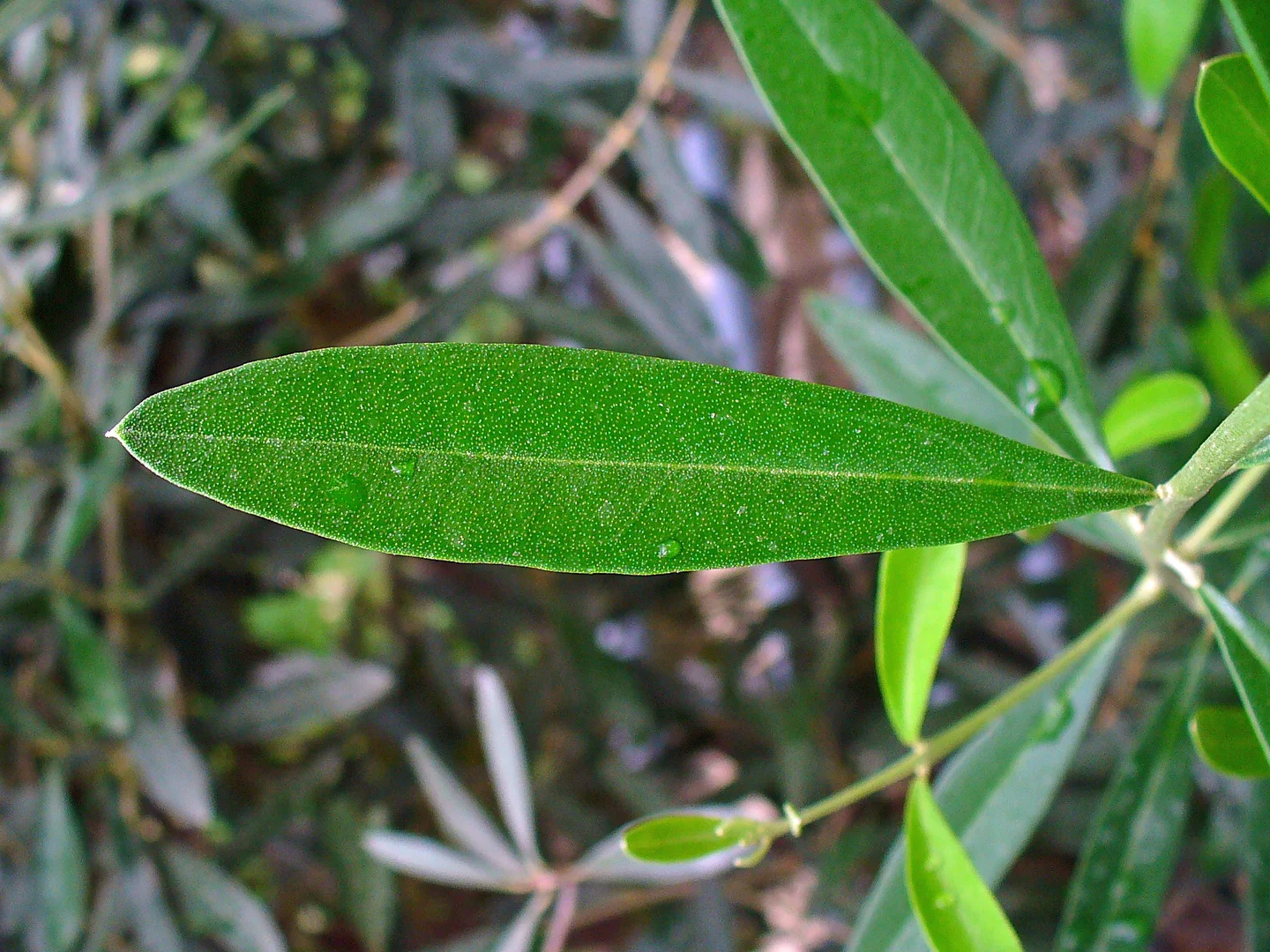
An elongated green olive leaf with a pale central vein and other leaves behind it.
An olive leaf photographed in Stutensee, Germany, in 2011. Botanical illustration, not an observation from Cabeceiras. This view does not show both sides of the same…Illustrative photograph · outside the municipality
H. Zell
ⓘ

An olive leaf photographed in Stutensee, Germany, in 2011. Botanical illustration, not an observation from Cabeceiras. This view does not show both sides of the same leaf.

Photography: H. Zell · CC BY-SA 3.0

View source

Date given at source: .

Request removal or correct the photo credit

The olive tree’s silvery side also tells a story.

The municipality’s landscape description includes olive trees on the hillsides of Cabeceiras. The cultivated olive has leaves that are grey-green above and silvery-grey beneath, where hairs grow. Its small flowers have four white petals joined at the base.

The fruit is the olive, an oil-rich drupe. The University of Évora’s description follows the change from green to reddish and dark shades during ripening, but also mentions forms that remain green when ripe. Colour alone does not tell the fruit’s whole story. The connection from tree to olive oil continues in the story of the Ramil oil mill.

The profile distinguishes the cultivated olive from its wild form, known in Portuguese as zambujeiro. The latter is described as having smaller leaves and fruits and thorny lower branches. This comparison shows why a single feature, such as the silvery underside of a leaf, does not explain every difference.

The olive is evergreen: it retains foliage throughout the year. You can therefore return to the same tree in different seasons and compare leaves, flowers and fruits, without expecting to find them all at once.

From leaf to fruit and winepress

Open an option and choose the story.

  1. Another leaf, another behavior throughout the yearA leaf drawn in waves →
  2. Water and olive oil production in RamilFrom Petimão to olive oil press →
  3. Other mills in local historyWhen the mill walked with the animals →
Follow the botany and the history of the oil work.
Source and context

University of Évora — Virtual Museum of Biodiversity, Olea europaea

Municipality — landscape and vegetation

Accessed: . Editorial summary; the date of consultation is not the date of the facts.

Back to index ↑
General ecology · wood and biodiversity

A log can be a little home

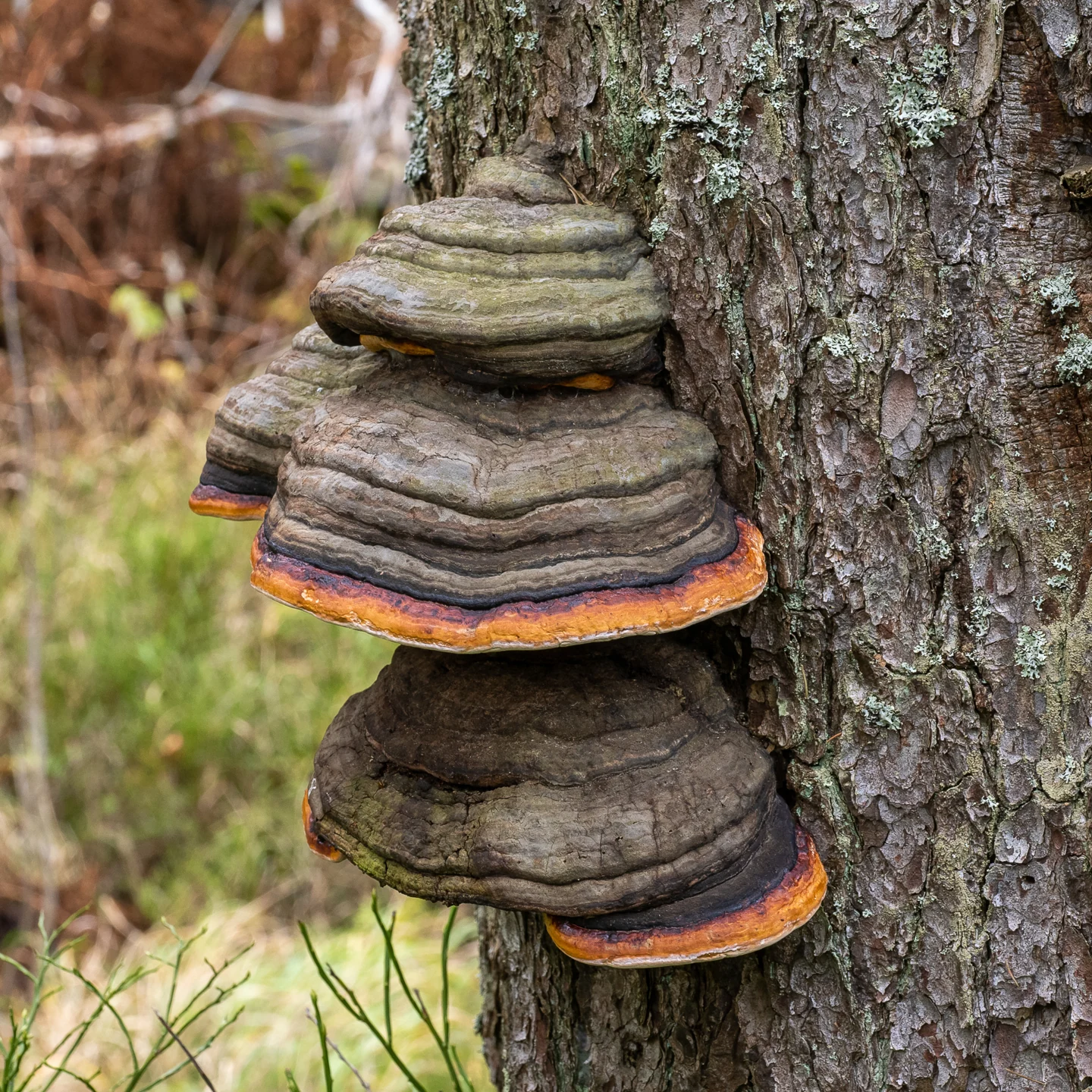
Fomitopsis pinicola on a tree trunk.
Fomitopsis pinicola on a tree trunk.Illustrative photograph
Piotr Lukasik
ⓘ

Fomitopsis pinicola on a tree trunk.

Photography: Piotr Lukasik · CC BY 4.0

View source

Date given at source: .

Request removal or correct the photo credit

Decaying wood is still full of connections.

A fallen log remains part of woodland life. Fungi break down its wood, which also supports other organisms, including insect larvae. Researcher Susana Gonçalves explains that some tree cavities result from fungal activity and can later shelter animals. A standing tree with cavities and a log on the ground offer different things to observe. In green spaces, retaining veteran trees requires assessment and monitoring of the risk of falling. This ecological explanation does not confirm a connection between the beetle photographed in Cabeceiras and a particular tree.

But wood does not always decay in the same way. In white rot, fungi break down lignin and cellulose; the wood may become pale, fibrous or spongy. In brown rot, decay mainly affects cellulose and hemicellulose, leaving a brownish residue rich in lignin. Wood may become brittle and break into small blocks. The University of California distinguishes these processes by their effects on wood components.

White and brown describe the decay, not the colour of a mushroom cap. They are not species names either. A visible reproductive structure on a trunk reveals only part of the story: decay may extend upwards or downwards and remain hidden. A photograph cannot measure that extent or assess a tree’s stability.

A log opens several stories

Open an option and choose the story.

  1. How to get foodA meal prepared outside →
  2. Larvae and woodAn old trunk still feeds life →
  3. The importance of sheltersA different house throughout the year →
  4. An example of brown decompositionShelf growing in a trunk →
  5. From wood to leaves on the groundA fallen leaf still has way →
These relationships are explanations of general ecology; they do not demonstrate who occupies a concrete tree.
See local fungal records
Return to observation proposal ↑
Source and context

Gulbenkian Garden — ecology of fungi, with Susana Gonçalves (17/04/2023)

University of California — Wood Decay Fungi in Landscape Trees (revised August 2019)

Accessed: . Editorial summary; the date of consultation is not the date of the facts.

Back to index ↑
YOUR LOCAL GUIDE

What would you like to discover?

Take a closer look.