Discover Cabeceiras de BastoFree independent guide
ViveCabeceirasYOUR GUIDE TO CABECEIRAS
ENEnglish
SearchSaved
5 STORIES · CONTINUOUS READING

Memory also needs care

From a photographer of Refojos to the arch archives and the conservation of Ponte de Cavez: five ways to convey the story.

All stories in the order of the route. You can print this page by the browser; sources and credits follow the reading.

Things to try1 activity · 1 interactive exploration · 3 questions
Refojos de Basto · photography and biography

From Cancela to portraits of Brazil

A photographer from Refojos left his mark across the Atlantic.

According to the Museu das Terras de Basto, Joaquim Insley Pacheco was born in Cancela, in Refojos de Basto. A photographer and painter, he became a prominent portraitist in 19th-century Brazil. Brazil’s National Library documents his appointment as Photographer to the Imperial Household in 1855. His story connects a place in the municipality with the early days of photography in Brazil.

The National Library’s exhibition adds a link through learning: Pacheco was a pupil of Frederick Walter, who arrived in Fortaleza in 1847 with daguerreotype equipment and also performed as a magician. Photography, teaching and entertainment meet in this story of the early professionals.

The recognition of 1855 places Pacheco in Rio de Janeiro and at the court of Pedro II. Three points help trace his life: his place of origin, his training and his professional recognition. Their connection reveals how a story from Refojos forms part of a wider history of images.

Want to move from biography to an image? A 2016 presentation on the National Library’s official blog shows a portrait of Pedro II, dated 1883 and attributed to Pacheco, from the institution’s collection. Its caption links an artist’s name, a sitter, a date and a collection. It is a concrete example to view in the source and compare with the photographer’s story.

Source and context

Basto Land Museum — Joaquim Insley Pacheco, 27/03/2026

National Library of Brazil Foundation — a photographer, an editor and a zoologist

National Library Foundation — presentation by Joaquim Insley Pacheco and portrait by Pedro II (14/10/2016)

Accessed: . Editorial summary; the date of consultation is not the date of the facts.

Back to index ↑
Arco de Baúlhe · remembering Júlio Henriques and the 2013 tribute

A botanist in the school library’s name

In Arco de Baúlhe, science can be found on a sign too.

Júlio Augusto Henriques was born in Arco de Baúlhe in 1838 and became a distinguished botanist. In June 2013, the municipality honoured him by naming the library at the Escola Básica do Arco after him. The announcement recalls his departure for Coimbra at sixteen and his dedication to science. Learning about the library’s namesake turns a name on a school door into a link between his birthplace, study and shared memory. This is the school library, distinct from the Biblioteca Municipal Dr. António Teixeira de Carvalho.

Source and context

Municipality — tribute to botanist Júlio Henriques in the school library of Arco de Baúlhe, news of 17/06/2013

Accessed: . Editorial summary; the date of consultation is not the date of the facts.

Back to index ↑
Arco de Baúlhe · documentary memory

The station keeps documents too

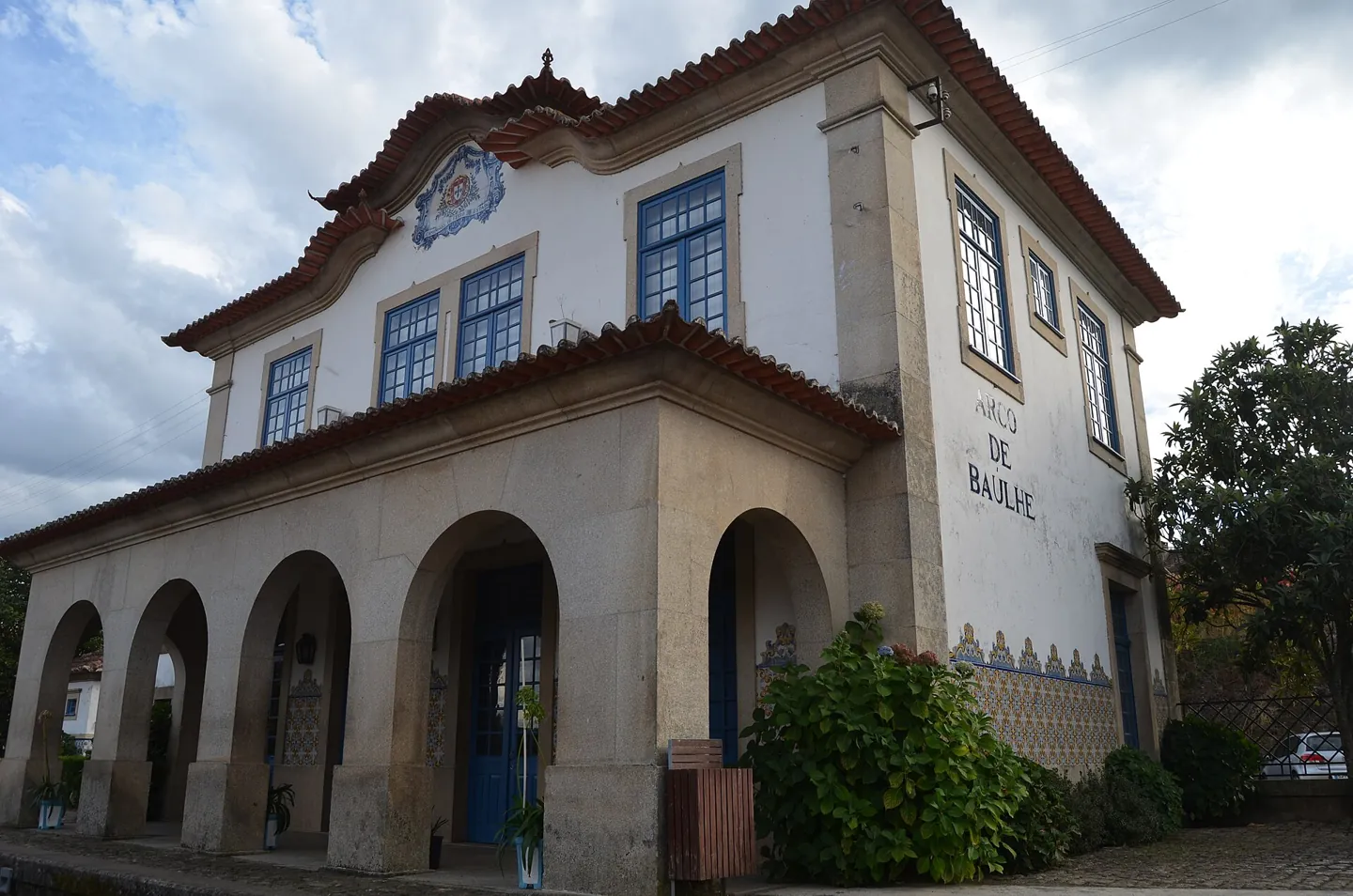
Arco de Baúlhe station building with its arched gallery.
Pedro from Maia (Porto), Portugal
ⓘ

Arco de Baúlhe station building with its arched gallery.

Photography: Pedro from Maia (Porto), Portugal · CC BY 2.0

View source

Date given at source: .

Request removal or correct the photo credit

Behind the exhibits are books, photographs and archives.

The Museu das Terras de Basto opened to the public on 23 May 2004, based at Arco de Baúlhe station. Its presentation of the Documentation Centre distinguishes two collections: the municipal collection and that of the Railway Museum, owned by the Fundação Museu Nacional Ferroviário and held by the local museum.

Books, periodicals, photographs, maps and archive documents support research into the region. The description recalls the organisation of the collection in 2011; it does not confirm current access arrangements.

In February 2011, the Museum also announced the checking and cataloguing of railway objects, starting from the inventory drawn up by CP technicians and included in the 2000 agreement. Preserving memory meant identifying and recording each object.

File gives context to objects

Open an option and choose the story.

  1. The agreements that changed the stationThe train stopped, memory stayed →
  2. An inscription on a lighthouseThe last light told a story →
  3. A part connected to mail transportThe mail also traveled by train →
It follows events through stories and sources. These links are proposed for reading, not physical paths.
See Fact sheet: Núcleo Ferroviário de Arco de Baúlhe
Source and context

Basto Land Museum — Documentation Centre, historical description of the collection

Basto Land Museum — Inventory of collections, 17/02/2011

Accessed: . Editorial summary; the date of consultation is not the date of the facts.

Back to index ↑
Arco de Baúlhe · history of the municipal library

In Arco, books found a home in 2005

A library holds encounters and discoveries too.

The Biblioteca Municipal Dr. António Teixeira de Carvalho opened in 2005 beside the Escola Básica do Arco de Baúlhe. The municipal presentation describes two reading rooms and an auditorium, along with spaces for work and meetings. It also recalls activities including storytelling, workshops, literary competitions, cinema and exhibitions. The building’s history shows how reading meets other forms of cultural participation. To plan a visit, consult the place listing.

Source and context

Municipality — Biblioteca Municipal Dr. António Teixeira de Carvalho: opening in 2005

Accessed: . Editorial summary; the date of consultation is not the date of the facts.

Back to index ↑
Cavez · heritage conservation, 2018–2019

Conserving a bridge also makes history

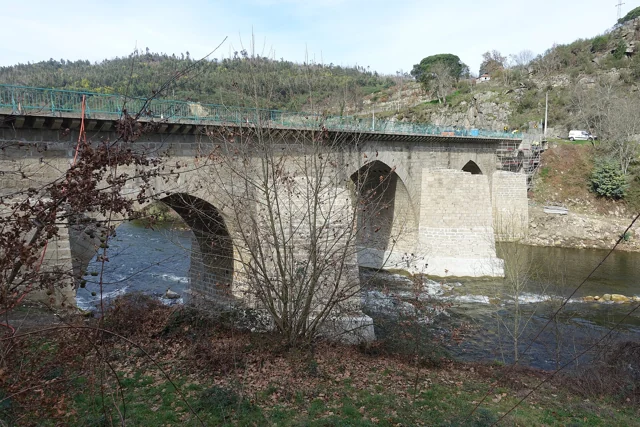
Cavez Bridge over the Tâmega River, with stone arches, a deck and tree-lined banks.
Ponte de Cavez on Tâmega. Background photography, without attribution to the project of 2018–2019.© Joseolgonⓘ

Not every change to a monument is visible at first glance.

On 30 April 2019, the municipality announced the completion of work on Cavez Bridge, begun in October 2018 by Infraestruturas de Portugal. The intervention strengthened the pier foundations and addressed the deck: paving, waterproofing, parapets and drainage. Classified as a National Monument since 1910, the bridge continued to receive care long after its construction. This account documents that project; it does not assess the structure’s current condition.

The announcement distinguishes two aspects of the work: the bridge’s support, through its pier foundations, and the crossing surface, with paving, waterproofing and drainage. Painting the parapets was only one part of the project. A general photograph shows the bridge in its setting, but cannot alone document the strengthening of its foundations.

Compare this news with the chronology: the 19th-century widening and the 2018–2019 project are separate interventions. Conserving a monument also produces new documentation, which should retain the date and scope of the work described.

See Fact sheet: Ponte de Cavez
Source and context

Municipality — conclusion of rehabilitation of Ponte de Cavez, 30/04/2019

Accessed: . Editorial summary; the date of consultation is not the date of the facts.

Back to index ↑
YOUR LOCAL GUIDE

What would you like to discover?

Take a closer look.