Discover Cabeceiras de BastoFree independent guide
ViveCabeceirasYOUR GUIDE TO CABECEIRAS
ENEnglish
SearchSaved
7 STORIES · CONTINUOUS READING

From wood to path

Raw material, learning, tools and change of craft: seven stories follow the footwear to the fair and to the pilgrimage. Includes questions and a design proposal, without visits to workshops.

All stories in the order of the route. You can print this page by the browser; sources and credits follow the reading.

Things to try4 activities · 2 interactive explorations · 6 questions
Outeiro · clog-making materials and tools

Before the clog, a piece of alder
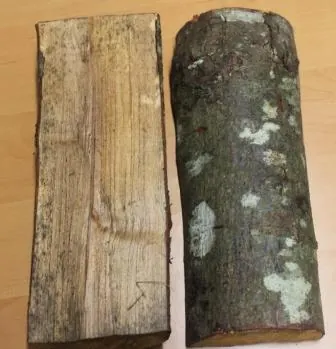
Alder log T13
Alder log T13
ⓘ

Alder log T13

Source: Museu das Terras de Basto

View source

Photograph date not stated.

Individual photographer and reuse licence not stated by the source.
Request removal or correct the photo credit

Hatchet T17
Hatchet T17
ⓘ

Hatchet T17

Source: Museu das Terras de Basto

View source

Photograph date not stated.

Individual photographer and reuse licence not stated by the source.
Request removal or correct the photo credit

Adze T18
Adze T18
ⓘ

Adze T18

Source: Museu das Terras de Basto

View source

Photograph date not stated.

Individual photographer and reuse licence not stated by the source.
Request removal or correct the photo credit

Adze T19
Adze T19
ⓘ

Adze T19

Source: Museu das Terras de Basto

View source

Photograph date not stated.

Individual photographer and reuse licence not stated by the source.
Request removal or correct the photo credit

Wooden clog soles T27
ⓘ

Wooden clog soles T27

Source: Museu das Terras de Basto

View source

Photograph date not stated.

Individual photographer and reuse licence not stated by the source.
Request removal or correct the photo credit

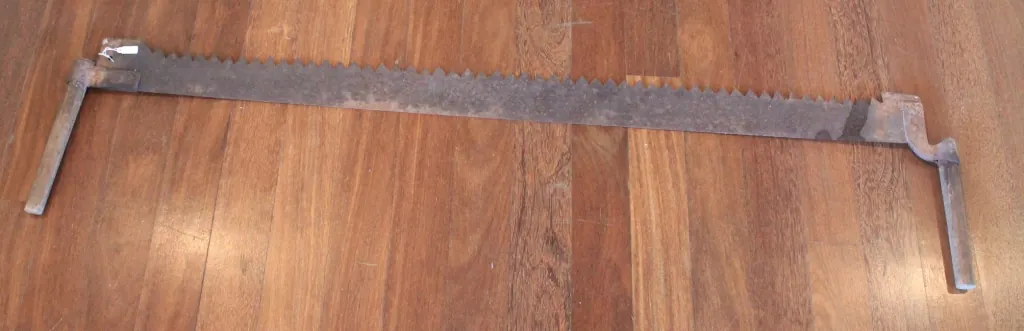
Saw T31
Saw T31
ⓘ

Saw T31

Source: Museu das Terras de Basto

View source

Photograph date not stated.

Individual photographer and reuse licence not stated by the source.
Request removal or correct the photo credit

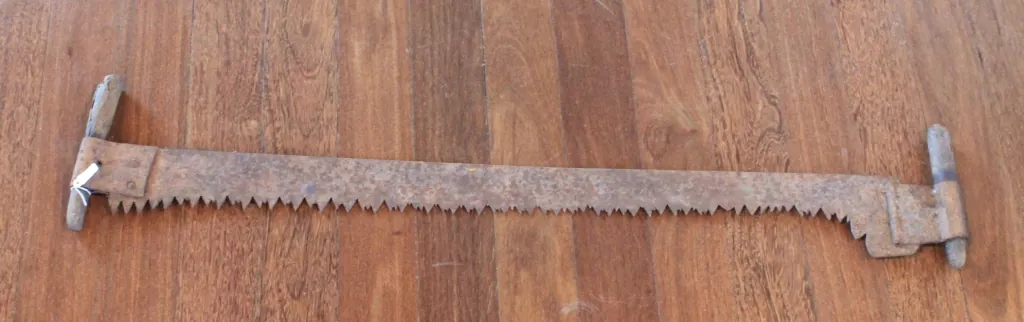
Saw T32
Saw T32
ⓘ

Saw T32

Source: Museu das Terras de Basto

View source

Photograph date not stated.

Individual photographer and reuse licence not stated by the source.

Request removal or correct the photo credit

Choosing the wood was part of the work.

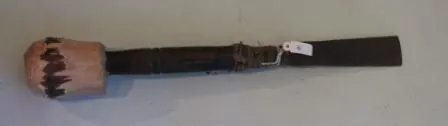
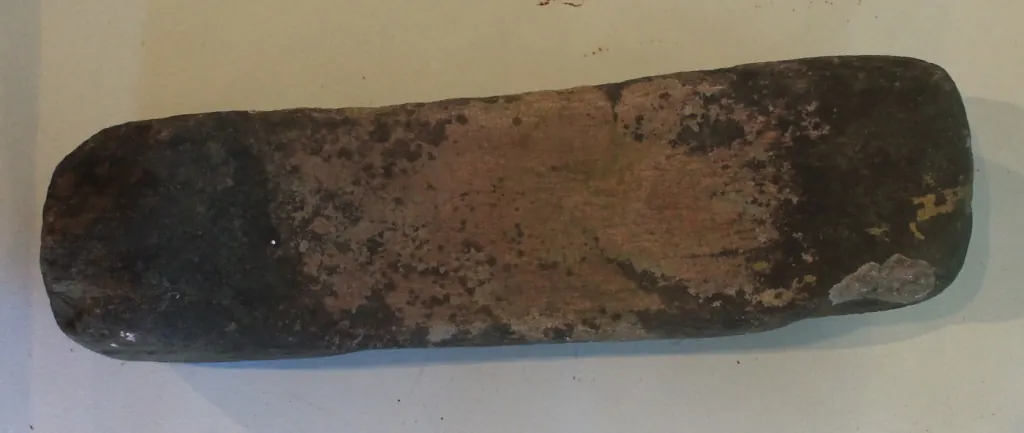
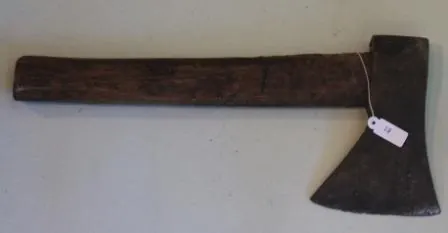
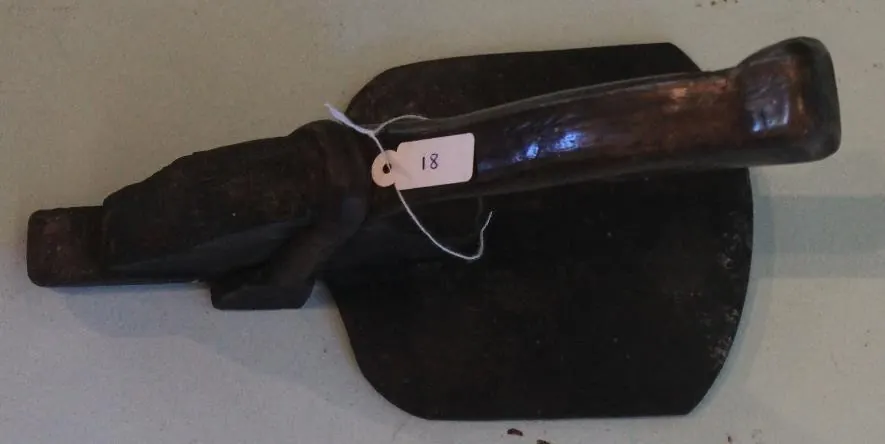
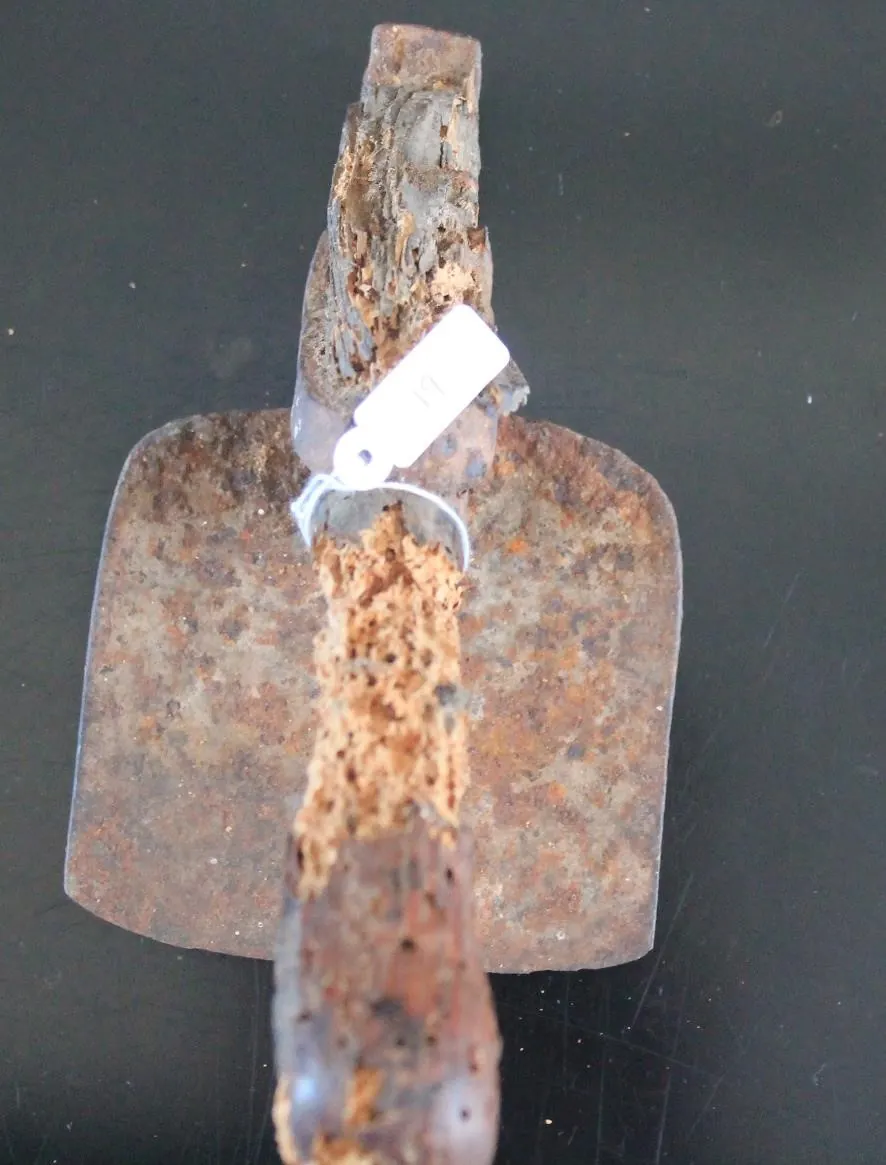
In the Museum’s inventory, an alder log from Pinhel is raw material for clog soles. The axe split the wood, the adze shaped it and the chisel prepared the edge where leather was nailed. A last used by Manuel Alves Leite connects the objects with the family history of clog making.

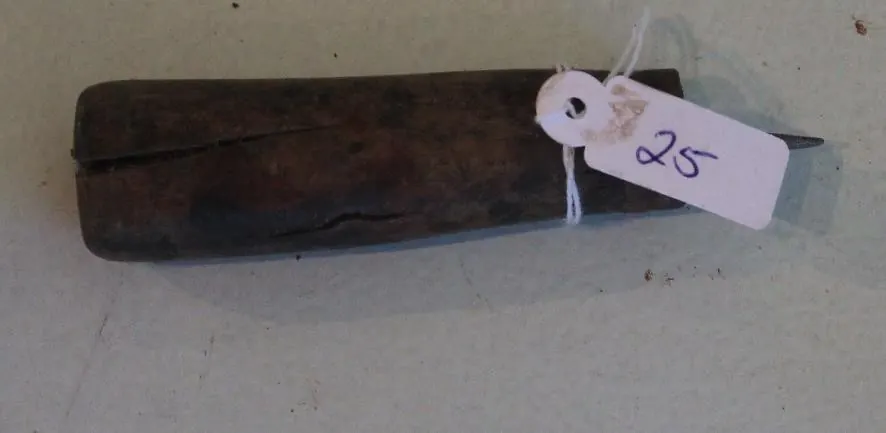
Work continued with other tools: pincers pulled the leather onto the wood and an awl opened holes for nails. Each object preserves a particular gesture. The inventory lets us follow these operations without indicating a workshop currently open to visitors.

Getting to know the parish
Source and context

Land Museum of Basto / Teresa Soeiro — In the country of Tamanco, introduction and inventory T10/T13/T16–T19

Accessed: . Editorial summary; the date of consultation is not the date of the facts.

Back to index ↑
Outeiro · history of clog making

Learning a craft beside a master

The Arts and Crafts gathering at Casa do Tempo, documented by the municipality in April 2025.
ⓘ

The Arts and Crafts gathering at Casa do Tempo, documented by the municipality in April 2025.

Source: Municipality of Cabeceiras de Basto

View source

Photograph date not stated.

Individual photographer and reuse licence not stated by the source.

Request removal or correct the photo credit

The Arts and Crafts gathering at Casa do Tempo, documented by the municipality in April 2025.
ⓘ

The Arts and Crafts gathering at Casa do Tempo, documented by the municipality in April 2025.

Source: Municipality of Cabeceiras de Basto

View source

Photograph date not stated.

Individual photographer and reuse licence not stated by the source.

Request removal or correct the photo credit

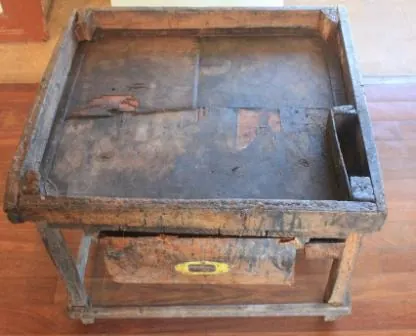
Workbench T15
Workbench T15
ⓘ

Workbench T15

Source: Museu das Terras de Basto

View source

Photograph date not stated.

Individual photographer and reuse licence not stated by the source.

Request removal or correct the photo credit

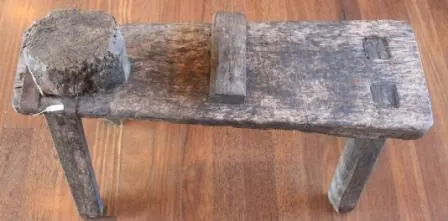
Clog maker’s bench T14
ⓘ

Clog maker’s bench T14

Source: Museu das Terras de Basto

View source

Photograph date not stated.

Individual photographer and reuse licence not stated by the source.

Request removal or correct the photo credit

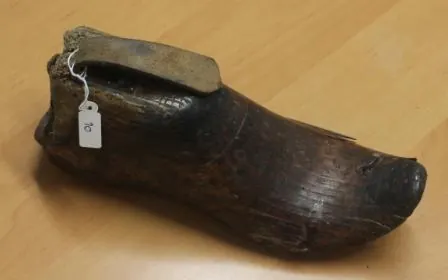
Clog last T10
Clog last T10
ⓘ

Clog last T10

Source: Museu das Terras de Basto

View source

Photograph date not stated.

Individual photographer and reuse licence not stated by the source.

Request removal or correct the photo credit

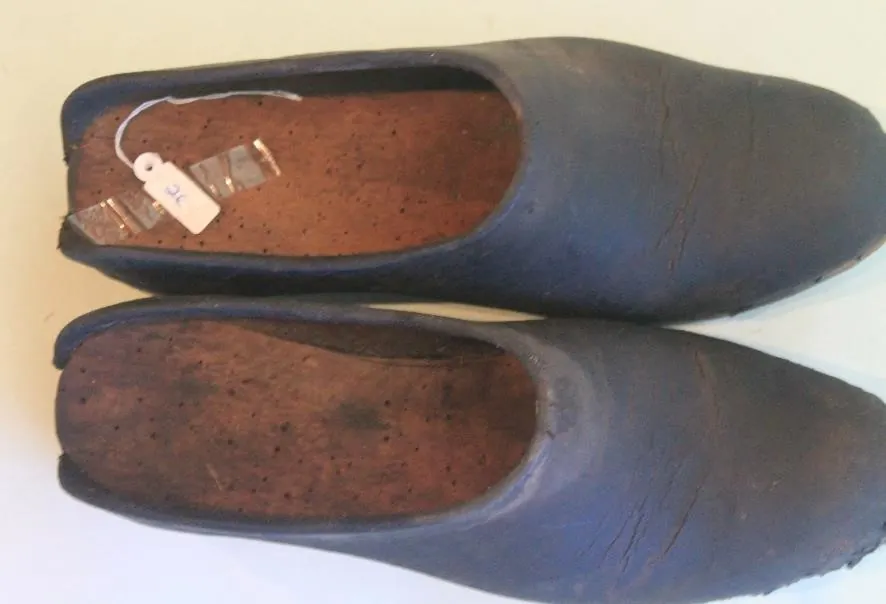
Pair of clogs T26
Pair of clogs T26
ⓘ

Pair of clogs T26

Source: Museu das Terras de Basto

View source

Photograph date not stated.

Individual photographer and reuse licence not stated by the source.

Request removal or correct the photo credit

In Outeiro, clog making passed from hand to hand.

In the study published in 2017, Teresa Soeiro recounts how Manuel Alves Leite, born in Pinhel in 1899, learned from Bernardino José Pereira, a clog maker from Sobreira. The skill passed to his descendants. This story of learning brings clog making close to families and places, without assuming that the workshop remains open.

The Museum’s inventory offers a glimpse of the workspace. It calls the low table used by Manuel António Teixeira Leite an ofício. A bench with a small block supported the finishing of the wooden soles; a wood-and-leather last connects production with Manuel Alves Leite’s generation. The objects show different working supports without reconstructing the layout of a particular workshop.

Dimensions help distinguish the supports: table T15 measures 82 centimetres long, 74 wide and 55 high; bench T14 is 87 long, 28 wide and 50 high. Despite similar lengths, they offer very different surfaces. The inventory links the bench with finishing the wooden soles, supported on a small block.

ENTER THE WORKSHOP THROUGH ITS OBJECTS

Open each support to discover its recorded function.

  1. 1 · Ofício: the low worktable

    Piece T15 was a worktable used by Manuel António Teixeira Leite.

  2. 2 · Bench: supporting the wooden sole

    On T14, a plank and a small block supported the finishing of wooden clog soles.

  3. 3 · Last: a tool for making clogs

    T10, made of wood and leather, was used by Manuel Alves Leite.

    Continue through tools and wood →
Comparison of pieces in the Museu das Terras de Basto inventory; it does not represent a workshop floor plan.
Getting to know the parish
Source and context

Teresa Soeiro — Soqueiros and Tamanqueiros, municipal edition of 2017, chapter The tamanqueiros of Outeiro, p. 68
Accessed:

Land Museum of Basto / Teresa Soeiro — In the country of Tamanco, introduction and inventory T10/T13/T16–T19
Accessed:

Editorial summary; the date of consultation is not the date of the facts.

Back to index ↑
Alvite and Passos · memory of crafts

From clogs to shoes in Cacheina

Two brothers changed crafts to follow their customers.

In the research published by Teresa Soeiro in 2017, Luís and Manuel José Ribeiro are presented as Cacheina’s last clog makers, in Alvite. Both became shoemakers later in life. Luís left clog making around 1980. The change shows a skill adapting to customers’ preferences rather than a tradition frozen in time. This is documented history, not an indication of workshops open today.

Getting to know the parish
Source and context

Teresa Soeiro — Soceiros e Tamanqueiros (2017), p. 64, digital page 66

Accessed: . Editorial summary; the date of consultation is not the date of the facts.

Back to index ↑
Terras de Basto · clog-making inventory

Pull, pierce and nail: making a clog

Workbench T15
Workbench T15
ⓘ

Workbench T15

Source: Museu das Terras de Basto

View source

Photograph date not stated.

Individual photographer and reuse licence not stated by the source.

Request removal or correct the photo credit

Clog maker’s bench T14
ⓘ

Clog maker’s bench T14

Source: Museu das Terras de Basto

View source

Photograph date not stated.

Individual photographer and reuse licence not stated by the source.

Request removal or correct the photo credit

Clog last T10
Clog last T10
ⓘ

Clog last T10

Source: Museu das Terras de Basto

View source

Photograph date not stated.

Individual photographer and reuse licence not stated by the source.

Request removal or correct the photo credit

Hatchet T17
Hatchet T17
ⓘ

Hatchet T17

Source: Museu das Terras de Basto

View source

Photograph date not stated.

Individual photographer and reuse licence not stated by the source.

Request removal or correct the photo credit

Chisel T16
Chisel T16
ⓘ

Chisel T16

Source: Museu das Terras de Basto

View source

Photograph date not stated.

Individual photographer and reuse licence not stated by the source.

Request removal or correct the photo credit

Adze T18
Adze T18
ⓘ

Adze T18

Source: Museu das Terras de Basto

View source

Photograph date not stated.

Individual photographer and reuse licence not stated by the source.

Request removal or correct the photo credit

Adze T19
Adze T19
ⓘ

Adze T19

Source: Museu das Terras de Basto

View source

Photograph date not stated.

Individual photographer and reuse licence not stated by the source.

Request removal or correct the photo credit

Pliers T20
Pliers T20
ⓘ

Pliers T20

Source: Museu das Terras de Basto

View source

Photograph date not stated.

Individual photographer and reuse licence not stated by the source.

Request removal or correct the photo credit

Lasting pincers T22
Lasting pincers T22
ⓘ

Lasting pincers T22

Source: Museu das Terras de Basto

View source

Photograph date not stated.

Individual photographer and reuse licence not stated by the source.

Request removal or correct the photo credit

Hammer T24
Hammer T24
ⓘ

Hammer T24

Source: Museu das Terras de Basto

View source

Photograph date not stated.

Individual photographer and reuse licence not stated by the source.

Request removal or correct the photo credit

Awl T25
Awl T25
ⓘ

Awl T25

Source: Museu das Terras de Basto

View source

Photograph date not stated.

Individual photographer and reuse licence not stated by the source.

Request removal or correct the photo credit

Wooden clog soles T27
ⓘ

Wooden clog soles T27

Source: Museu das Terras de Basto

View source

Photograph date not stated.

Individual photographer and reuse licence not stated by the source.

Request removal or correct the photo credit

Whetstone T33
Whetstone T33
ⓘ

Whetstone T33

Source: Museu das Terras de Basto

View source

Photograph date not stated.

Individual photographer and reuse licence not stated by the source.

Request removal or correct the photo credit

Each tool solves a small part of the work.

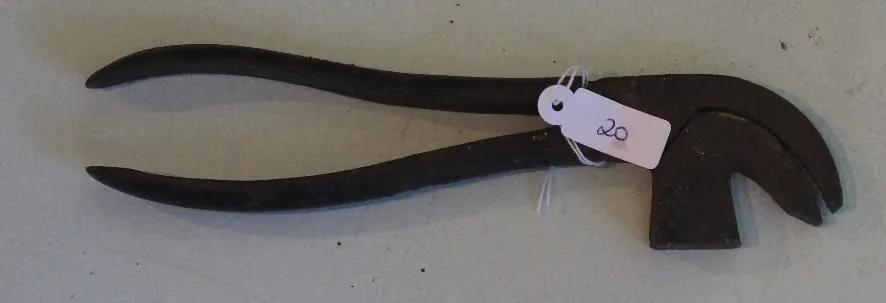
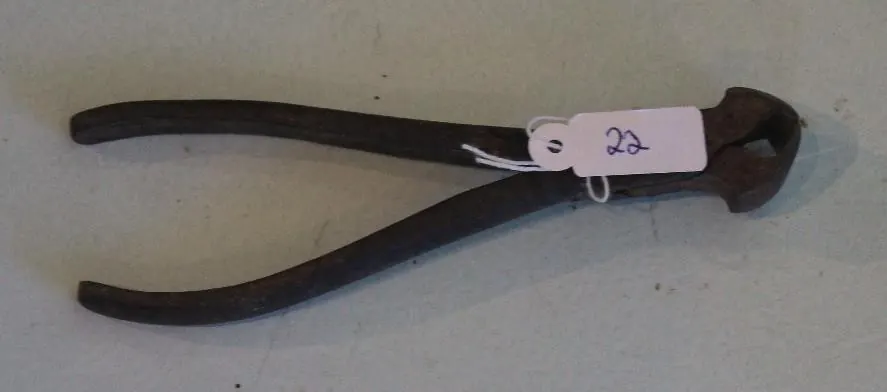
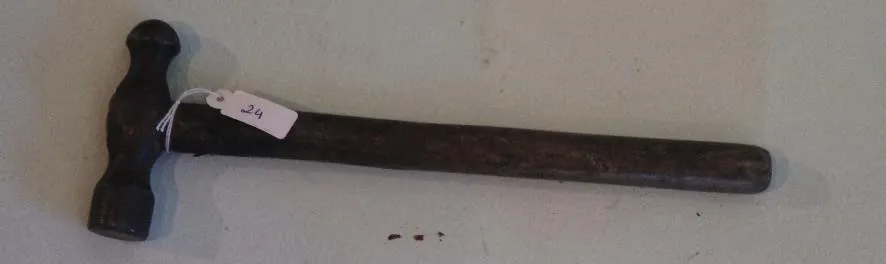
The Museu das Terras de Basto’s inventory preserves tools used by Manuel António Teixeira Leite. Pincers pulled leather onto the wooden sole; an awl opened nail holes; a hammer fixed the nails. And if a nail was misplaced? Pliers removed it. These objects allow working gestures to be reconstructed without turning the inventory into a workshop currently open to visitors.

The inventory also preserves the setting for those gestures. The low worktable, called an ofício and recorded as T15, was used by Manuel António Teixeira Leite. Bench T14 had a thick plank and a small block supporting the wood during finishing. The workshop was a collection of supports and equipment as well as hand tools.

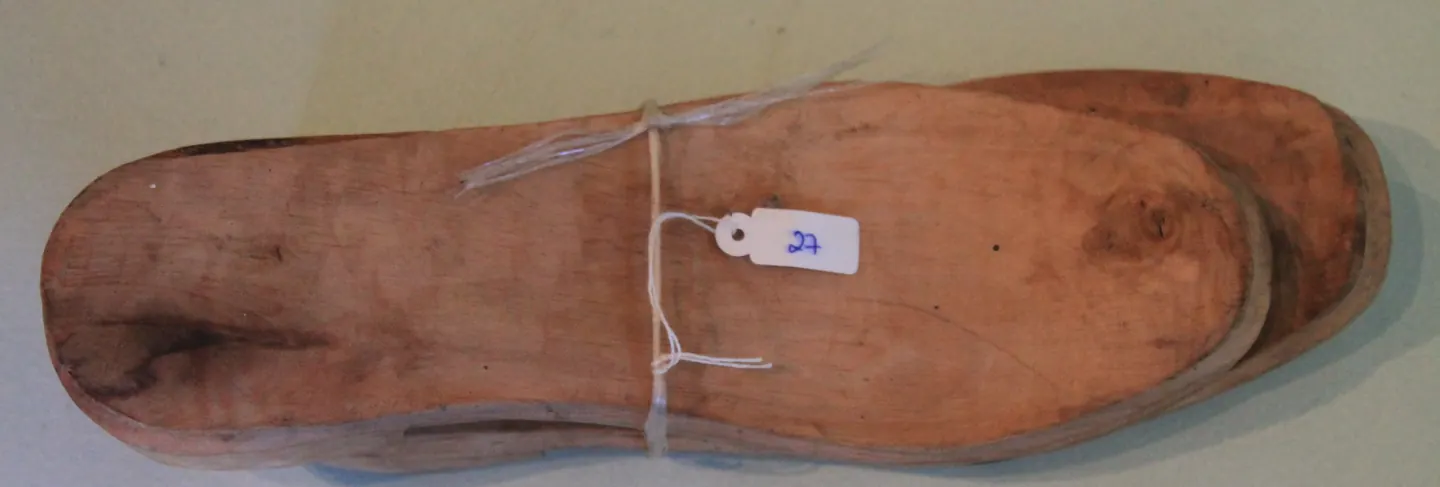
A sharpening stone, T33, recalls another task: caring for the knives. Making footwear included keeping tools ready to cut. The pair of wooden soles T27 was inventoried at an intermediate stage, with the wood shaped and ready to receive leather. The unfinished object helps reconstruct the production sequence.

Enters the history of the workshop

Open an option and choose the story.

  1. From the tree to the wood baseBefore the punch, a piece of alder →
  2. Learn by the MasterA craft learned alongside the master →
  3. From the fair to work in the fieldsFrom fair to work in the field →
Choose between raw material, learning and destination of footwear.
Source and context

Land Museum of Basto — In Tamanco Country: table T15, seat T14, tools T20/T22/T24/T25, sticks T27 and stone T33 and Chancas MTB 450

Accessed: . Editorial summary; the date of consultation is not the date of the facts.

Back to index ↑
Outeiro · memory of wooden footwear

Carolinas: a name to wear

A board and a strong strap could make the simplest model.

In the 2017 study, Teresa Soeiro describes the carolinas made by Outeiro’s clog makers or their apprentices. A cut wooden board followed the foot’s shape, held in place by a strip of reused leather or another durable material. This was the cheapest model. The same book shows that names varied: in Penafiel, carolinas meant a different kind of footwear.

Source and context

Teresa Soeiro — Soqueiros e Tamanqueiros, municipal edition of 2017, p. 96 (viewer page 98)

Accessed: . Editorial summary; the date of consultation is not the date of the facts.

Back to index ↑
Outeiro and Refojos · trade in the mid-20th century

Two ox carts full of footwear

The São Miguel fair began months earlier in the workshop.

Teresa Soeiro reports that, in the mid-20th century, Outeiro’s clog makers sometimes took two ox carts loaded with socos and chancas to the São Miguel fair in Refojos. They built up production over months and kept the goods in wooden stalls by candlelight. The fair brought craftspeople and resellers together: the footwear then travelled on to other customers.

Source and context

Teresa Soeiro — Soqueiros e Tamanqueiros, municipal edition of 2017, p. 96 (viewer page 98)

Accessed: . Editorial summary; the date of consultation is not the date of the facts.

Back to index ↑
Cavez · pilgrimage account published in 1886

To the pilgrimage, clogs in hand

Pair of clogs T26
Pair of clogs T26
ⓘ

Pair of clogs T26

Source: Museu das Terras de Basto

View source

Photograph date not stated.

Individual photographer and reuse licence not stated by the source.

Request removal or correct the photo credit

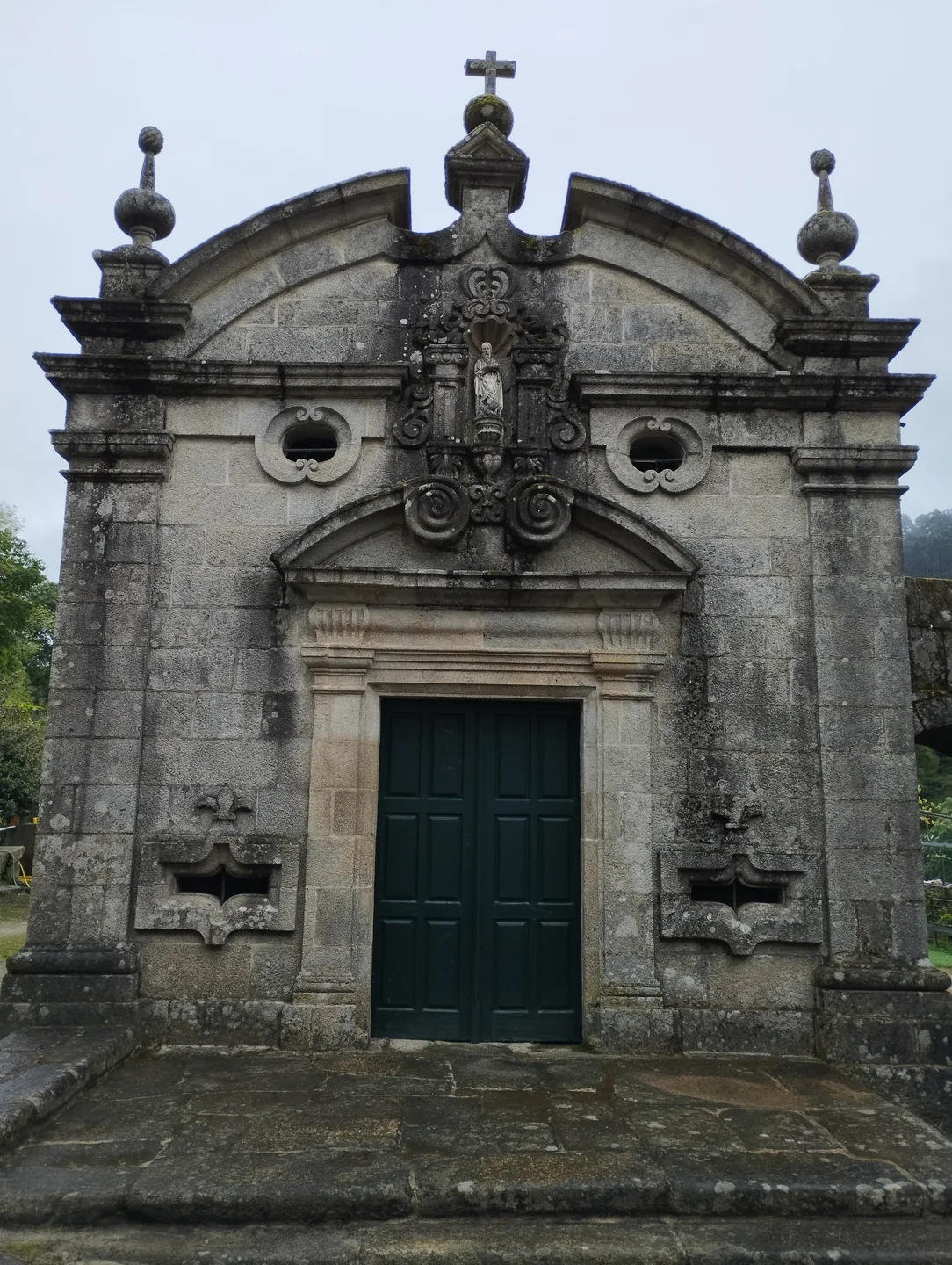
Façade of São Bartolomeu chapel in Cavez.
ⓘ

Façade of São Bartolomeu chapel in Cavez.

Source: Museu das Terras de Basto

View source

Photograph date not stated.

Individual photographer and reuse licence not stated by the source.

Request removal or correct the photo credit

Carrying footwear did not always mean wearing it.

Teresa Soeiro revisits a description by José Augusto Vieira, published in 1886: among pilgrims to São Bartolomeu de Cavez, some women carried their footwear in their hands. The episode adds a human detail to the journey and recalls habits of thrift and comfort. It is historical testimony, not a description of today’s pilgrimage.

In the study’s introduction, Teresa Soeiro connects wooden footwear with rural paths and farming in the north-west. She mentions sole reinforcements made of metal pieces and, more recently, reused tyre rubber. These are solutions described for resisting wear, without identifying the reinforcement used by the pilgrims in the 1886 episode.

The pilgrimage scene reminds us that owning an object does not mean using it throughout a journey. Keeping it for particular moments was also part of its use. To follow the story before the walk, open the reading about alder and clog makers’ tools: footwear begins with choosing and transforming materials.

Getting to know the parish See Fact sheet: Capela de São Bartolomeu de Cavez
Source and context

Land Museum of Basto / Teresa Soeiro — In the country of Tamanco, introduction and inventory T10/T13/T16–T19

Accessed: . Editorial summary; the date of consultation is not the date of the facts.

Back to index ↑
YOUR LOCAL GUIDE

What would you like to discover?

Take a closer look.