Discover Cabeceiras de BastoFree independent guide
ViveCabeceirasYOUR GUIDE TO CABECEIRAS
ENEnglish
SearchSaved
11 STORIES · CONTINUOUS READING

Alvite: from fields to memory

Eleven readings link fields, water, work, fair, justice, church and chapels of Alvite. It compares the strength of animals with the uses of water and the different charges of places of worship. The memories of 1758 preserve their time; the sequence does not indicate a walk.

All stories in the order of the route. You can print this page by the browser; sources and credits follow the reading.

Things to try8 activities · 6 interactive explorations · 6 questions
Alvite · written account from 1758

There was more than maize in the fields

A list of crops opens a window onto the landscape of 1758.

Milhão appears as the most abundant grain in Alvite’s 1758 account. But the list continues with rye, milho-alvo, painço, wheat and barley. The priest adds beans, vinho de enforcado, olive oil, chestnuts, acorns and fruit.

The list reveals varied farming but gives no quantities for each crop. Compare it with Bucos, where the account describes a different balance between grains. The documents reveal differences without turning priests’ impressions into modern statistics.

The same account places part of the parish on the slopes of Senhora da Orada and another part in flatter land beside a small watercourse. The list of products gains a setting: fields in different positions across the terrain. The text does not, however, connect each crop with a particular plot.

Harvest and meal are also different things. Knowing that people produced grain, beans, wine or olive oil does not reveal the recipe served in a particular house. To reach the kitchen, other sources are needed, such as the family memories and documented preparations on this website.

Follow the cereal, change the source

Open an option and choose the story.

  1. Another parish in 1758Three cereals in the same landscape →
  2. Objects that count the bread cycleBefore the bread, there was a field →
  3. A family - transmitted preparationThis bread mixture rye and wheat →
  4. The water also changed its wayThe water changed its way →
Comparing a parochial document, a museum space and a cooking memory.
Source and context

Municipality — Memory of Alvite, 23/05/1758; transcription of José Viriato Chapel (2003)

Accessed: . Editorial summary; the date of consultation is not the date of the facts.

Back to index ↑
Alvite · written account from 1758

Orada changed from summit to valley

The same mountain could reveal different landscapes.

In the account of 1758, Orada has a stony summit with few trees, described as harsh and cold. On its lower slopes, the scene changes: chestnuts, oaks, vines trained up trees, olive oil and cereals enter the description.

The vicar places residents in the lower areas near the valley, not on the mountain top. Altitude, settlement and cultivation help us read the whole picture. This is the written portrait of that year, not a survey of today’s vegetation.

What changed between the high and the valley?

Open an option and choose the story.

  1. ♪ Shepherding on the high ground ♪

    The portrait of 1758 adds cattle to the uses of the highlands.

    The Orada was also a land of shepherding →
  2. Water saved for the fields

    Springs and prey help to understand how water was sought to water.

    Store water coming from the hill →
  3. A pantry of various cereals

    The document lists products without assigning each crop to a parcel.

    In the fields, there was more than corn →
  4. Another reading of Orada and Petimão

    The municipal presentation places the mountain and river in the landscape of Passos.

    A mountains and a river to situate Passos →
Compares the described uses in 1758 and continues by the landscape of Passos. The sources have their own times and scopes.
Source and context

Municipality — Memory of Alvite, 23/05/1758; transcription of José Viriato Chapel (2003)

Accessed: . Editorial summary; the date of consultation is not the date of the facts.

Back to index ↑
Alvite · 1758 account

Storing water from the hillside

Small springs helped irrigate the fields.

In the 1758 account, the vicar of Alvite described small springs in the Serra da Orada. Residents held this water in pools to benefit east-facing fields. Storing water was a way of dealing with scarcity.

The same document described the parish as dry, particularly in summer, and noted the absence of grain mills and fulling mills. Two olive-oil mills worked with oxen and other animals; to grind cereals, many residents went to neighbouring parishes. The account links natural resources, techniques and journeys without establishing that the same uses or structures survive today.

Getting to know the parish
Source and context

Basto Land Museum — Parish Memories of 1758: Alvite

Accessed: . Editorial summary; the date of consultation is not the date of the facts.

Back to index ↑
Alvite · 1758 account

When animals powered the oil mill

Not all power came from water.

In 1758, vicar João Lobo de Sousa described two olive-oil mills powered by oxen and other draught animals. The parish was particularly dry in summer and had neither grain mills nor fulling mills. Many residents went to neighbouring parishes to grind grain and make olive oil.

The same account mentions small flows of water from Orada, retained in reservoirs to benefit the fields. Irrigation and milling did not necessarily rely on the same solution: here, storing water for crops coexisted with using animal power at the oil mill. It is a picture of how work was organised in 1758, not an inventory of present-day equipment.

Where did the force come from?

Open an option and choose the story.

  1. Save water to the fieldsStore water coming from the hill →
  2. Move mills without watering fieldsA river that moved but did not water →
  3. Use water to work woolWater also worked wool →
Comparing water uses and limitations in historical testimonials are not instructions for operating equipment.
Getting to know the parish
Source and context

Basto Land Museum — Parish Memories of 1758: Alvite

Accessed: . Editorial summary; the date of consultation is not the date of the facts.

Back to index ↑
Alvite · 1758 account

The bulls came from Barroso

A fair connected breeding country with buyers.

Alvite’s 1758 account describes the Santo Antonino fair on 2 September and its eve. Bulls came from Barroso and were bought for different destinations. Most of the fair took place at Pereiras, in Refojos.

At the same place, the vicar mentions a monthly fair on the 2nd, introduced a few years earlier and considered less important. Distinguishing them avoids confusing the annual gathering with the monthly calendar. The account documents trade and movement at that time, without announcing current fairs.

Getting to know the parish
Source and context

Basto Land Museum — Parish Memories of 1758: Alvite

Accessed: . Editorial summary; the date of consultation is not the date of the facts.

Back to index ↑
Alvite · the couto’s administration in 1758

One place, two jurisdictions

In 1758, not every matter was decided by the same authority.

The São Pedro de Alvite account distinguishes civil matters, linked with the abbot and convent of Refojos, from criminal matters, assigned to the judge of the municipality of Cabeceiras. The couto therefore had an organisation that cannot be reduced to a line on a map. This is a historical description, with no correspondence to current administration. One important territorial distinction remains: the answer places Petimão in the jurisdiction of Celorico de Basto. The couto’s powers are described for the other settlements, avoiding a reading of the whole parish as a single jurisdiction.

The territory seen by different rules

Open an option and choose the story.

  1. Who kept the chapels?Six chapels, different responsibilities →
  2. A later change of municipalityPassos changed municipality →
  3. A fair between places and parishesThe bulls came from Barroso →
Administrative and religious relations are not limited to a single frontier.
Getting to know the parish
Source and context

Basto Land Museum — Parish Memories of 1758: Alvite

Municipality — Alvite Parish Memories, 1758; transcription of José Viriato Chapel (2003)

Accessed: . Editorial summary; the date of consultation is not the date of the facts.

Back to index ↑
Alvite · written account from 1758

The earthquake entered Alvite’s account

A local memory of a larger event.

Answering the 1758 inquiry, Alvite’s vicar recalled the earthquake of 1755. He said there had been no ruins except that the arms of two crosses at the chapel of Casa da Torre had reportedly twisted northwards. He added that they were already straight again.

The account separates the event from the state observed when writing. This is local testimony, not a measurement of earthquake intensity or confirmation of marks visible today.

Source and context

Municipality — Memory of Alvite, 23/05/1758; transcription of José Viriato Chapel (2003)

Accessed: . Editorial summary; the date of consultation is not the date of the facts.

Back to index ↑
Orada · animals in Alvite’s account from 1758

Orada was grazing land too

A mountain can tell stories of animals and work.

In the account of Alvite, the parish priest described poor grazing on Orada, used throughout the year by cattle, working equines, sheep and goats. He also mentioned rabbits and partridges in a hunting context. This is testimony from 1758, not a current wildlife inventory or directions to hunting locations.

Source and context

Municipality — Alvite Parish Memories, 1758; transcription of José Viriato Chapel (2003)

Accessed: . Editorial summary; the date of consultation is not the date of the facts.

Back to index ↑
Alvite · church described in 1758

Three altars in one nave

A church can also be portrayed in words.

In 1758, the vicar described Alvite’s church as having three altars: the main altar, associated with Saint Peter, and those of the Name of God and Our Lady of the Rosary. He mentioned a single nave, choir, chancel and sacristy. This is the arrangement recorded at that time, without confirmation that it remains the same.

The document places the church in Cacheina, surrounded by residents. It distinguishes the main altar from the two side altars and mentions a brotherhood associated with the confraternity of the Blessed Sacrament. The portrait of the building thus includes a community: places of worship, people and religious organisation appear in the same answer.

A list of spaces is not enough to reconstruct a floor plan. We can recognise functions and names, but locating each room precisely would require other sources. It is a good opportunity to compare what a text describes with what an exterior photograph can show.

From church to places of worship

Open an option and choose the story.

  1. Six chapels, different responsibilities

    The parish church was part of a wider network of houses, places and charges.

    Six chapels, different responsibilities →
  2. A construction linked to the paedia

    Compares the written portrait of the interior of the church with an exterior photograph of another construction.

    A chapel against the stone →
  3. Another church in the same inquiry

    Use the number and names of the altars to compare descriptions of 1758.

    Five altars to read a church →
Choose another reading and compare what each source lets you know.
Source and context

Municipality — Alvite Parish Memories, 1758; transcription of José Viriato Chapel (2003)

Accessed: . Editorial summary; the date of consultation is not the date of the facts.

Back to index ↑
Alvite · 1758 account

Six chapels, different responsibilities

Heritage also had a system of care.

The Alvite account lists six chapels in 1758. Santo Antonino belonged to the house and estate of that name; Bom Despacho stood beside Casa de Alvação; Sagrada Família beside Casa da Torre. These three are presented as private.

The others were São Mamede in Petimão, Santa Catarina on the hill of the same name and São Sebastião in Chão. The text assigns costs to parishioners but makes an exception for São Mamede: there, the convent of Refojos and the abbot of São Clemente were responsible as joint beneficiaries. The word fábrica concerns these maintenance responsibilities, not an industrial factory. These are relationships from 1758, establishing neither present ownership nor access.

Getting to know the parish See Fact sheet: Casa e Quinta do Alvação See Fact sheet: Casa da Torre de Alvite See Fact sheet: Capela de Santa Catarina de Alvite
Source and context

Basto Land Museum — Parish Memories of 1758: Alvite

Accessed: . Editorial summary; the date of consultation is not the date of the facts.

Back to index ↑
Alvite · heritage and its landscape setting

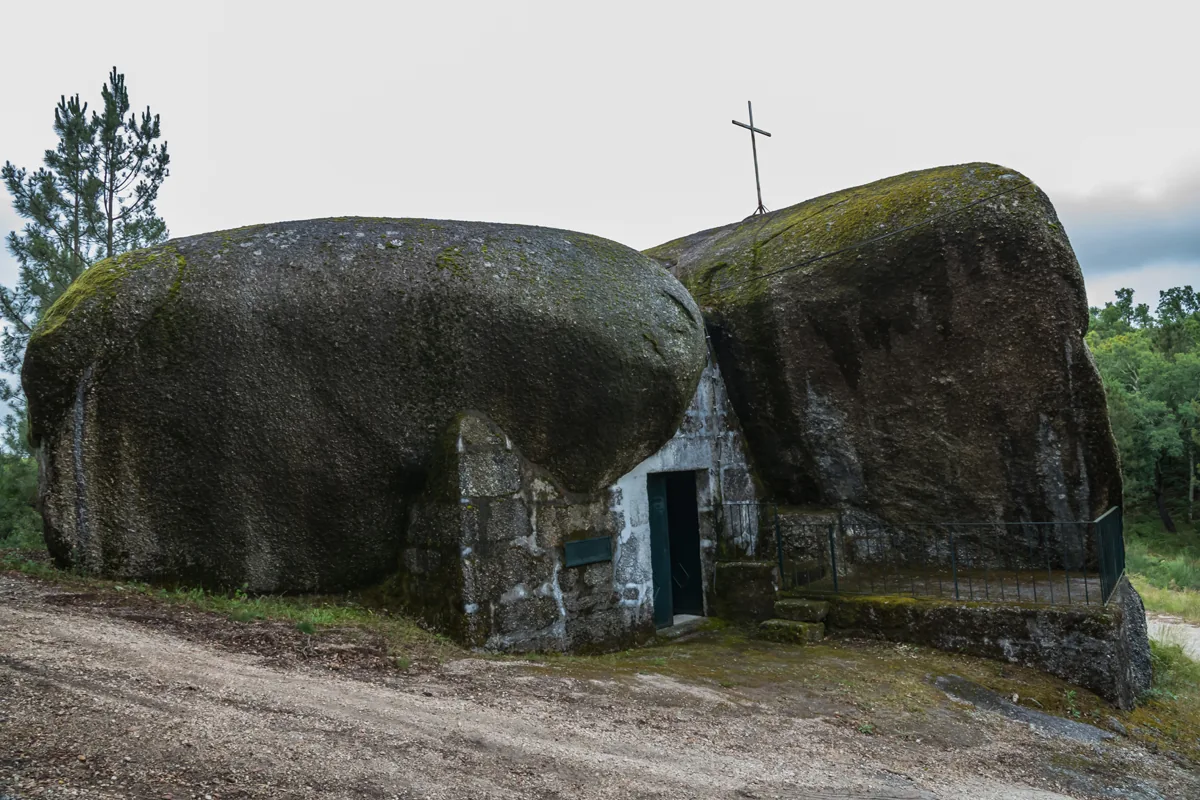
A chapel against the rock

Santa Catarina chapel between granite boulders.
ⓘ

Santa Catarina chapel between granite boulders.

Source: Visit Cabeceiras — Município de Cabeceiras de Basto

View source

Photograph date not stated.

Individual photographer and reuse licence not stated by the source.

Request removal or correct the photo credit

At Santa Catarina, the building meets the rocky outcrop.

The municipal presentation highlights a distinctive feature of the chapel of Santa Catarina in Alvite: it is embedded in an outcrop of rock. The meeting of rock and building offers a way to look at heritage beyond the façade.

The source identifies that relationship with the site, but gives no construction date or visiting hours here. The chapel’s listing brings together the available documentary information.

The 1758 account already named Santa Catarina on the hill of that name, among six chapels in the parish. The two sources answer different questions: the old document places it within a network of places of worship; the municipal presentation draws attention to the relationship between building and rock. Its presence in the account does not date the exterior appearance shown in the photograph.

One chapel, three scales

Open an option and choose the story.

  1. The chapel network in 1758

    The name Santa Catarina appears next to five other places of worship.

    Six chapels, different responsibilities →
  2. The landscape from the top to the valley

    The historical document distinguishes relief, settlement and cultivation.

    The Orada changed from high to valley →
  3. Another relationship between stone and construction

    In Vilela, granite appears as masonry material; it compares this relationship with the penedia of Santa Catarina.

    Granite also draws the village →
Choose another reading and compare what each source lets you know.
See Fact sheet: Capela de Santa Catarina de Alvite
Source and context

Municipality — landscape of Alvite e Passos

Basto Land Museum — Parish Memories of 1758: Alvite

Accessed: . Editorial summary; the date of consultation is not the date of the facts.

Back to index ↑
YOUR LOCAL GUIDE

What would you like to discover?

Take a closer look.