Discover Cabeceiras de BastoFree independent project
ViveCabeceirasYOUR GUIDE TO CABECEIRAS
ENEnglish
SearchSaved
CHOICE · EXPERIMENTARY · TAKE

A notebook.
Your findings.

Up to six proposals of Cabeceiras, in your own order, to do it at home, in company or on a break.

2 de 6 propostas escolhidas · faça-as ao seu ritmo.

PROPOSTA 1 DE 2 · Viajar no tempo

Watch the materials

Uz · Gondiães e Vilar de Cunhas

Stone on the walls, colme on the roof

The municipal presentation of the village describes stone houses and some stalk covers. It also recalls the name Casal da Urzeira, associated with the heather of the hills. There are two ways to read the connection between the village and the landscape: in the materials of the houses and in the memory of the name. The same description associates the village with agriculture, animal husbandry and the work of flax and wool. The portrait helps relate houses, fields and crafts. It's an asset presentation, without confirming how many hives remain today.

Vamos experimentar?

  1. In a view of the village, it distinguishes walls, coverings and relationship with the fields.
  2. Write down only the materials you can recognize; a distant photograph may not show the type of cover.
  3. Compare with the stories of flax and wool, without assigning to each house a specific craft.

It observes from an accessible space, respecting privacy and objects.

Open a história e os seus recursos →
Sources of this proposal

My findings

An idea, a drawing or a question to go on.
PROPOSTA 2 DE 2 · Ler a paisagem pelas plantas

Try watching

Sliding crops · olive trees

One leaf, two faces

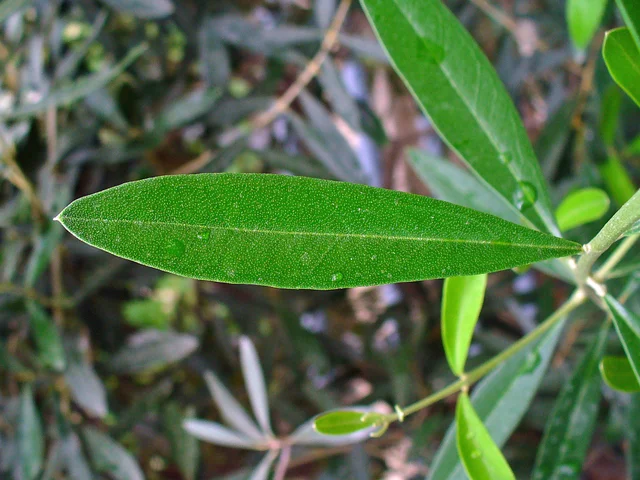
On the half slopes of Cabeceiras, the municipal portrait includes olive trees. The cultivated olive tree has grey-green leaves on top and silver-gray under it, where there are hair. The small flowers feature four white petals attached to the base. The fruit is olive, an oil-rich drupa. The description of the University of Évora follows the change from green to reddish and dark shades during maturation, but refers to variants that remain green even mature. Color alone doesn't tell the whole story of the fruit. From the tree to the olive oil, there is a link that can continue in reading about the Ramil mill. The record distinguishes the cultivated olive tree from the wild variety, the zambujeiro. The latter describes smaller leaves and fruits and thorny lower branches. The comparison shows why a single feature, such as the silvery leaf tone, does not solve all the differences. The olive tree is perennial: it maintains foliage throughout the year. This allows you to return to the same tree at different times and compare leaves, flowers and fruits without expecting all to be present simultaneously.

Elongated and green olive leaf, with light central ribbedness and other leaves at the bottom.
Olive leaf photographed in Stutensee, Germany, in 2011. Botanical illustration; it is not a record of Cabeceiras. This frame does not show the two faces of the same leaf.
Photography: H. Zell · CC BY-SA 3.0
About this photograph

Date given at source: . Source consulted in 2026-11-07. EXIF orientation, proportional resizing and WebP conversion; no retouching or clipping of the file.

Request withdrawal or correct authorship

Vamos experimentar?

  1. Observes the photograph: draw the contour and the central nerve of the sheet.
  2. The image does not show the two sides of the same sheet. Separate what you see from what the text explains on the lower face.
  3. If you observe an olive tree throughout the year, record separately leaves, flowers and fruits, without taking off material.

A proposal to make at your pace, without collecting copies.

Open a história e os seus recursos →
Sources of this proposal

My findings

An idea, a drawing or a question to go on.

YOUR LOCAL GUIDE

What would you like to discover?

Take a closer look.