Discover Cabeceiras de BastoFree independent guide
ViveCabeceirasYOUR GUIDE TO CABECEIRAS
ENEnglish
SearchSaved
CHOICE · EXPERIMENTARY · TAKE

A notebook.
Your findings.

Up to six proposals of Cabeceiras, in your own order, to do it at home, in company or on a break.

4 de 6 propostas escolhidas · faça-as ao seu ritmo.

PROPOSTA 1 DE 4 · Viajar no tempo

Try watching

Gondiães e Vilar de Cunhas · memory and landscape

A house with three granaries

In Casa de Chouzas, three 19th-century granaries join the solarengo building highlighted by the Municipality. The set approximates two functions: inhabit and guard the harvest. Instead of looking only at the main house, it is also worth recognizing the importance of agricultural support constructions. The presentation of Vilar de Cunhas places this heritage in a plateau and mountain landscape, marked by agriculture and pastoral care. The house and the granaries can be read in this work context, without the source detailing the production of each property. The dating of the house is less firm: the municipality presents it as perhaps 19th century, while assigning the granaries to the 19th century. This difference must remain visible. The photo accompanying the reading shows the portal; it does not show the three granaries. The asset reference does not confirm access to the set.

Vamos experimentar?

  1. Look at the photo of the portal and list only the elements you can see.
  2. Compared to the three granaries mentioned in the text: what depends on the written description?
  3. Imagine a caption that distinguishes the frame of the photograph from the remaining patrimonial set.

A proposal to make at your pace, without collecting copies.

Open a história e os seus recursos →
Sources of this proposal

My findings

An idea, a drawing or a question to go on.
PROPOSTA 2 DE 4 · Ler a paisagem pelas plantas

Try watching

Common names used in source

Medroneiro, carqueja and tojo

Medronheiro, carqueja, tojo and madresilva appear in the municipal description of the mountain vegetation. The source also associates the altitude forests to the grazing of goats, cattle and sheep, distinguishing them from the pastures cultivated below. Thus, the forest is part of a landscape of plants, animals and work. These common names are a starting point to know the vegetation, not an identification of each plant found. The municipal presentation relates this vegetation with changes of use: refers to the partial replacement of oaks, chestnut trees and forests by pine-bravo. Reading the landscape implies, therefore, asking also for what was planted and what has become. A green spot can gather stories of grazing, cultivation and forest. It begins by choosing a detail in the following readings: the stem of the carqueja, the thorns of the tojo, the flowering and the fruits of the medronho or the position of the madresilva on the edge of the forest. Each question brings the look closer without requiring that you already know how to identify all the plants.

Vamos experimentar?

  1. In a landscape design, use different symbols for trees, shrubs and fields.
  2. Compare the spots: where you find continuity and where there are intervals? You can do the exercise from a photograph.
  3. Choose one of the plans of this story and open the related reading to discover a detail.

A proposal to make at your pace, without collecting copies.

Open a história e os seus recursos →
Sources of this proposal

My findings

An idea, a drawing or a question to go on.

PROPOSTA 3 DE 4 · Ler a paisagem pelas plantas

Try watching

Sliding crops · olive trees

One leaf, two faces

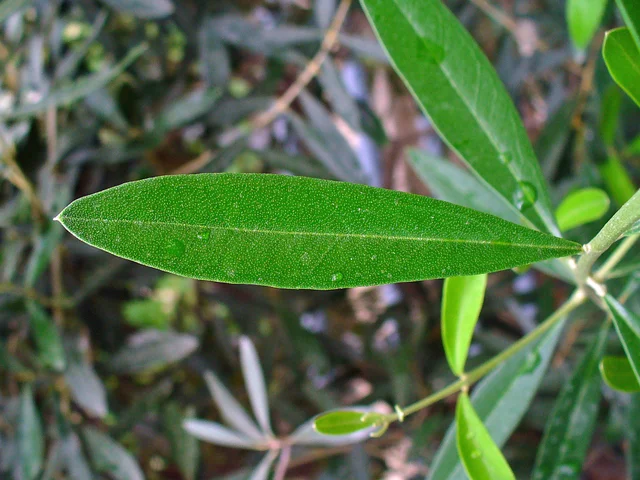
On the half slopes of Cabeceiras, the municipal portrait includes olive trees. The cultivated olive tree has grey-green leaves on top and silver-gray under it, where there are hair. The small flowers feature four white petals attached to the base. The fruit is olive, an oil-rich drupa. The description of the University of Évora follows the change from green to reddish and dark shades during maturation, but refers to variants that remain green even mature. Color alone doesn't tell the whole story of the fruit. From the tree to the olive oil, there is a link that can continue in reading about the Ramil mill. The record distinguishes the cultivated olive tree from the wild variety, the zambujeiro. The latter describes smaller leaves and fruits and thorny lower branches. The comparison shows why a single feature, such as the silvery leaf tone, does not solve all the differences. The olive tree is perennial: it maintains foliage throughout the year. This allows you to return to the same tree at different times and compare leaves, flowers and fruits without expecting all to be present simultaneously.

Elongated and green olive leaf, with light central ribbedness and other leaves at the bottom.
Olive leaf photographed in Stutensee, Germany, in 2011. Botanical illustration; it is not a record of Cabeceiras. This frame does not show the two faces of the same leaf.
Photography: H. Zell · CC BY-SA 3.0
About this photograph

Date given at source: . Source consulted in 2026-11-07. EXIF orientation, proportional resizing and WebP conversion; no retouching or clipping of the file.

Request withdrawal or correct authorship

Vamos experimentar?

  1. Observes the photograph: draw the contour and the central nerve of the sheet.
  2. The image does not show the two sides of the same sheet. Separate what you see from what the text explains on the lower face.
  3. If you observe an olive tree throughout the year, record separately leaves, flowers and fruits, without taking off material.

A proposal to make at your pace, without collecting copies.

Open a história e os seus recursos →
Sources of this proposal

My findings

An idea, a drawing or a question to go on.

PROPOSTA 4 DE 4 · Ofícios e memórias

Compare two solutions

Alvite e Passos · irrigation documented in 2008

The water has changed its way

The municipal record of Poça do Monte, raised in 14 April 2008, describes a transformation into Alvite: the channel into natural land was channeled by consorts in 2001. It was about a kilometer and used water from the source of Ribeiro Furado. The register identifies seven consorts and refers to a sharp slope in the initial part. This story helps distinguish the old open channel from pipe conduction. The document does not allow us to conclude what the network is like today, nor does it present a way to walk.

Vamos experimentar?

  1. Split a sheet into two columns: before and after.
  2. Note the change described in the text and the date of the source.
  3. Write a question the document leaves open.

Exploitation of the document, no visit to the real estate.

Open a história e os seus recursos →
Sources of this proposal

My findings

An idea, a drawing or a question to go on.

YOUR LOCAL GUIDE

What would you like to discover?

Take a closer look.