One leaf, two sides
ⓘ
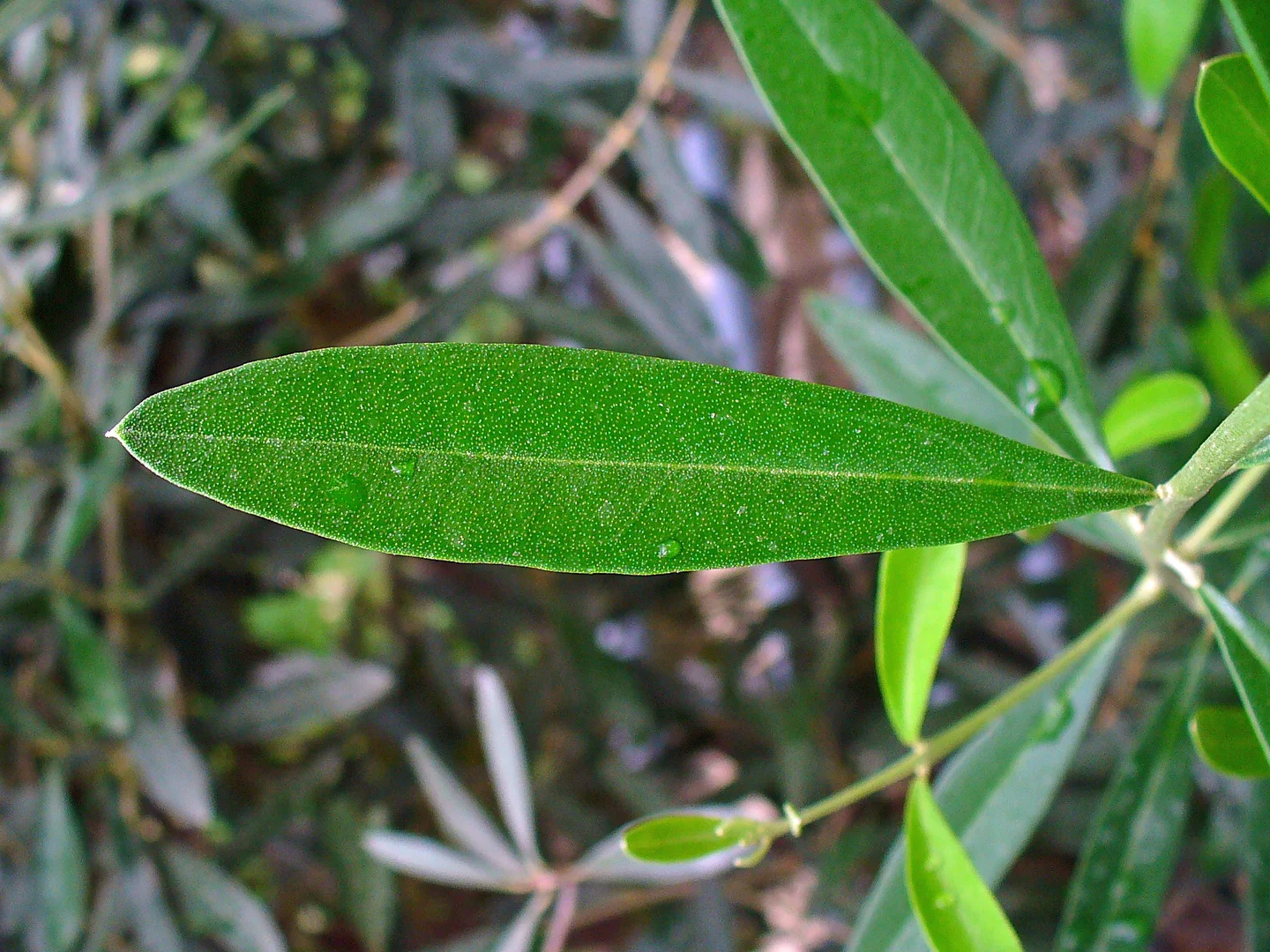
An olive leaf photographed in Stutensee, Germany, in 2011. Botanical illustration, not an observation from Cabeceiras. This view does not show both sides of the same leaf.
Photography: H. Zell · CC BY-SA 3.0

Date given at source: .
The olive tree’s silvery side also tells a story.
Text size
Your choice is saved only in this browser.
The municipality’s landscape description includes olive trees on the hillsides of Cabeceiras. The cultivated olive has leaves that are grey-green above and silvery-grey beneath, where hairs grow. Its small flowers have four white petals joined at the base.
The fruit is the olive, an oil-rich drupe. The University of Évora’s description follows the change from green to reddish and dark shades during ripening, but also mentions forms that remain green when ripe. Colour alone does not tell the fruit’s whole story. The connection from tree to olive oil continues in the story of the Ramil oil mill.
The profile distinguishes the cultivated olive from its wild form, known in Portuguese as zambujeiro. The latter is described as having smaller leaves and fruits and thorny lower branches. This comparison shows why a single feature, such as the silvery underside of a leaf, does not explain every difference.
The olive is evergreen: it retains foliage throughout the year. You can therefore return to the same tree in different seasons and compare leaves, flowers and fruits, without expecting to find them all at once.
Explore further: words and activities
Explore this story
From leaf to fruit and winepress
Open an option and choose the story.
Another leaf, another behavior throughout the year
A leaf drawn in waves →Water and olive oil production in Ramil
From Petimão to olive oil press →Other mills in local history
When the mill walked with the animals →
One bookmark per reading journey, saved in this browser.
Source and context
University of Évora — Virtual Museum of Biodiversity, Olea europaea
Municipality — landscape and vegetation
Accessed: . Editorial summary; the date of consultation is not the date of the facts.