Maize left its mark on the village
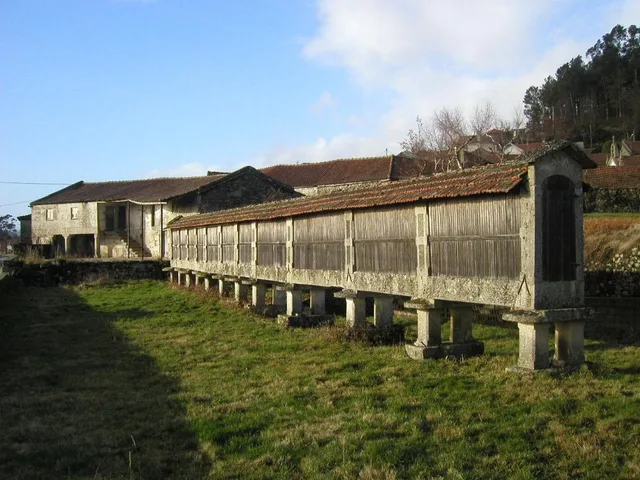
Carrazedo’s granaries tell a farming story.
Text size
Your choice is saved only in this browser.
Maize shaped Carrazedo’s economy and left its mark in buildings: the canastros, also called espigueiros. The municipal guide attributes a capacity of between 14 and 18 tonnes of maize to the largest example.
That scale helps us imagine the importance of storing the harvest. It is the capacity given in the source, not the quantity currently stored. The photograph lets you observe the building.
The municipal page for Bucos lists the Espigueiro da Casa de Fundevilla in Carrazedo among the parish’s heritage features. The building makes visible a stage between harvesting and milling: storing the grain. It is not a mill, and its capacity does not tell us how much maize a family produced in a year.
To follow the food’s journey, connect three places in the readings: the field where the grain grows, the granary where it is stored and the mill where it is processed. This sequence helps explain distinct functions without imagining that all the buildings presented belonged to the same farm.
Explore further: words and activities
Explore this story
One bookmark per reading journey, saved in this browser.
Source and context
Municipality — Village Guide of Serra da Cabreira: landscape, work and heritage
Municipality — parish of Bucos, patrimony and poultice of Casa de Fundevilla
Accessed: . Editorial summary; the date of consultation is not the date of the facts.