Discover Cabeceiras de BastoFree independent guide
ViveCabeceirasYOUR GUIDE TO CABECEIRAS
ENEnglish
SearchSaved
7 STORIES · CONTINUOUS READING

Santa Senhorinha: water, encounters and memory

Seven stories to link the river to the fields, bridges, fairs and news. Explore the links between readings and set up a mail calendar of 1758. The old documents keep their dates; do not announce current services or parties.

All stories in the order of the route. You can print this page by the browser; sources and credits follow the reading.

Things to try4 activities · 3 interactive explorations · 3 questions
Santa Senhorinha · 1758 account

The river became part of farming life

A cultivated riverbank tells history too.

The 1758 account describes the river of Santa Senhorinha flowing all year, but with little water in summer. It describes cultivated banks, fruit trees and wild trees, linking water with irrigation and rural work.

Vila de Lobos and Cainhos had olive-oil mills; grain mills are mentioned in Vila de Lobos and Sestelo. The same description follows several river uses: growing crops, grinding grain and processing olives. It does not confirm which facilities survive or operate today.

Unlike the rushing currents described at São Nicolau, the abbot characterises this river as calm and flowing from west to east. He begins its course at Aboim and lists Várzea Cova, Passos and São Clemente before Santa Senhorinha. This is the geography reported in the document, not a current delineation of the watercourse.

Residents’ use of water for the fields is described as unrestricted. The account was signed on 23 May 1758. That detail matters: the reference to little water in summer describes a pattern known to the author, not an observation made during that year’s summer.

One river, four stories

Open an option and choose the story.

  1. Crossing: wooden bridgesNot all bridges were stone →
  2. Cultivating: bread, wine and olive oilBread, wine and olive oil filled the portrait of the earth →
  3. Know the names of fishTrouts, scallops and berries in the memory of the river →
  4. Meet people at the fairsOlela had dates →
Follows the work, crossings, harvests and fish in the memories of the parish.
Source and context

Municipality — Memória de Santa Senhorinha, 23/05/1758; transcript of José Viriato Chapel (2003)

Accessed: . Editorial summary; the date of consultation is not the date of the facts.

Back to index ↑
Santa Senhorinha · 1758 account

Not every bridge was made of stone

Wood connected riverbanks too.

The 1758 account lists three wooden bridges in the parish: Vagalhafos at Quinta de Vila de Lobos; Santa Senhorinha near the church; and Olela. Their names connect crossings with estates, worship and inhabited places.

The same account mentions dressed-stone bridges at São Clemente and São Martinho do Arco de Baúlhe. Wood and stone thus appear in a single river description. The list supplies no construction dates and does not prove that the structures survive.

Source and context

Municipality — Memória de Santa Senhorinha, 23/05/1758; transcript of José Viriato Chapel (2003)

Accessed: . Editorial summary; the date of consultation is not the date of the facts.

Back to index ↑
Documentary account · 1758

Olela had days for gathering

History happened between stalls and shoppers too.

In Santa Senhorinha’s 1758 account, Olela appears as a place of fairs in December, February and March. The parish priest mentions payments for setting up and dues. This is a window onto local exchange at that time, not today’s market calendar. The text specifies the days: 14 and 15 December, 24 and 25 February, and 27 March. These dates belong to the 1758 account.

The payments mentioned remind us that a fair also had rules. Beyond the goods exchanged, occupied spaces and fees matter too. If you could interview someone at that fair, would you first ask what they sold, where they came from or what they paid for their place? The document does not give every answer: asking helps reveal what we still want to discover.

Getting to know the parish
Source and context

Municipality — Parish memories of Santa Senhorinha, 1758
Accessed:

Municipality — Memória de Santa Senhorinha, 23/05/1758, replies 15, 19 and 20; transcription of José Viriato Capela (2003)
Accessed:

Editorial summary; the date of consultation is not the date of the facts.

Back to index ↑
Santa Senhorinha · celebrations in 1758

When parishes came together

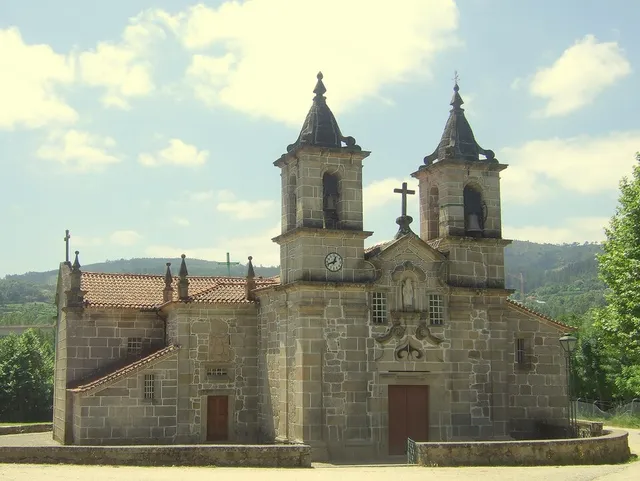
Façade of the Church of Santa Senhorinha de Basto, with its two towers
Igreja de Santa Senhorinha · heritage context of the parish, not a record of the 1758 celebration© Bocacheteⓘ

A celebration could bring the territory together.

In 1758, the Corpus Christi procession brought the municipal council and representatives of nearby parishes together in Santa Senhorinha, with crosses and clergy. The account mentions spending on wax and a sermon: behind the celebration stood preparation, objects and work.

The abbot also describes, separately, the forty-hour triduum, with music and sermons over three days. Distinguishing these references helps explain the religious calendar of that time. The document is testimony from 1758, not the agenda of current celebrations.

What made a community meet?

Open an option and choose the story.

  1. Look at the churchA church told in images →
  2. Knowing the Objects of DevotionDevotion also fit in a candle →
  3. Follow newsTo receive news, it was necessary to count on Fox →
  4. Discover the fairs of OlelaOlela had dates →
Choose a call to continue for celebrations, news or exchanges.
Getting to know the parish
Source and context

Municipality — Parish Memoirs of Santa Senhorinha (1758)

Accessed: . Editorial summary; the date of consultation is not the date of the facts.

Back to index ↑
Santa Senhorinha · 1758 account

A church told through images

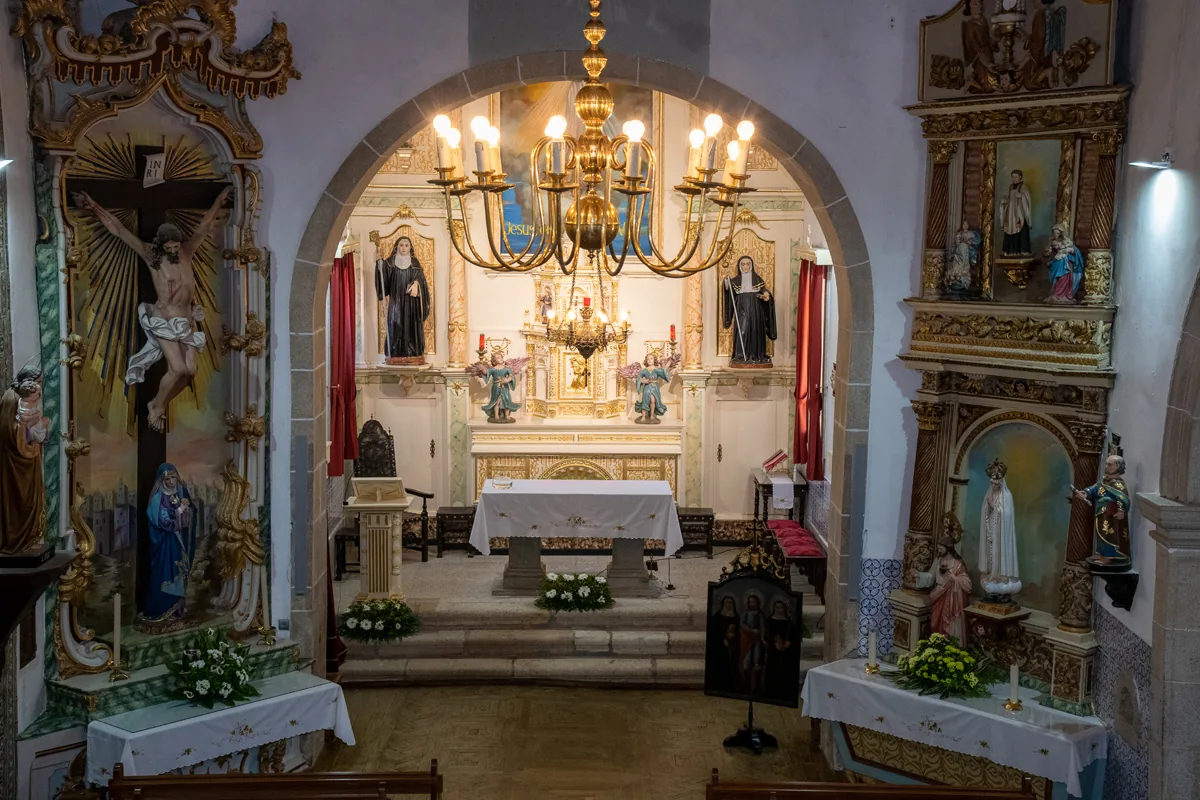
Interior of Santa Senhorinha church.
ⓘ

Interior of Santa Senhorinha church.

Source: Visit Cabeceiras — Município de Cabeceiras de Basto

View source

Photograph date not stated.

Individual photographer and reuse licence not stated by the source.

Request removal or correct the photo credit

Before screens, people looked at painted panels.

In the 1758 account, Santa Senhorinha’s church had two naves with different image programmes. One presented panels on the Creation of the World; the nave of the Franciscan Third Order showed saints of that order.

The abbot also described a vaulted chapel closed by iron grilles. Painting, spaces and architectural elements formed a written portrait of the interior. The source allows that description to be studied without guaranteeing that the pieces or arrangement survive today.

The description continues with tombs, presented by the abbot as decorated with painting and gold lettering, and a private chapel dedicated to Nossa Senhora do Pilar. The interior emerges as a group of spaces, images and inscriptions, each with a role in the account.

This allows a layered reading: first the arrangement of the naves, then the painted themes and finally the elements marking memory and devotion. There is no need to imagine a single undifferentiated hall; the document itself distinguishes several settings.

See Fact sheet: Igreja de Santa Senhorinha
Source and context

Municipality — Memória de Santa Senhorinha, 23/05/1758; transcript of José Viriato Chapel (2003)

Accessed: . Editorial summary; the date of consultation is not the date of the facts.

Back to index ↑
Santa Senhorinha · agricultural production described in 1758

Bread, wine and olive oil in a portrait of the land

The parish account also described what people harvested.

In the 1758 response, the abbot of Santa Senhorinha highlighted bread, wine and olive oil among the most abundant products and praised the variety of fruit. The document connects the table with work in the fields. It does not list grape varieties, grains or fruit varieties here; those details should not be added by assumption.

Draw a small table with three places: bread, wine and olive oil. Beside it, add a field, a vineyard and an olive tree as questions about where food comes from. The document describes production, not a menu or how food was shared among families. That distinction helps us read the past more carefully.

Source and context

Municipality — Memória de Santa Senhorinha, 23/05/1758, replies 15, 19 and 20; transcription of José Viriato Capela (2003)

Accessed: . Editorial summary; the date of consultation is not the date of the facts.

Back to index ↑
Santa Senhorinha and Refojos · postal service described in 1758

News depended on Raposeira

Letters connected parishes before travelling further.

In 1758, receiving news in Santa Senhorinha depended on the postal service at Raposeira, in Refojos. The account gives a distance of a quarter of a league and a connection with Porto: departure on Thursday and arrival on Tuesday.

Those two days suggest a weekly rhythm of news. They do not let us calculate how long a particular letter took: the text does not describe its full journey. Raposeira also appears in other parishes’ accounts, showing how one service connected different communities.

Vila Nune’s answer gives a different arrival day: Monday for the services at Raposeira and Mondim. That difference deserves to remain visible. Comparing sources also means recognising where they disagree, rather than turning separate accounts into a single timetable.

Four Ways to Expect News

Open an option and choose the story.

  1. Vila Nune: two support pointsThe news had day to arrive →
  2. Faia: days of the weekThe letters had arrival days →
  3. Bucos: the distance to FoxThe letters arrived elsewhere →
Open each report. The days and distances are those indicated by the parish priests in 1758; they do not form a reconstructed postal itinerary.
Source and context

Municipality — Memória de Santa Senhorinha, 23/05/1758, replies 15, 19 and 20; transcription of José Viriato Capela (2003)

Municipality — Parish Memoirs of Vila Nune, 23/05/1758

Accessed: . Editorial summary; the date of consultation is not the date of the facts.

Back to index ↑
YOUR LOCAL GUIDE

What would you like to discover?

Take a closer look.