Discover Cabeceiras de BastoFree independent guide
ViveCabeceirasYOUR GUIDE TO CABECEIRAS
ENEnglish
SearchSaved
8 STORIES · CONTINUOUS READING

Plants also count places

A roundabout, a square, a school plantation, the season and the fields: eight readings about choices and memories of the landscape of Cabeceiras. Compare the ginkgo and the metasequoia and follow the changes of flowers, leaves and uses of the gardens. News keep their dates.

All stories in the order of the route. You can print this page by the browser; sources and credits follow the reading.

Things to try3 activities · 1 interactive exploration · 3 questions
Sobreira · landscaping documented in 2016

Three cork oaks offer a clue to the name

At Rotunda da Sobreira, plants help tell the story of the place.

In June 2016, the municipality announced completion of landscaping at Rotunda da Sobreira, at an entrance to the town. Three cork oaks were planted in the centre and rosemary in the granite beds. The report linked the choice of cork oak to the possible origin of the name Sobreira. This is the source’s interpretation, not a demonstrated etymology. The account documents a landscaping choice in 2016 without confirming each plant’s current condition.

Source and context

Municipality — Urban arrangement of the Sobreira Rotunda, 22/06/2016

Accessed: . Editorial summary; the date of consultation is not the date of the facts.

Back to index ↑
Praça da República · garden memories from 2011

Spring comes to the square too

Camellias and rhododendrons change the town’s colours.

In April 2011, the municipality described a seasonal handover in Praça da República: the camellias were losing their flowers as the rhododendrons began to bloom. The news item recorded two pink-flowered plants and linked them to the traditional gardens of Terras de Basto. This dated portrait of the square invites us to notice flowers as well as monuments. A March report from the same year counted 33 camellia plants in the square: 30 added during the redesign joined the three already there. It mentioned pink, white and variegated flowers. These figures belong to the 2011 account, not a current count.

Source and context

Municipality — Rododendros give spark to Republic Square, 01/04/2011
Accessed:

Municipality — Camellias in Republic Square, 18/03/2011
Accessed:

Editorial summary; the date of consultation is not the date of the facts.

Back to index ↑
Parque Florestal · 2016 planting and species biology

A tree with fan-shaped leaves

The ginkgo’s leaves have a distinctive shape to look for.

Ginkgo biloba leaves open like fans and may have a central division. Gulbenkian describes them turning golden in autumn before falling. The connection to Cabeceiras has a date: the municipal news item of 18 March 2016 records ginkgo and dawn redwood planting in Parque Florestal. The record tells the story of that planting; it does not confirm the trees’ present condition.

The fan shape also appears in the leaf’s veins. Gulbenkian explains that the division into two lobes, when present, gives rise to the name biloba. Leaves do not all need an identical notch to belong to the same species.

Ginkgo has male and female trees. Female trees produce seeds with a fleshy covering that may resemble a plum, but these are not fruits like those of a plum tree. This story invites us to observe shapes and understand reproduction; the municipal news does not identify the sex of the tree planted in Cabeceiras.

Origin and use are part of the story too. Gulbenkian places ginkgo’s origin in south-eastern China and mentions its planting in Portuguese parks, gardens and streets. It prefers sunny places with available water in well-drained soil. A garden can therefore bring together trees from very different origins: being planted in Cabeceiras does not make a species native to the municipality.

Two trees, two ways to look

Open an option and choose the story.

  1. Metasequoia: leaves in pairs and autumnA conifer who undresses in autumn →
  2. The role of trees in the shadeThe shadow is also part of the village →
  3. Another season: the flowers of the squareSpring also passes through the square →
Compare botany and memory of a plantation. The sources are not a current inventory of the park.
Source and context

Municipality — World Tree Day, 18/03/2016

Calouste Gulbenkian Foundation — Ginkgo

Accessed: . Editorial summary; the date of consultation is not the date of the facts.

Back to index ↑
Parque Florestal · 2016 planting and general botany

A conifer that sheds its leaves in autumn

Having cones does not mean keeping leaves all year round.

The municipal news of March 2016 records the planting of a dawn redwood in Parque Florestal alongside a ginkgo. This episode opens a window onto Metasequoia glyptostroboides, the living species of the genus described by Cambridge University Botanic Garden. The report provides no detailed botanical identification and does not confirm the tree’s survival today.

In Cambridge’s description, this conifer sheds its leaves and turns coppery in autumn. Leaves, buds and branches are arranged in opposite pairs. Its bark is fissured and the tree can grow large. These are general features, not measurements of a tree in Cabeceiras.

Compare it with ginkgo: both can change colour and lose foliage, but leaf shape and arrangement differ greatly. A tree’s calendar and a leaf’s pattern tell different parts of its story.

The scientific story has a twist: Cambridge reports that dawn redwood was known only from fossils until 1941, when living trees were found in Sichuan, China. Seed collection and distribution later helped establish it in gardens across several countries. The profile distinguishes its limited wild population from widespread cultivation. A park tree and a population in its native habitat tell different stories.

Source and context

Municipality — World Tree Day, 18/03/2016

Cambridge University Botanic Garden — Metasequoia glyptostroboides, deciduous foliage and layout of leaves

Accessed: . Editorial summary; the date of consultation is not the date of the facts.

Back to index ↑
Arco de Baúlhe · March 2023 planting

An orange tree beside railway memories

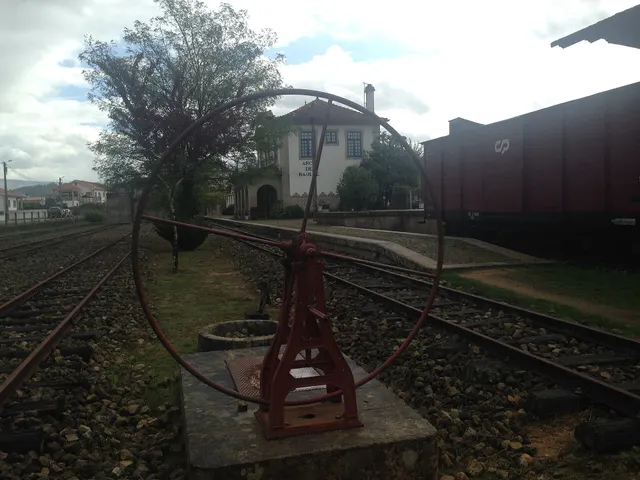
Turntable and tracks at the former Arco de Baúlhe station, with buildings and railway vehicles in the background.
Place linked to this story: Núcleo Ferroviário de Arco de Baúlhe© JP Ribeiroⓘ

In the museum garden, the community has put down roots too.

On 21 March 2023, users of the Espaços de Convívio e Lazer in Arco de Baúlhe and Vila Nune joined the initiative As plantas do nosso Jardim. At the railway museum they planted an orange tree in the leisure area and aromatic plants in a bed. The municipal report reveals another side of the museum: a place for meeting and participation. It describes that planting, without guaranteeing that all the plants survive today.

See Fact sheet: Núcleo Ferroviário de Arco de Baúlhe
Source and context

Municipality — World Tree and Poetry Day, 21/03/2023

Accessed: . Editorial summary; the date of consultation is not the date of the facts.

Back to index ↑
Arco de Baúlhe · educational project documented in 2016

A garden bed for learning through the senses

Turntable and tracks at the former Arco de Baúlhe station, with buildings and railway vehicles in the background.
Arco de Baúlhe station and surrounding. This photograph contextualizes the museum; it does not identify the site or plans of the 2016 program.© JP Ribeiroⓘ

Plants are part of the station’s memory too.

In a March 2016 announcement, the museum recalled an aromatic-herb project created in 2013 at the Arco de Baúlhe railway museum. For that month it proposed planting new aromatic plants and two fruit trees with children from the school centre and users of the day centre. The garden bed connected the museum with environmental education. The source documents the project and announced programme, without confirming the garden’s current composition.

Bringing children and older people together gives the garden another dimension: a plant can recall a kitchen or garden. Try asking someone which scent they associate with childhood and write down the answer and date. This idea draws on the museum’s announced intergenerational gathering; it is neither botanical identification nor advice about edible plants.

See Fact sheet: Núcleo Ferroviário de Arco de Baúlhe
Source and context

Basto Land Museum — The smells and aromas of our gardens, announcement of 15/03/2016

Accessed: . Editorial summary; the date of consultation is not the date of the facts.

Back to index ↑
Parque Urbano · planting documented in 2022

Fruit trees found a place in the park

Codornos, Pipo de Basto and Verdeal: names to remember.

On World Tree Day in 2022, the council reported planting fruit trees identified as Codornos, Pipo de Basto apple and Verdeal apple in the town’s Parque Urbano. Local associations sponsored the trees in an initiative that also included strawberry trees, olives and nettle trees. The report connects public space with fruit names and community participation. It records planting in March of that year; it does not confirm every tree’s survival or authorise picking fruit.

Source and context

Municipality — World Tree Day and plantation in Urban Park, 21/03/2022

Accessed: . Editorial summary; the date of consultation is not the date of the facts.

Back to index ↑
Agricultural landscape

Olive trees, cork oaks and vines

From the hillsides to cultivated river plains.

The municipal description follows the landscape from the hillsides to the river plains: olive trees and cork oaks appear alongside vines trained up other trees. The source mentions poplars, plane trees and fruit trees, including apple, orange and pear trees. It also describes slopes shaped into terraces and small plains beside rivers adapted for farming. This is a way of observing the relationship between relief, water and cultivation, rather than an up-to-date inventory of every plot.

Source and context

Municipality — landscape and vegetation

Municipality — Tourist sites: agricultural landscape and vegetation

Accessed: . Editorial summary; the date of consultation is not the date of the facts.

Back to index ↑
YOUR LOCAL GUIDE

What would you like to discover?

Take a closer look.