Discover Cabeceiras de BastoFree independent guide
ViveCabeceirasYOUR GUIDE TO CABECEIRAS
ENEnglish
SearchSaved
5 STORIES · CONTINUOUS READING

Before the table, the earth

The work of a bovine race, the origin of a product, the cereals of a bread, the heathers of honey and the beans of a sweet. Five stories about what gives identity to flavors.

All stories in the order of the route. You can print this page by the browser; sources and credits follow the reading.

Things to try3 activities · 2 interactive explorations · 1 question · 1 recipe
Gondiães · historical link to the Barrosã breed

Barrosã cattle helped work the land

Before the meal comes a story of fields and animals.

CAPOLIB includes Gondiães in the historic home territory of the Barrosã breed. It describes cattle linked with work and meat production, adapted to mountain farming: they help work small plots, and their manure fertilises the soil. This connects animal heritage with rural life; it is not a survey of the herds currently present in the parish.

Source and context

CAPOLIB — Barrosan breed, historical area and designation of origin

Accessed: . Editorial summary; the date of consultation is not the date of the facts.

Back to index ↑
Cabeceiras · regional product framework

Barrosã: a name tied to its origins

The link to the land can be documented too.

Barrosã connects the table with mountain farming. CAPOLIB describes cattle making use of meadows, damp grasslands and common land, with feed that may include grass, hay, straw and maize. It also distinguishes the breed from the certified product: Carne Barrosã depends on production rules and animals entered in the herd book, with traceability through to the consumer. Cabeceiras is part of the area described by the cooperative. Behind the name are breeders, fields and records; simply naming the breed on a menu does not confirm certification of the meat served.

The farming role was not limited to feeding the animals. The cooperative describes a dual-purpose breed used for draught work and meat: it helped work small plots, made use of available natural resources and returned manure to the fields. The animal formed part of a cycle of grazing, cultivation and fertilisation.

The horns are another feature highlighted by CAPOLIB: they project upwards in a shape resembling a lyre. The name refers to the Barroso plateau, but the breed’s history also includes its spread through Minho. Understanding its origins therefore calls for a regional view beyond the borders of one municipality.

Source and context

CAPOLIB — Barrosan breed, historical area and designation of origin

Accessed: . Editorial summary; the date of consultation is not the date of the facts.

Back to index ↑
Pedraça · testimony collected in March 2011

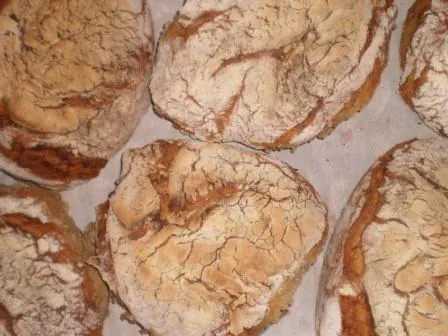
This broa blends rye and wheat

The mixed-grain bread after baking — mixed-grain bread sequence documented by the Museum in Recovos, Pedraça.
ⓘ

The mixed-grain bread after baking — mixed-grain bread sequence documented by the Museum in Recovos, Pedraça.

Source: Museu das Terras de Basto

View source

Photograph date not stated.

Individual photographer and reuse licence not stated by the source.

Request removal or correct the photo credit

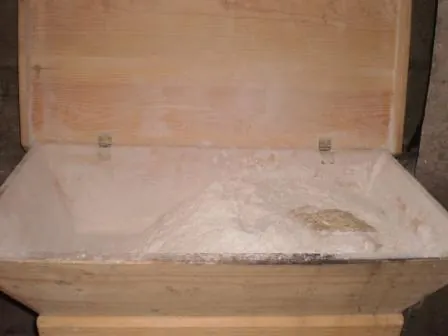
Flour and a portion of dough in the kneading trough — mixed-grain bread sequence documented by the Museum in Recovos, Pedraça.
ⓘ

Flour and a portion of dough in the kneading trough — mixed-grain bread sequence documented by the Museum in Recovos, Pedraça.

Source: Museu das Terras de Basto

View source

Photograph date not stated.

Individual photographer and reuse licence not stated by the source.

Request removal or correct the photo credit

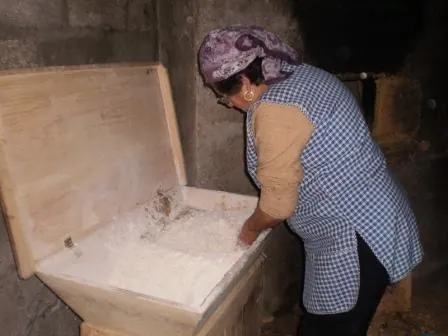
Preparing dough in the kneading trough — mixed-grain bread sequence documented by the Museum in Recovos, Pedraça.
ⓘ

Preparing dough in the kneading trough — mixed-grain bread sequence documented by the Museum in Recovos, Pedraça.

Source: Museu das Terras de Basto

View source

Photograph date not stated.

Individual photographer and reuse licence not stated by the source.

Request removal or correct the photo credit

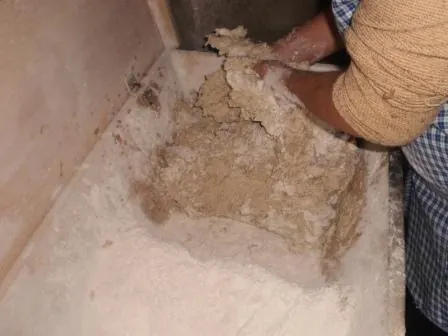
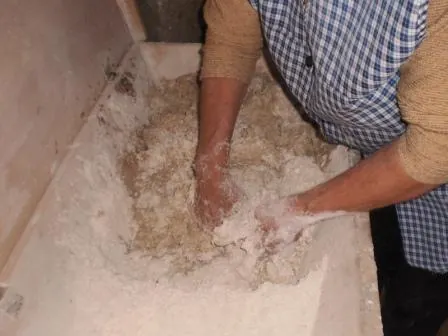
Working the dough by hand — mixed-grain bread sequence documented by the Museum in Recovos, Pedraça.
ⓘ

Working the dough by hand — mixed-grain bread sequence documented by the Museum in Recovos, Pedraça.

Source: Museu das Terras de Basto

View source

Photograph date not stated.

Individual photographer and reuse licence not stated by the source.

Request removal or correct the photo credit

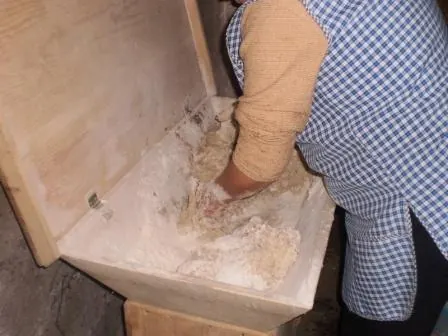
Kneading in the wooden trough — mixed-grain bread sequence documented by the Museum in Recovos, Pedraça.
ⓘ

Kneading in the wooden trough — mixed-grain bread sequence documented by the Museum in Recovos, Pedraça.

Source: Museu das Terras de Basto

View source

Photograph date not stated.

Individual photographer and reuse licence not stated by the source.

Request removal or correct the photo credit

A closer look at dough preparation — mixed-grain bread sequence documented by the Museum in Recovos, Pedraça.
ⓘ

A closer look at dough preparation — mixed-grain bread sequence documented by the Museum in Recovos, Pedraça.

Source: Museu das Terras de Basto

View source

Photograph date not stated.

Individual photographer and reuse licence not stated by the source.

Request removal or correct the photo credit

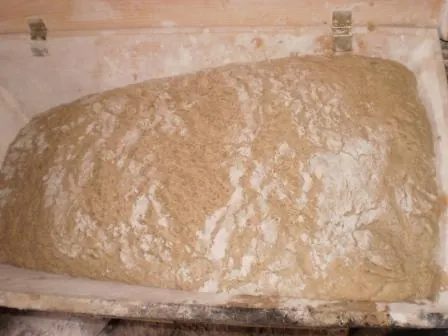
Dough in the trough before baking — mixed-grain bread sequence documented by the Museum in Recovos, Pedraça.
ⓘ

Dough in the trough before baking — mixed-grain bread sequence documented by the Museum in Recovos, Pedraça.

Source: Museu das Terras de Basto

View source

Photograph date not stated.

Individual photographer and reuse licence not stated by the source.

Request removal or correct the photo credit

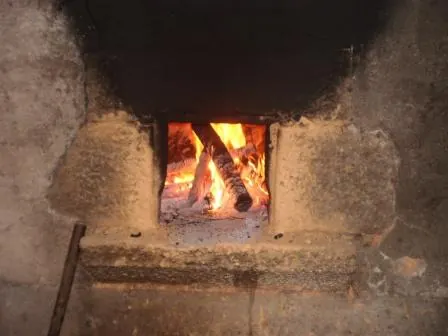
Fire in the wood-fired oven — mixed-grain bread sequence documented by the Museum in Recovos, Pedraça.
ⓘ

Fire in the wood-fired oven — mixed-grain bread sequence documented by the Museum in Recovos, Pedraça.

Source: Museu das Terras de Basto

View source

Photograph date not stated.

Individual photographer and reuse licence not stated by the source.

Request removal or correct the photo credit

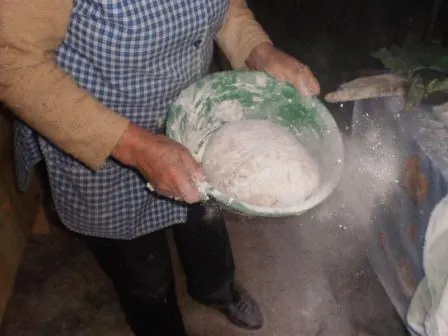
Shaping the loaf in a bowl — mixed-grain bread sequence documented by the Museum in Recovos, Pedraça.
ⓘ

Shaping the loaf in a bowl — mixed-grain bread sequence documented by the Museum in Recovos, Pedraça.

Source: Museu das Terras de Basto

View source

Photograph date not stated.

Individual photographer and reuse licence not stated by the source.

Request removal or correct the photo credit

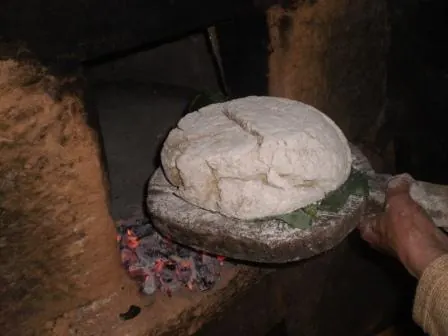
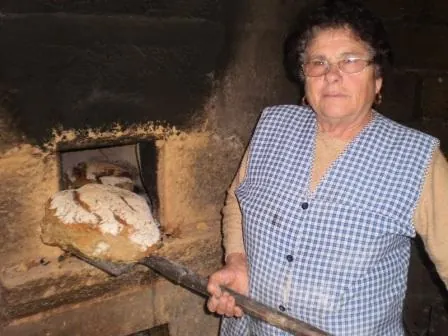
Placing the loaf in the oven with a peel — mixed-grain bread sequence documented by the Museum in Recovos, Pedraça.
ⓘ

Placing the loaf in the oven with a peel — mixed-grain bread sequence documented by the Museum in Recovos, Pedraça.

Source: Museu das Terras de Basto

View source

Photograph date not stated.

Individual photographer and reuse licence not stated by the source.

Request removal or correct the photo credit

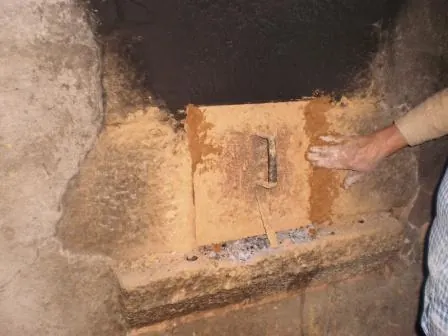
Closing the wood-fired oven — mixed-grain bread sequence documented by the Museum in Recovos, Pedraça.
ⓘ

Closing the wood-fired oven — mixed-grain bread sequence documented by the Museum in Recovos, Pedraça.

Source: Museu das Terras de Basto

View source

Photograph date not stated.

Individual photographer and reuse licence not stated by the source.

Request removal or correct the photo credit

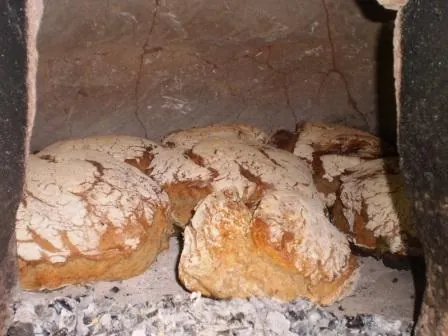
Baked loaves in the oven — mixed-grain bread sequence documented by the Museum in Recovos, Pedraça.
ⓘ

Baked loaves in the oven — mixed-grain bread sequence documented by the Museum in Recovos, Pedraça.

Source: Museu das Terras de Basto

View source

Photograph date not stated.

Individual photographer and reuse licence not stated by the source.

Request removal or correct the photo credit

The batch of bread and the work behind it — mixed-grain bread sequence documented by the Museum in Recovos, Pedraça.
ⓘ

The batch of bread and the work behind it — mixed-grain bread sequence documented by the Museum in Recovos, Pedraça.

Source: Museu das Terras de Basto

View source

Photograph date not stated.

Individual photographer and reuse licence not stated by the source.

Request removal or correct the photo credit

Not every memory of broa begins with maize.

In the recipe recorded by the Museu das Terras de Basto in March 2011, Maria da Conceição Gonçalves Mouta, who lived in Recovos, Pedraça, combined light rye, dark rye and wheat. The account distinguishes the maize broa she learned from her grandmother from the mixed-grain broa she began making later. Tradition changes even within one kitchen. In the same account, she says she no longer baked weekly: she made bread for celebrations and when she missed homemade broa. She also prepared it for Santa Marinha and for Christmas and maize-husking events at the Associação D. Nuno Álvares in Pedraça. Bread connected the kitchen with community gatherings.

The rhythm of baking also changed the leavening. When bread was baked frequently, dough was kept from the previous batch; in the preparation described in 2011, she used baker’s yeast prepared the day before. The change in ingredients accompanied a change in the calendar, from weekly bread to bread for gatherings.

Mixed-grain broa — a batch from Recovos

Tick off ingredients as you gather them. Checkmarks last only on this page. Any time shown for the reading journey is reading time, not cooking time.

Go to preparation ↓

Ingredients

Method at a glance

Back to ingredients ↑

Tick off each step as you finish it. You can untick it; checkmarks last only on this page.

Maria da Conceição Gonçalves Mouta; account recorded by Maria de Fátima Carvalho in March 2011. The source announces eight loaves, gives portions of 1.5 kg and does not explain the difference from the total weight of ingredients. The documented values are retained without recalculating the yield or adapting the recipe to a domestic oven.

Read the original recipe →

Choose another recipe →

The batch continues in other stories

Open an option and choose the story.

  1. What were you saving for next time?

    The dough of a batch connected the one-day bread to the next week.

    The bread kept the next batch →
  2. What was in before the bread?

    Compares another preparation associated with the oven and the cooking sequence.

    Before the bread, this cake would enter →
  3. When bread comes to dessert

    In the scrambles collected in Pedraça, the bread is added to the honey and dried fruits.

    The bread also made the feast →
It compares recipes and memories, maintaining the authorship and time of each collection.
Source and context

Museum — Mixed-grain bread, published 12/05/2011; fieldwork in March 2011 in Recovos, Pedraça
Accessed:

Basto Land Museum — food collections, 2010 and 2011
Accessed:

Editorial summary; the date of consultation is not the date of the facts.

Back to index ↑
Cabeceiras · regional production area

The landscape reaches the honey too

Heather connects the hills with the flavours on the table.

Cabeceiras de Basto lies within the production area of Mel das Terras Altas do Minho DOP described by the PTPT portal. Heather flowers connect mountain vegetation with this dark honey, which can be liquid or crystallised. The story does not end at the hive: the profile describes collection, extraction, settling and packing within the production region. Plants, bees and human work all lie on the path to the jar. The municipality’s inclusion in that area does not mean every honey sold here is certified.

The name also has criteria in the profile consulted. The portal distinguishes the product’s pollen composition and the names “Mel de Urze” and “Mel de Queiró”, associated with more than 35% pollen from the heather family. This information cannot be obtained simply by looking at the jar’s colour.

Presentation can vary: the profile includes centrifuged honey, liquid or crystallised, and honeycomb. For a particular product, read the origin and identification on the label. A landscape photograph or sale at a local market does not, by itself, demonstrate DOP certification.

From flower to sweet

Open an option and choose the story.

  1. What the bee takes on the visitSmall loads on the legs →
  2. Flowers at different timesA flower calendar →
  3. Honey on French toast of 2012Honey also sweetens French toast →
  4. A cake with a travel historyHoney meets cinnamon and fennel →
Choose a step: the biology of bees, the work described for the product and the uses of honey in table stories.
Return to observation proposal ↑
Source and context

PTPT — Highland honey of Minho: product, know-how and production area

Accessed: . Editorial summary; the date of consultation is not the date of the facts.

Back to index ↑
Sweets · 2019 competition

Beans make it to dessert too

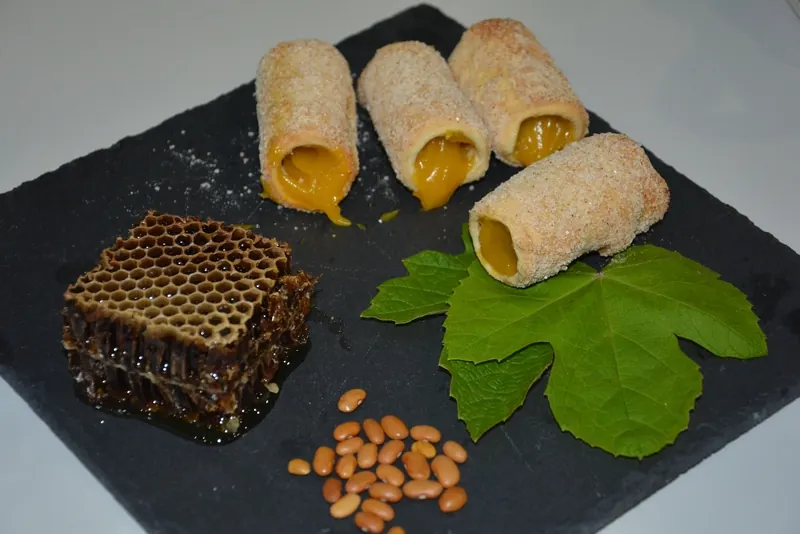
Alice Alves’s Miguelitos, winners of the 2019 Doce Cabeceirense competition.
ⓘ

Alice Alves’s Miguelitos, winners of the 2019 Doce Cabeceirense competition.

Source: Municipality of Cabeceiras de Basto

View source

Photograph date not stated.

Individual photographer and reuse licence not stated by the source.

Request removal or correct the photo credit

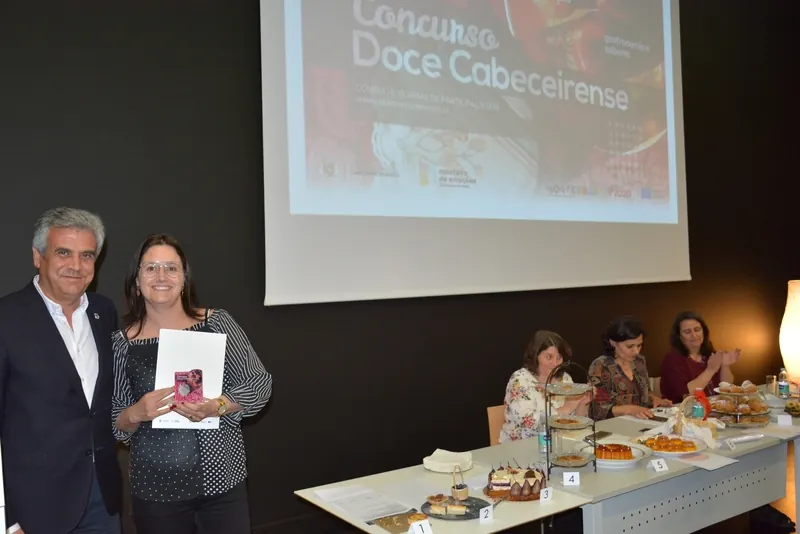
Miguelitos prize presentation at the 2019 Doce Cabeceirense competition.
ⓘ

Miguelitos prize presentation at the 2019 Doce Cabeceirense competition.

Source: Municipality of Cabeceiras de Basto

View source

Photograph date not stated.

Individual photographer and reuse licence not stated by the source.

Request removal or correct the photo credit

The story of Miguelitos has a date and a named creator.

Alice da Conceição de Magalhães Alves’s Miguelitos won the Concurso Doce Cabeceirense, whose result was announced at the Casa do Tempo on 18 May 2019. The municipal report describes a rolled preparation made with yellow beans, flour and Vinho Verde, filled with eggs and honey. The competition was part of the Mosteiro de Emoções programme. In February 2020, the municipality highlighted them again as the dessert for the Fim de Semana Gastronómico, alongside cozido as the main course. The sweet thus moved from the competition to the promotion of local food; the report does not confirm current availability.

Source and context

Municipality — Miguelitos win the Sweet Head Competition, 20/05/2019
Accessed:

Municipality — Gastronomic Weekend announcement, 07/02/2020
Accessed:

Editorial summary; the date of consultation is not the date of the facts.

Back to index ↑
YOUR LOCAL GUIDE

What would you like to discover?

Take a closer look.