Discover Cabeceiras de BastoFree independent guide
ViveCabeceirasYOUR GUIDE TO CABECEIRAS
ENEnglish
SearchSaved
12 STORIES · CONTINUOUS READING

Discreet lives between fields, forests and water

Twelve readings with four photographs to compare snouts, coats and thorns. The illustrative images were made outside the municipality, two of them in wildlife parks. Next, for bats: a local documentary record, echo, feeding, hunting from a landing and changing shelters throughout the year. Includes a proposal for observation without identification of species.

All stories in the order of the route. You can print this page by the browser; sources and credits follow the reading.

Things to try9 activities · 6 interactive explorations · 10 questions
Badger · general biology

A home beneath the ground
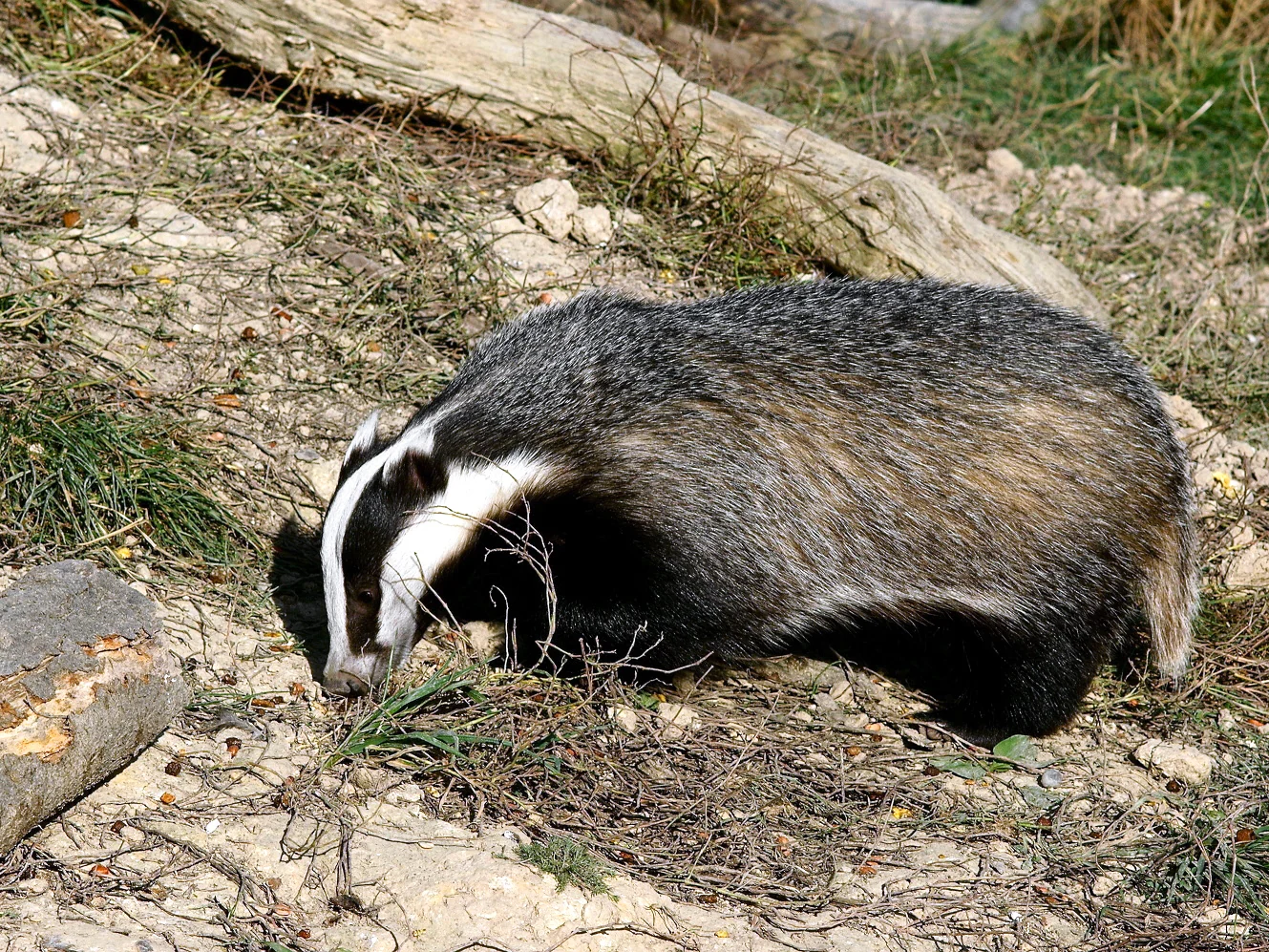
Badger with gray body and head with light and dark bands, next to the ground.
Badger at the British Wildlife Centre in Newchapel, Surrey, UK, in 2011. Animal in fauna park; not a record of Cabeceiras.
Photography: Peter Trimming · CC BY 2.0
About this photograph

Date given at source: . Source consulted on 2026-11-07. EXIF orientation, proportional resizing and WebP conversion of the current version in Commons; no retouching or additional clipping.

Request removal or correct the photo credit

Badgers spend much of their lives out of our sight.

The European badger, Meles meles, is mainly nocturnal and shelters in extensive underground setts. Two dark stripes on a white head are a striking visual clue; its short legs have strong claws. Museu Virtual da Biodiversidade describes its presence in woods, forests and farmland with vegetation. This profile explains the species in mainland Portugal; it does not document an observation in Cabeceiras de Basto. The claws are long and non-retractile: they do not draw back like a cat’s. A short, pale tail provides another contrast with a fox’s long tail. These details help compare descriptions without searching for or disturbing setts.

For the thorns and life in the water

Open an option and choose the story.

  1. Other body, other protectionWinter is not a sleep followed →
  2. Watching the otter mustachesThe otter takes the dress diving suit →
  3. Compare the hump coatThe hind changes coat →
Compare described characteristics and illustrative photographs. Links do not confirm that these species have been observed in the same place.
Source and context

University of Évora — Virtual Museum of Biodiversity: Meles meles

Accessed: . Editorial summary; the date of consultation is not the date of the facts.

Back to index ↑
Hedgehog · general biology

Winter is not one unbroken sleep

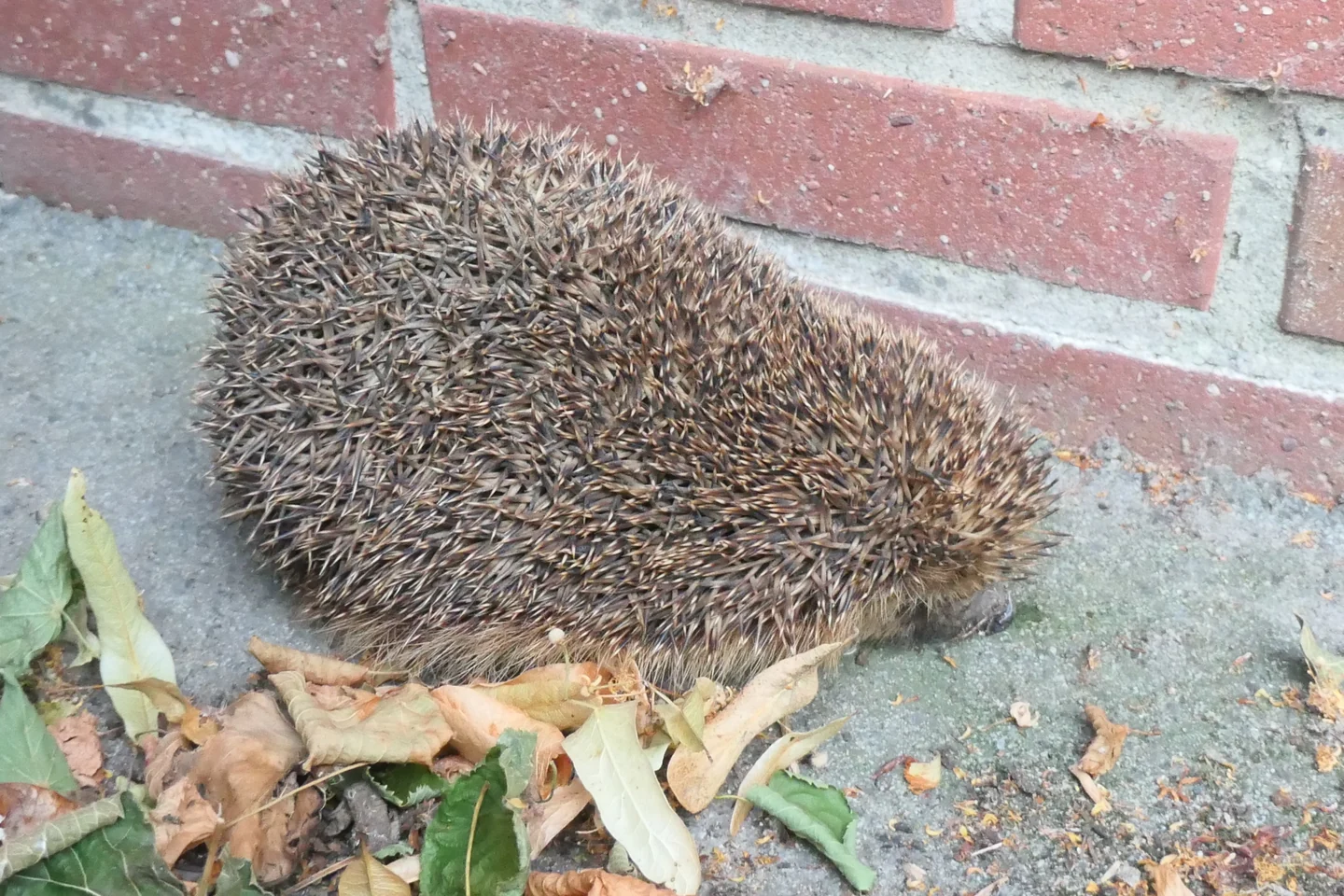
Hedgehog next to a brick wall, with visible thorns and little head exposed.
Goldfish in Kalkar, Germany, in 2025. Illustration of the species; it is not a record of Cabeceiras.
Photography: Pieter Delicaat · CC BY-SA 4.0
About this photograph

Date given at source: . Source consulted on 2026-11-07. EXIF orientation, proportional resizing and WebP conversion of the current version in Commons; no retouching or additional clipping.

Request removal or correct the photo credit

Hedgehogs can become active again when temperatures rise.

According to FCT NOVA, the European hedgehog’s hibernation can be interrupted by warmer periods. This nocturnal, solitary mammal, Erinaceus europaeus, eats insects, earthworms, snails and fruit, among other foods. When threatened, it rolls into a ball and exposes its spines. Woods, hedges, meadows and gardens are among its habitats. This is general biology: the source does not confirm a record in the municipality. Its short legs have five toes, and a small tail lies beneath the spines. FCT NOVA also mentions an ability to climb and move through water. These are general species characteristics, not suggestions for testing an animal you find.

Source and context

FCT NOVA — FCT VIVA: Erinaceus europaeus

Accessed: . Editorial summary; the date of consultation is not the date of the facts.

Back to index ↑
Species biology · Portuguese context

Roe deer change their coats

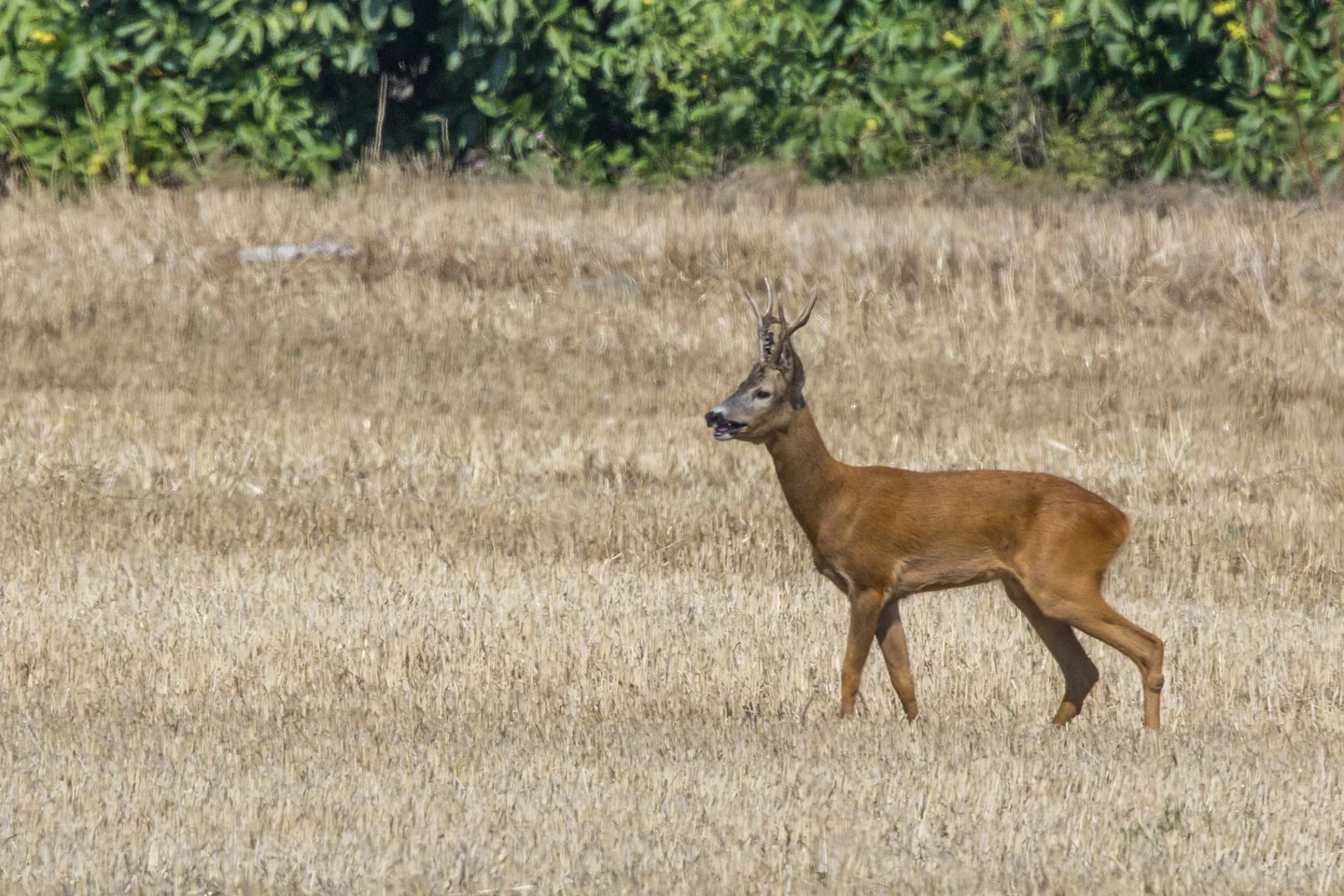
Profile hind in a field, with stems, raised ears and reddish brown coat.
Male hind in Dobruja, Romania, in August 2022. Illustration of the species; it is not a record of Cabeceiras.
Photography: Charles J. Sharp · CC BY-SA 4.0
About this photograph

Date given at source: . Source consulted on 2026-11-07. EXIF orientation, proportional resizing and WebP conversion of the current version in Commons; no retouching or additional clipping.

Request removal or correct the photo credit

One coat for summer, another for winter.

The roe deer, Capreolus capreolus, changes from a reddish-brown coat in summer to a grey one in winter. It eats plants and also uses open areas and scrub. This species description does not identify a sighting point in the municipality. Roe deer are small deer: the platform’s description gives a weight of up to 30 kg. Males have antlers; the white rump patch is kidney-shaped in males and heart-shaped in females.

Antlers follow a cycle too: the platform describes annual growth and shedding in roe deer and red deer. They are therefore not a feature that stays the same all year. On the head, the mostly black nose and upper lip contrast with the white lower lip.

Activity patterns add another difference. Although mainly active at dusk and at night, the source presents the roe deer as Portugal’s most daytime-active deer. These are species tendencies, not a guaranteed time to see one. Shape, season and behaviour need to be considered together when learning about an animal.

The same world, different rhythms

Open an option and choose the story.

  1. Boiler shelter and feedThe boar comes out when the light is low →
  2. The winter of the hedgehogWinter is not a sleep followed →
  3. A family that changes throughout the yearIberian wolf →
  4. Entwined environmentsA landscape needs connections →
Compare general features without turning reading into a sighting guide.
Source and context

Lobo-Iberico platform in Portugal — wolf prey; registration of Cabreira without date indicated

Accessed: . Editorial summary; the date of consultation is not the date of the facts.

Back to index ↑
Serra da Cabreira · regional reference and species biology

The otter wears its diving suit

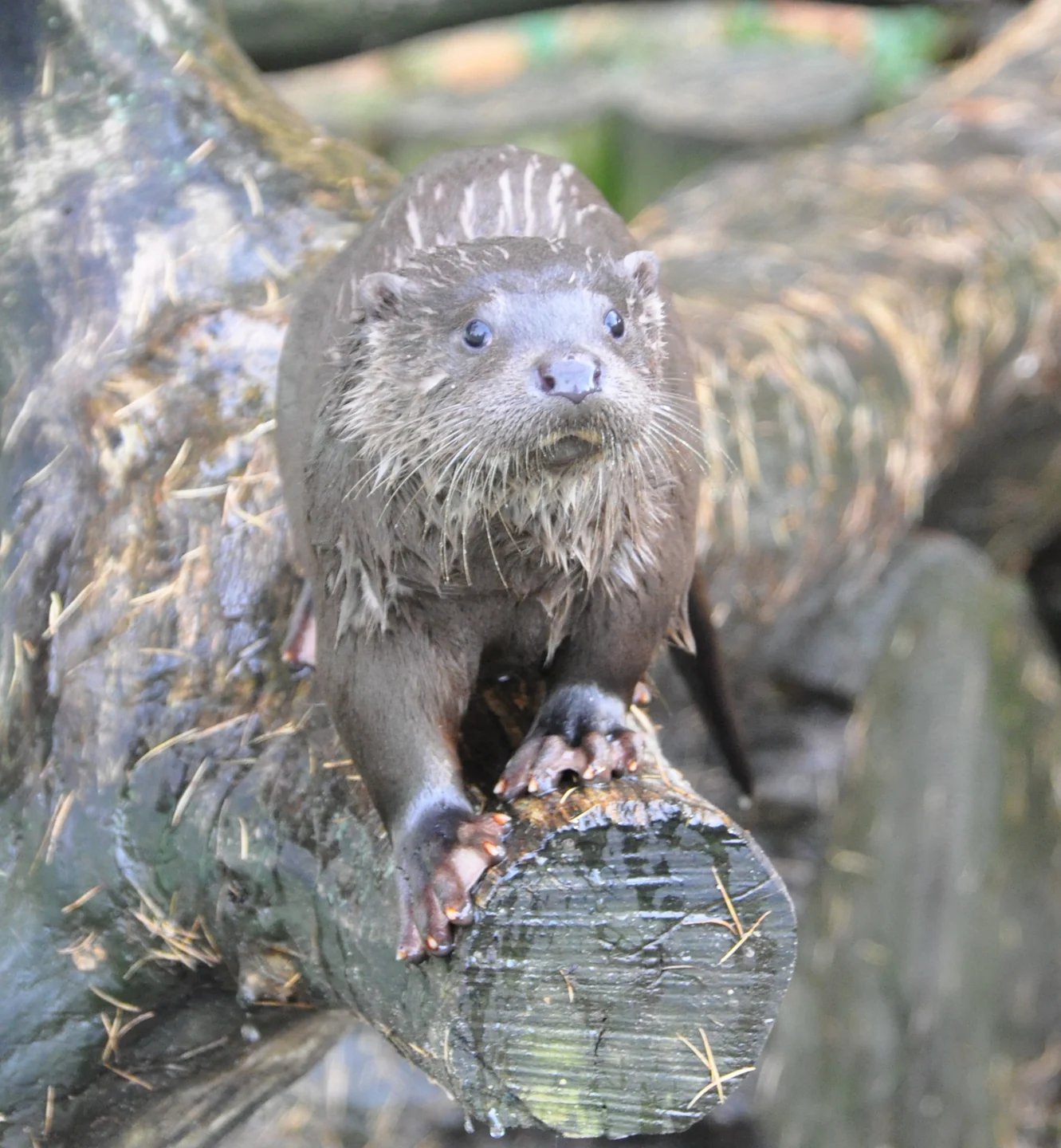
Otter front view over wood, with snout, mustaches and visible paws.
European otter at the Lüneburg Heath fauna park, Germany, in 2009. Animal in fauna park; it is not a record of Cabeceiras.
Photography: Quartl · CC BY-SA 3.0
About this photograph

Date given at source: . Source consulted on 2026-11-07. EXIF orientation, proportional resizing and WebP conversion of the current version in Commons; no retouching or additional clipping.

Request removal or correct the photo credit

Waterproof fur and feet that help it swim.

The Eurasian otter, Lutra lutra, has webbed feet and a thick coat that protects it in water. Its life connects the river with its banks: vegetation offers shelter and roots can hide dens. It is mainly active at dusk and at night.

Vieira do Minho’s municipal website includes the otter among Cabreira’s mammals. This regional reference helps introduce the species but does not identify a sighting location.

The University of Évora’s description also mentions a long tail tapering at the tip and a muzzle with long whiskers. Otters do not depend only on rivers: the species also uses reservoirs, estuaries and, less often, the marine coast. These features help us get to know the animal without turning the story into a sighting point.

Body and environment

Open an option and choose the story.

  1. Other current-linked mammalA mole connected to the current →
  2. The vegetation accompanying the riverThe river also has a forest →
  3. Compare with an underground shelterA house under the ground →
Compare described characteristics and illustrative photographs. Links do not confirm that these species have been observed in the same place.
Source and context

University of Évora — Virtual Museum of Biodiversity, Lutra lutra; David Germano
Consultations: ,

Vieira Tourism of Minho — fauna of Serra da Cabreira, regional reference
Accessed:

Editorial summary; the date of consultation is not the date of the facts.

Back to index ↑
Fox · general biology

Between woodland and field

A varied landscape offers foxes different environments.

The red fox, Vulpes vulpes, occupies many habitats, from coast to mountain. Museu Virtual da Biodiversidade highlights a preference for scrub and woodland interspersed with farmland or pasture. A long, bushy tail and pointed muzzle help identify its outline.

The distribution described covers mainland Portugal but does not replace a located record in Cabeceiras de Basto.

The coat can combine brown, reddish and grey tones; the tail tip may have a whitish patch. The description also notes that cubs are brownish until about six months old. Colour and age should therefore be considered when looking at the animal, rather than expecting the same appearance every time.

Source and context

University of Évora — Virtual Museum of Biodiversity: Vulpes vulpes

Accessed: . Editorial summary; the date of consultation is not the date of the facts.

Back to index ↑
Mammals · behaviour and local reference

Wild boar come out as the light fades

A long snout and a very varied diet.

The wild boar, Sus scrofa, is omnivorous and is mainly active at dusk and at night. During the day it may shelter in dense scrub. Plataforma Lobo-ibérico documents a wild boar killed by wolves in Serra da Cabreira, in Cabeceiras, without giving the record’s date. Its long snout and thick coat distinguish it from the domestic pig. Despite being omnivorous, the source describes a mainly plant-based diet. This flexibility helps explain its adaptation to different landscapes.

The platform also uses the Portuguese name porco-bravo and describes marked differences between the sexes. It discusses the species’ expansion in Portugal, including areas near urban centres. That national context cannot tell us how many wild boar live in Cabeceiras.

The Cabreira record and the description of habits answer different questions: one documents an encounter between predator and prey; the other helps explain the species’ life. This single reference cannot establish how often predation occurs or the size of local populations.

Source and context

Lobo-Iberico platform in Portugal — wolf prey; registration of Cabreira without date indicated

Accessed: . Editorial summary; the date of consultation is not the date of the facts.

Back to index ↑
Serra da Cabreira · regional reference and species biology

Wildcats need a varied landscape

Woodland for shelter, open ground for hunting.

The wildcat, Felis silvestris, is associated with scrub and woodland, often near rocky areas and watercourses. It may search for food in undisturbed meadows. A thick tail with dark rings and a rounded tip is one of the features described by the University of Évora. Its resemblance to domestic cats calls for care in identification.

The municipal source mentions it for Cabreira without locating a population in a particular parish.

The University of Évora’s description adds retractable claws and mainly crepuscular and nocturnal activity: twilight is the transition between day and night. The source lists habitat fragmentation and hybridisation with domestic cats among the threats. Appearance alone does not resolve every identification question.

Source and context

University of Évora — Virtual Museum of Biodiversity, Felis silvestris; David Germano
Consultations: ,

Vieira Tourism of Minho — fauna of Serra da Cabreira, regional reference
Accessed:

Editorial summary; the date of consultation is not the date of the facts.

Back to index ↑
Cabeceiras de Basto · occurrence mentioned in an environmental study

A bat entered the area’s records too

An environmental reference adds nocturnal life to the portrait of Cabeceiras.

The environmental report for the Ribeira de Pena–Vieira do Minho power line, archived by the Portuguese Environment Agency, mentions a greater horseshoe bat, Rhinolophus ferrumequinum, record in a roost associated with Cabeceiras de Basto. This is documentary evidence of the species’ occurrence, not a current population count. The information does not allow a parish to be assigned here or an observation location to be announced.

From registration to questions about the species

Open an option and choose the story.

  1. Can you hunt from a landing?

    A British description shows different ways to capture insects.

    Hunting can also get stopped →
  2. How do you find your way?

    The scheme distinguishes the sound emission from the echo that returns.

    Listen to the echo to find the way →
  3. Is the shelter always the same?

    Knows different needs throughout the year, without finding shelters.

    A different house throughout the year →
Documentary occurrence and general biology have different sources.
Source and context

Matos, Fonseca & Associados / REN — EIA of the Double Line Ribeira de Pena–Vieira do Minho1/2, summary report, p.169; APA archive

Accessed: . Editorial summary; the date of consultation is not the date of the facts.

Back to index ↑
Bats · general biology, without a local observation point

Following echoes to find the way

The night can be explored through sound.

In echolocation, bats emit sound pulses and receive echoes returning from objects. This helps them perceive what is ahead and follow moving prey. Ricardo Rocha’s explanation for the Gulbenkian also reminds us that they are not blind: vision plays a part in their lives. Researchers use devices to capture sounds we often cannot hear. This is a general explanation, not a way to identify species from observed flight.

An ultrasound detector makes sounds beyond human hearing accessible. Morcegos.pt presents it as an observation tool: listening with equipment adds clues, but this story does not teach species identification from a single sound.

FOLLOW THE SOUND'S WAY

The sound starts from the bat and the echo returns after finding the insect. Original didactic scheme, without scale of distance or time; does not represent a local observation.
Source and context

Calouste Gulbenkian Foundation / Wilder — How do bats hunt at night?, 25/09/2019, with Ricardo Rocha

Bats.pt — As noted, general observation guidelines

Accessed: . Editorial summary; the date of consultation is not the date of the facts.

Back to index ↑
Bats · general ecological roles

Small hunters with a role in the landscape

Eating insects connects bats with fields and forests too.

Insect-eating bats connect the night with fields and forests. By feeding, they help control insect populations, including species that can affect farming and trees. The ICNF text invites us to discover this ecological role beyond the myths surrounding bats.

Worldwide, there are other diets and relationships: fruit-eating bats can contribute to forest regeneration, while pollen-feeding bats take part in pollination. These global examples do not assign those diets to species recorded in Cabeceiras.

Thinking about food is a way to connect an animal with the landscape. What resources does it seek? What other organisms are involved? Ecological roles are not limited to the number of individuals we can see. In the local story, this explanation accompanies the documentary record of the greater horseshoe bat; it adds no new observation.

Eat, orient and rest

Open an option and choose the story.

  1. How do you get the information back by sound?

    The echo carries information; it does not mean that the animal is blind.

    Listen to the echo to find the way →
  2. What changes over the year?

    Home, creation and hibernation place different needs.

    A different house throughout the year →
  3. What is documented in Cabeceiras?

    The environmental study refers to the species, without providing a current count here.

    A bat also entered the documents of the territory →
Three ways to understand biology and distinguish a general explanation from a local documentary record.
Source and context

ICNF — There are bats in the air..., text by Cristina Girão Vieira

Accessed: . Editorial summary; the date of consultation is not the date of the facts.

Back to index ↑
Greater horseshoe bat · biology described by a British source

Hunting can begin at rest

A perch can be part of a bat’s strategy.

Finding food does not always require continuous flight. The Bat Conservation Trust describes the greater horseshoe bat setting off from a regular perch to catch passing insects. Larger prey may be taken to a feeding perch. The same profile mentions catching prey in flight and, occasionally, on the ground.

Among the insects eaten, it lists beetles, moths, craneflies and caddisflies. The last group connects this story with insects whose larvae can build shelters in water: the adult form takes part in other food relationships.

The source describes the species in a British context. There is a documentary reference to Rhinolophus ferrumequinum in Cabeceiras, presented in another story; that does not demonstrate that these behaviours have been observed here. The comparison helps separate two questions: where has the animal been mentioned, and how can it live?

Source and context

Bat Conservation Trust — Greater horseshoe bat, behavior and feeding

Accessed: . Editorial summary; the date of consultation is not the date of the facts.

Back to index ↑
Bats · general biology and observation, without roost locations

A different home through the year

For a bat, shelter and season are connected.

Bats’ needs change throughout the year. The ICNB guide explains that many species use different roosts: their resting place need not always be the same. In maternity colonies, females and young gather during a stage that ends when the young become independent.

Hibernation meets another challenge: saving energy in winter. Body temperature and the organism’s activity decrease. These are general biological explanations, not a calendar of roost occupation in Cabeceiras or a description of every species.

For observation, Morcegos.pt suggests dusk, while some light remains, and recommends avoiding shining lights at the animals. We can watch their flight from a safe public space, without entering roosts or trying to touch bats.

Source and context

ICNB / Luisa Rodrigues — I have bats at home, what should I do? (2008), pp. 3 and18; archive ICNF

Bats.pt — As noted, general observation guidelines

Accessed: . Editorial summary; the date of consultation is not the date of the facts.

Back to index ↑
YOUR LOCAL GUIDE

What would you like to discover?

Take a closer look.