Discover Cabeceiras de BastoFree independent guide
ViveCabeceirasYOUR GUIDE TO CABECEIRAS
ENEnglish
SearchSaved
6 STORIES · CONTINUOUS READING

From railway to motorway

Board the inaugural train of 1949 and follow the old bus routes through to the A7 motorway.

All stories in the order of the route. You can print this page by the browser; sources and credits follow the reading.

Things to try2 explorações interativas · 3 perguntas
Arco de Baúlhe · 15 January 1949

The eleven o’clock train
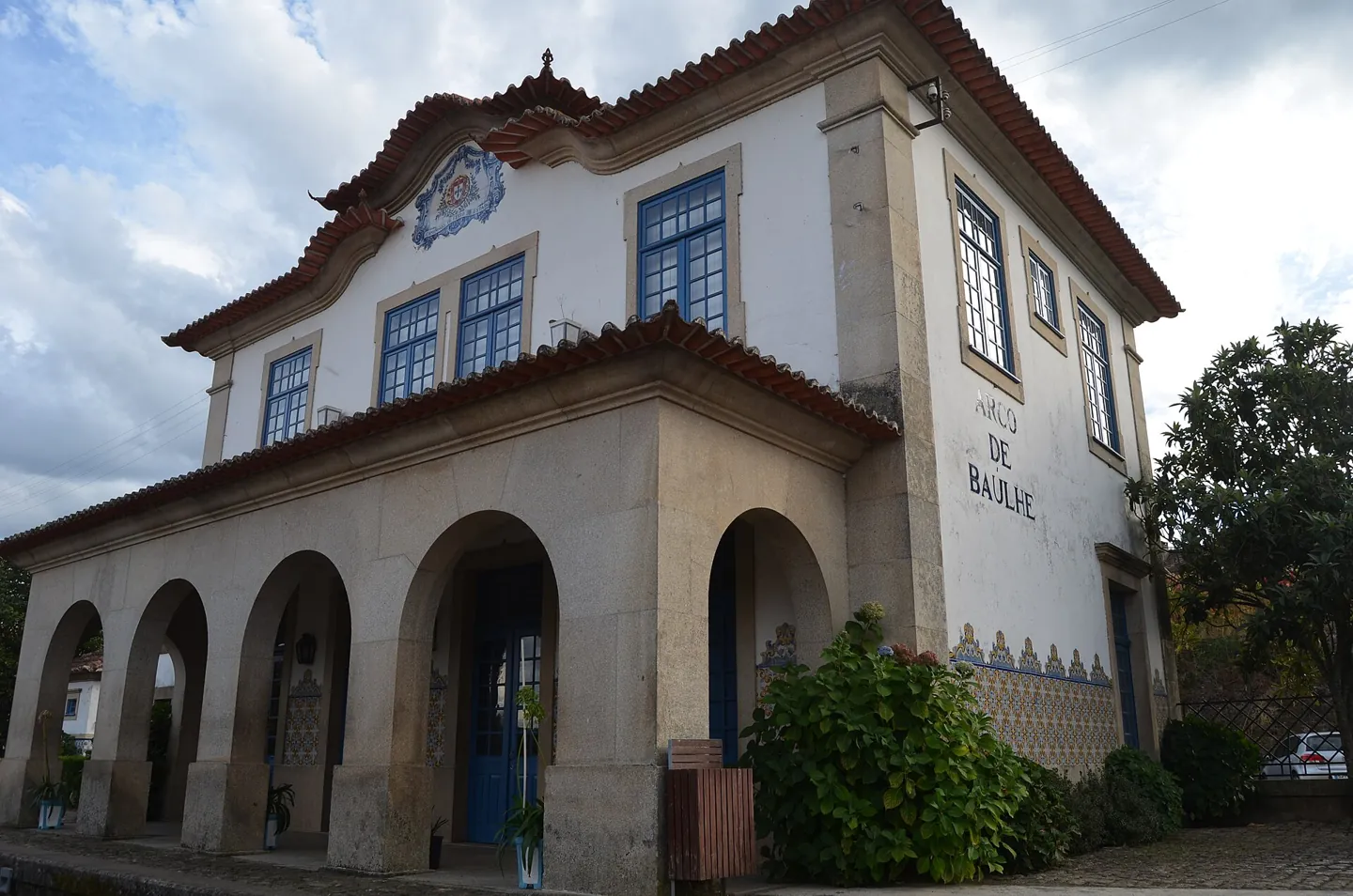
Arco de Baúlhe station building with its arched gallery.
Pedro from Maia (Porto), Portugal
ⓘ

Arco de Baúlhe station building with its arched gallery.

Photography: Pedro from Maia (Porto), Portugal · CC BY 2.0

View source

Date given at source: .

Request removal or correct the photo credit

Arco de Baúlhe station: building and garden.
FF Mira
ⓘ

Arco de Baúlhe station: building and garden.

Photography: FF Mira · CC BY-SA 2.0

View source

Date given at source: .

Request removal or correct the photo credit

On the opening day, the journey from Porto to Arco de Baúlhe involved a change of train.

On 15 January 1949, the official party left São Bento station in Porto at 7:35 am. At Livração, passengers boarded the inaugural train for the Tâmega Line’s narrower tracks. Locomotive 207 led the way, with Albano Teixeira de Freitas at the controls and Fernando Pinto Baldaia tending the fire.

The Gazeta dos Caminhos de Ferro reports that the train arrived in Arco de Baúlhe at eleven, greeted by music, fireworks and crowds. The trip marked the opening of around 17 kilometres of track from Celorico de Basto. The account describes an official Estado Novo ceremony and records details of the journey, the railway workers and the reception in town.

See Fact sheet: Núcleo Ferroviário de Arco de Baúlhe
Source and context

Gazeta dos Caminhos de Ferro, no. 1467 — New railway developments

Accessed: . Editorial summary; the date of consultation is not the date of the facts.

Back to index ↑
Cabeceiras de Basto · 1952 concession

A route for goods

In 1952, a route from Lodeiro de Arque to Cabeceiras was granted its own concession.

A regular road service could also be a way to organise freight. In October 1952, the road transport authority announced a freight concession between Lodeiro de Arque and Cabeceiras de Basto. The application came from Eugénio Marques & Manuel Gonçalves Ferreira, a firm based in the municipality.

The ten-year term was to run from the quarter in which the service began. That detail helps explain what the notice records. It grants permission and leaves open when the first vehicle ran and what it carried.

Source and context

Diário do Governo, series III, no. 238 — Road freight service, 1952

Accessed: . Editorial summary; the date of consultation is not the date of the facts.

Back to index ↑
Arco de Baúlhe, Vila Nune, Refojos, Painzela and São Nicolau · 1973–1974

Getting to the station by bus

Two public notices show how bus routes connected with Arco de Baúlhe station.

In 1973, António Magalhães & C.ª proposed a bus from Molares to Rossas. Stops within the municipality included Vila Nune, both the station and town of Arco de Baúlhe, Olela, Portela, the municipal seat, Painzela and São Nicolau. The notice said this would replace two services already running from Arco station, one to Cabeceiras and one to Rossas.

In 1974, Auto Mondinense applied for another service, this time between Cabeceiras and Molares, also serving Arco and Vila Nune. The notices show existing routes alongside those the operators hoped to create. The records consulted document the applications for the two new services.

See Fact sheet: Núcleo Ferroviário de Arco de Baúlhe
Source and context

Diário do Governo, series III, no. 239 — Molares–Rossas bus application, 1973

Diário do Governo, series III, no. 235 — Bus application to Molares, 1974

Accessed: . Editorial summary; the date of consultation is not the date of the facts.

Back to index ↑
Arco de Baúlhe · railway memories

The train stopped, the memory stayed

Arco de Baúlhe station building with its arched gallery.
Pedro from Maia (Porto), Portugal
ⓘ

Arco de Baúlhe station building with its arched gallery.

Photography: Pedro from Maia (Porto), Portugal · CC BY 2.0

View source

Date given at source: .

Request removal or correct the photo credit

Arco de Baúlhe station: building and garden.
FF Mira
ⓘ

Arco de Baúlhe station: building and garden.

Photography: FF Mira · CC BY-SA 2.0

View source

Date given at source: .

Request removal or correct the photo credit

The station found another role after the line closed.

According to the Museum’s retrospective, Arco station ceased operating in January 1990 when the section between Amarante and Arco de Baúlhe closed. On 8 January 2000, an agreement between REFER and the municipality paved the way for the transfer of use of the premises and their development as a museum. The Museum’s opening on 23 May 2004 belongs to that new chapter.

The transfer brought responsibilities: the municipality became responsible for conserving, maintaining and managing the section in collaboration with the Fundação Museu Nacional Ferroviário. The Museum’s April 2025 news item also reports the municipal decision of 14 February that year to classify the complex. The change of use therefore involved agreements and continuing work, beyond opening the doors to the public.

From the last journey to preserved memory

It opens every moment and discovers what the date represents.

  1. January 1990 · Closure

    The section closes and the station leaves the railway function.

  2. 8 January 2000 · A Protocol

    Municipality and REFER agree the provision of facilities to the museum section.

  3. 23 May 2004 · Opening of core

    The space receives the public as Railway Center of the Land Museum of Basto.

Marks of the retrospective of the Museum published in 2025. The closure refers to the Amarante–Arco de Baúlhe section.
See Fact sheet: Núcleo Ferroviário de Arco de Baúlhe
Source and context

Basto Land Museum — Railway Station Arco de Baúlhe classified as Municipal Interest Set, 02/04/2025

Accessed: . Editorial summary; the date of consultation is not the date of the facts.

Back to index ↑
Arco de Baúlhe and Vila Nune · railway memory and a changing route

New footsteps on the old line

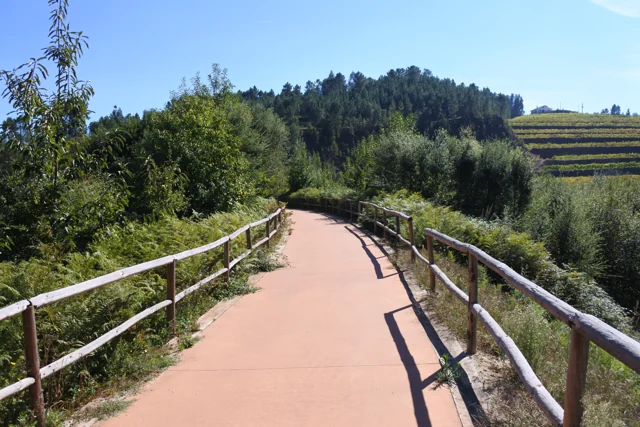
Tâmega rail trail in Arco de Baúlhe e Vila Nune, with reddish paving and wooden railings, photographed in October 2016.
The former railway channel converted to Ecopista in Arco de Baúlhe e Vila Nune. Photo by FF Mira, October 6, 2016; does not document the inauguration of 2013 or the current conditions of the entire route.© FF Miraⓘ

The former railway welcomed walkers and bicycles.

The Tâmega Line’s corridor continued connecting places after the trains. On 20 April 2013, the municipality’s section of the greenway opened between the Railway Museum in Arco de Baúlhe and Mulher Morta, in Vila Nune. The municipal listing gives this section a length of 5.4 kilometres, within the longer connection to Amarante.

The route’s gradients preserve its railway origins: the municipal description associates the old corridor with a maximum gradient of 3%. This is a published characteristic of the route, not a current check of every entrance or obstacle. To prepare an outing, consult the practical listing and signs on site.

The former station and Vila Nune halt tell different parts of the story. The municipality includes the halt among Vila Nune’s heritage; in Arco, the station became a museum. A route can change use without losing the landmarks that help us recognise its past.

Three Ways to Guard the Railroad

Open an option and choose the story.

  1. The station that won a museum lifeThe train stopped, memory stayed →
  2. A carriage and its passengersA place in the third class →
  3. Documents that preserve memoryThe station also keeps documents →
Discover the transformation of spaces, vehicles and documents. They are reading links, not steps of a pedestrian route.
See Fact sheet: Ecopista do Tâmega — troço de Cabeceiras See Fact sheet: Antigo apeadeiro de Vila Nune
Source and context

Municipality — Ecopist of Tâmega: reuse of channel and inauguration of 2013

Municipality — Arco de Baúlhe e Vila Nune: former tenant

Basto Land Museum — Railway Station Arco de Baúlhe classified as Municipal Interest Set, 02/04/2025

Accessed: . Editorial summary; the date of consultation is not the date of the facts.

Back to index ↑
Cabeceiras de Basto · 2005 and 2018

The motorway changed the conversation

Completion of the A7 in 2005 brought a new connection. Thirteen years later, the debate was about the cost of using it.

The A7 between Vila do Conde and Vila Pouca de Aguiar was completed in December 2005, according to a position paper presented by the municipality in 2018. In the council’s view, the motorway had given the municipality a faster connection to both the coast and inland areas.

The 2018 proposal asked the national government to lower the tolls and linked travel costs to life in a sparsely populated area. Read alongside old bus notices, it shows how the debate had come to include the price of using a fast connection.

Source and context

Municipality of Cabeceiras de Basto — Proposal on A7 tolls, 2018

Accessed: . Editorial summary; the date of consultation is not the date of the facts.

Back to index ↑
YOUR LOCAL GUIDE

What would you like to discover?

Take a closer look.