Discover Cabeceiras de BastoFree independent guide
ViveCabeceirasYOUR GUIDE TO CABECEIRAS
ENEnglish
SearchSaved
4 STORIES · CONTINUOUS READING

Four ways to look at a train

Compare comfort, materials and power in the Arco collection.

All stories in the order of the route. You can print this page by the browser; sources and credits follow the reading.

Local history · Arco de Baúlhe e Vila Nune

A travelling room for official occasions
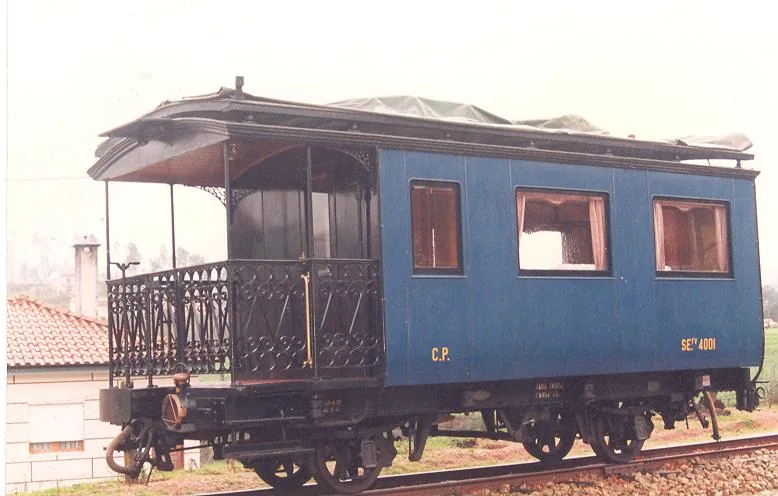
Saloon carriage 4001, in an archive photograph shared by the museum.
ⓘ

Saloon carriage 4001, in an archive photograph shared by the museum.

Source: Museu das Terras de Basto

View source

Photograph date not stated.

Autoria da fotografia e licença de reutilização não identificadas na fonte.
Request removal or correct the photo credit

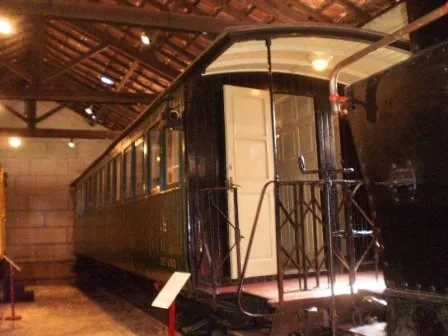
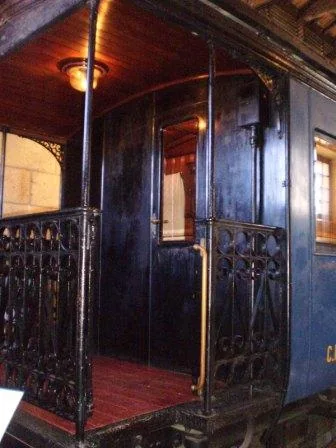
Interior and platform of saloon carriage 4001.
ⓘ

Interior and platform of saloon carriage 4001.

Source: Museu das Terras de Basto

View source

Photograph date not stated.

Autoria da fotografia e licença de reutilização não identificadas na fonte.

Request removal or correct the photo credit

Carriage 4001 connects Belgium with a royal visit.

Leather-lined walls, brocade curtains, velvet armchairs and crystal mirrors: this carriage was designed as more than a row of seats. The museum identifies saloon carriage 4001 as a Belgian vehicle built by Ateliers Germains in 1905 for official journeys.

In 1907 Queen Amélia used it to visit the spa at Pedras Salgadas on the Corgo line. Its connection with Arco today is the railway collection preserving the vehicle; that royal journey did not therefore pass through Cabeceiras. Comparing this interior with a third-class carriage reveals how social differences could be seen in the materials and space of a journey.

Getting to know the parish See Fact sheet: Núcleo Ferroviário de Arco de Baúlhe
Source and context

Museu das Terras de Basto — Colecções do Núcleo Ferroviário de Arco de Baúlhe: Carruagem-salão SE.FV4001

Accessed: . Editorial summary; the date of consultation is not the date of the facts.

Back to index ↑
Local history · Arco de Baúlhe e Vila Nune

Eighteen seats in a wooden saloon

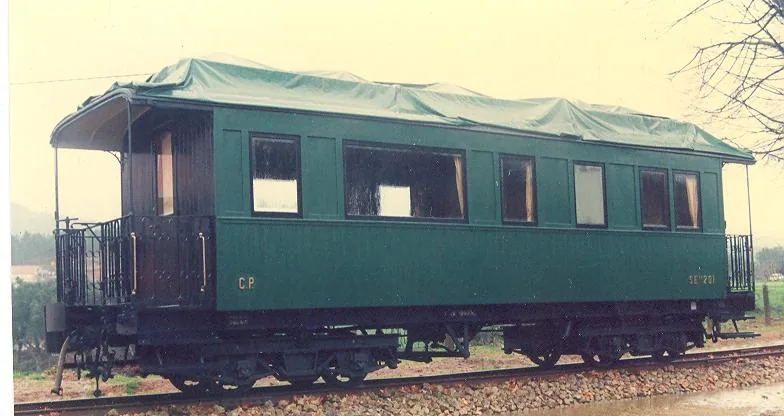
Saloon carriage 201, in an archive photograph shared by the museum.
ⓘ

Saloon carriage 201, in an archive photograph shared by the museum.

Source: Museu das Terras de Basto

View source

Photograph date not stated.

Autoria da fotografia e licença de reutilização não identificadas na fonte.

Request removal or correct the photo credit

Wooden exterior of saloon carriage 201 at the museum.
ⓘ

Wooden exterior of saloon carriage 201 at the museum.

Source: Museu das Terras de Basto

View source

Photograph date not stated.

Autoria da fotografia e licença de reutilização não identificadas na fonte.

Request removal or correct the photo credit

Carriage 201 held two compartments and another way of travelling.

Saloon carriage 201 was built in Düsseldorf in 1906 by Carl Weyer. The museum describes a wooden exterior and an interior with inlaid wood, stained glass and eighteen seats across two compartments. Its lighting ran on acetylene.

King Carlos travelled in it in 1907 on a visit to Pedras Salgadas along the Corgo line. As with other vehicles in the Arco collection, its earlier history includes other railways. Wood, leather and crystal help evoke the setting without confusing the carriage’s origins with the history of the station preserving it today. Photographs published in 2011 document different moments without dating every image.

Getting to know the parish See Fact sheet: Núcleo Ferroviário de Arco de Baúlhe
Source and context

Museu das Terras de Basto — Colecções do Núcleo Ferroviário de Arco de Baúlhe: Carruagem-salão SE.YF 201

Accessed: . Editorial summary; the date of consultation is not the date of the facts.

Back to index ↑
Local history · Arco de Baúlhe e Vila Nune

The journey from a wooden bench

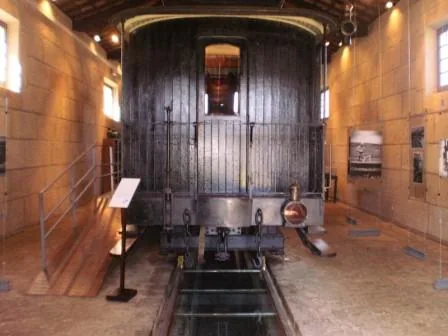
Platform of passenger carriage 453.
ⓘ

Platform of passenger carriage 453.

Source: Museu das Terras de Basto

View source

Photograph date not stated.

Autoria da fotografia e licença de reutilização não identificadas na fonte.

Request removal or correct the photo credit

Carriage 453 was made for third-class passengers.

Not every journey came with velvet armchairs. Carriage 453, built in Belgium in 1908 by Atelier des Nivelles, served third-class passengers on wooden benches. It was acquired for the Vouga Valley line and is part of the railway collection at Arco de Baúlhe.

The museum highlights its wooden body supported by a strong chassis, as well as its toilet facilities. It makes a useful comparison with official saloons: the same one-metre gauge did not mean the same comfort. The collection brings together objects of different origins without claiming that they all ran on the Tâmega line.

Getting to know the parish See Fact sheet: Núcleo Ferroviário de Arco de Baúlhe
Source and context

Museu das Terras de Basto — Colecções do Núcleo Ferroviário de Arco de Baúlhe: Carruagem de passageiros CE.YF453

Accessed: . Editorial summary; the date of consultation is not the date of the facts.

Back to index ↑
Local history · Arco de Baúlhe e Vila Nune

What did a steam locomotive carry?

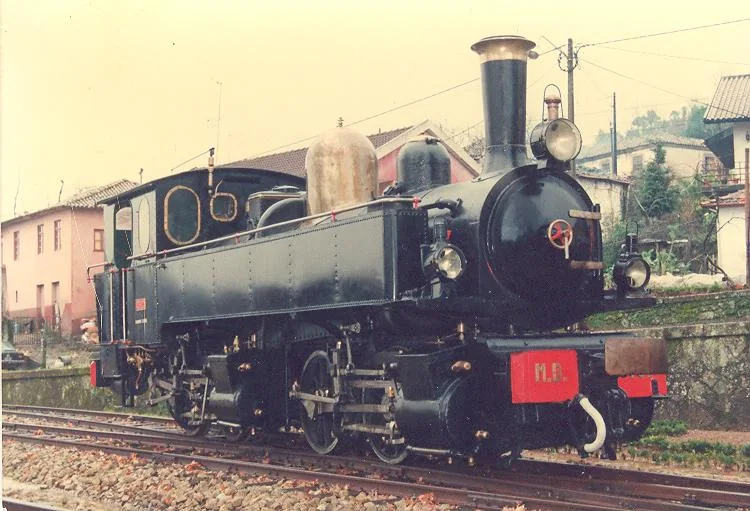
Locomotive MD 407, in an archive photograph published by the museum in 2011.
ⓘ

Locomotive MD 407, in an archive photograph published by the museum in 2011.

Source: Museu das Terras de Basto

View source

Photograph date not stated.

Autoria da fotografia e licença de reutilização não identificadas na fonte.

Request removal or correct the photo credit

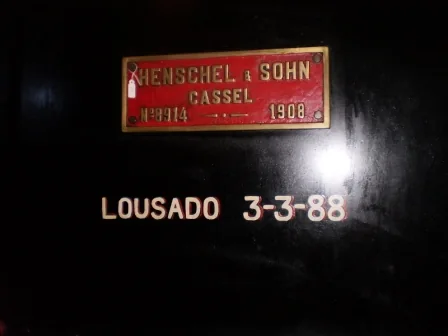
Henschel & Sohn maker’s plate on locomotive MD 407.
ⓘ

Henschel & Sohn maker’s plate on locomotive MD 407.

Source: Museu das Terras de Basto

View source

Photograph date not stated.

Autoria da fotografia e licença de reutilização não identificadas na fonte.

Request removal or correct the photo credit

Water and coal were part of MD 407’s journey.

Locomotive MD 407 could carry 3,500 litres of water and 1,300 kilograms of coal. These figures recorded by the museum reveal what had to be transported to produce motion. Its maker’s plate identifies Henschel & Sohn of Kassel and the year 1908.

The engine ran on the Guimarães line. The source presents other routes only as probable, a distinction that matters: being at Arco does not prove use on the Tâmega line. Compared with the collection’s petrol railcar, the locomotive tells another stage in railway power, involving supplies, heat and human work.

Getting to know the parish See Fact sheet: Núcleo Ferroviário de Arco de Baúlhe
Source and context

Museu das Terras de Basto — Colecções do Núcleo Ferroviário de Arco de Baúlhe: Locomotiva MD 407

Accessed: . Editorial summary; the date of consultation is not the date of the facts.

Back to index ↑
YOUR LOCAL GUIDE

What would you like to discover?

Take a closer look.