Discover Cabeceiras de BastoFree independent guide
ViveCabeceirasYOUR GUIDE TO CABECEIRAS
ENEnglish
SearchSaved
4 STORIES · CONTINUOUS READING

Water worked too

Four stories of channels, wheels and olive oil. A reading journey.

All stories in the order of the route. You can print this page by the browser; sources and credits follow the reading.

Local history · Alvite e Passos

Two presses waiting for water
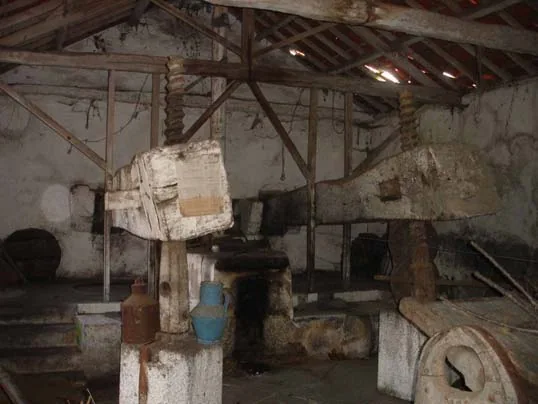
Casa de Ramil olive press — photograph from the 2008 municipal inventory.
Casa de Ramil olive press
ⓘ

Casa de Ramil olive press — photograph from the 2008 municipal inventory.

Source: Municipality of Cabeceiras de Basto

View source

Photograph date not stated.

Individual photographer and reuse licence not stated by the source.

Request removal or correct the photo credit

At Ramil, power arrived along a water channel.

Imagine olives arriving at a building powered from outside. At Casa de Ramil in Petimão, the 2008 municipal inventory recorded two presses and a channel fed by the Petimão stream. Water passed through a pressure chamber beside the building before driving the machinery.

Granite held the structure; water supplied the movement. These details tell a different story from the animal-powered olive presses described in Alvite in 1758. They are records of different periods, showing how one parish could use different solutions to process olives. The photograph comes from the 2008 inventory.

Getting to know the parish
Source and context

Municipality — olive-press inventory, page 2 (2008)

Accessed: . Editorial summary; the date of consultation is not the date of the facts.

Back to index ↑
Local history · Cabeceiras de Basto (São Nicolau)

Three kinds of work under one roof

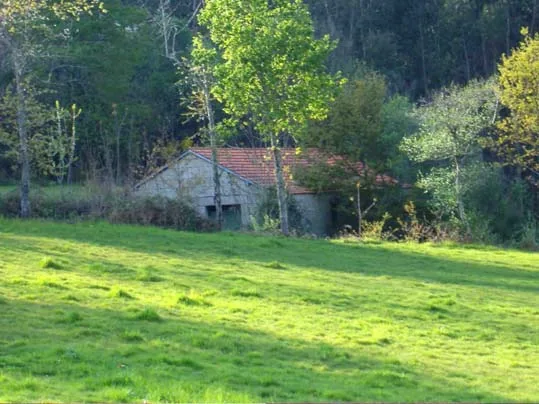
Quinta de Covas in Parada — photograph from the 2008 municipal inventory.
Quinta de Covas in Parada
ⓘ

Quinta de Covas in Parada — photograph from the 2008 municipal inventory.

Source: Municipality of Cabeceiras de Basto

View source

Photograph date not stated.

Individual photographer and reuse licence not stated by the source.

Request removal or correct the photo credit

Olive oil, flour and wine at Quinta de Covas.

At Quinta de Covas in Parada, one building held an olive press, a grain mill and a wine press. The 2008 inventory describes a structure roughly seventeen by nine metres, with a water channel connected to the River Peio. One recorded detail was a trough made from a tree trunk.

The same house served different crops and tasks. The record dates the closure of the grain mill and olive press to 1994, linking it to changes in the use of water. The historical photograph helps place the complex in its landscape without confirming its present condition or public access.

Getting to know the parish
Source and context

Municipality — olive-press inventory, page 6 (2008)

Accessed: . Editorial summary; the date of consultation is not the date of the facts.

Back to index ↑
Local history · Cabeceiras de Basto (São Nicolau)

The great winter waterwheel

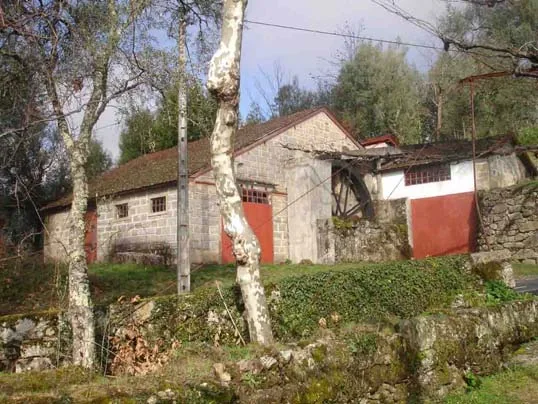
Casa do Casal in Ponte de Vilarinho — photograph from the 2008 municipal inventory.
Casa do Casal in Ponte de Vilarinho
ⓘ

Casa do Casal in Ponte de Vilarinho — photograph from the 2008 municipal inventory.

Source: Municipality of Cabeceiras de Basto

View source

Photograph date not stated.

Individual photographer and reuse licence not stated by the source.

Request removal or correct the photo credit

At Casa do Casal, the season followed the olives.

In Ponte de Vilarinho, the olive press at Casa do Casal had a large external wheel covered in zinc sheet. Water arrived along an irrigation channel and fell onto the wheel, an overshot waterwheel. The February 2008 survey describes the olive-oil season as running from January to early March.

This is a working calendar recorded at that time, not a current visiting schedule. The season connected harvest, water and effort: a building alone was not enough to make the press work. The photograph shows the house in its setting and suggests the scale of this seasonal production facility.

Getting to know the parish
Source and context

Municipality — olive-press inventory, page 7 (2008)

Accessed: . Editorial summary; the date of consultation is not the date of the facts.

Back to index ↑
Local history · Rio Douro

First olive oil, then irrigation

At Portelada, water had more than one job.

At Casa da Portelada in Eiró, Rio Douro, water from Levada dos Moinhos did not finish its journey after powering the olive press. It then continued to irrigate fields. The 2008 inventory describes a granite pressure chamber and the combination of olive press and grain mill.

The record names January and February as the oil-making season in the working pattern it documents. This is neither an invitation to visit nor a current timetable. The most interesting detail is the sequence of uses: the same water could produce movement and then benefit fields farther down. Following a channel means following relationships between work and land.

Getting to know the parish
Source and context

Municipality — olive-press inventory, page 21 (2008)

Accessed: . Editorial summary; the date of consultation is not the date of the facts.

Back to index ↑
YOUR LOCAL GUIDE

What would you like to discover?

Take a closer look.