Abadim: life under the couto
ⓘ
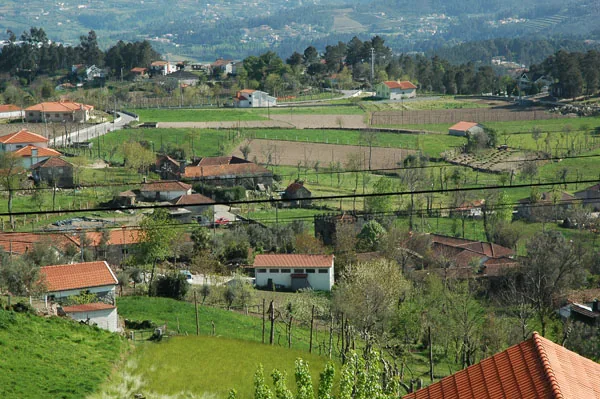
Fields and houses in Abadim.
Source: Carta Arqueológica de Cabeceiras de Basto
Photograph date not stated.
Autoria da fotografia e licença de reutilização não identificadas na fonte.
ⓘ
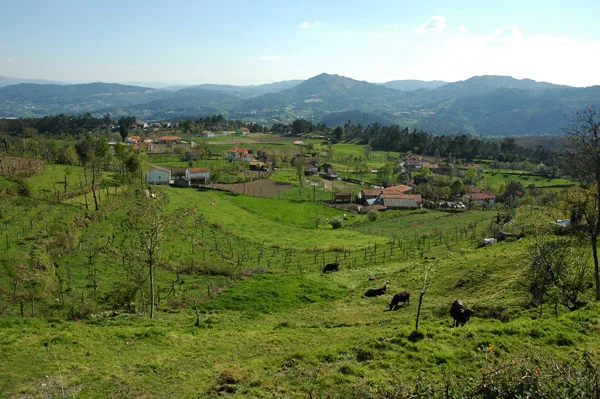
Fields and houses in Abadim.
Source: Carta Arqueológica de Cabeceiras de Basto
Photograph date not stated.
Autoria da fotografia e licença de reutilização não identificadas na fonte.
The Tower, fields and hills tell different parts of one story.
Text size
Your choice is saved only in this browser.
In Abadim, the Tower and pillory recall a territory with its own institutions. In 1758, Abbot José Antunes described a couto with an ordinary judge and municipal council. Their election was presided over by the donatário, the lord granted rights over this territory. Local affairs also involved the magistrate of Guimarães, who could intervene during inspections or special judicial proceedings.
The charter of Vadym, granted by Manuel I on 12 October 1514, belongs to this history of authority and obligations. It differs from the Cabeceiras charter, dated seven days earlier. Looking at the pillory, imagine an older geography in which neighbouring places could have different arrangements.
Most life, however, unfolded in the fields. The 1758 account distinguishes harvests around Torre and Santo António from those of Travassô, Porto d’Olho and Torrinheiras. Rye predominated in colder land; elsewhere crops were more varied, including wine, olive oil and chestnuts. Short distances between settlements concealed important differences in what could be grown.
Two histories of Abadim meet here: the symbols of authority and the people working the land. The landscape helps explain both.
Explore further: words and activities
Explore this story
Source and context
Basto Land Museum / António P. Dinis — Tower of Abadim, 17/01/2018
Accessed:
Municipality — Parish memories of Abadim, José Antunes, 22/05/1758
Accessed:
Municipality — celebration of fora, published in 07/10/2024
Accessed:
Carta Arqueológica de Cabeceiras de Basto — 01.01
Accessed:
Editorial summary; the date of consultation is not the date of the facts.