A log can be a little home
ⓘ
Decaying wood is still full of connections.
Text size
Your choice is saved only in this browser.
A fallen log remains part of woodland life. Fungi break down its wood, which also supports other organisms, including insect larvae. Researcher Susana Gonçalves explains that some tree cavities result from fungal activity and can later shelter animals. A standing tree with cavities and a log on the ground offer different things to observe. In green spaces, retaining veteran trees requires assessment and monitoring of the risk of falling. This ecological explanation does not confirm a connection between the beetle photographed in Cabeceiras and a particular tree.
But wood does not always decay in the same way. In white rot, fungi break down lignin and cellulose; the wood may become pale, fibrous or spongy. In brown rot, decay mainly affects cellulose and hemicellulose, leaving a brownish residue rich in lignin. Wood may become brittle and break into small blocks. The University of California distinguishes these processes by their effects on wood components.
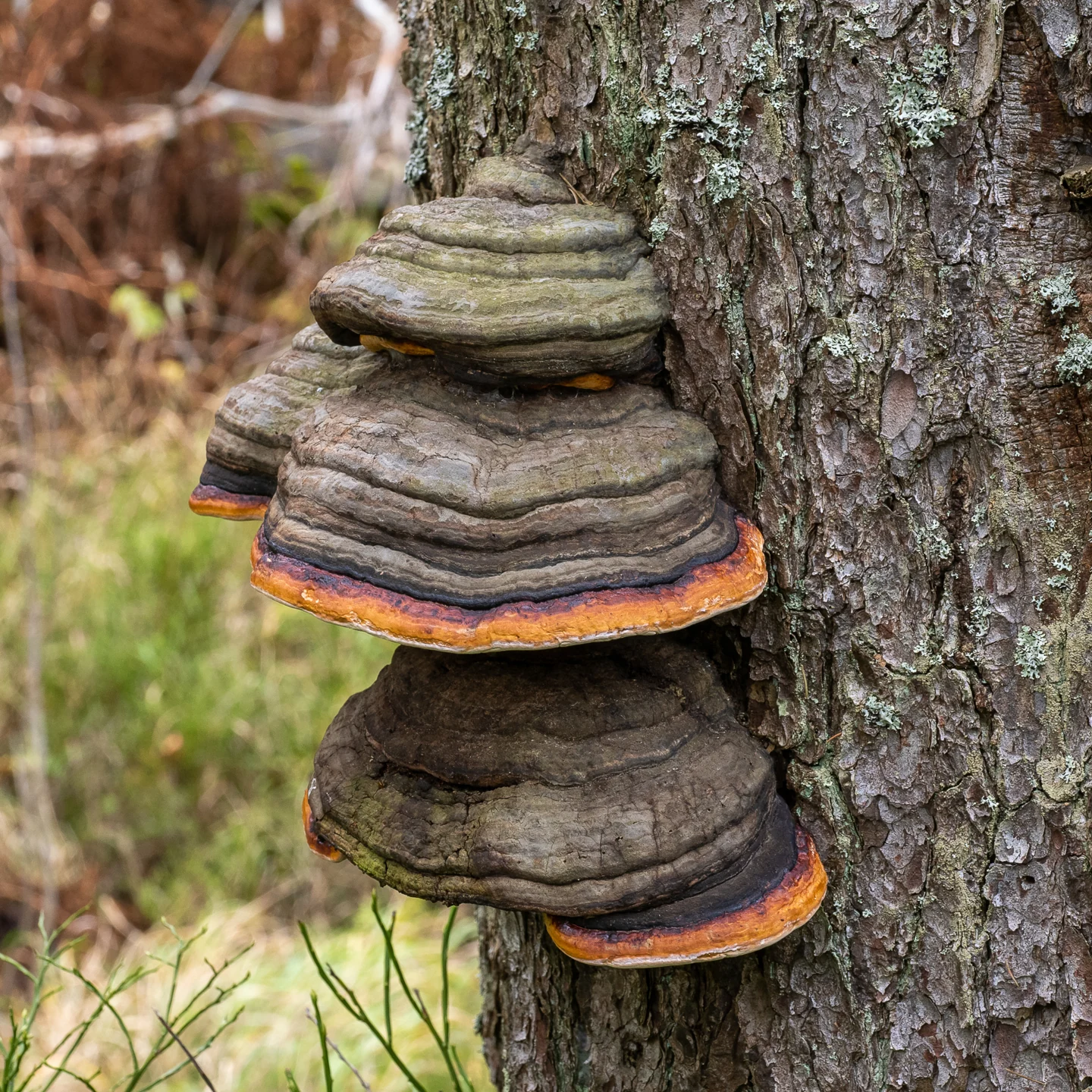
White and brown describe the decay, not the colour of a mushroom cap. They are not species names either. A visible reproductive structure on a trunk reveals only part of the story: decay may extend upwards or downwards and remain hidden. A photograph cannot measure that extent or assess a tree’s stability.
Explore further: words and activities
Explore this story
A log opens several stories
Open an option and choose the story.
How to get food
A meal prepared outside →Larvae and wood
An old trunk still feeds life →The importance of shelters
A different house throughout the year →An example of brown decomposition
Shelf growing in a trunk →From wood to leaves on the ground
A fallen leaf still has way →
Source and context
Gulbenkian Garden — ecology of fungi, with Susana Gonçalves (17/04/2023)
University of California — Wood Decay Fungi in Landscape Trees (revised August 2019)
Accessed: . Editorial summary; the date of consultation is not the date of the facts.