Discover Cabeceiras de BastoFree independent guide
ViveCabeceirasYOUR GUIDE TO CABECEIRAS
ENEnglish
SearchSaved
CHOICE · EXPERIMENTARY · TAKE

A notebook.
Your findings.

Up to six proposals of Cabeceiras, in your own order, to do it at home, in company or on a break.

3 de 6 propostas escolhidas · faça-as ao seu ritmo.

PROPOSTA 1 DE 3 · Crafts and memories

From village to stone detail

Vilela · Rio Douro

Granite shapes the village too

The municipal introduction to the Cavez stream trail highlights granite masonry in the old streets of Vilela, in Rio Douro. After irrigation channels and meadows, the reading of the territory continues through its houses: the region’s material also helps shape the settlement. The municipal text presents a sequence linking buildings with farming: channels, mills and irrigated meadows precede the description of the village streets. Vernacular architecture here means building connected with local materials and practices. Granite is not only a rock in the landscape; it enters the walls and the settlement’s visual character. To explore this relationship, compare the photograph of Vilela with the reading about granite’s grains. A village view shows volumes and surfaces; a close look at the rock reveals another scale. The municipal description neither dates each house nor allows us to conclude that every wall has the same history.
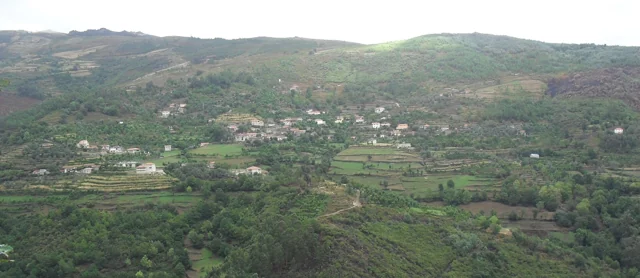
Panoramic view of Vilela, Rio Douro, with houses and agricultural plots on the slopes.
Vilela · architecture and landscape of Rio Douro© Ambcruzⓘ

Vamos experimentar?

  1. Watch the photograph and choose a built wall or volume.
  2. Opens the history of granite grains and compares the two observation scales.
  3. Note what the general view allows you to perceive and what would require a closer image.

An activity to try at your own pace, without collecting specimens.

Open a história e os seus recursos →
Sources of this proposal

My findings

An idea, a drawing or a question to go on.
PROPOSTA 2 DE 3 · Read the landscape through the plants

Try observing

Common names used in the source

Strawberry tree, carqueja and gorse

Strawberry tree, carqueja, gorse and honeysuckle appear in the municipality’s description of mountain vegetation. The source also links upland scrub to grazing goats, cattle and sheep, distinguishing it from cultivated pasture lower down. Scrub is therefore part of a landscape of plants, animals and work. These common names are starting points for learning about vegetation, not identifications of every plant you encounter. The municipal account relates this vegetation to changing land use: it mentions the partial replacement of oaks, chestnuts and scrub by maritime pine. Reading the landscape therefore also means asking what was planted and what changed. One green patch may hold stories of grazing, cultivation and forestry. Start by choosing a detail in the next stories: a carqueja stem, gorse spines, the strawberry tree’s flowers and fruits, or honeysuckle’s place at the woodland edge. Each question brings you closer without requiring you to identify every plant already.

Vamos experimentar?

  1. In a landscape design, use different symbols for trees, shrubs and fields.
  2. Compare the spots: where you find continuity and where there are intervals? You can do the exercise from a photograph.
  3. Choose one of the plans of this story and open the related reading to discover a detail.

An activity to try at your own pace, without collecting specimens.

Open a história e os seus recursos →
Sources of this proposal

My findings

An idea, a drawing or a question to go on.

PROPOSTA 3 DE 3 · Travel through time

Try observing

Gondiães and Vilar de Cunhas · memory and landscape

A house with three granaries

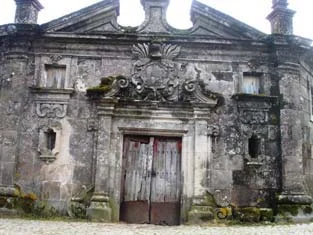
At Casa de Chouzas, three 19th-century granaries stand alongside the manor house highlighted by the municipality. The group connects two functions: living and storing the harvest. Rather than looking only at the main house, it is worth recognising the importance of buildings supporting agriculture. The introduction to Vilar de Cunhas places this heritage in a landscape of plateau and mountain, shaped by farming and pastoralism. House and granaries can be read in that working context, although the source does not detail each property’s production. The house’s dating is less firm: the municipality presents it as perhaps 19th-century, while assigning the granaries to the 19th century. That difference should remain visible. The photograph accompanying the reading shows the portal, not the three granaries. The heritage reference does not confirm access to the group.

Municipal archive photograph: Casa de Chouzas.
Portal da Casa de Chouzas · photo of the municipal inventory; the granaries do not appear in this framework.ⓘ

Vamos experimentar?

  1. Look at the photo of the portal and list only the elements you can see.
  2. Compared to the three granaries mentioned in the text: what depends on the written description?
  3. Imagine a caption that distinguishes the frame of the photograph from the remaining patrimonial set.

An activity to try at your own pace, without collecting specimens.

Open a história e os seus recursos →
Sources of this proposal

My findings

An idea, a drawing or a question to go on.

YOUR LOCAL GUIDE

What would you like to discover?

Take a closer look.