Discover Cabeceiras de BastoFree independent guide
ViveCabeceirasYOUR GUIDE TO CABECEIRAS
ENEnglish
SearchSaved
CHOICE · EXPERIMENTARY · TAKE

Your notebook

Choose up to six ideas, try them and take your discoveries with you.

2 de 6 propostas escolhidas · faça-as ao seu ritmo.

PROPOSTA 1 DE 2 · Life you do not always see

Compare two faces

Reorder or remove

Badger · general biology

Vamos experimentar?

  1. In the photograph, it follows the light and dark bands of the head and the contour of the body.
  2. Compare the text with the image: the description of the claws and the den goes beyond what this framework shows.
  3. Open the otter story and compare the snouts in the two photographs, keeping the contexts of each park separate.

The badger was photographed at the British Wildlife Centre in the UK. A daylight photograph in a park does not invalidate the description of the species' mostly nocturnal habits.

Discover the story

A home beneath the ground

The European badger, Meles meles, is mainly nocturnal and shelters in extensive underground setts. Two dark stripes on a white head are a striking visual clue; its short legs have strong claws. Museu Virtual da Biodiversidade describes its presence in woods, forests and farmland with vegetation. This profile explains the species in mainland Portugal; it does not document an observation in Cabeceiras de Basto. The claws are long and non-retractile: they do not draw back like a cat’s. A short, pale tail provides another contrast with a fox’s long tail. These details help compare descriptions without searching for or disturbing setts.
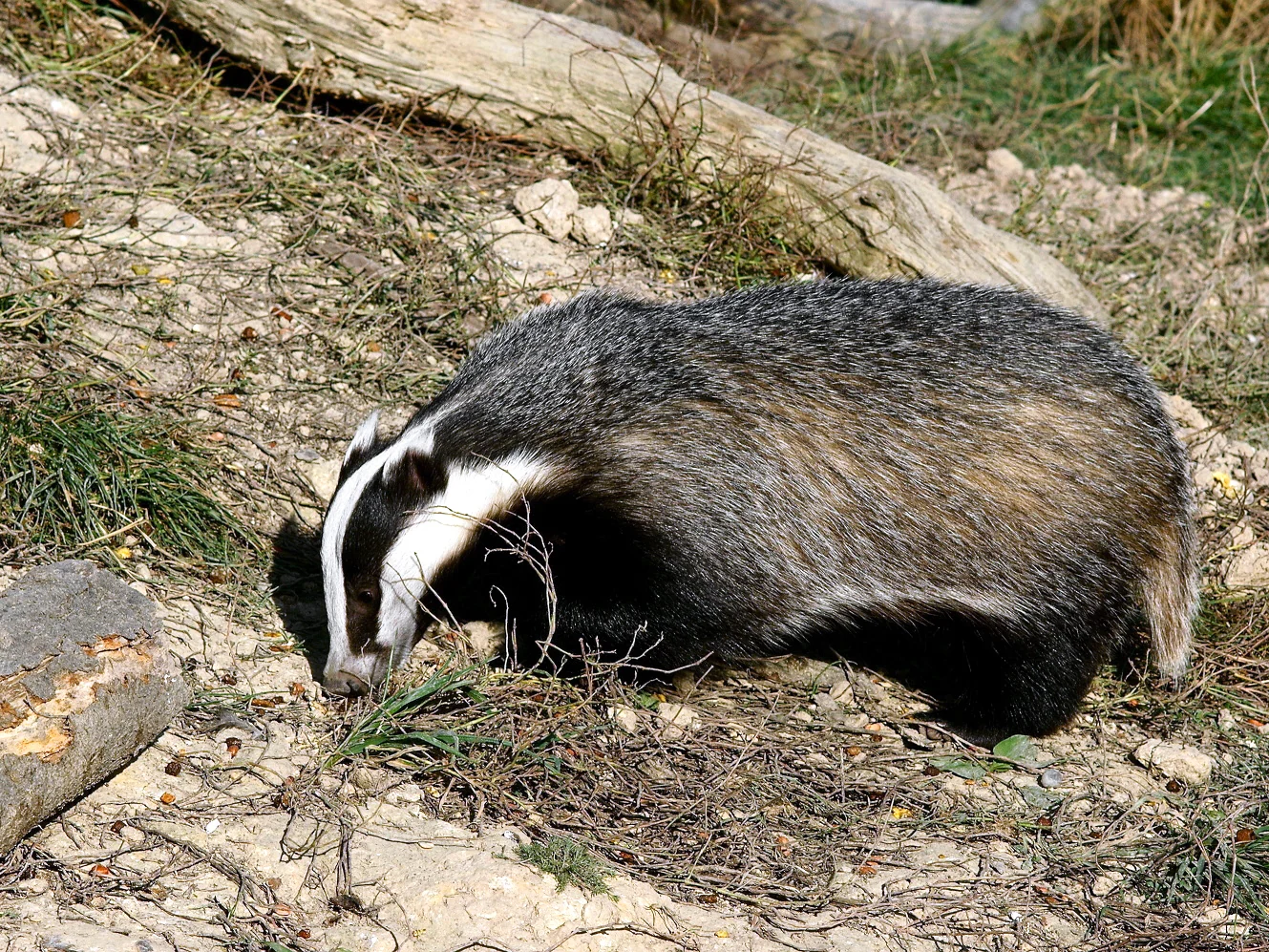
Badger with gray body and head with light and dark bands, next to the ground.
Badger at the British Wildlife Centre in Newchapel, Surrey, UK, in 2011. Animal in fauna park; not a record of Cabeceiras.Illustrative photograph · outside the municipality
Peter Trimming
ⓘ

Badger at the British Wildlife Centre in Newchapel, Surrey, UK, in 2011. Animal in fauna park; not a record of Cabeceiras.

Photography: Peter Trimming · CC BY 2.0

View source

Date given at source: .

Request removal or correct the photo credit

Open a história e os seus recursos →
Sources of this proposal

My findings

An idea, a drawing or a question to go on.

PROPOSTA 2 DE 2 · Life you do not always see

What information does a feather fit?

Reorder or remove

Species biology · trace recorded in Cavez

Vamos experimentar?

  1. Draws two columns: what I see in the photograph and what I read about the species.
  2. Places observable color and shape in the first; singing and night habits belong to the explanation of the second.
  3. Leaves the age, sex and location of the nest unfilled: the image linked to the story does not show them.

Exercise with the photograph published, without collecting feathers or searching for nests.

Discover the story

At dusk, a bird can seem like an insect

The European nightjar feeds on insects and becomes active at dusk and during the night. Its continuous song can resemble a cicada’s sound. In Portugal it is a summer visitor, associated mainly with the north and the transition between woodland and open spaces. The Cavez record shows a feather attributed to this species by the iNaturalist community. It is a trace: not a photograph of the whole bird or proof of a nest at that point. Curiosity begins with a feather and continues into the soundscape. Long wings and a long tail may be visible in silhouette, but low light hides details. The Aves de Portugal profile explains that females lack the white wing patches of males; juveniles lack them too. The absence of a mark alone does not determine age and sex. The source describes a late arrival, with song easier to detect in May and June. This is a Portuguese pattern, not a sightings calendar for Cavez. The recorded feather cannot tell us when the bird sang, where it nested or how long it stayed in the area. To understand journeys, researchers need another kind of record. The BTO presents tracking studies that located an important wintering area in grassland and shrub landscapes south of the equatorial forest, mainly in the Democratic Republic of the Congo. This information concerns birds tracked in those studies, not a demonstrated destination for the bird associated with the Cavez feather. A feather documents a trace in one place; tracking connects positions over time to study movements.

Open a história e os seus recursos →
Sources of this proposal

My findings

An idea, a drawing or a question to go on.

YOUR LOCAL GUIDE

What would you like to discover?

Take a closer look.