Discover Cabeceiras de BastoFree independent guide
ViveCabeceirasYOUR GUIDE TO CABECEIRAS
ENEnglish
SearchSaved
CHOICE · EXPERIMENTARY · TAKE

A notebook.
Your findings.

Up to six proposals of Cabeceiras, in your own order, to do it at home, in company or on a break.

2 de 6 propostas escolhidas · faça-as ao seu ritmo.

PROPOSTA 1 DE 2 · Life you do not always see

Compare two faces

Badger · general biology

A home beneath the ground

The European badger, Meles meles, is mainly nocturnal and shelters in extensive underground setts. Two dark stripes on a white head are a striking visual clue; its short legs have strong claws. Museu Virtual da Biodiversidade describes its presence in woods, forests and farmland with vegetation. This profile explains the species in mainland Portugal; it does not document an observation in Cabeceiras de Basto. The claws are long and non-retractile: they do not draw back like a cat’s. A short, pale tail provides another contrast with a fox’s long tail. These details help compare descriptions without searching for or disturbing setts.
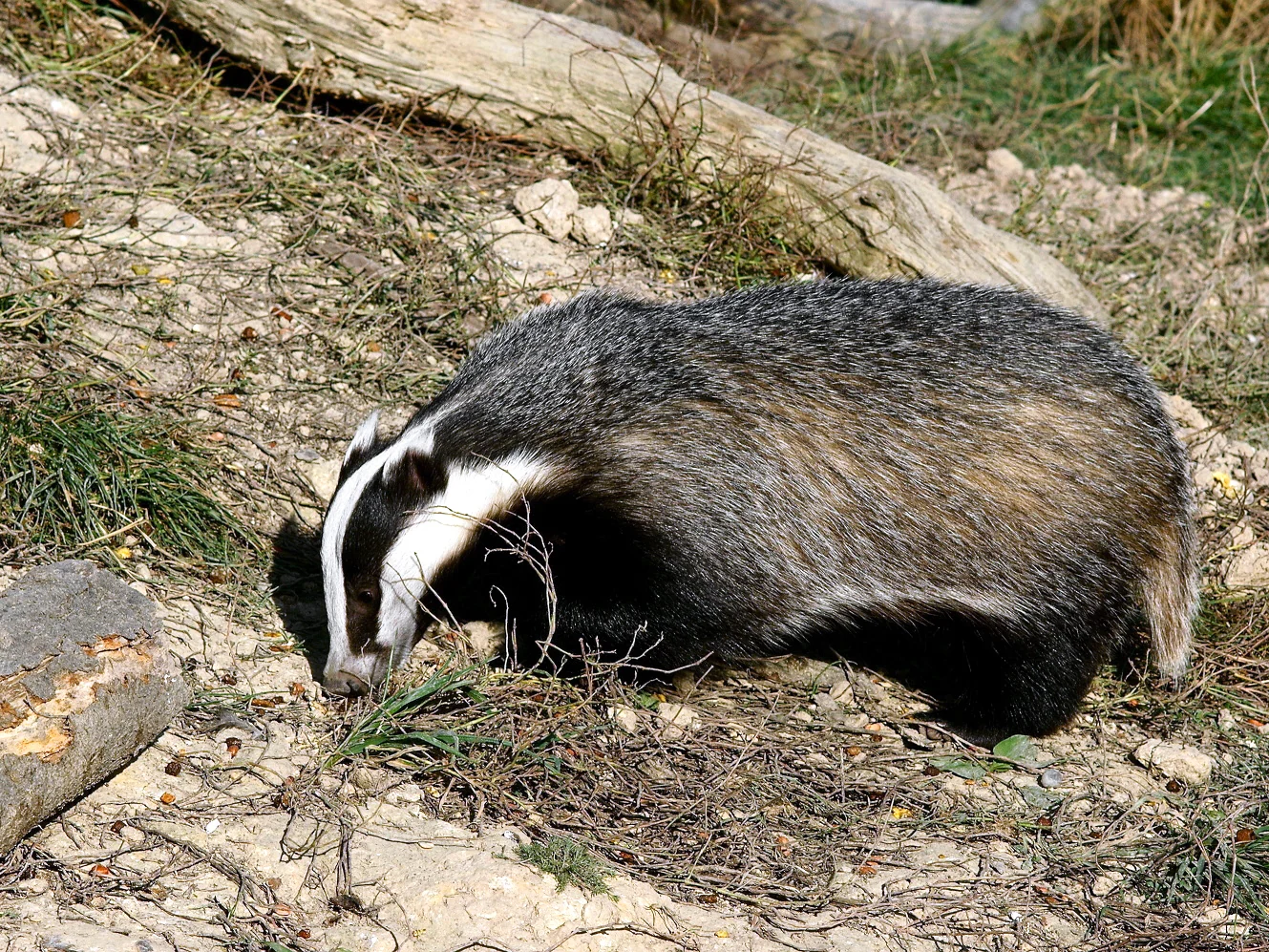
Badger with gray body and head with light and dark bands, next to the ground.
Badger at the British Wildlife Centre in Newchapel, Surrey, UK, in 2011. Animal in fauna park; not a record of Cabeceiras.Illustrative photograph · outside the municipality
Peter Trimming
ⓘ

Badger at the British Wildlife Centre in Newchapel, Surrey, UK, in 2011. Animal in fauna park; not a record of Cabeceiras.

Photography: Peter Trimming · CC BY 2.0

View source

Date given at source: .

Request removal or correct the photo credit

Vamos experimentar?

  1. In the photograph, it follows the light and dark bands of the head and the contour of the body.
  2. Compare the text with the image: the description of the claws and the den goes beyond what this framework shows.
  3. Open the otter story and compare the snouts in the two photographs, keeping the contexts of each park separate.

The badger was photographed at the British Wildlife Centre in the UK. A daylight photograph in a park does not invalidate the description of the species' mostly nocturnal habits.

Open a história e os seus recursos →
Sources of this proposal

My findings

An idea, a drawing or a question to go on.

PROPOSTA 2 DE 2 · A world beneath the leaves

Draw a change under the ground

General ecology · mycorrhizae

Roots have partners

In mycorrhizas, a plant and a fungus form a partnership. The plant supplies organic compounds; the mycelium associated with the roots helps obtain water and nutrients. Oaks, chestnuts and pines can take part in these relationships. A nearby tree gives an observation context, but does not reveal a mushroom’s identity on its own. Researcher Susana Gonçalves also distinguishes ectomycorrhizas: in these associations, the fungus surrounds the root tips. This example shows that there are different kinds of relationships between plants and fungi, beyond the visible appearance of mushrooms. The partnership extends the area from which the plant can obtain resources: its roots connect with the fungal network. But the participants are not always the same. Some fungi can associate with several plants, while others have very specific partners. Knowing the trees in a place therefore helps us understand the environment without replacing identification of the fungus.

Vamos experimentar?

  1. Draws a plant with roots and a network of hyphae next to them.
  2. Draw an arrow from the plant to the fungus, with the legend organic compounds.
  3. Draw another in the direction of the plant, with water and nutrients; compare the scheme with the photographs, which show only the mushrooms.

General representation of a mycorriza, without stating which partnership is present in the local photographs.

Open a história e os seus recursos →
Sources of this proposal

My findings

An idea, a drawing or a question to go on.

YOUR LOCAL GUIDE

What would you like to discover?

Take a closer look.