Discover Cabeceiras de BastoFree independent guide
ViveCabeceirasYOUR GUIDE TO CABECEIRAS
ENEnglish
SearchSaved
CHOICE · EXPERIMENTARY · TAKE

A notebook.
Your findings.

Up to six proposals of Cabeceiras, in your own order, to do it at home, in company or on a break.

2 de 6 propostas escolhidas · faça-as ao seu ritmo.

PROPOSTA 1 DE 2 · The flavours of Cabeceiras

Compare two French toasts

Cabeceiras · 2012 memory and 2015 recipe

Honey sweetens rabanadas too

In the food programme of 23–25 March 2012, Cabeceiras presented roast kid as its speciality and rabanadas with honey as a regional sweet. The municipal announcement also links the table to Vinho Verde, meat and honey. This combination shows how food promotion brings products and preparations together. It is the historical programme of that edition, not a current menu or a claim that rabanadas originated exclusively in the municipality. The 2015 guide adds a preparation with milk and honey. Compare it with Dídia Teixeira’s wine version: the same name can hold different recipes.
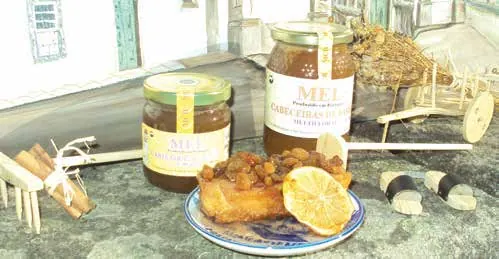
Honey rabanada in the Cabeceiras presentation in the 2014–2015 gastronomic guide.
ⓘ

Honey rabanada in the Cabeceiras presentation in the 2014–2015 gastronomic guide.

Source: Turismo do Porto e Norte de Portugal

View source

Photograph date not stated.

Individual photographer and reuse licence not stated by the source.

Request removal or correct the photo credit

Vamos experimentar?

  1. Open the recipes of honey and wine.
  2. Compares the liquid in which the bread is wet, the ingredients of the frying and the finish.
  3. Write down who shared each version and where it appears.

Comparison between documented recipes; does not presuppose a single preparation in all houses.

Open a história e os seus recursos →
Sources of this proposal

My findings

An idea, a drawing or a question to go on.

PROPOSTA 2 DE 2 · Between rivers and mountains

Compares three ways to use water

Cavez · landscape described in 1758

A river that powered mills but did not irrigate

In 1758, the Tâmega at Cavez was described as a river with plentiful water throughout the year and a particularly strong winter current. It had weirs, channels and grain mills. Along its banks, the account noted cultivated areas, olive groves and trees supporting vines. Despite that presence in farming life, the vicar stated that the river did not irrigate the parish’s fields: it ran too deep to allow irrigation channels. This is an important difference between having water nearby and being able to direct it to a plot. The description shows how relief shaped water use at that time; it does not describe present-day irrigation.

Vamos experimentar?

  1. It makes three columns: Cavez, Bucos and Alvite.
  2. After reading the related stories, note where water, mills or water retention appear.
  3. Emphasize a difference and write the explanation given by the document. Do not make it a description of the present.

It works with the accounts of 1758; the result is a historical comparison.

Open a história e os seus recursos →
Sources of this proposal

My findings

An idea, a drawing or a question to go on.

YOUR LOCAL GUIDE

What would you like to discover?

Take a closer look.