Up to six proposals of Cabeceiras, in your own order, to do it at home, in company or on a break.
2 de 6 propostas escolhidas · faça-as ao seu ritmo.
PROPOSTA 1 DE 2 · Crafts and memories
What's changed in tradition?
Jogo do Pau · historical context
Fairs had a side of conflict too
The inventory recalls confrontations at fairs and pilgrimages, in a rural setting where the staff served as support and defence. It distinguishes that past from the cultural practice of demonstrations. Understanding this change lets us see Jogo do Pau as a tradition that adapted to communities and times.
The record connects the transformation with changes in rural society and transmission between generations. In demonstrations, it highlights training, attention and decision-making. The schools of Abadim and Bucos appear as places of learning in the inventory process. The same object gains a different social setting: knowing its history includes understanding why people practise and how they learn.
Vamos experimentar?
It makes two columns: context of conflict and cultural presentation.
Note what changes in purpose and what continues to depend on learning.
Distinguish the story told in the inventory of a training announcement or current show.
An activity to try at your own pace, without collecting specimens.
Olive-tree roots shaped the new altar and ambo in the chapel of Nossa Senhora do Amparo. The Archdiocese of Braga’s report of 6 October 2025 attributes the work to Atelier Amadeus and describes a refurbishment centred on the altar. A suspended cross forms part of the element called Corpo de Luz.
Parish priest Rui Filipe Marques Araújo explained the lighting’s symbolism: groups of lights refer to the Trinity, the Evangelists and the Apostles. The publication also highlights the contribution of artists, technicians, workers and the community. The intervention shows heritage continuing to gain new forms and meanings; the 2025 report does not give visiting hours.
The account presents the celebration, presided over by José Cordeiro, as a gathering of Faia with the communities of Arco de Baúlhe and Vila Nune. The choice of roots also receives a religious interpretation: according to the priest, transforming previously discarded material expresses renewal and redemption. This is the symbolic reading attributed to him in the report, distinct from the description of the materials. To understand the work, we can look at both layers: how it was made and the meaning given to it.
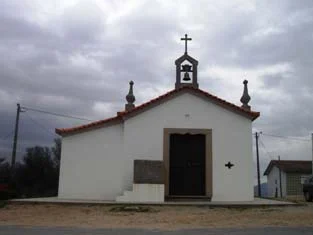
Outside the Lady of Amparo from Faia. The photograph places the chapel; it does not show the new altar or interior lighting.ⓘ
Vamos experimentar?
Read the history of the chapels described in 1758 and this reading about the intervention of 2025.
On a sheet, separate what each source describes: location and relationships with the community; materials, light and artistic creation.
Write down a question that remains unanswered. The old reference does not allow dating each part of the current building.
A comparison of sources to make at home; does not require access to the interior of the chapel.