Draws the second life of an object
Outeiro · footwear uses in the Museum inventory
From the fair to work in the fields
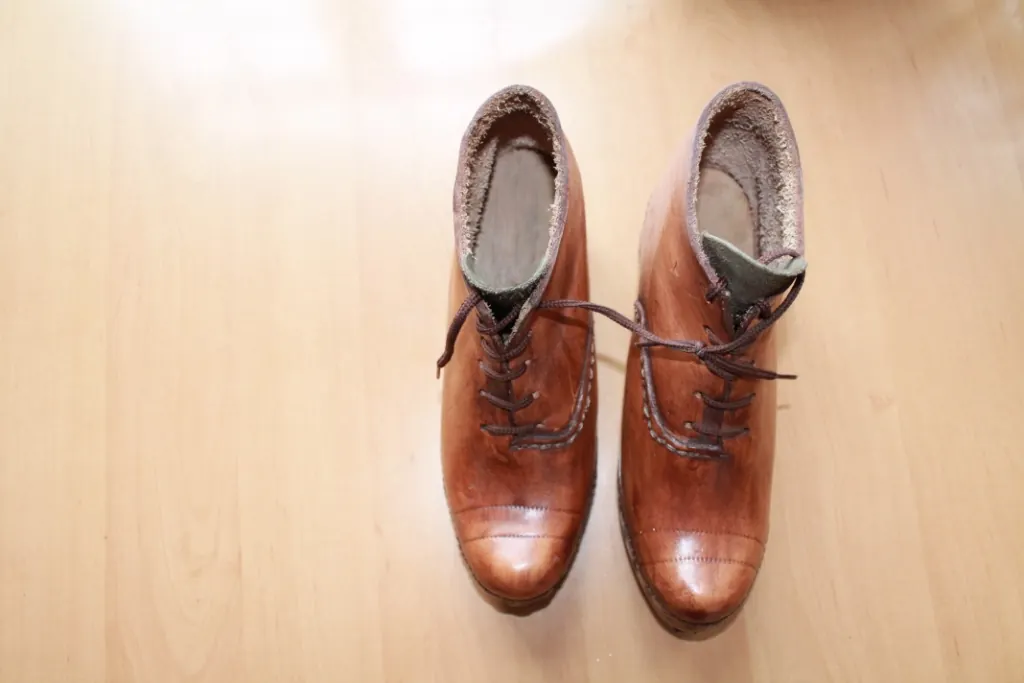
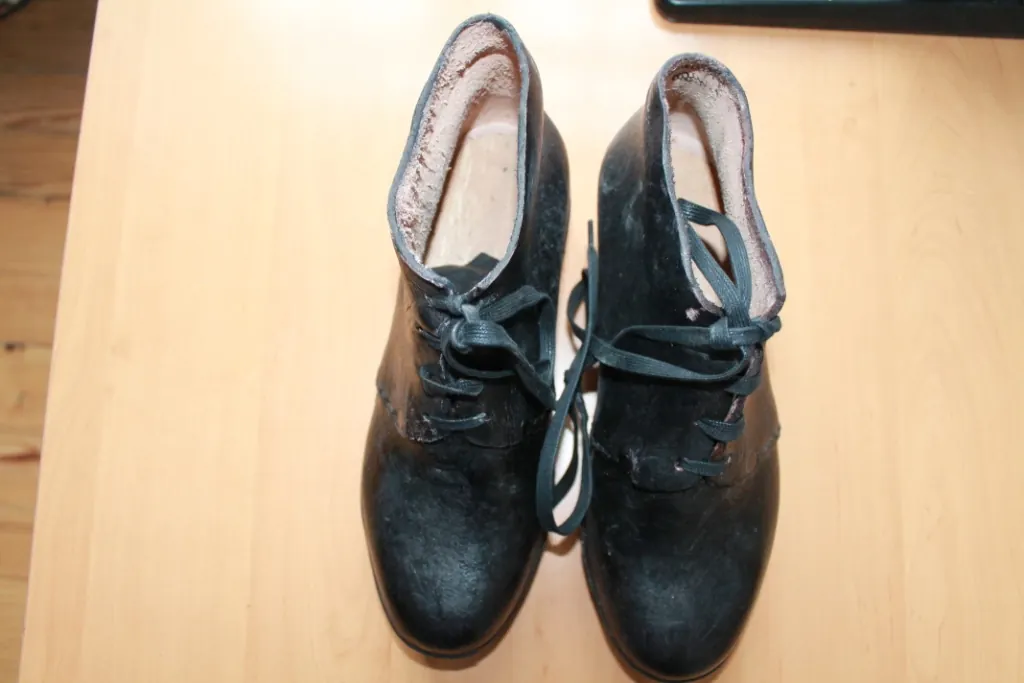
The pair of women’s chancas MTB 449 was made by José Alves Leite and acquired by the Museu das Terras de Basto. Wood, leather, rubber, tacks and cord make up the piece, which measures 26 centimetres long and 15.5 high. The record associates this footwear with fairs and Sundays. Once more worn, it moved to farm work: wear could change the occasion of use without ending the object’s life. This is a documented description, not a rule for every family. The collection also includes men’s chancas MTB 450, likewise made by José Alves Leite and acquired by the Museum. The record again mentions more worn footwear moving to the fields. Comparing the pieces lets us follow documented materials and uses without reducing all clog making to a single model. Pair MTB 450 measures 28 centimetres long, 16 high and 9.5 wide. For MTB 449, the recorded width is 7.5 centimetres. The differences describe these two museum pieces, not a size chart for all socos or chancas. The inventory number keeps each set of dimensions connected with the right object.
ⓘ
Women’s clogs MTB 449
Source: Museu das Terras de Basto
Photograph date not stated.
Individual photographer and reuse licence not stated by the source.
ⓘ
Men’s clogs MTB 450
Source: Museu das Terras de Basto
Photograph date not stated.
Individual photographer and reuse licence not stated by the source.
ⓘ
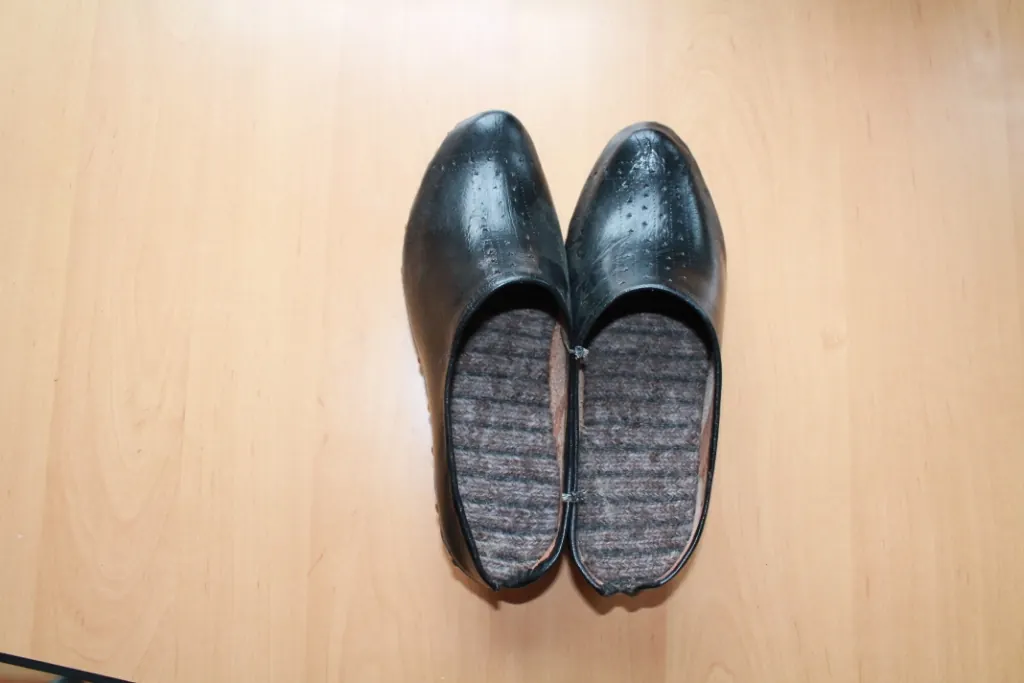
Women’s clogs MTB 451
Source: Museu das Terras de Basto
Photograph date not stated.
Individual photographer and reuse licence not stated by the source.
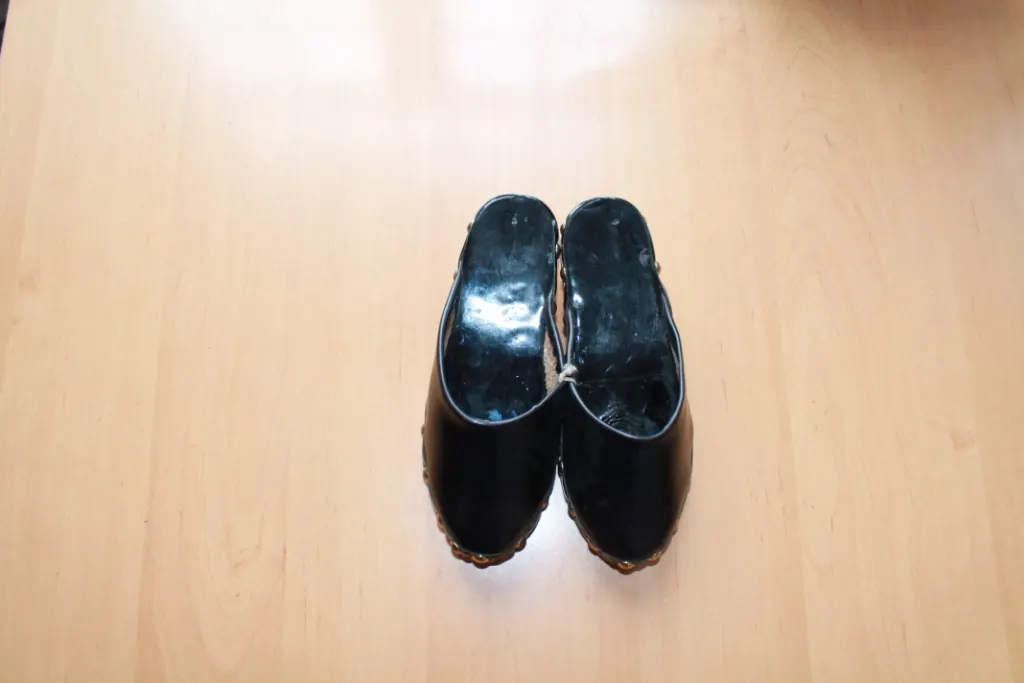
ⓘ
Children’s clogs MTB 452
Source: Museu das Terras de Basto
Photograph date not stated.
Individual photographer and reuse licence not stated by the source.
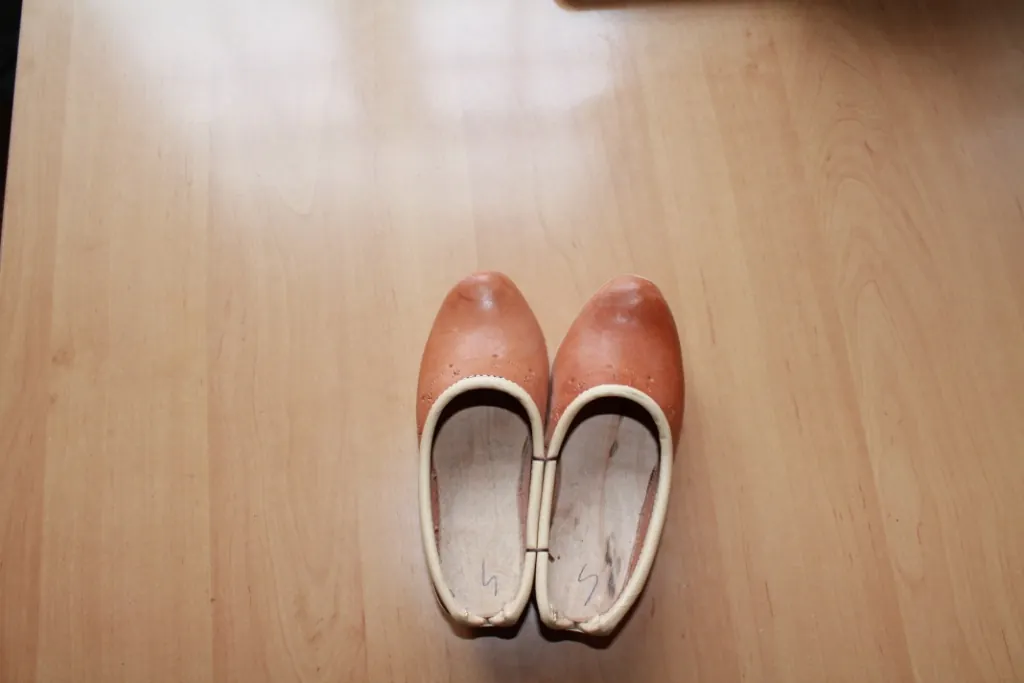
ⓘ
Children’s clogs MTB 453
Source: Museu das Terras de Basto
Photograph date not stated.
Individual photographer and reuse licence not stated by the source.
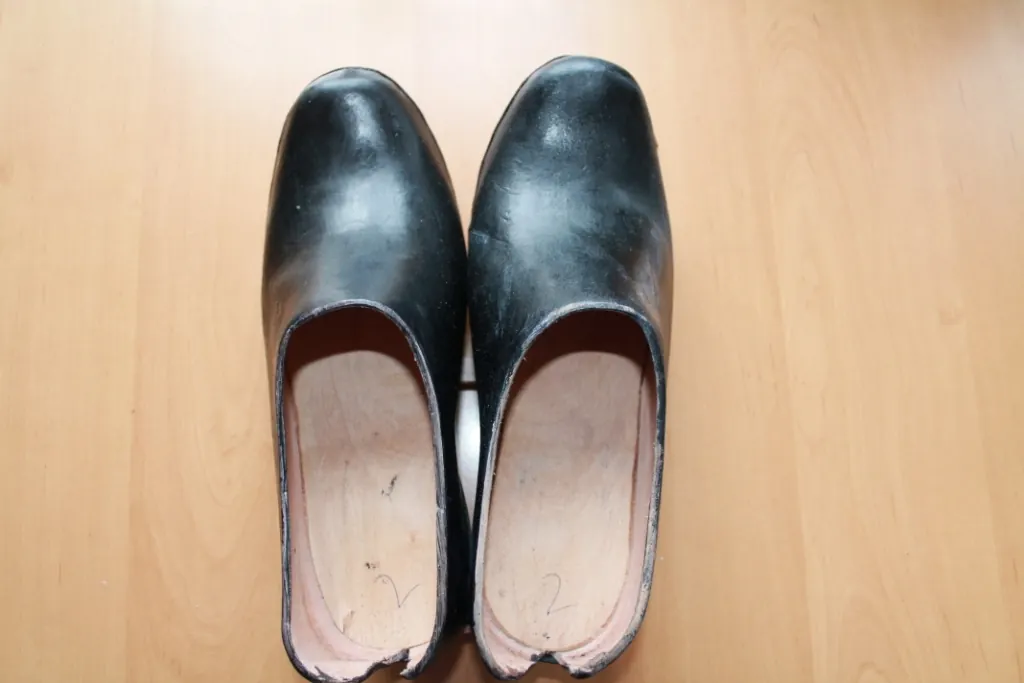
ⓘ
Men’s clogs MTB 454
Source: Museu das Terras de Basto
Photograph date not stated.
Individual photographer and reuse licence not stated by the source.
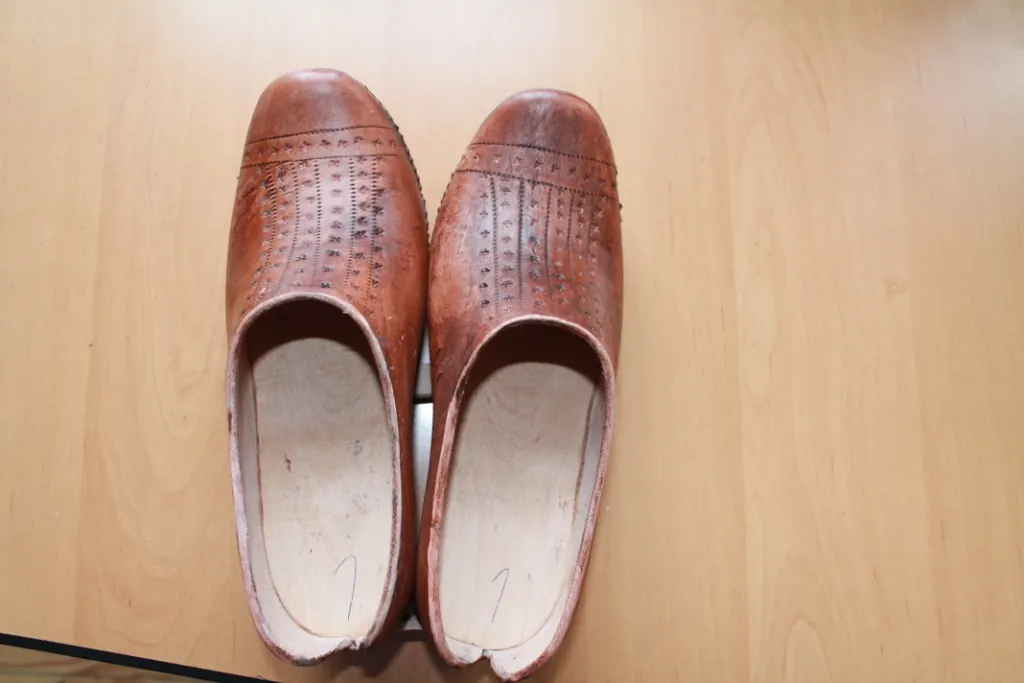
ⓘ
Men’s clogs MTB 455
Source: Museu das Terras de Basto
Photograph date not stated.
Individual photographer and reuse licence not stated by the source.
Vamos experimentar?
- Draws two moments for the same pair of Chancas: fair or Sunday and work in the field.
- Between the two, put an arrow with the word wear.
- Choose an object of yours and imagine another possible use when it ceases to serve the initial function.
Comparison inspired by the documented use of Chancas, without assigning this route to all the pieces.
Open a história e os seus recursos →Sources of this proposal
- Basto Land Museum — In the country of Tamanco, women's Chancas MTB 449Consultation/revision: 2026-11-08
- Land Museum of Basto — In Tamanco Country: table T15, seat T14, tools T20/T22/T24/T25, sticks T27 and stone T33 and Chancas MTB 450Consultation/revision: 2026-11-08
My findings
An idea, a drawing or a question to go on.