Discover Cabeceiras de BastoFree independent guide
ViveCabeceirasYOUR GUIDE TO CABECEIRAS
ENEnglish
SearchSaved
CHOICE · EXPERIMENTARY · TAKE

A notebook.
Your findings.

Up to six proposals of Cabeceiras, in your own order, to do it at home, in company or on a break.

2 de 6 propostas escolhidas · faça-as ao seu ritmo.

PROPOSTA 1 DE 2 · Read the landscape through the plants

Try observing

Common names used in the source

Strawberry tree, carqueja and gorse

Strawberry tree, carqueja, gorse and honeysuckle appear in the municipality’s description of mountain vegetation. The source also links upland scrub to grazing goats, cattle and sheep, distinguishing it from cultivated pasture lower down. Scrub is therefore part of a landscape of plants, animals and work. These common names are starting points for learning about vegetation, not identifications of every plant you encounter. The municipal account relates this vegetation to changing land use: it mentions the partial replacement of oaks, chestnuts and scrub by maritime pine. Reading the landscape therefore also means asking what was planted and what changed. One green patch may hold stories of grazing, cultivation and forestry. Start by choosing a detail in the next stories: a carqueja stem, gorse spines, the strawberry tree’s flowers and fruits, or honeysuckle’s place at the woodland edge. Each question brings you closer without requiring you to identify every plant already.

Vamos experimentar?

  1. In a landscape design, use different symbols for trees, shrubs and fields.
  2. Compare the spots: where you find continuity and where there are intervals? You can do the exercise from a photograph.
  3. Choose one of the plans of this story and open the related reading to discover a detail.

An activity to try at your own pace, without collecting specimens.

Open a história e os seus recursos →
Sources of this proposal

My findings

An idea, a drawing or a question to go on.
PROPOSTA 2 DE 2 · Read the landscape through the plants

Alloy plant, soil and water

Serra da Cabreira · flora and habitat

A carnivorous plant in the mountains

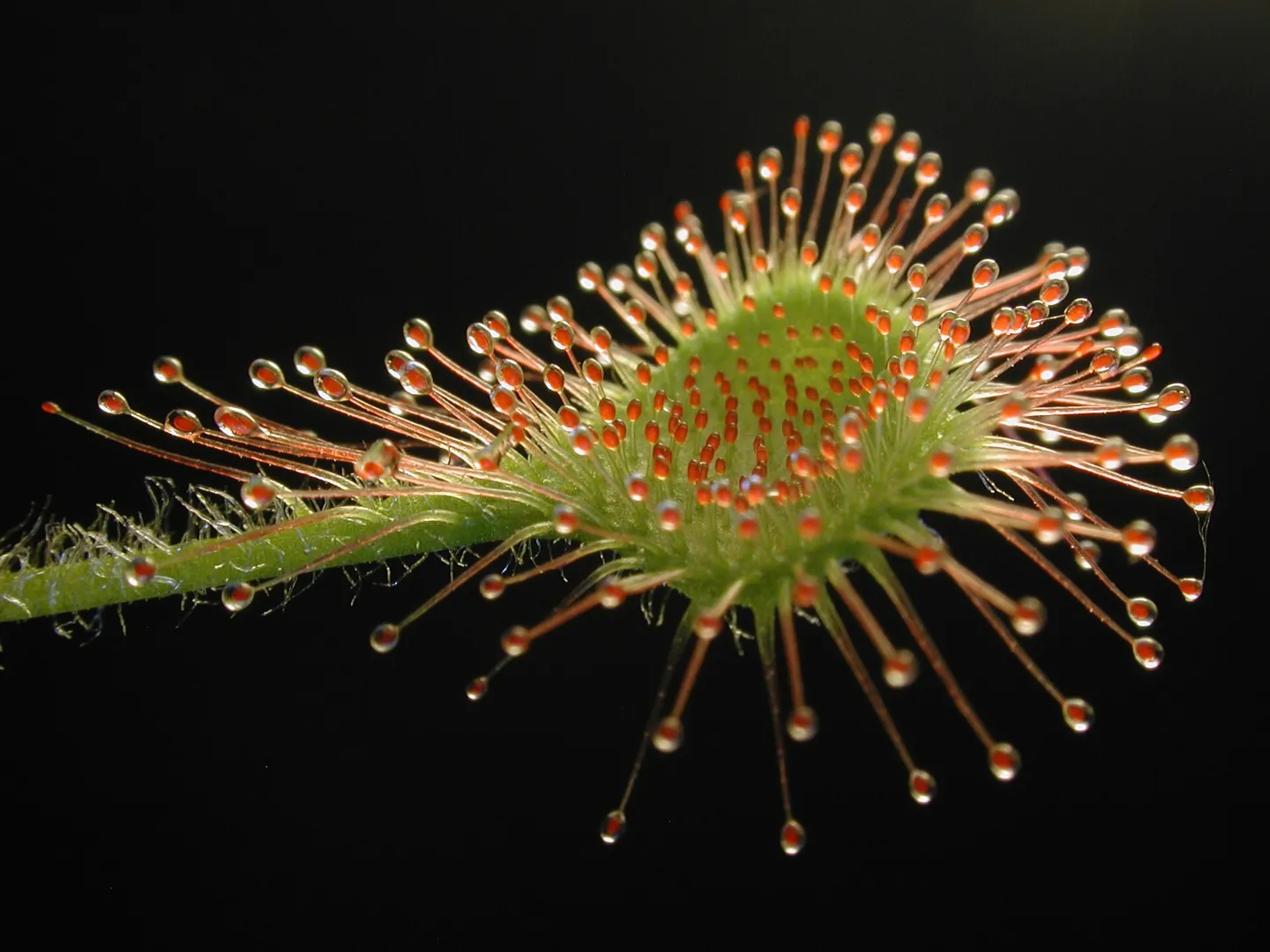
Visit Cabeceiras includes Drosera rotundifolia in the mountain flora. Flora-On describes its habitat as waterlogged meadows, marshes and peat bogs with Sphagnum mosses, generally in mountain areas. The reference concerns Cabreira as a whole; it does not identify an observation point in this guide. A review by the US Forest Service helps explain this connection with water: it describes continuously moist conditions and soils that are often acidic and poor in nutrients. The plant tolerates prolonged dry spells poorly. This explanation concerns the species in general, rather than measurements of soil or water in Cabreira. Knowing a plant also means knowing the habitat it depends on. A photograph shows its shape; a habitat description explains why looking for a similar flower on any hillside is not enough. Moisture is a key clue here. Observe differences between habitats without entering waterlogged areas or removing plants for comparison.

Drosera rotundifolia leaf with tentacles and droplets. Species photograph, not located in the Cabreira.
Petr Dlouhý
ⓘ

Drosera rotundifolia leaf with tentacles and droplets. Species photograph, not located in the Cabreira.

Photography: Petr Dlouhý · CC BY-SA 3.0

View source

Photograph date not stated.

Request removal or correct the photo credit

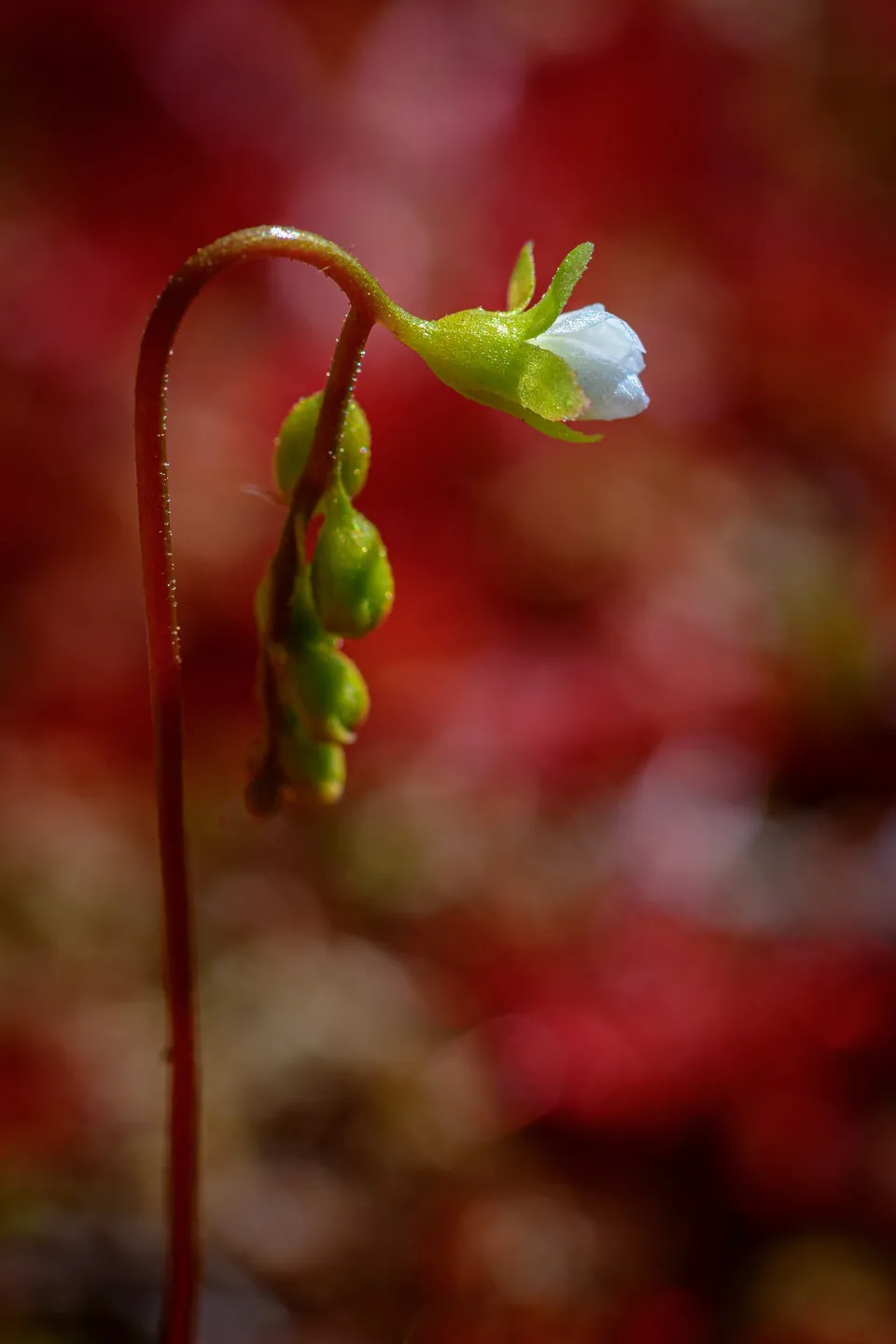
Drosera rotundifolia flower. Species illustration, not a local observation.
Stephan Sprinz
ⓘ

Drosera rotundifolia flower. Species illustration, not a local observation.

Photography: Stephan Sprinz · CC BY 4.0

View source

Date given at source: .

Request removal or correct the photo credit

Vamos experimentar?

  1. Draws three boxes: turtledove, water and soil nutrients.
  2. Connect sundew with the constant moisture described in the story.
  3. Opens the leaf trap story and adds an arrow to the insects.

A map of relationships made from sources, without going into bogs or looking for a population.

Open a história e os seus recursos →
Sources of this proposal

My findings

An idea, a drawing or a question to go on.
YOUR LOCAL GUIDE

What would you like to discover?

Take a closer look.