Discover Cabeceiras de BastoFree independent guide
ViveCabeceirasYOUR GUIDE TO CABECEIRAS
ENEnglish
SearchSaved
CHOICE · EXPERIMENTARY · TAKE

A notebook.
Your findings.

Up to six proposals of Cabeceiras, in your own order, to do it at home, in company or on a break.

3 de 6 propostas escolhidas · faça-as ao seu ritmo.

PROPOSTA 1 DE 3 · Travel through time

Try observing

Tâmega Line · object presented by the Museum in June 2024

The last light told a story

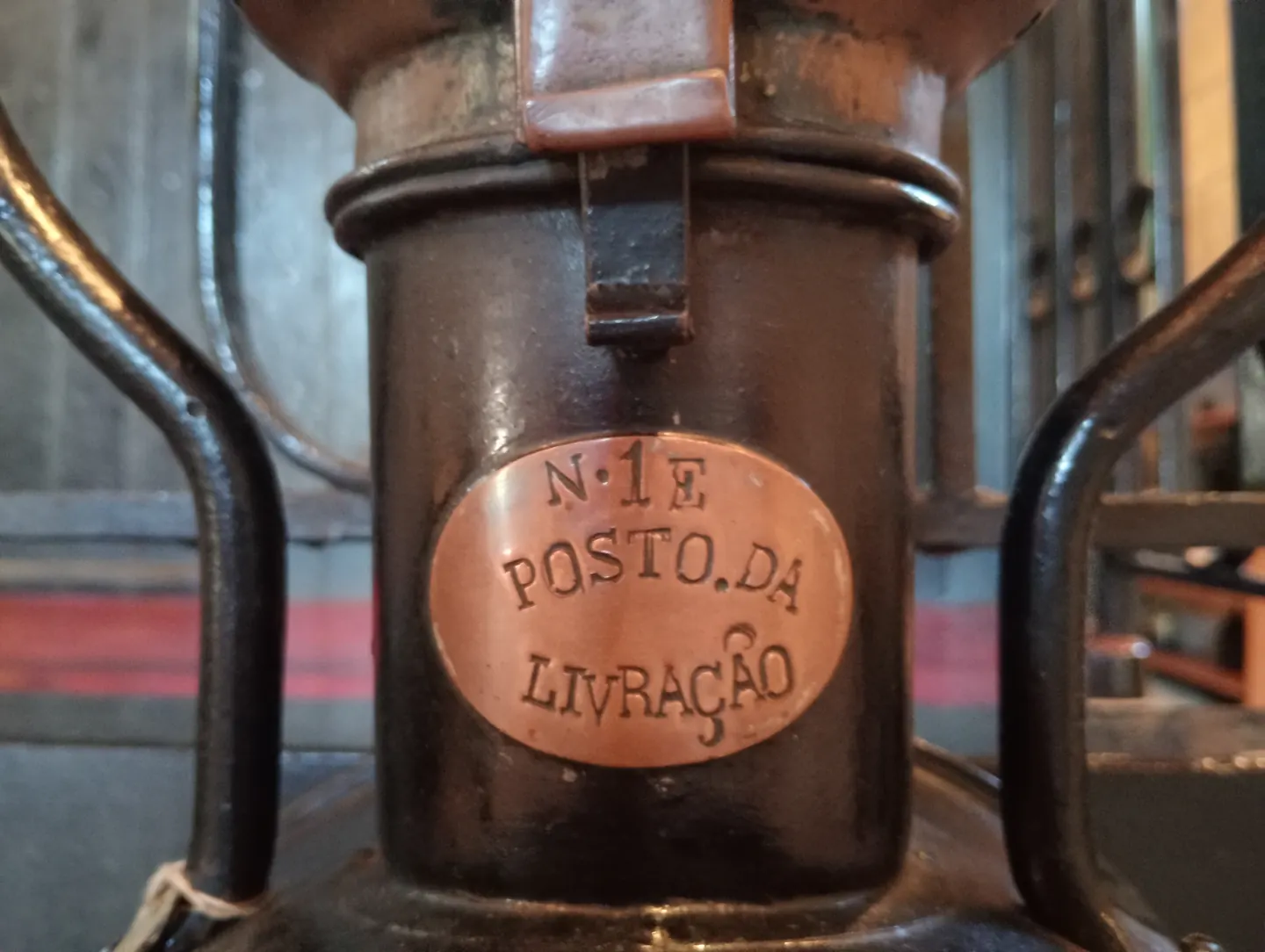
The last vehicle of a train carried an important message. The Museum presents a red tail lamp, used at night on the last carriage or wagon to indicate that the train was complete. Its purpose was to signal, not to light the track ahead of the locomotive. The inscription N.1 E POSTO. DA LIVRAÇÃO links the object to Livração station on the Tâmega Valley line. Reading the object means bringing together three clues: the colour of the light, its position on the train and the inscription connecting it with a place. This small object shows that railway history also consists of signals and quiet tasks. The Museum’s presentation, published in June 2024, describes its use and the station to which it was assigned; it does not give a manufacturing date.
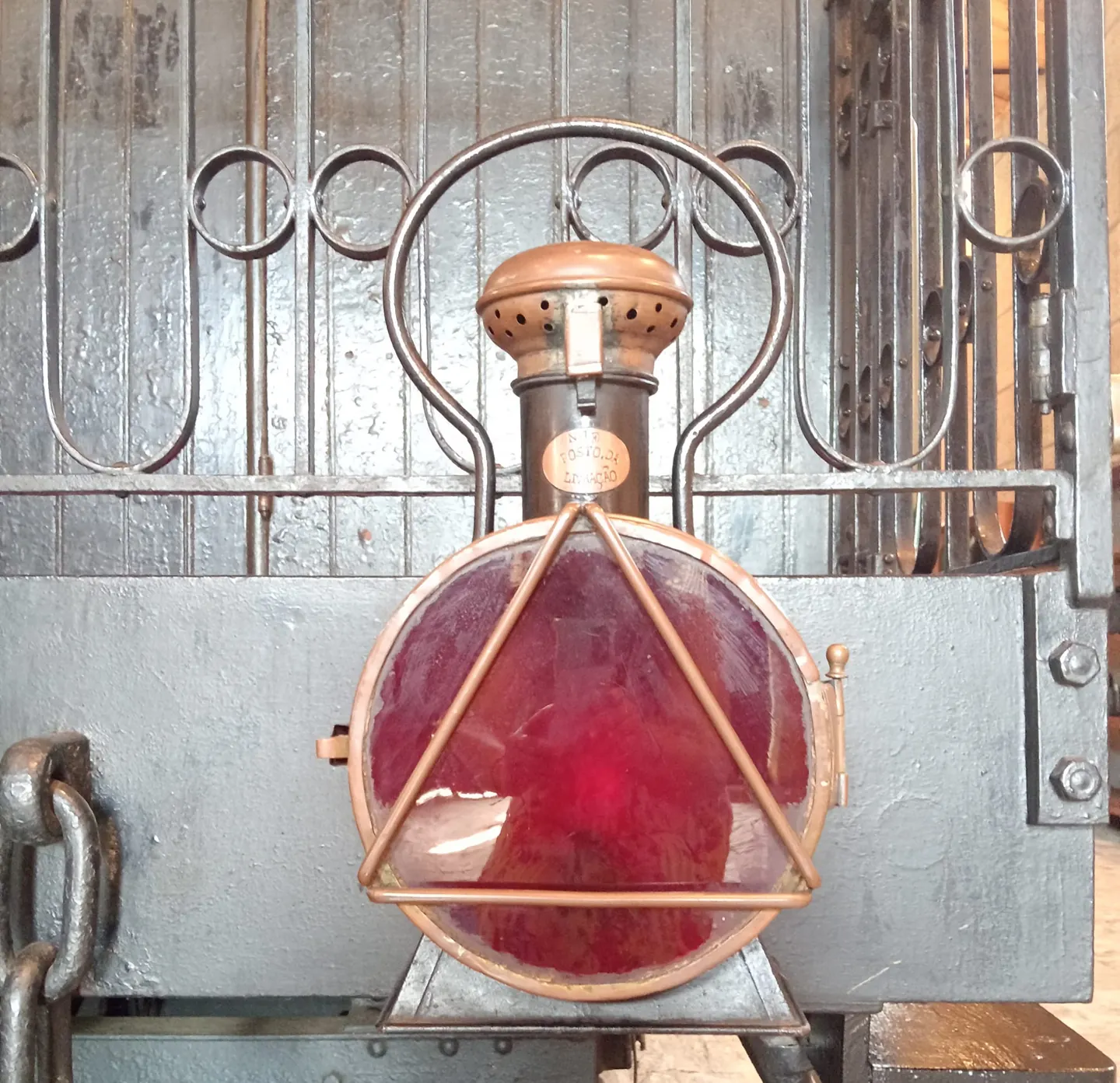
Tail lamp no. 1 associated with the Livração post, in the Museum’s 2024 publication.
ⓘ

Tail lamp no. 1 associated with the Livração post, in the Museum’s 2024 publication.

Source: Museu das Terras de Basto

View source

Photograph date not stated.

Individual photographer and reuse licence not stated by the source.
Request removal or correct the photo credit

Tail lamp no. 1 associated with the Livração post, in the Museum’s 2024 publication.
ⓘ

Tail lamp no. 1 associated with the Livração post, in the Museum’s 2024 publication.

Source: Museu das Terras de Basto

View source

Photograph date not stated.

Individual photographer and reuse licence not stated by the source.

Request removal or correct the photo credit

Vamos experimentar?

  1. Draws a locomotive followed by carriages and a last vehicle.
  2. Mark the position of the tail headlamp and identify the colour described at the source.
  3. Compare your task to the pier lamp in the related reading. Two lights can transmit information or illuminate different spaces.

An activity to try at your own pace, without collecting specimens.

Open a história e os seus recursos →
Sources of this proposal

My findings

An idea, a drawing or a question to go on.
PROPOSTA 2 DE 3 · Crafts and memories

Compare two portraits of Faia

Faia · sacred art, 2025

Roots and light renew a chapel

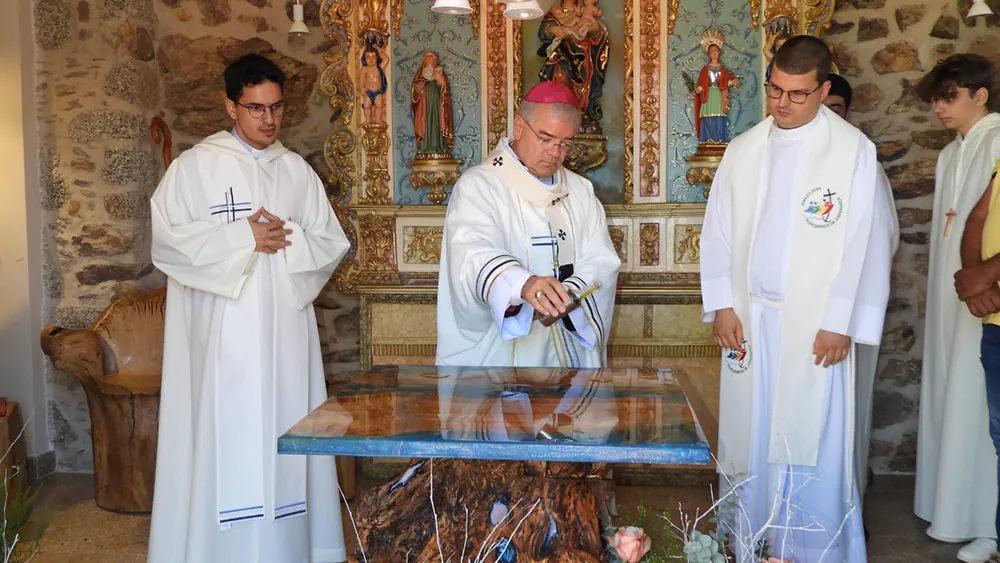
Olive-tree roots shaped the new altar and ambo in the chapel of Nossa Senhora do Amparo. The Archdiocese of Braga’s report of 6 October 2025 attributes the work to Atelier Amadeus and describes a refurbishment centred on the altar. A suspended cross forms part of the element called Corpo de Luz. Parish priest Rui Filipe Marques Araújo explained the lighting’s symbolism: groups of lights refer to the Trinity, the Evangelists and the Apostles. The publication also highlights the contribution of artists, technicians, workers and the community. The intervention shows heritage continuing to gain new forms and meanings; the 2025 report does not give visiting hours. The account presents the celebration, presided over by José Cordeiro, as a gathering of Faia with the communities of Arco de Baúlhe and Vila Nune. The choice of roots also receives a religious interpretation: according to the priest, transforming previously discarded material expresses renewal and redemption. This is the symbolic reading attributed to him in the report, distinct from the description of the materials. To understand the work, we can look at both layers: how it was made and the meaning given to it.

The altar of the Chapel of Nossa Senhora do Amparo during the celebration documented in October 2025.
ⓘ

The altar of the Chapel of Nossa Senhora do Amparo during the celebration documented in October 2025.

Source: Arquidiocese de Braga

View source

Photograph date not stated.

Autor e licença de reutilização não identificados na fonte.

Request removal or correct the photo credit

Vamos experimentar?

  1. Read the history of the chapels described in 1758 and this reading about the intervention of 2025.
  2. On a sheet, separate what each source describes: location and relationships with the community; materials, light and artistic creation.
  3. Write down a question that remains unanswered. The old reference does not allow dating each part of the current building.

A comparison of sources to make at home; does not require access to the interior of the chapel.

Open a história e os seus recursos →
Sources of this proposal

My findings

An idea, a drawing or a question to go on.

PROPOSTA 3 DE 3 · A world beneath the leaves

Try observing

General knowledge · national guide

The mushroom is only one part

A mushroom is a reproductive structure; the body of many fungi is a network of threads called mycelium. Each thread is a hypha. CCRES describes this network colonising living or decaying organic matter, from which the fungus obtains nutrients. The fruiting body develops from the mycelium and allows spores to disperse. If conditions are favourable, they can give rise to new mycelium. The visible mushroom tells only part of the life cycle; not all fungi produce cap-shaped structures. When some decomposer species are cultivated, mycelium can develop in inoculated logs. The same log can produce mushrooms for several years while conditions and nutrients remain suitable. This general explanation neither identifies a species nor documents its occurrence in Cabeceiras. The network can also form cords called rhizomorphs. In certain wood-inhabiting fungi, these help bridge gaps between branches or logs to reach another food source. An outer layer protects the inner hyphae during this exploration. Another strategy is to form sclerotia: compact masses of hyphae with a resistant covering. They allow fungi to survive unfavourable periods and, when conditions improve, can produce mycelium or reproductive structures. These are forms of growth and survival described by the Australian botanic gardens, not local records.

Vamos experimentar?

  1. Draw a network of wires on paper and, above, a mushroom.
  2. Tick the net as mycelium and choose a wire to represent a hyphae.
  3. Use the drawing as a scheme: it does not represent the shape or size of a real fungus.

An activity to try at your own pace, without collecting specimens.

Open a história e os seus recursos →
Sources of this proposal

My findings

An idea, a drawing or a question to go on.

YOUR LOCAL GUIDE

What would you like to discover?

Take a closer look.