Compare two portraits of Faia
Faia · sacred art, 2025
Vamos experimentar?
- Read the history of the chapels described in 1758 and this reading about the intervention of 2025.
- On a sheet, separate what each source describes: location and relationships with the community; materials, light and artistic creation.
- Write down a question that remains unanswered. The old reference does not allow dating each part of the current building.
A comparison of sources to make at home; does not require access to the interior of the chapel.
Discover the story
Roots and light renew a chapel
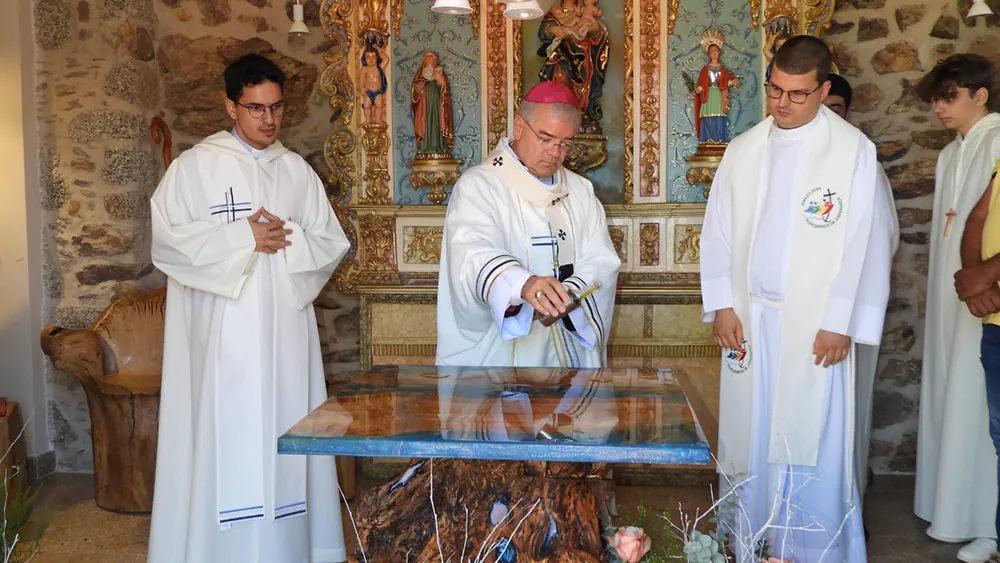
Olive-tree roots shaped the new altar and ambo in the chapel of Nossa Senhora do Amparo. The Archdiocese of Braga’s report of 6 October 2025 attributes the work to Atelier Amadeus and describes a refurbishment centred on the altar. A suspended cross forms part of the element called Corpo de Luz. Parish priest Rui Filipe Marques Araújo explained the lighting’s symbolism: groups of lights refer to the Trinity, the Evangelists and the Apostles. The publication also highlights the contribution of artists, technicians, workers and the community. The intervention shows heritage continuing to gain new forms and meanings; the 2025 report does not give visiting hours. The account presents the celebration, presided over by José Cordeiro, as a gathering of Faia with the communities of Arco de Baúlhe and Vila Nune. The choice of roots also receives a religious interpretation: according to the priest, transforming previously discarded material expresses renewal and redemption. This is the symbolic reading attributed to him in the report, distinct from the description of the materials. To understand the work, we can look at both layers: how it was made and the meaning given to it.
ⓘ
The altar of the Chapel of Nossa Senhora do Amparo during the celebration documented in October 2025.
Source: Arquidiocese de Braga
Photograph date not stated.
Autor e licença de reutilização não identificados na fonte.
Sources of this proposal
- Archdiocese of Braga — renewal of Lady of Amparo, news of 06/10/2025Consultation/revision: 2026-11-07
- Arquidiocese de Braga / Paróquia São Tiago da Faia — dedicação da capela, 06/10/2025; fotografia indicada como DRConsultation/revision: 2026-11-18
My findings
An idea, a drawing or a question to go on.