Discover Cabeceiras de BastoFree independent guide
ViveCabeceirasYOUR GUIDE TO CABECEIRAS
ENEnglish
SearchSaved
CHOICE · EXPERIMENTARY · TAKE

A notebook.
Your findings.

Up to six proposals of Cabeceiras, in your own order, to do it at home, in company or on a break.

2 de 6 propostas escolhidas · faça-as ao seu ritmo.

PROPOSTA 1 DE 2 · Travel through time

Try observing

Gondiães and Vilar de Cunhas · memory and landscape

A house with three granaries

At Casa de Chouzas, three 19th-century granaries stand alongside the manor house highlighted by the municipality. The group connects two functions: living and storing the harvest. Rather than looking only at the main house, it is worth recognising the importance of buildings supporting agriculture. The introduction to Vilar de Cunhas places this heritage in a landscape of plateau and mountain, shaped by farming and pastoralism. House and granaries can be read in that working context, although the source does not detail each property’s production. The house’s dating is less firm: the municipality presents it as perhaps 19th-century, while assigning the granaries to the 19th century. That difference should remain visible. The photograph accompanying the reading shows the portal, not the three granaries. The heritage reference does not confirm access to the group.
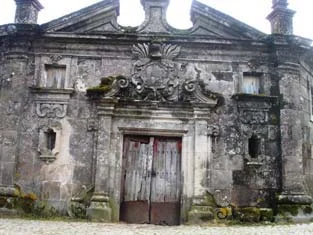
Municipal archive photograph: Casa de Chouzas.
Portal da Casa de Chouzas · photo of the municipal inventory; the granaries do not appear in this framework.ⓘ

Vamos experimentar?

  1. Look at the photo of the portal and list only the elements you can see.
  2. Compared to the three granaries mentioned in the text: what depends on the written description?
  3. Imagine a caption that distinguishes the frame of the photograph from the remaining patrimonial set.

An activity to try at your own pace, without collecting specimens.

Open a história e os seus recursos →
Sources of this proposal

My findings

An idea, a drawing or a question to go on.
PROPOSTA 2 DE 2 · Crafts and memories

Draw the table and bench to scale

Outeiro · history of clog making

Learning a craft beside a master

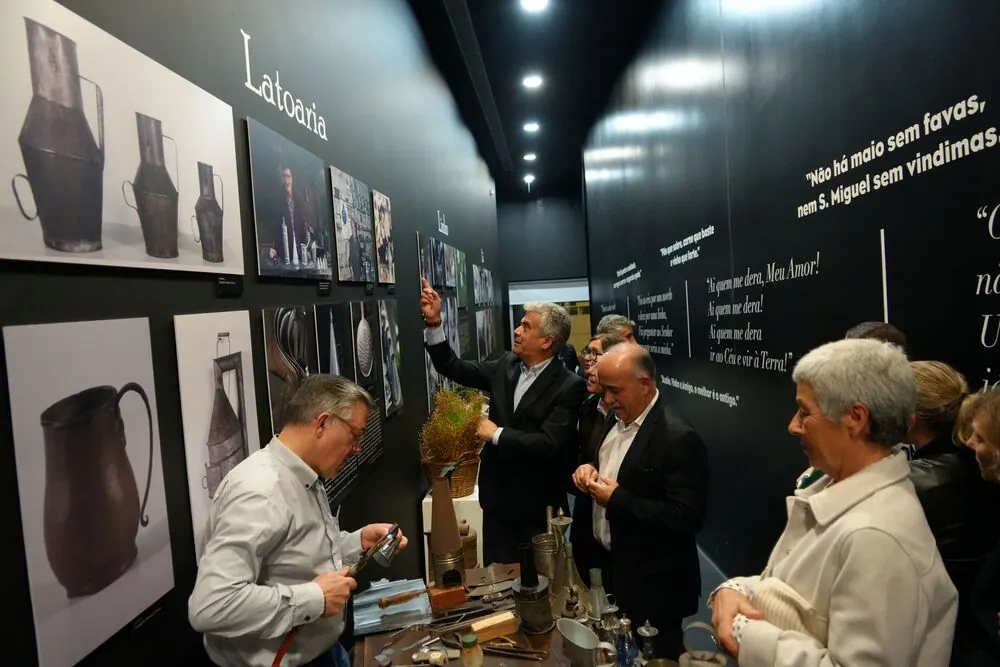
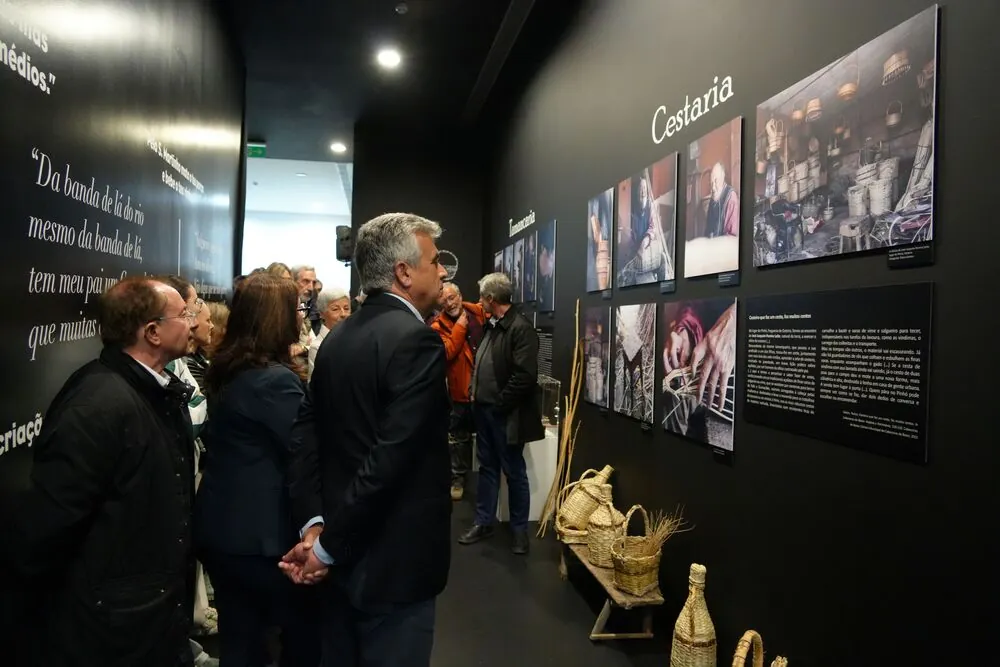
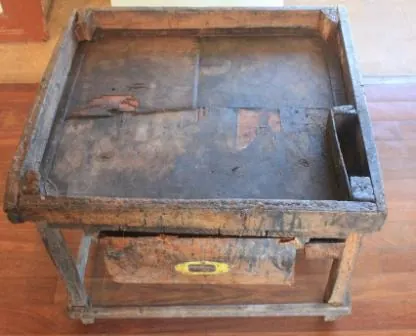
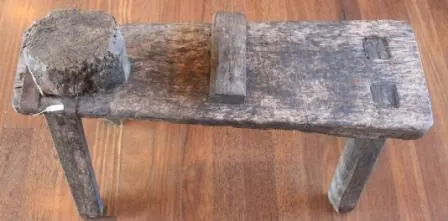
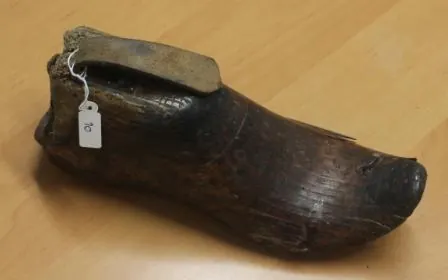
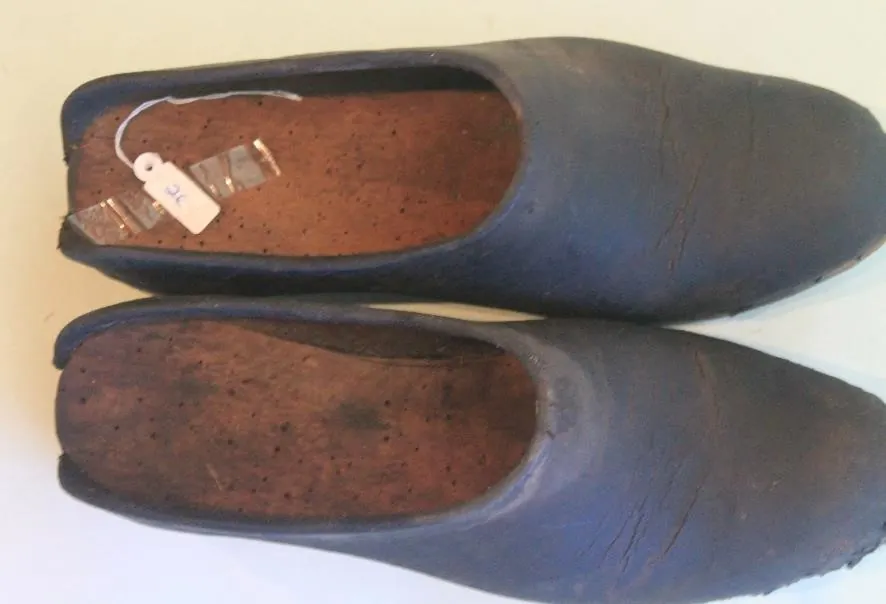
In the study published in 2017, Teresa Soeiro recounts how Manuel Alves Leite, born in Pinhel in 1899, learned from Bernardino José Pereira, a clog maker from Sobreira. The skill passed to his descendants. This story of learning brings clog making close to families and places, without assuming that the workshop remains open. The Museum’s inventory offers a glimpse of the workspace. It calls the low table used by Manuel António Teixeira Leite an ofício. A bench with a small block supported the finishing of the wooden soles; a wood-and-leather last connects production with Manuel Alves Leite’s generation. The objects show different working supports without reconstructing the layout of a particular workshop. Dimensions help distinguish the supports: table T15 measures 82 centimetres long, 74 wide and 55 high; bench T14 is 87 long, 28 wide and 50 high. Despite similar lengths, they offer very different surfaces. The inventory links the bench with finishing the wooden soles, supported on a small block.

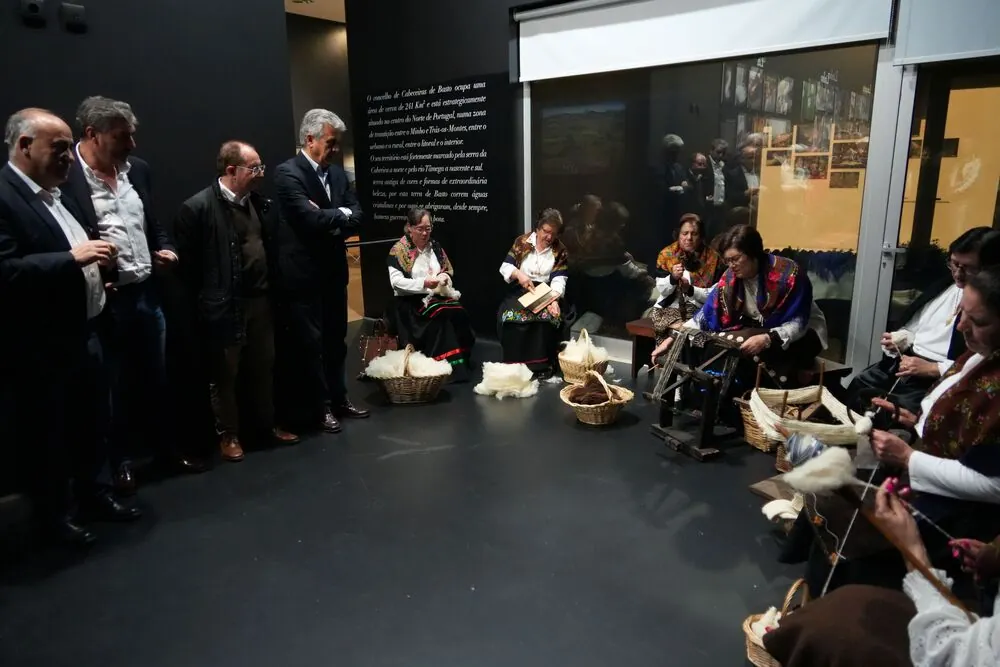
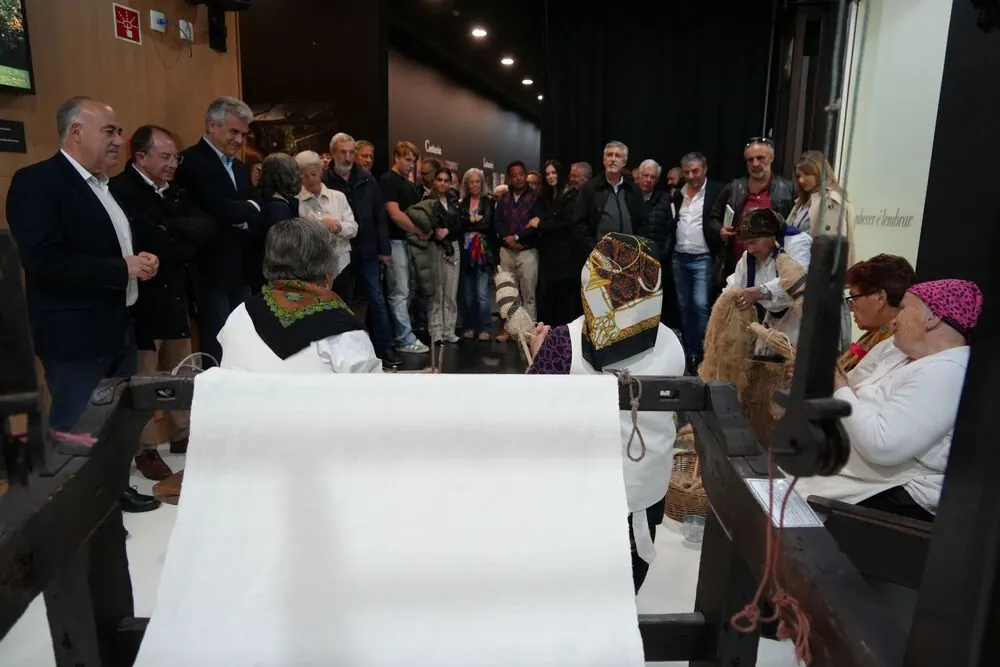
The Arts and Crafts gathering at Casa do Tempo, documented by the municipality in April 2025.
ⓘ

The Arts and Crafts gathering at Casa do Tempo, documented by the municipality in April 2025.

Source: Municipality of Cabeceiras de Basto

View source

Photograph date not stated.

Individual photographer and reuse licence not stated by the source.

Request removal or correct the photo credit

The Arts and Crafts gathering at Casa do Tempo, documented by the municipality in April 2025.
ⓘ

The Arts and Crafts gathering at Casa do Tempo, documented by the municipality in April 2025.

Source: Municipality of Cabeceiras de Basto

View source

Photograph date not stated.

Individual photographer and reuse licence not stated by the source.

Request removal or correct the photo credit

Workbench T15
Workbench T15
ⓘ

Workbench T15

Source: Museu das Terras de Basto

View source

Photograph date not stated.

Individual photographer and reuse licence not stated by the source.

Request removal or correct the photo credit

Clog maker’s bench T14
ⓘ

Clog maker’s bench T14

Source: Museu das Terras de Basto

View source

Photograph date not stated.

Individual photographer and reuse licence not stated by the source.

Request removal or correct the photo credit

Clog last T10
Clog last T10
ⓘ

Clog last T10

Source: Museu das Terras de Basto

View source

Photograph date not stated.

Individual photographer and reuse licence not stated by the source.

Request removal or correct the photo credit

Pair of clogs T26
Pair of clogs T26
ⓘ

Pair of clogs T26

Source: Museu das Terras de Basto

View source

Photograph date not stated.

Individual photographer and reuse licence not stated by the source.

Request removal or correct the photo credit

Vamos experimentar?

  1. On paper, represent every ten centimetres with one centimetre.
  2. Draw the table’s surface as 8.2 by 7.4 centimetres and the bench’s as 8.7 by 2.8.
  3. Compare the widths and return to the diagram: which task is associated with the bench?

Draw the documented dimensions without reconstructing the workshop or using its tools.

Open a história e os seus recursos →
Sources of this proposal

My findings

An idea, a drawing or a question to go on.
YOUR LOCAL GUIDE

What would you like to discover?

Take a closer look.