Discover Cabeceiras de BastoFree independent guide
ViveCabeceirasYOUR GUIDE TO CABECEIRAS
ENEnglish
SearchSaved
CHOICE · EXPERIMENTARY · TAKE

Your notebook

Choose up to six ideas, try them and take your discoveries with you.

3 de 6 propostas escolhidas · faça-as ao seu ritmo.

PROPOSTA 1 DE 3 · Travel through time

Try observing

Reorder or remove

Gondiães and Vilar de Cunhas · memory and landscape

Vamos experimentar?

  1. Look at the photo of the portal and list only the elements you can see.
  2. Compared to the three granaries mentioned in the text: what depends on the written description?
  3. Imagine a caption that distinguishes the frame of the photograph from the remaining patrimonial set.

An activity to try at your own pace, without collecting specimens.

Discover the story

A house with three granaries

At Casa de Chouzas, three 19th-century granaries stand alongside the manor house highlighted by the municipality. The group connects two functions: living and storing the harvest. Rather than looking only at the main house, it is worth recognising the importance of buildings supporting agriculture. The introduction to Vilar de Cunhas places this heritage in a landscape of plateau and mountain, shaped by farming and pastoralism. House and granaries can be read in that working context, although the source does not detail each property’s production. The house’s dating is less firm: the municipality presents it as perhaps 19th-century, while assigning the granaries to the 19th century. That difference should remain visible. The photograph accompanying the reading shows the portal, not the three granaries. The heritage reference does not confirm access to the group.
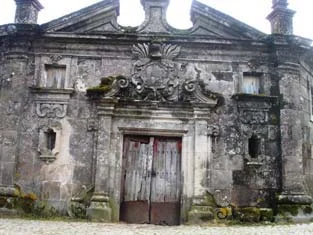
Municipal archive photograph: Casa de Chouzas.
Portal da Casa de Chouzas · photo of the municipal inventory; the granaries do not appear in this framework.ⓘ
Open a história e os seus recursos →
Sources of this proposal

My findings

An idea, a drawing or a question to go on.
PROPOSTA 2 DE 3 · Crafts and memories

Which vessel would you choose?

Reorder or remove

Refojos · inventoried heritage

Vamos experimentar?

  1. Write three tasks: measuring, transporting and serving olive oil.
  2. Associates with each task one of the pieces of readings: measurements, bag and gallet.
  3. Choose a home object with a similar function and describe only what you can observe.

Comparison of functions; does not require visiting or manipulating the invented parts.

Discover the story

Olive oil had a table vessel too

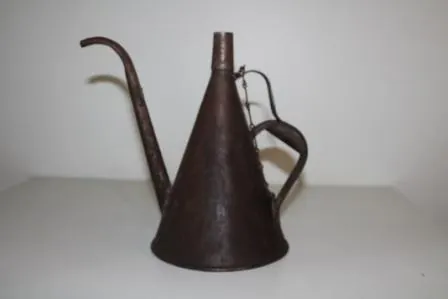
Cruet MSRM88, recorded as belonging to the Igreja de São Miguel de Refojos, is described by the Museum as a metal piece for serving olive oil at the table. The 2016 record distinguishes that function from carrying or measuring. This is an inventory description: it neither confirms the piece’s current display nor allows a particular meal to be reconstructed. One way to explore the collection is to follow the same product through different tasks: measuring, carrying and serving. The cruet belongs to the serving stage; the measures and olive-oil case let you continue the comparison.

Oil cruet MSRM 88 — inventory presented by the Terras de Basto Museum.
Oil cruet MSRM 88
ⓘ

Oil cruet MSRM 88 — inventory presented by the Terras de Basto Museum.

Source: Museu das Terras de Basto

View source

Photograph date not stated.

Individual photographer and reuse licence not stated by the source.

Request removal or correct the photo credit

Open a história e os seus recursos →
Sources of this proposal

My findings

An idea, a drawing or a question to go on.

PROPOSTA 3 DE 3 · Crafts and memories

Compare two solutions

Reorder or remove

Alvite and Passos · irrigation documented in 2008

Vamos experimentar?

  1. Split a sheet into two columns: before and after.
  2. Note the change described in the text and the date of the source.
  3. Write a question the document leaves open.

Exploitation of the document, no visit to the real estate.

Discover the story

The water changed its path

The municipal record for Poça do Monte, surveyed on 14 April 2008, describes a change in Alvite: the shared users piped the natural-ground channel in 2001. It was about one kilometre long and used water from the Ribeiro Furado spring. The record identifies seven shared users and mentions a steep initial slope. This story helps distinguish the old open channel from piped water conveyance. The document cannot establish the network’s condition today and does not present a walking route.

Open a história e os seus recursos →
Sources of this proposal

My findings

An idea, a drawing or a question to go on.

YOUR LOCAL GUIDE

What would you like to discover?

Take a closer look.