Discover Cabeceiras de BastoFree independent guide
ViveCabeceirasYOUR GUIDE TO CABECEIRAS
ENEnglish
SearchSaved
CHOICE · EXPERIMENTARY · TAKE

A notebook.
Your findings.

Up to six proposals of Cabeceiras, in your own order, to do it at home, in company or on a break.

2 de 6 propostas escolhidas · faça-as ao seu ritmo.

PROPOSTA 1 DE 2 · Travel through time

Try observing

Gondiães and Vilar de Cunhas · memory and landscape

A house with three granaries

At Casa de Chouzas, three 19th-century granaries stand alongside the manor house highlighted by the municipality. The group connects two functions: living and storing the harvest. Rather than looking only at the main house, it is worth recognising the importance of buildings supporting agriculture. The introduction to Vilar de Cunhas places this heritage in a landscape of plateau and mountain, shaped by farming and pastoralism. House and granaries can be read in that working context, although the source does not detail each property’s production. The house’s dating is less firm: the municipality presents it as perhaps 19th-century, while assigning the granaries to the 19th century. That difference should remain visible. The photograph accompanying the reading shows the portal, not the three granaries. The heritage reference does not confirm access to the group.
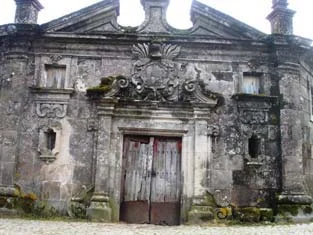
Municipal archive photograph: Casa de Chouzas.
Portal da Casa de Chouzas · photo of the municipal inventory; the granaries do not appear in this framework.ⓘ

Vamos experimentar?

  1. Look at the photo of the portal and list only the elements you can see.
  2. Compared to the three granaries mentioned in the text: what depends on the written description?
  3. Imagine a caption that distinguishes the frame of the photograph from the remaining patrimonial set.

An activity to try at your own pace, without collecting specimens.

Open a história e os seus recursos →
Sources of this proposal

My findings

An idea, a drawing or a question to go on.
PROPOSTA 2 DE 2 · Crafts and memories

Before, during and after the way

Cavez · pilgrimage account published in 1886

To the pilgrimage, clogs in hand

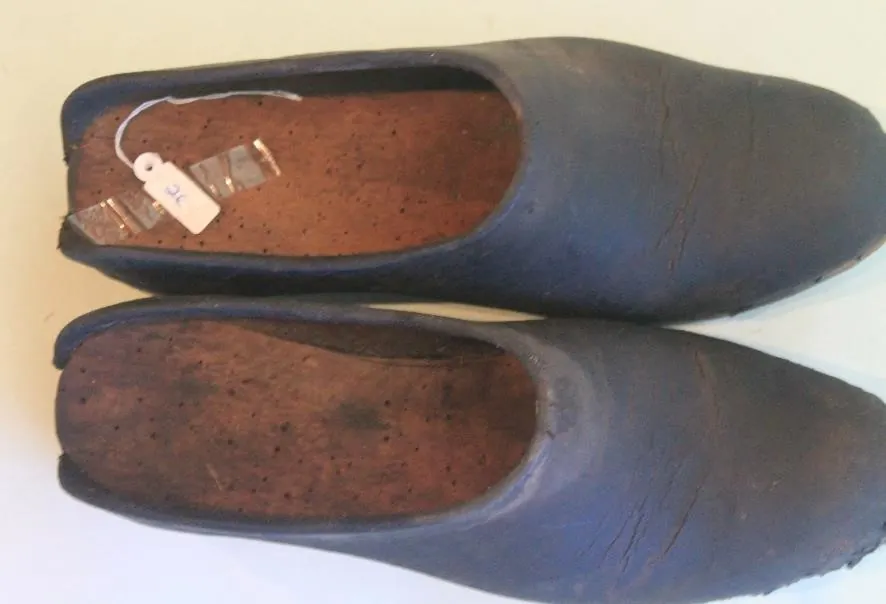
Teresa Soeiro revisits a description by José Augusto Vieira, published in 1886: among pilgrims to São Bartolomeu de Cavez, some women carried their footwear in their hands. The episode adds a human detail to the journey and recalls habits of thrift and comfort. It is historical testimony, not a description of today’s pilgrimage. In the study’s introduction, Teresa Soeiro connects wooden footwear with rural paths and farming in the north-west. She mentions sole reinforcements made of metal pieces and, more recently, reused tyre rubber. These are solutions described for resisting wear, without identifying the reinforcement used by the pilgrims in the 1886 episode. The pilgrimage scene reminds us that owning an object does not mean using it throughout a journey. Keeping it for particular moments was also part of its use. To follow the story before the walk, open the reading about alder and clog makers’ tools: footwear begins with choosing and transforming materials.

Pair of clogs T26
Pair of clogs T26
ⓘ

Pair of clogs T26

Source: Museu das Terras de Basto

View source

Photograph date not stated.

Individual photographer and reuse licence not stated by the source.

Request removal or correct the photo credit

Vamos experimentar?

  1. Draws three boxes: manufacture, transport and wear.
  2. It links the history of the pilgrimage to the box that describes the observed gesture.
  3. Follow the tool reading and add a material or operation to the manufacturing box.

Activity from sources and readings; does not require displacement or manipulation of historical pieces.

Open a história e os seus recursos →
Sources of this proposal

My findings

An idea, a drawing or a question to go on.

YOUR LOCAL GUIDE

What would you like to discover?

Take a closer look.