A tail longer than the body
ⓘ
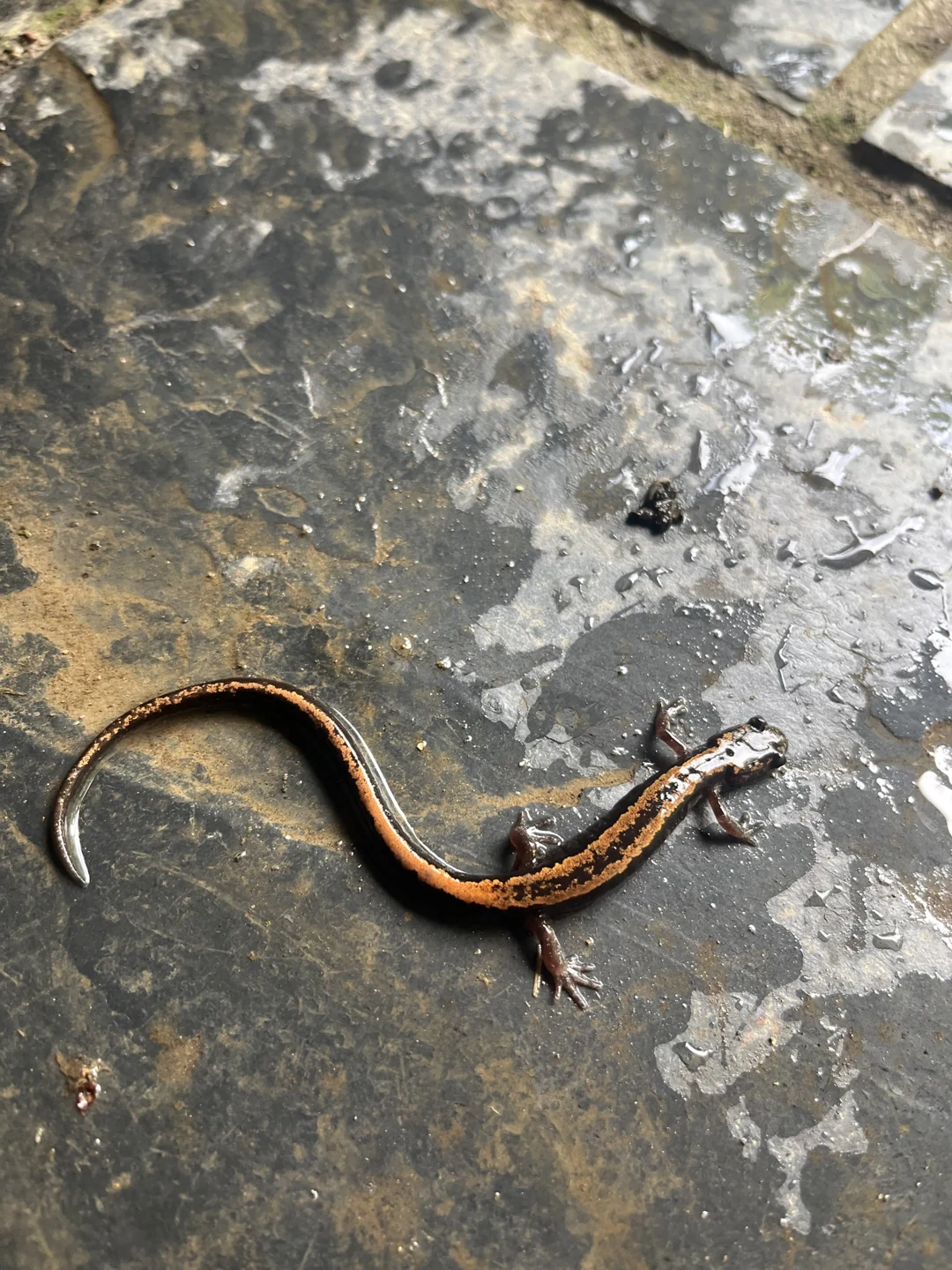
Golden-striped salamander with its tail curved over a rock.
Photography: Daniel Castanhal García · CC BY 4.0
Date given at source: .
The gold-striped salamander’s life is closely tied to moisture.
Text size
Your choice is saved only in this browser.
The gold-striped salamander, Chioglossa lusitanica, is mentioned by Visit Cabeceiras for Serra da Cabreira. It has a slender body, a tail longer than its body and two golden or orange stripes along its dark back.
According to LPN, vegetation influences how it uses space: in farmland and forests of exotic species it tends to stay closer to streams, while in native woodland it may move farther from water. The bank is therefore part of this amphibian’s story. This is species biology, not a sighting point.
It is endemic to the Iberian Peninsula and is nocturnal. Its front feet have four toes and its hind feet five: details that help us learn about the species without handling it.
Parque Biológico de Gaia describes a terrestrial life beside watercourses, abundant vegetation and high humidity, with a diet of small invertebrates. Being associated with streams does not mean spending its whole life swimming. When reading about eggs and larvae, compare the life stage with the habitat used: the relationship with water changes during development.
Explore further: words and activities
Explore this story
One bookmark per reading journey, saved in this browser.
Source and context
Visit Cabeceiras — natural heritage of Serra da Cabreira
Accessed:
Gaia Biological Park — Chioglossa lusitanica
Accessed:
Link to Nature Protection — Salamander-lusitan
Accessed:
Editorial summary; the date of consultation is not the date of the facts.