Carnival went into the cooking pot too
ⓘ
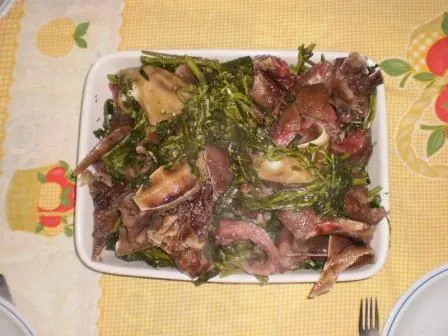
Pork ear with turnip greens: photograph accompanying the recipe recorded by the Museum in 2011.
Source: Museu das Terras de Basto
Photograph date not stated.
Individual photographer and reuse licence not stated by the source.
ⓘ
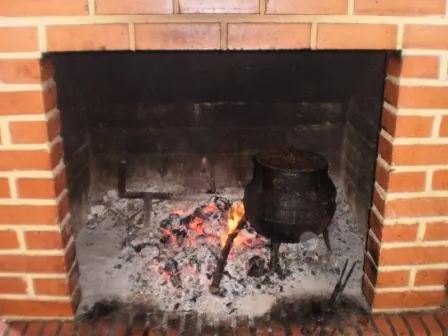
Hearth in the Museum’s March 2011 account of pork ear with turnip greens.
Source: Museu das Terras de Basto
Photograph date not stated.
Individual photographer and reuse licence not stated by the source.
A recipe learned from a grandmother in Cavez.
Text size
Your choice is saved only in this browser.
Pig’s ear, leafy greens and potatoes made up the Carnival meal Maria da Conceição remembered in February 2011. It is a documented family memory, not a menu available all year round. The potatoes and greens cooked in the meat’s cooking water; the pig’s ear went back into the pot at the end, before serving with olive oil.
The account traces the recipe’s passage between generations: Maria da Conceição was born in Cavez and lived in Recovos, Pedraça; she had learned this dish from her grandmother. In 2011, a gas cooker and stainless-steel pans were already part of her kitchen, while the hearth remained in use on special occasions. The account shows a tradition living alongside changes in cooking equipment.
Cooking water connects meat and accompaniments: in the account, greens and potatoes share the preparation process. Compare this sequence with greens and beans. Rather than seeking one fixed recipe, notice how using the broth links different meals and memories of local cooking.
Explore further: words and activities
Explore this story
Carnival and the flavors of the family
Open an option and choose the story.
Another dish with cabbage and meat
The same informant describes another combination of beef, cabbage and beans.
Cauliflowers with beans →Who taught you how to cook?
The collections identify the grandmother of Cavez and the mother-in-law of Pedraça, linking each dish to whom he taught it.
A recipe also has those who teach it →The same kitchen, another time
The fireplace remained in the oven, even after the gas stove entered the kitchen.
At Christmas, he turned to the fireplace →
One bookmark per reading journey, saved in this browser.
Source and context
Accessed: . Editorial summary; the date of consultation is not the date of the facts.