The forest has a history too
ⓘ
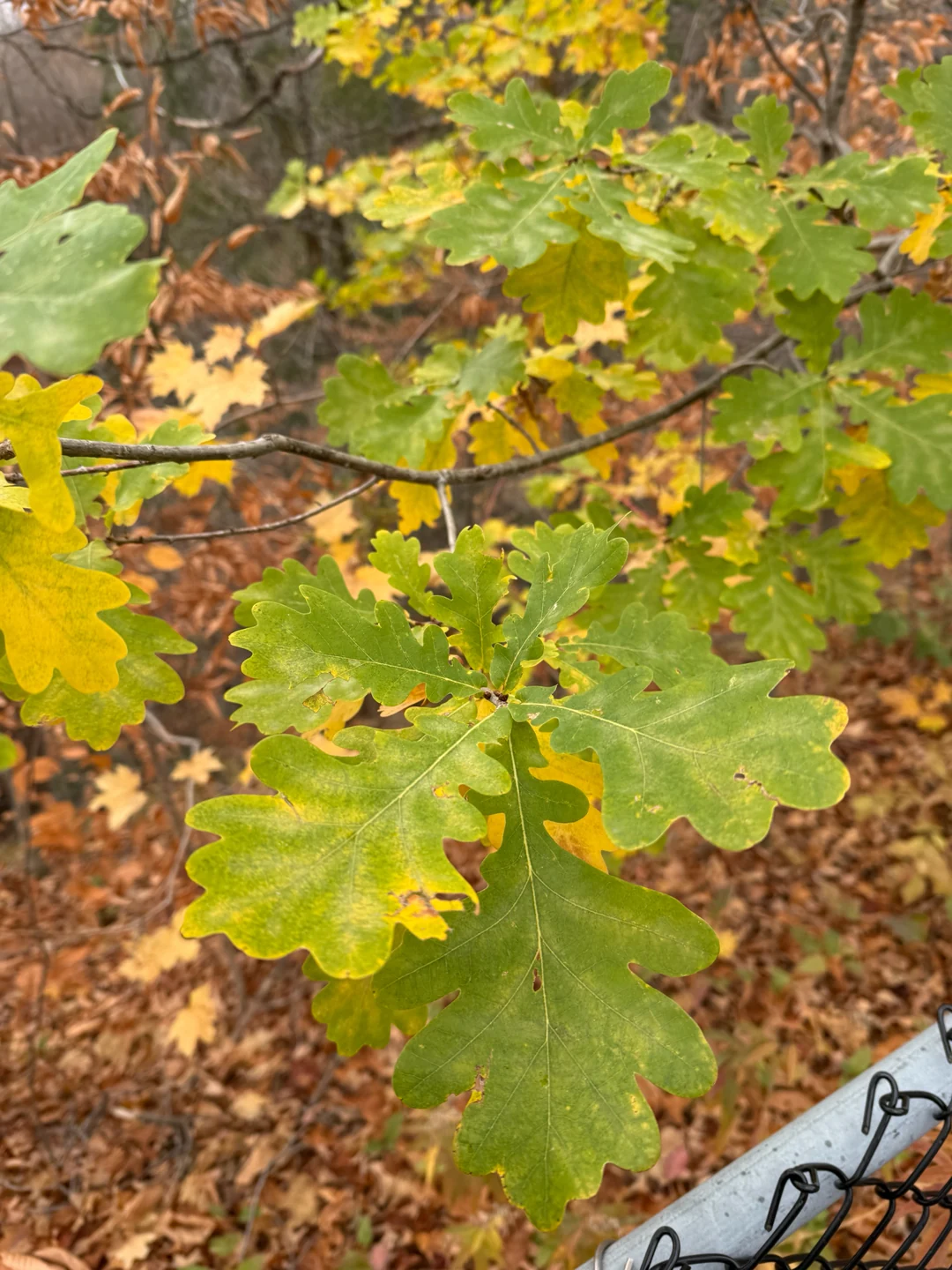
Pedunculate oak leaves, Quercus robur.
Photography: Patrice Dupont · CC BY 4.0
Date given at source: .
Names that belong to the memory of the mountains.
Text size
Your choice is saved only in this browser.
Oaks and chestnuts form part of the mountain vegetation described by the municipality. The same source describes the partial replacement of that vegetation by maritime pine. A wooded hillside therefore also records planting choices and changes in land use. Looking only at the greenery is not enough: notice the species, the patches and the spaces between trees. This municipal description is not a current survey of every wood.
The same tree species can create different working landscapes. The publication Florestas do Alto Minho distinguishes chestnut orchards, managed for fruit, from chestnut coppices, managed for poles. These are uses of the chestnut tree, not two tree species. This regional comparison helps us ask questions about the landscape of Cabeceiras; it does not identify the purpose of any particular local plot.
There is also a forest beneath the canopy. The understorey consists of plants growing under the trees; dead wood can support wood-feeding insects and fungi too. A forest landscape is therefore more than a count of living trunks. Look for different layers — canopy, low vegetation and fallen wood — without assuming that species mentioned for another region occur in that spot.
Explore further: words and activities
Explore this story
Read a tree per part
Open an option and choose the story.
The drawing of a sheet
Wolves, ribs and petiole are different clues in the description of an oak leaf.
A leaf drawn in waves →Inside a chestnut burr
It follows the relationship between the coating of the fruit and the chestnut we know at the table.
What is hidden in the hedgehog? →The scales of a pine cone
The scales of a pine cone help to find out how to lodge and release seeds.
A pine cone has small seed houses →A fruit with a wing
A winged structure changes the way we look at the fruit; there is local photography to compare.
A fruit with wing →Seeds and water
The alder connects seed dispersion to water and offers another flowering calendar.
Seeds that travel through water →
One bookmark per reading journey, saved in this browser.
Source and context
Municipality — landscape and vegetation
High CIM Minho — High Forests Minho, sours and candlesticks (habitat 9260)
Accessed: . Editorial summary; the date of consultation is not the date of the facts.