A star on the pillory
ⓘ
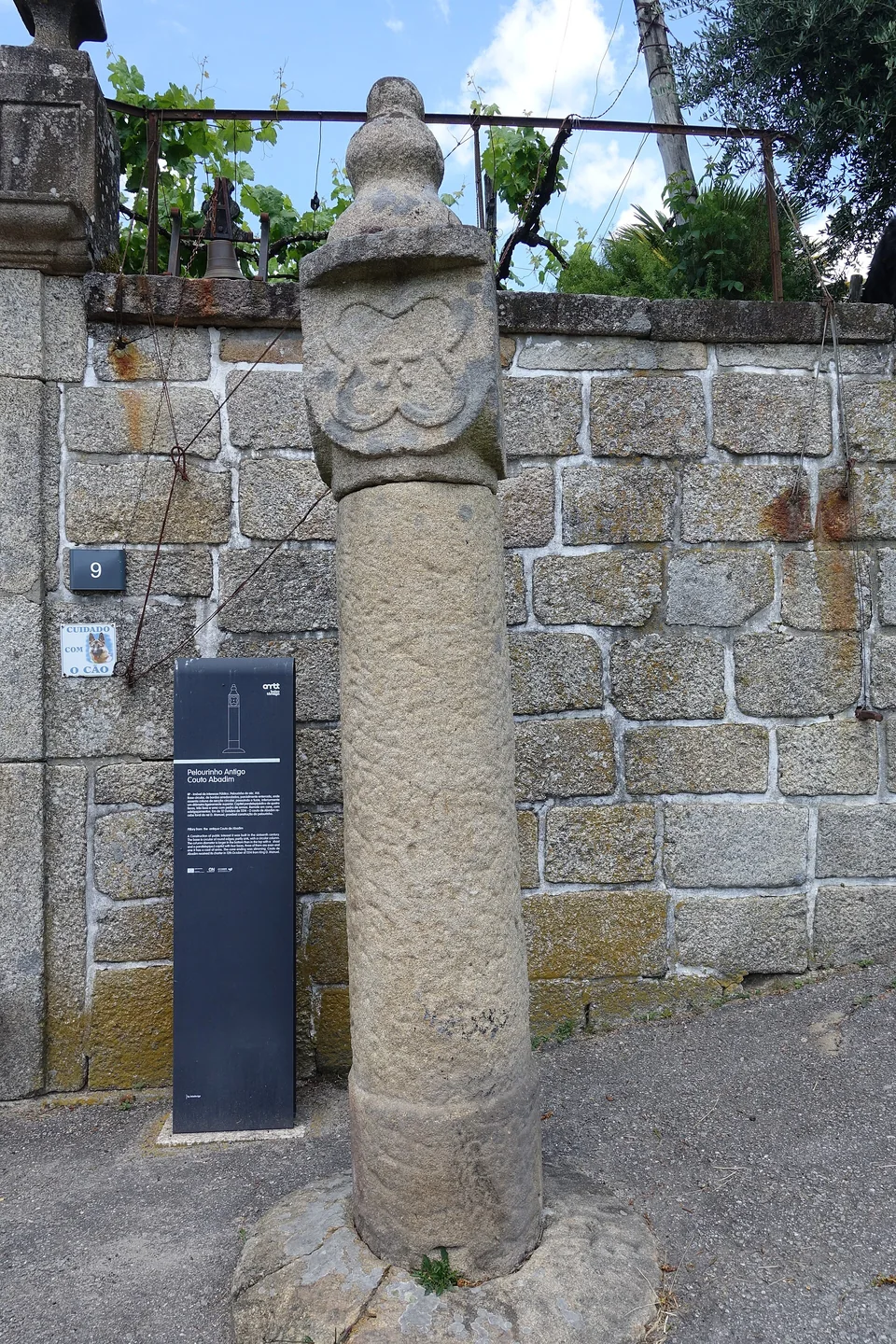
Abadim pillory, with a building and wall in the background.
Photography: Joseolgon · CC BY-SA 4.0

Date given at source: .
ⓘ
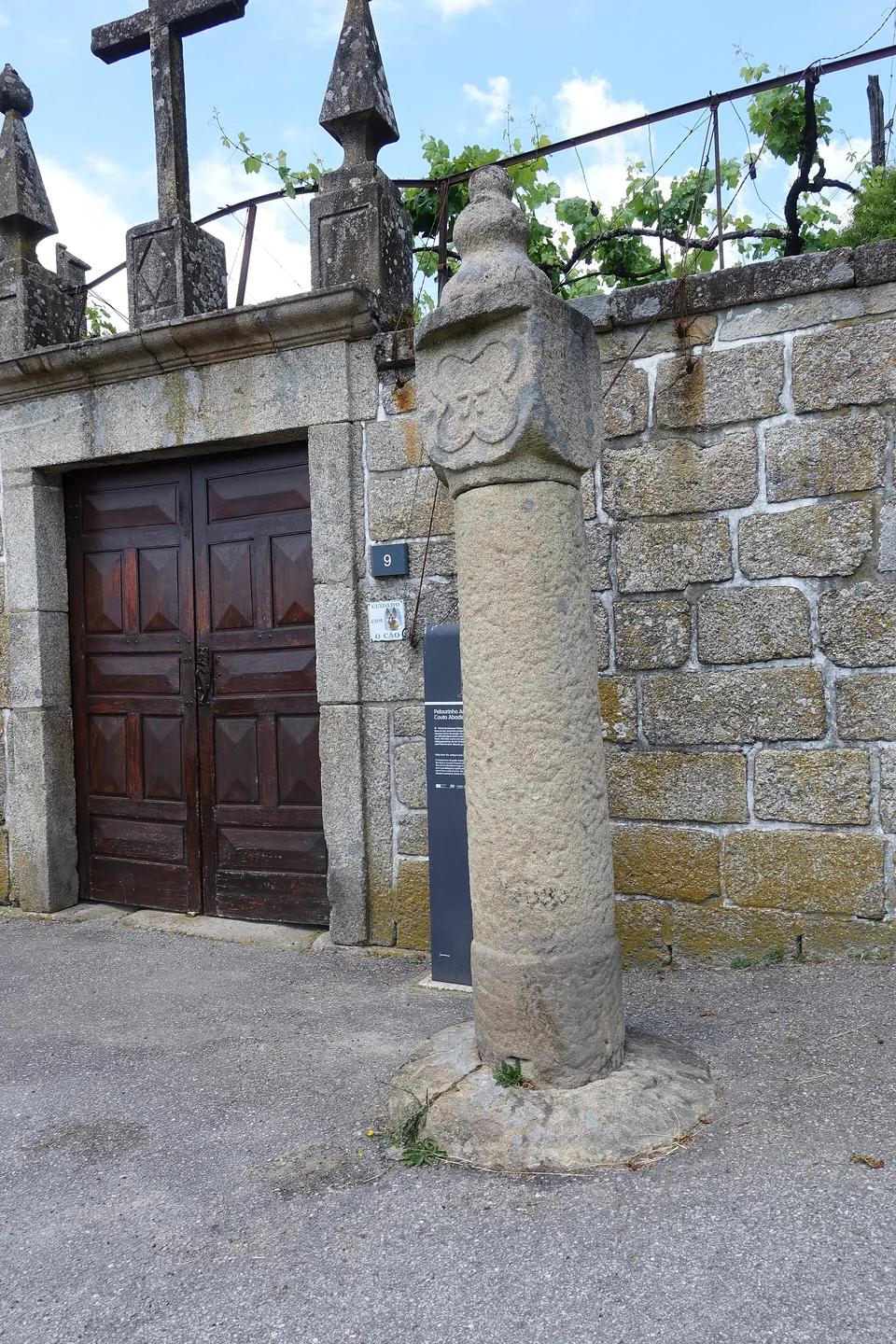
Detail of the column and finial of Abadim pillory.
Photography: Joseolgon · CC BY-SA 4.0

Date given at source: .
A small monument holds a history of autonomy.
Text size
Your choice is saved only in this browser.
Abadim’s pillory looks simple at first: a smooth granite column, a cubic capital and a pear-shaped finial. Yet one face bears a five-pointed star within a four-lobed frame. The Museum connects the monument with the administrative and judicial autonomy of the old couto, abolished in 1836. It places construction near the charter of 1514, but the Cultural Heritage record warns that dating is difficult and the piece may be much later. The star invites a second look at a monument easily overlooked.
The official record describes four faces on the capital: three undecorated and one bearing the star. This explains why a photograph from another side may not show its best-known motif. The record places the monument beside the portal of Casa da Torre do Tronco and documents its designation as a Property of Public Interest in 1933. The protection date is not the construction date.
The charter, the stone’s age and the heritage designation answer distinct questions. Instead of automatically assigning “1514” to the entire monument, compare its described form, proposed dates and the documents that changed its status.
Explore further: words and activities
Explore this story
One bookmark per reading journey, saved in this browser.
Source and context
Basto Land Museum / António P. Dinis — Pelourinho de Abadim, 26/01/2018
Accessed:
Cultural heritage — Pelourinho de Abadim, record 341971, historical-artistic note
Accessed:
Editorial summary; the date of consultation is not the date of the facts.