Discover Cabeceiras de BastoFree independent guide
ViveCabeceirasYOUR GUIDE TO CABECEIRAS
ENEnglish
SearchSaved
7 STORIES · CONTINUOUS READING

Santa Senhorinha: places, books and devotion

Seven stories bring together the valley, the houses, the images of the church, the copied accounts, the food and the offerings. Comparing documents and interpretations to discover how the memory of St.

All stories in the order of the route. You can print this page by the browser; sources and credits follow the reading.

Things to try3 activities · 2 interactive explorations · 1 question
Santa Senhorinha · landscape described in 1758

A valley full of names

In 1758, the parish was described through its settlements too.

The parish account places Santa Senhorinha in a valley between Gatiras and Ladário. It lists settlements including Rendufe, Soutelo, Outeiro Seco, Olela, Devesa and Vila Garcia, among many others. The church is described as standing outside the settlement, in the middle of a field. This portrait evokes a community spread across several clusters, while retaining the names and perspective of the 1758 document rather than serving as a current map.

The author also lists settlements visible from the area, distinguishing the position in the valley from the view from Ladário. Visibility was part of how the territory was presented. A place could be described through its surroundings and what could be seen from higher ground, as well as through boundaries and names.

Source and context

Municipality — Parish Memories of Santa Senhorinha (1758), replies 4 and 6; transcription of José Viriato Chapel (2003)

Accessed: . Editorial summary; the date of consultation is not the date of the facts.

Back to index ↑
Santa Senhorinha · church and manor houses

A “Sé” and houses with memories

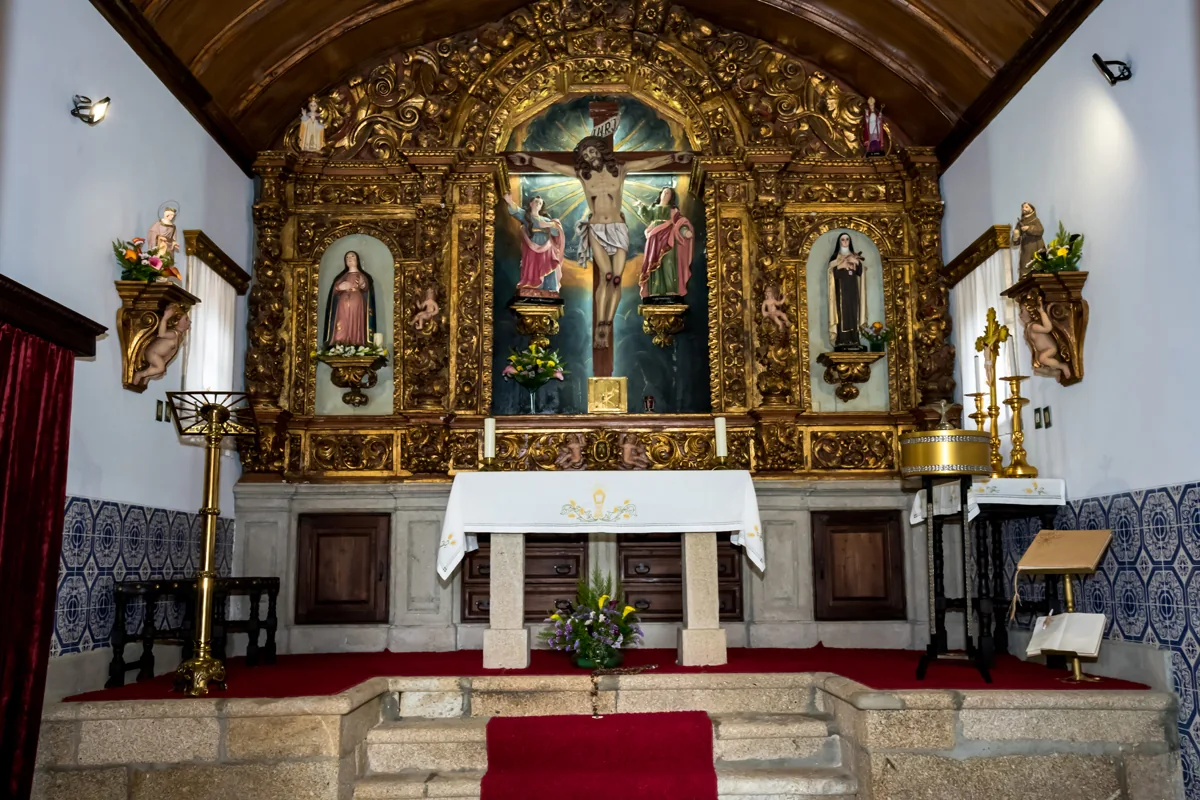
Interior of Senhora do Ó / Senhor do Calvário chapel in Basto.
ⓘ

Interior of Senhora do Ó / Senhor do Calvário chapel in Basto.

Source: Visit Cabeceiras — Município de Cabeceiras de Basto

View source

Photograph date not stated.

Individual photographer and reuse licence not stated by the source.

Request removal or correct the photo credit

Names also express the importance of a place.

The municipal presentation records the popular name Sé de Basto for the church of Santa Senhorinha, associating it with the idea of antiquity. Among the manor houses, it highlights buildings from the 17th and 18th centuries, some with coats of arms and chapels. Paço, Castelo, Mozes and Vila Garcia were already mentioned in 1726. This reference helps us read the parish’s heritage without assuming the houses can be visited or still retain every old feature.

The municipal portrait goes beyond the four houses mentioned in 1726. It includes Carcavelos, Caínhos, Casa do Forno, Eirões and Olela, extending the view across several settlements. In religious architecture it mentions the Calvário chapel, also called Senhora do Ó, in Olela, and the chapel of Santo António. These references reveal the variety of the heritage without assigning all the buildings the same date.

Sé de Basto belongs to the popular usage described by the municipality. Here it offers a clue to the importance attached to the church; it has not been turned into a claim of cathedral status. Comparing the name with the account of painted panels allows us to see the building through words from different periods and with different purposes.

See Fact sheet: Igreja de Santa Senhorinha See Fact sheet: Casa de Carcavelos See Fact sheet: Casa e Quinta do Forno See Fact sheet: Capela do Calvário / Senhora do Ó
Source and context

Municipality — Basto (Santa Senhorinha): designation of church and manor houses

Accessed: . Editorial summary; the date of consultation is not the date of the facts.

Back to index ↑
Santa Senhorinha · 1758 account

A church told through images

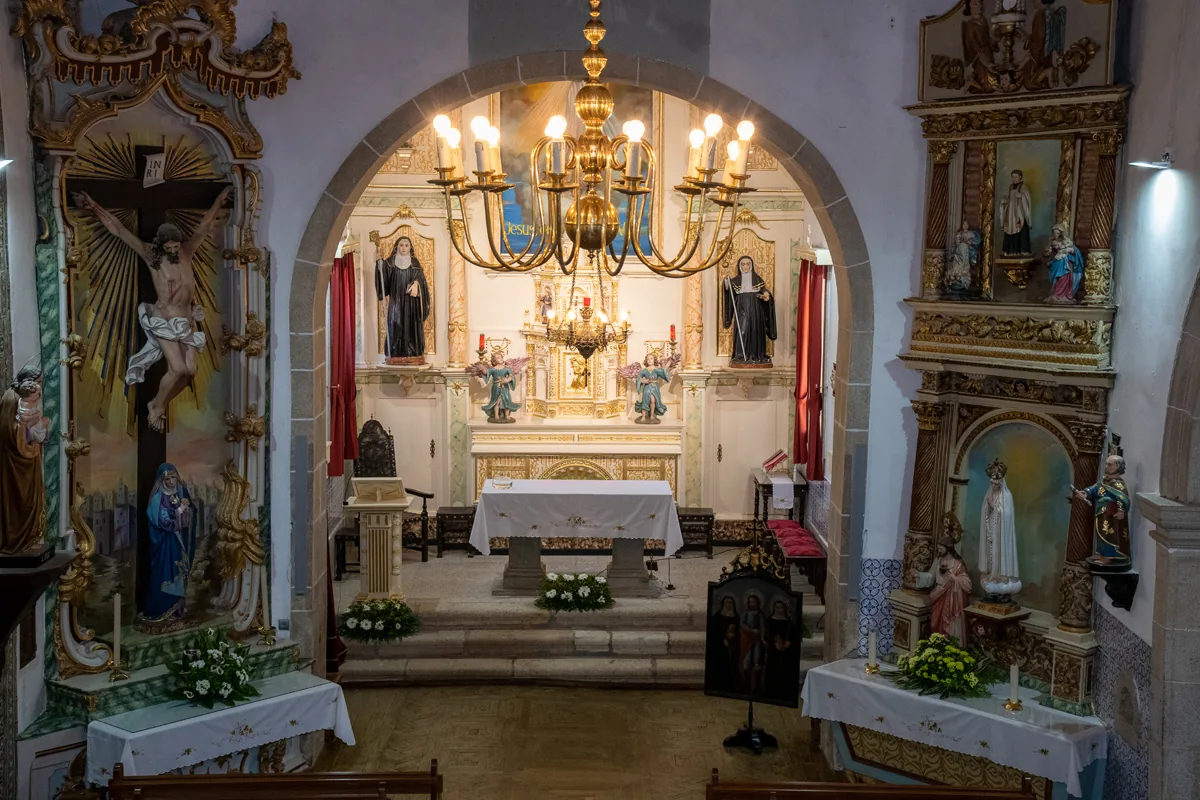
Interior of Santa Senhorinha church.
ⓘ

Interior of Santa Senhorinha church.

Source: Visit Cabeceiras — Município de Cabeceiras de Basto

View source

Photograph date not stated.

Individual photographer and reuse licence not stated by the source.

Request removal or correct the photo credit

Before screens, people looked at painted panels.

In the 1758 account, Santa Senhorinha’s church had two naves with different image programmes. One presented panels on the Creation of the World; the nave of the Franciscan Third Order showed saints of that order.

The abbot also described a vaulted chapel closed by iron grilles. Painting, spaces and architectural elements formed a written portrait of the interior. The source allows that description to be studied without guaranteeing that the pieces or arrangement survive today.

The description continues with tombs, presented by the abbot as decorated with painting and gold lettering, and a private chapel dedicated to Nossa Senhora do Pilar. The interior emerges as a group of spaces, images and inscriptions, each with a role in the account.

This allows a layered reading: first the arrangement of the naves, then the painted themes and finally the elements marking memory and devotion. There is no need to imagine a single undifferentiated hall; the document itself distinguishes several settings.

See Fact sheet: Igreja de Santa Senhorinha
Source and context

Municipality — Memória de Santa Senhorinha, 23/05/1758; transcript of José Viriato Chapel (2003)

Accessed: . Editorial summary; the date of consultation is not the date of the facts.

Back to index ↑
Santa Senhorinha · transmission of religious accounts

A story that reached us in copies

Texts have their own journey through time.

Odília Alves Gameiro studies three texts on the life and miracles of Saint Senhorinha, preserved in 16th-century copies: two in Latin and one in Portuguese. Their similarities suggest a medieval original, according to the researcher. Reading these versions allows the construction of memory and devotion to be studied. The date of a copy is not necessarily the date of the story it tells.

The two Latin accounts studied come from Coimbra: one from the Colégio da Graça and the other from Santa Cruz. This provenance shows that the memory of a saint connected with Basto travelled beyond the place of worship. Each copy is also an object with a history of preservation and transmission.

Three periods must be distinguished: the life being narrated, the composition of the account and the surviving copy. The research places Senhorinha in the second half of the 10th century, but does not turn the 16th-century texts into accounts written by people who knew her. Similarities and differences between versions are themselves part of the historian’s work.

The study also reads the accounts in the context of a rural community: harvests, food and journeys appear among the concerns represented. Beyond recounting wonders, hagiography offers insight into that imagination and the values the text seeks to convey.

Three ways to get to know Saint Lady

Open an option and choose the story.

  1. A narrative of devotionThe story of frogs who have shut up →
  2. The interior described in 1758A church told in images →
  3. The church and houses of the parishA “Sé” and houses with memory →
Religious reports, a description of 1758 and built heritage are sources of different natures.
Source and context

Odília Alves Gameiro — The nobiliarchic appropriation of a rural cult: the hagiography of Santa Senhorinha of Basto, Archipelago · History, 2001, pp. 561–562 and 571–572

Accessed: . Editorial summary; the date of consultation is not the date of the facts.

Back to index ↑
Religious tradition · Santa Senhorinha

The story of the frogs that fell silent

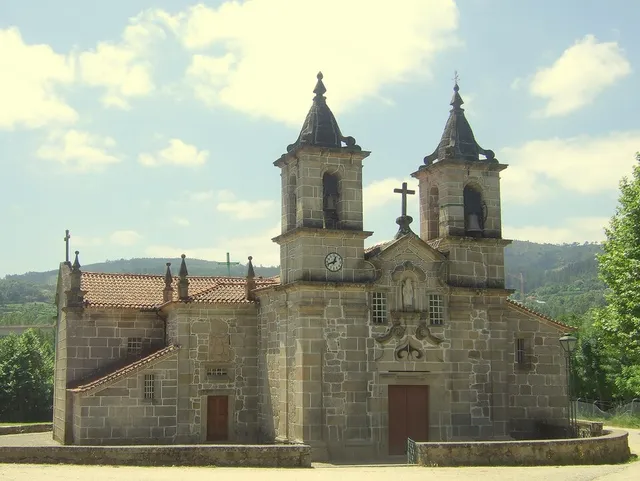
Façade of the Church of Santa Senhorinha de Basto, with its two towers
Igreja de Santa Senhorinha · place of worship, not representation of the episode© Bocacheteⓘ

A small scene passed through centuries of devotion.

In the religious narrative studied by Odília Alves Gameiro, croaking frogs disturbed the nuns as they prepared for a religious office. Senhorinha is said to have silenced the noise. The municipality includes this episode among miracles attributed to the saint. It is a story from devotional tradition, told to explore the imagery surrounding her cult, without presenting it as a demonstrated event.

Getting to know the parish
Source and context

Odília Alves Gameiro — The nobiliary appropriation of a rural cult, pp. 563–564

Municipality — Basto (Santa Senhorinha)

Accessed: . Editorial summary; the date of consultation is not the date of the facts.

Back to index ↑
Santa Senhorinha · a historical reading of hagiography

Bread tells a story of devotion too

In Saint Senhorinha’s accounts, food reveals rural concerns.

Odília Alves Gameiro identifies wheat fields and vineyards in the narratives, fears of losing harvests in a storm, and episodes of insufficient food for the community. She relates the reference to white bread to the nuns’ social position.

Reading these passages reveals themes and values in religious texts: sustenance, dependence on natural cycles and social differences. It does not amount to proving the miracles described or reconstructing a menu. To compare with another kind of source, follow the crops described by the abbot in 1758.

Source and context

Odília Alves Gameiro — The nobiliary appropriation of a rural cult, 2001, pp. 562–563

Accessed: . Editorial summary; the date of consultation is not the date of the facts.

Back to index ↑
Santa Senhorinha · objects and devotional memory

Devotion in a candle

Small objects help us understand people from other times.

In Odília Alves Gameiro’s study, offerings mentioned in accounts of Santa Senhorinha include wax, candles, large ceremonial candles and oil lamps. The author interprets their low cost as a sign of devotion accessible to different social groups. Bell ringing and oral transmission also appear in the spread of the narrated miracles. These are elements of the history of devotion, not proof of the supernatural events described.

The study distinguishes an offering accompanying a request from one giving thanks for a received favour. The same object could therefore take part in different moments of devotion. Its interpretation depends on the narrated context, not only on the material from which it was made.

Objects, words and memory

Open an option and choose the story.

  1. Food in the narrativesThe bread also tells a story of devotion →
  2. The light in the home spaceThe light fit in a small piece →
  3. The texts that conveyed the storiesA story that arrived in copies →
Choose another way to enter the history of devotion and everyday life.
Source and context

Odília Alves Gameiro — The nobiliarchic appropriation of a rural cult: the hagiography of Santa Senhorinha of Basto, Archipelago · History, 2001, pp. 561–562 and 571–572

Accessed: . Editorial summary; the date of consultation is not the date of the facts.

Back to index ↑
YOUR LOCAL GUIDE

What would you like to discover?

Take a closer look.