Discover Cabeceiras de BastoFree independent guide
ViveCabeceirasYOUR GUIDE TO CABECEIRAS
ENEnglish
SearchSaved
4 STORIES · CONTINUOUS READING

Pedraça, before and after the manor houses

From hilltop to fields, from burial mounds to houses: choose a story.

All stories in the order of the route. You can print this page by the browser; sources and credits follow the reading.

Things to try1 atividade · 1 exploração interativa
Pedraça

An 1880 notebook on a hilltop
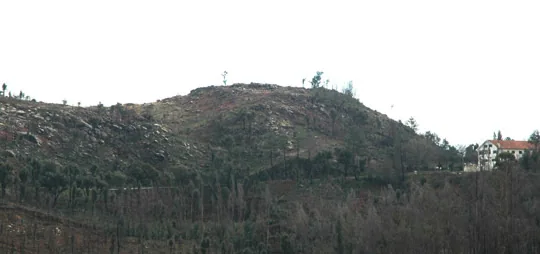
Alto dos Moiros in Parada da Ribeira.
ⓘ

Alto dos Moiros in Parada da Ribeira.

Source: Carta Arqueológica de Cabeceiras de Basto

View source

Photograph date not stated.

Autoria da fotografia e licença de reutilização não identificadas na fonte.
Request removal or correct the photo credit

Alto dos Moiros in Parada da Ribeira.
ⓘ

Alto dos Moiros in Parada da Ribeira.

Source: Carta Arqueológica de Cabeceiras de Basto

View source

Photograph date not stated.

Autoria da fotografia e licença de reutilização não identificadas na fonte.

Request removal or correct the photo credit

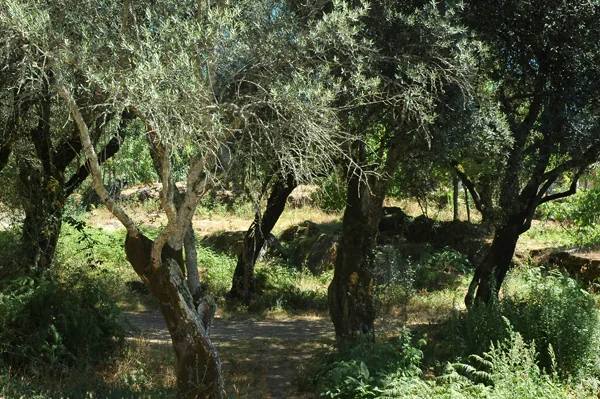
Martins Sarmento left clues about Alto dos Moiros.

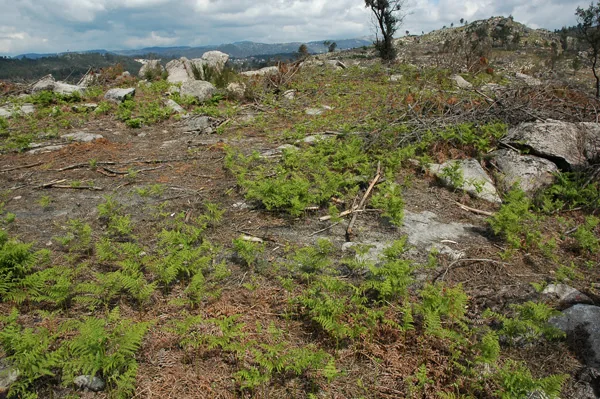
On 31 May 1880, Martins Sarmento visited Alto dos Moiros at Parada da Ribeira, Pedraça. He recorded a small enclosure protected by a thick wall. The Archaeological Inventory later described the hill again, distinguishing terraces set among granite outcrops.

The proposed Late Bronze Age occupation also draws on dark and brown fragments of coarse pottery. The place’s interest extends beyond an isolated wall: it lies in the relationship between the enclosure, the terrain and the objects found. The old notebook and later observations help tell that story, without turning every loose stone into an identified house.

Getting to know the parish
Source and context

Carta Arqueológica de Cabeceiras de Basto — 13.01

Accessed: . Editorial summary; the date of consultation is not the date of the facts.

Back to index ↑
Pedraça

Roman history can emerge in fields too

Fields at Abas das Torres in Pedraça.
ⓘ

Fields at Abas das Torres in Pedraça.

Source: Carta Arqueológica de Cabeceiras de Basto

View source

Photograph date not stated.

Autoria da fotografia e licença de reutilização não identificadas na fonte.

Request removal or correct the photo credit

Fields at Abas das Torres in Pedraça.
ⓘ

Fields at Abas das Torres in Pedraça.

Source: Carta Arqueológica de Cabeceiras de Basto

View source

Photograph date not stated.

Autoria da fotografia e licença de reutilização não identificadas na fonte.

Request removal or correct the photo credit

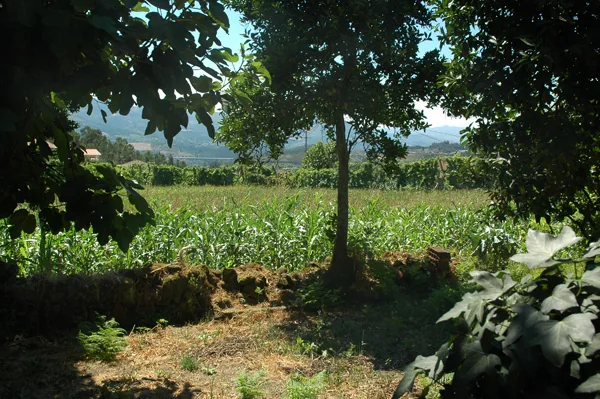
At Abas das Torres, small pieces opened a larger story.

Behind Casa da Torre in Pedraça, fields hold references to Roman and medieval remains. The Archaeological Inventory mentions fragments of flanged roofing tiles, ceramic pipes and everyday pottery found in this area and nearby.

An account by Martins Sarmento describes a grave made with tiles, pottery and a fragment of green glass. These clues led the authors to suggest Roman or Late Roman agricultural occupation. No structures were identified during the survey described in the record. It is a reminder that history does not always arrive as a monument: sometimes it begins with small fragments scattered across a field.

Getting to know the parish
Source and context

Carta Arqueológica de Cabeceiras de Basto — 13.02

Accessed: . Editorial summary; the date of consultation is not the date of the facts.

Back to index ↑
Pedraça

Seven burial mounds in an old notebook

Area of the Tarroeiras burial mounds in Pedraça.
ⓘ

Area of the Tarroeiras burial mounds in Pedraça.

Source: Carta Arqueológica de Cabeceiras de Basto

View source

Photograph date not stated.

Autoria da fotografia e licença de reutilização não identificadas na fonte.

Request removal or correct the photo credit

Area of the Tarroeiras burial mounds in Pedraça.
ⓘ

Area of the Tarroeiras burial mounds in Pedraça.

Source: Carta Arqueológica de Cabeceiras de Basto

View source

Photograph date not stated.

Autoria da fotografia e licença de reutilização não identificadas na fonte.

Request removal or correct the photo credit

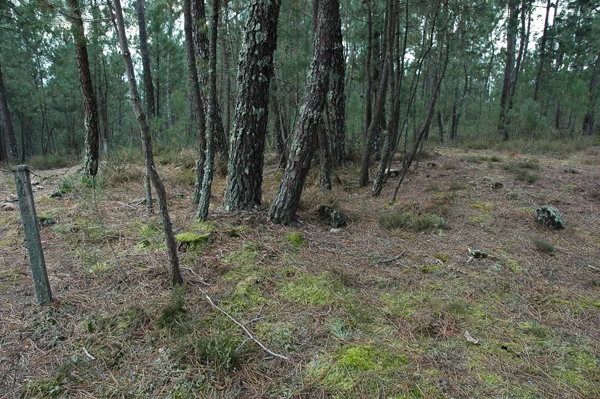
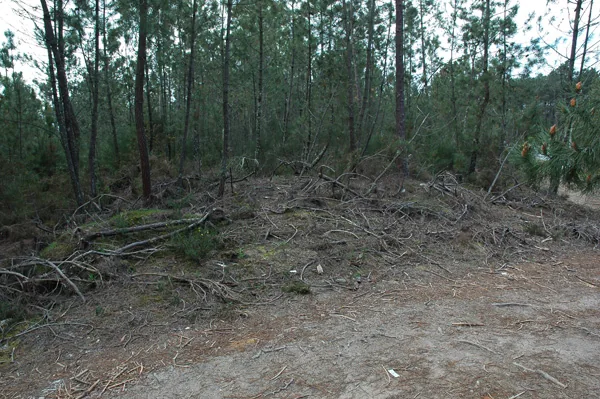
At Tarroeiras, the record of a visit helps preserve memory.

When Martins Sarmento visited Tarroeiras in Pedraça on 31 May 1880, he described seven burial mounds. They were low tombs with small chambers lined with granite slabs. Even then, they showed signs of disturbance.

During a later visit documented in the Archaeological Inventory, researchers identified only two badly damaged mounds and faint traces of a third. These are observations from different moments, not a current count for visitors. The contrast shows the value of field notebooks: drawings, measurements and descriptions can preserve information no longer visible in the landscape. Tarroeiras also tells the story of recording what is disappearing.

Getting to know the parish
Source and context

Carta Arqueológica de Cabeceiras de Basto — 13.03

Accessed: . Editorial summary; the date of consultation is not the date of the facts.

Back to index ↑
Pedraça · residential heritage

Pedraça can be told through its houses too

Beyond the church lies a landscape of homes.

Pedraça’s history can also be read through its houses. The municipal presentation highlights Casa do Paço, Casa de Parada and the houses of the Baron of Basto and Paço de Vila. It describes Parada as Brazilian in style, while drawing attention to the place name for Casa do Paço. These are different clues: one points to architecture, the other to place naming.

The houses belong to a parish the municipality describes as fertile and rich in water, connected with agriculture and flax growing. Bringing housing together with the working landscape helps us look at heritage beyond religious buildings.

The municipal description gives no construction dates for this group and does not identify who was responsible for each building. The reference to Brazilian taste is also insufficient to reconstruct an owner’s biography. The houses are starting points for learning about the parish; inclusion here does not imply public access.

Houses, persons and work in Pedraça

Open an option and choose the story.

  1. A tradition linked to the Constable

    The Municipality introduces this narrative as a tradition; the formulation is part of the information.

    A house between memory and proof →
  2. People and learning flax

    A bowl of seeds binds people, cultivation and transmission of a knowledge.

    A bowl of seeds, a knowledge that continues →
  3. Work equipment

    The inventory distinguishes the old hydraulic mill from the factory powered by electricity.

    Behind the factory, another time →
Explore other entries for the history of the parish.
Source and context

Municipality — parish presentation of Pedraça

Accessed: . Editorial summary; the date of consultation is not the date of the facts.

Back to index ↑
YOUR LOCAL GUIDE

What would you like to discover?

Take a closer look.