Discover Cabeceiras de BastoFree independent guide
ViveCabeceirasYOUR GUIDE TO CABECEIRAS
ENEnglish
SearchSaved
9 STORIES · CONTINUOUS READING

Painzela: gardens and layers of memory

Nine readings between gardens, chapels, documents and people. Opens the chronologies, distinguishes dates from buildings and documents and knows the route of Baltazar Castro. It is a reading sequence, without assuming access to private properties.

All stories in the order of the route. You can print this page by the browser; sources and credits follow the reading.

Things to try4 activities · 6 interactive explorations · 5 questions
Heritage · Painzela

One house, two centuries in view
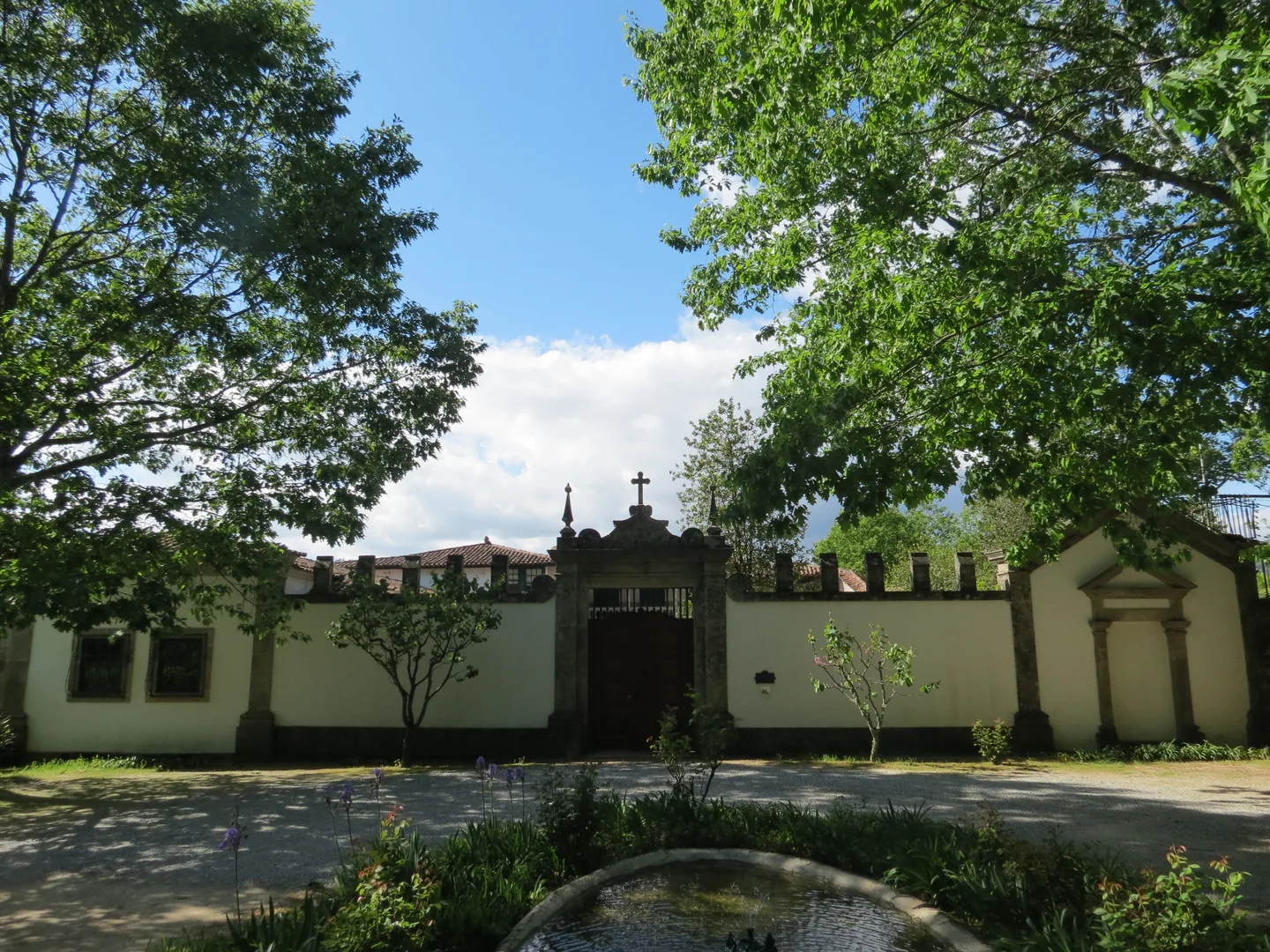
Casa de Pielas and garden.
ⓘ

Casa de Pielas and garden.

Source: Museu das Terras de Basto

View source

Photograph date not stated.

Individual photographer and reuse licence not stated by the source.

Request removal or correct the photo credit

The building and garden tell different chapters.

Casa de Pielas and its garden are not presented as the work of a single period. The municipality dates the house’s architecture to the 18th century and the garden to the 19th, suggesting English influence as a possibility.

Separating these layers helps you read the whole: a building can gain new spaces and new ways of being framed over time. This is a heritage reference, without confirmation of current visiting arrangements for the private property.

Painzela per layer

Open an option and choose the story.

  1. Living shapes in the gardenPlants that gain forms →
  2. Water and working spacesThe water draws the garden of Piellas →
  3. A 17th century chapelA chapel helps to read the house →
  4. What was left in the fileA chapel leaves a trail in the archive →
Links between heritage readings. Dates and access conditions are explained in each story.
Getting to know the parish See Fact sheet: Casa de Pielas, jardins e anexos
Source and context

Municipality — assets of Painzela

Accessed: . Editorial summary; the date of consultation is not the date of the facts.

Back to index ↑
Painzela · gardens and skills

Plants shaped by human hands

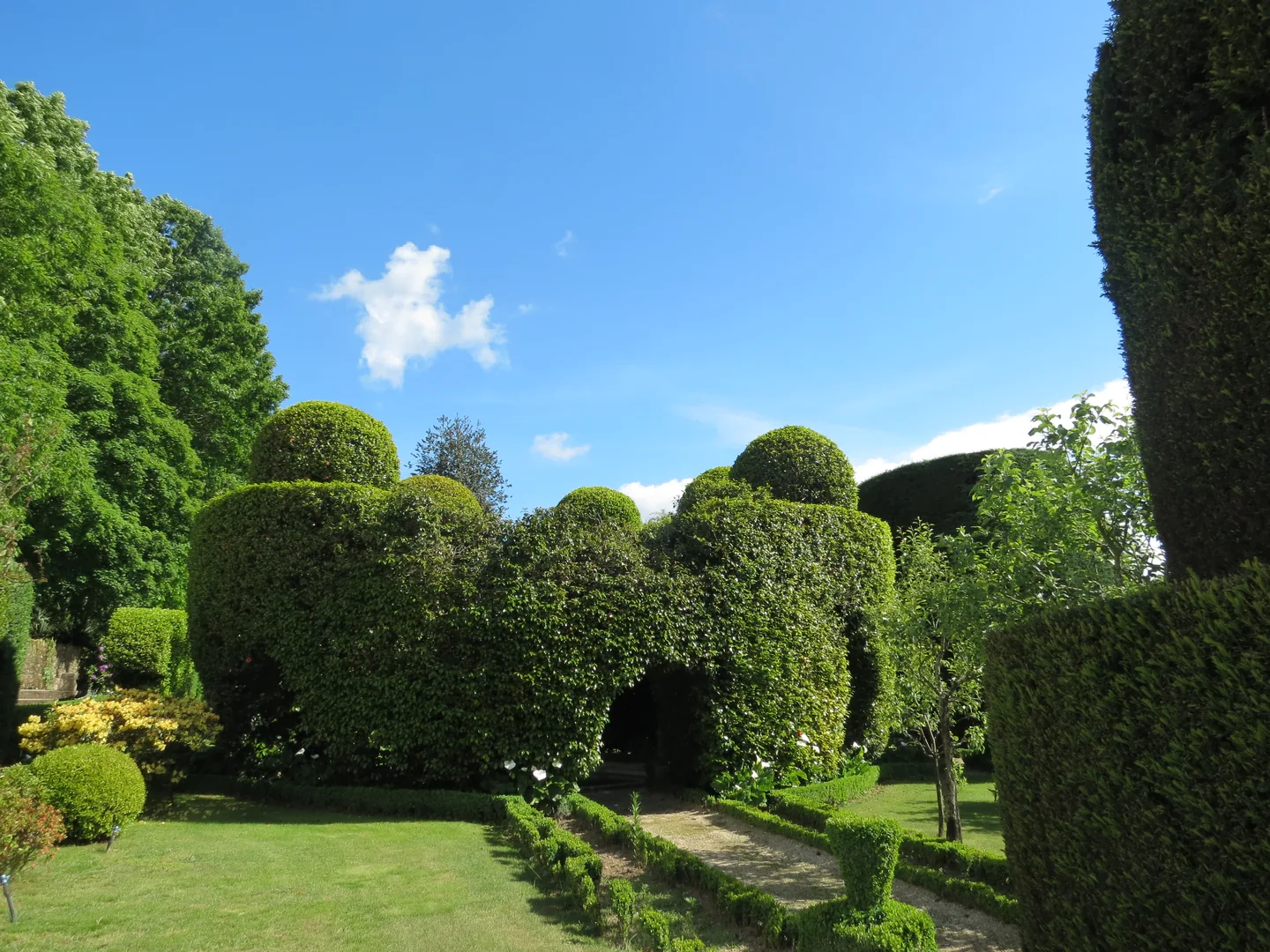
Topiary shapes in the Pielas garden.
ⓘ

Topiary shapes in the Pielas garden.

Source: Museu das Terras de Basto

View source

Photograph date not stated.

Individual photographer and reuse licence not stated by the source.

Request removal or correct the photo credit

Camellias and yews are part of the story of these gardens.

Camellias and yews trimmed into geometric or animal shapes: this is the art of topiary. The Portuguese Historic Gardens Association links this tradition to the school of Manuel Joaquim Alves Soares, continued by his son Joaquim. Casa de Piellas, in Painzela, is part of this history. It is private property; check the visiting conditions in its place profile.

The Rota do Tâmega presentation links this school of gardening to support from the sisters Emília Ermelinda and Justina Praxedes Pinto Basto. In the mid-19th century, they are said to have supported Manuel Joaquim Alves Soares’s training in Porto and England. The story of these plant shapes therefore also involves the sharing of knowledge and its transmission between generations.

Looking at topiary means looking both at a plant and at human skill. Geometric shapes organise lines and volumes; animal shapes evoke living creatures. The association identifies examples of this tradition at several estates in Basto, not just Piellas.

The garden also holds knowledge

Open an option and choose the story.

  1. Distinguishing the time of the house and the gardenOne house, two centuries in sight →
  2. Follow the tanks, the woods and the streamThe water draws the garden of Piellas →
  3. Compare a natural form: the fan sheetA tree with fan leaves →
Explore the vegetable forms, water and different times of the property.
Getting to know the parish See Fact sheet: Casa de Pielas, jardins e anexos
Source and context

Portuguese Association of Historical Gardens — Route Tâmega

Portuguese Association of Historical Gardens — Casa de Piellas, Painzela

Accessed: . Editorial summary; the date of consultation is not the date of the facts.

Back to index ↑
Landscape and garden · Painzela

Water shapes the garden at Piellas

Topiary shapes in the Pielas garden.
ⓘ

Topiary shapes in the Pielas garden.

Source: Museu das Terras de Basto

View source

Photograph date not stated.

Individual photographer and reuse licence not stated by the source.

Request removal or correct the photo credit

Among the clipped shrubs, there are other paths to follow.

At Piellas, water helps connect garden, woodland and fields. The description published by Revista Jardins places an L-shaped pool beside the wall, near a passage to the Casa do Boal woodland. Another pool, surrounded by bamboo and box, opens towards a cultivated field bordered by woodland. The water continues to the Painzela stream.

The article also describes paths shaded by vine pergolas and a farmyard associated with former maize and wine production. The estate therefore brings together places for leisure and work: its garden of clipped shrubs belongs to a wider landscape.

Try imagining the estate in layers: terraces, paths, vegetation and the water system. The description connects these elements but does not provide a complete map of the water circuit. Piellas is private property; consult the place profile for visiting conditions.

The garden within the landscape

Open an option and choose the story.

  1. The bushes that take shapePlants that gain forms →
  2. The different seasons of the fifthOne house, two centuries in sight →
  3. Another water story in PainzelaSeven consorts shared the levada →
It relates plants, history and uses of water.
See Fact sheet: Casa de Pielas, jardins e anexos
Source and context

Jardins Magazine — Gardens of Portugal: Route of the Tâmega, section Casa de Piellas

Accessed: . Editorial summary; the date of consultation is not the date of the facts.

Back to index ↑
Painzela · 17th-century heritage

A chapel helps us read a house

Archive photograph: Capela de São Gonçalo e cruzeiro de Painzela.
Chapel of São Gonçalo · photograph of the municipal inventory; the cruise does not appear in this framework.ⓘ

In Cimo de Vila, domestic and religious heritage meet.

The municipal introduction to Painzela highlights Casa de Cimo de Vila and its chapel of São Gonçalo, dated 1662. The group adds another period to the discovery of the parish, alongside Casa de Pielas and its garden. The heritage reference does not confirm access to the interior.

The municipal text places the group in a mainly farming landscape, in a strip of territory extending east to west towards the boundary with Fafe. The same introduction includes the parish church, roadside devotional shrines and the chapel of São Brás: São Gonçalo’s chapel is one part of a network of places, not the parish’s entire religious history.

The date of 1662 allows a comparison with Pielas, whose house is presented as 18th-century and garden as 19th-century. These are references to distinct periods; they do not prove that all elements visible today belong to the same building campaign.

Getting to know the parish See Fact sheet: Capela de São Gonçalo e cruzeiro de Painzela
Source and context

Municipality — assets of Painzela

Accessed: . Editorial summary; the date of consultation is not the date of the facts.

Back to index ↑
Painzela · reading a document from 1758

How was a parish counted?

In 1758, Painzela’s portrait counted households and people admitted to the sacraments.

The municipal transcription of the Parish Memories records 137 households and 439 souls admitted to the sacraments in Painzela. The wording itself distinguishes domestic units from a religious category of people. The 439 should therefore not be presented as a modern census of all inhabitants. The document also reveals the language used to describe the community.

The same passage identifies Santo André as the parish church’s dedication and connects the vicar’s presentation with the abbot of Santa Senhorinha. The short text thus brings together population, church and ecclesiastical organisation. Rather than reading it as a statistical table, we can ask what the author chose to record about the community.

Another layer lies between the old document and the screen: the municipality explains that the transcription updates spelling and punctuation from José Viriato Capela’s edition, published in 2003. This distinguishes the testimony’s date, 1758, from the date of the edition used to share it. References to chapels appear separately in the documentary note.

A document opens other questions

Open an option and choose the story.

  1. Who introduced the parish priest?Painzela was not isolated →
  2. What's being dated?A chapel leaves a trail in the archive →
  3. How is the community described in another time?A parish is also playing and singing →
Choose a link to continue reading. Each story distinguishes its time and available sources.
Getting to know the parish
Source and context

Municipality — parish account of Painzela (1758)

Accessed: . Editorial summary; the date of consultation is not the date of the facts.

Back to index ↑
Painzela · parish organisation in 1758

Painzela was not isolated

Archive photograph: Igreja de Santo André de Painzela.
Igreja de Santo André de Painzela · photograph of municipal inventoryⓘ

A short record reveals a link between parishes.

The Painzela account published in the Parish Memories identifies Santo André as the parish church’s dedication and assigns the presentation of its priest to the abbot of Santa Senhorinha de Basto. The record shows an institutional connection between two parishes.

It assigns the vicar a stipend of 100,000 réis. The figure records the stated remuneration at the time; it cannot be compared directly with present salaries. The municipal transcription updates spelling and punctuation from José Viriato Capela’s edition, published in 2003.

Getting to know the parish See Fact sheet: Igreja de Santo André de Painzela
Source and context

Municipality — parish account of Painzela (1758)

Accessed: . Editorial summary; the date of consultation is not the date of the facts.

Back to index ↑
Painzela · documentary references from 1656 and 1735

A chapel leaves a trail in the archive

Document dates tell stories too.

References accompanying the Painzela account mention an obligation connected with the chapel of Nossa Senhora da Conceição, dated 1656. Another, from 1735, concerns the establishment of the chapel of São Gonçalo and an obligation to its fabric fund.

These dates belong to documents. The municipal heritage introduction assigns 1662 to the São Gonçalo chapel at Casa de Cimo de Vila: these are different kinds of information that should not be merged into one construction date. Reading sources also involves asking what each record is actually dating.

Three dates, three questions

It opens every moment and discovers what the date represents.

  1. 1656

    Documentary reference to the chapel of Nossa Senhora da Conceição.

  2. 1662 · A date assigned to the building

    The municipal presentation dates from the chapel of São Gonçalo da Casa de Cimo de Vila.

  3. 1735 · Institution and maintenance

    The archive refers to the institution of a chapel of São Gonçalo and an obligation to its factory.

The documentary references and the asset description do not show that all records correspond to the same construction phase.
Source and context

Municipality — parish account of Painzela (1758)

Municipality — assets of Painzela

Accessed: . Editorial summary; the date of consultation is not the date of the facts.

Back to index ↑
Painzela · Baltazar Castro’s origins and career

From Painzela to leading monument conservation

Baltazar Castro put his training at the service of heritage.

Born in Painzela on 1 May 1891, Baltazar da Silva Castro studied in Porto and began his career in Public Works in 1919. The University of Porto documents his work in the northern monuments services and move to Lisbon in 1936 to take charge of the Monuments directorate. This link between Painzela and restoration history follows a professional life; it does not attribute the parish’s buildings to the architect.

His training combined engineering, architecture, construction and drawing. In 1930 he became acting head of the northern Monuments directorate. Study journeys were also part of his work: the University mentions travel to Spain in 1934 devoted to Visigothic architecture, and across Europe in 1938 focused on military architecture.

He did not work only in restoration. With Rogério de Azevedo, he designed the Garagem do Jornal O Comércio do Porto and the extension and refurbishment of the University of Porto’s Faculty of Medicine. These projects are in Porto; his connection with Painzela lies in his origins, not in their location.

A Life Between Training and Heritage

It opens every moment and discovers what the date represents.

  1. 1891 · Born in Painzela

    The biography identifies the parish as a place of birth.

  2. 1919 · Enter Public Works

    Start of public career in the Porto District Public Works Directorate.

  3. 1930 · Direct the Monuments of the North

    Interim appointment, prior to the move to Lisbon.

  4. 1936 · Moving to Lisbon

    He takes over as Director of Monuments.

Selection of landmarks documented by the University of Porto. It is not a list of interventions in Cabeceiras.
Source and context

University of Porto — Distinguished Students: Baltazar Castro, newsletter Common House No 232, 09/06/2025

Accessed: . Editorial summary; the date of consultation is not the date of the facts.

Back to index ↑
Painzela · association history in the municipal introduction

A parish meets through games and song

Águias de Painzela brings community life into local history.

The municipal introduction dates the founding of Águias de Painzela to 1996. The activities it describes include football, sueca card-game and malha throwing-game tournaments, as well as a singing group devoted to regional popular music. The portrait connects sport, social life and musical transmission. It is a memory of the association presented by the municipality, without confirming a current timetable of rehearsals or gatherings.

Source and context

Municipality of Cabeceiras de Basto — Associativism: Culture and Entertainment, presentations by the Eagles of Painzela and the Folkloric Group of St. Nicholas

Accessed: . Editorial summary; the date of consultation is not the date of the facts.

Back to index ↑
YOUR LOCAL GUIDE

What would you like to discover?

Take a closer look.