Discover Cabeceiras de BastoFree independent guide
ViveCabeceirasYOUR GUIDE TO CABECEIRAS
ENEnglish
SearchSaved
5 STORIES · CONTINUOUS READING

Between light and humidity

From the glow of insects to the shadow of forests: five readings to see how living beings relate to the environment. Sources distinguish general biology and local records.

All stories in the order of the route. You can print this page by the browser; sources and credits follow the reading.

Things to try4 activities · 4 interactive explorations · 4 questions
Portuguese fauna · general biology, without a local record

A light that carries a message

Fireflies’ glow is part of how they interact.

Fireflies’ light results from a chemical reaction and can serve communication or defence. Parque Biológico de Gaia explains that in most species in this group, larvae and adults can produce light. During reproduction, luminous signals help partners find each other.

There is a less visible life behind the glow too: in Portugal, larvae feed mainly on snails and slugs. Intense lighting can disrupt communication between these insects. This story introduces features of the group and the importance of darkness; it does not confirm firefly species, periods of abundance or observation points in Cabeceiras.

The night has different signs

Open an option and choose the story.

  1. Listen before you see

    The singing helps to detect adult males from the big-sault-green.

    A corner hidden in the green →
  2. Hear what comes back

    Elocation is another relationship with sound.

    Listen to the echo to find the way →
  3. A bird at the drop of light

    The discovery of the night environment continues.

    At nightfall, a bird looks like an insect →
General biology comparisons; local records are identified at each reading.
Source and context

Gaia Biological Park — firefly and firefly biology

Accessed: . Editorial summary; the date of consultation is not the date of the facts.

Back to index ↑
Species biology · trace recorded in Cavez

At dusk, a bird can seem like an insect

Not every bird is discovered by looking up at the sky.

The European nightjar feeds on insects and becomes active at dusk and during the night. Its continuous song can resemble a cicada’s sound. In Portugal it is a summer visitor, associated mainly with the north and the transition between woodland and open spaces. The Cavez record shows a feather attributed to this species by the iNaturalist community. It is a trace: not a photograph of the whole bird or proof of a nest at that point. Curiosity begins with a feather and continues into the soundscape.

Long wings and a long tail may be visible in silhouette, but low light hides details. The Aves de Portugal profile explains that females lack the white wing patches of males; juveniles lack them too. The absence of a mark alone does not determine age and sex.

The source describes a late arrival, with song easier to detect in May and June. This is a Portuguese pattern, not a sightings calendar for Cavez. The recorded feather cannot tell us when the bird sang, where it nested or how long it stayed in the area.

To understand journeys, researchers need another kind of record. The BTO presents tracking studies that located an important wintering area in grassland and shrub landscapes south of the equatorial forest, mainly in the Democratic Republic of the Congo. This information concerns birds tracked in those studies, not a demonstrated destination for the bird associated with the Cavez feather. A feather documents a trace in one place; tracking connects positions over time to study movements.

Return to observation proposal ↑
Source and context

Poultry of Portugal — Caprimulgus europaeus

British Trust for Ornithology — BirdFacts: Nightjar, Caprimulgus europaeus; follow-up and winter studies

Accessed: . Editorial summary; the date of consultation is not the date of the facts.

Back to index ↑
Local observation · Cavez · general botany

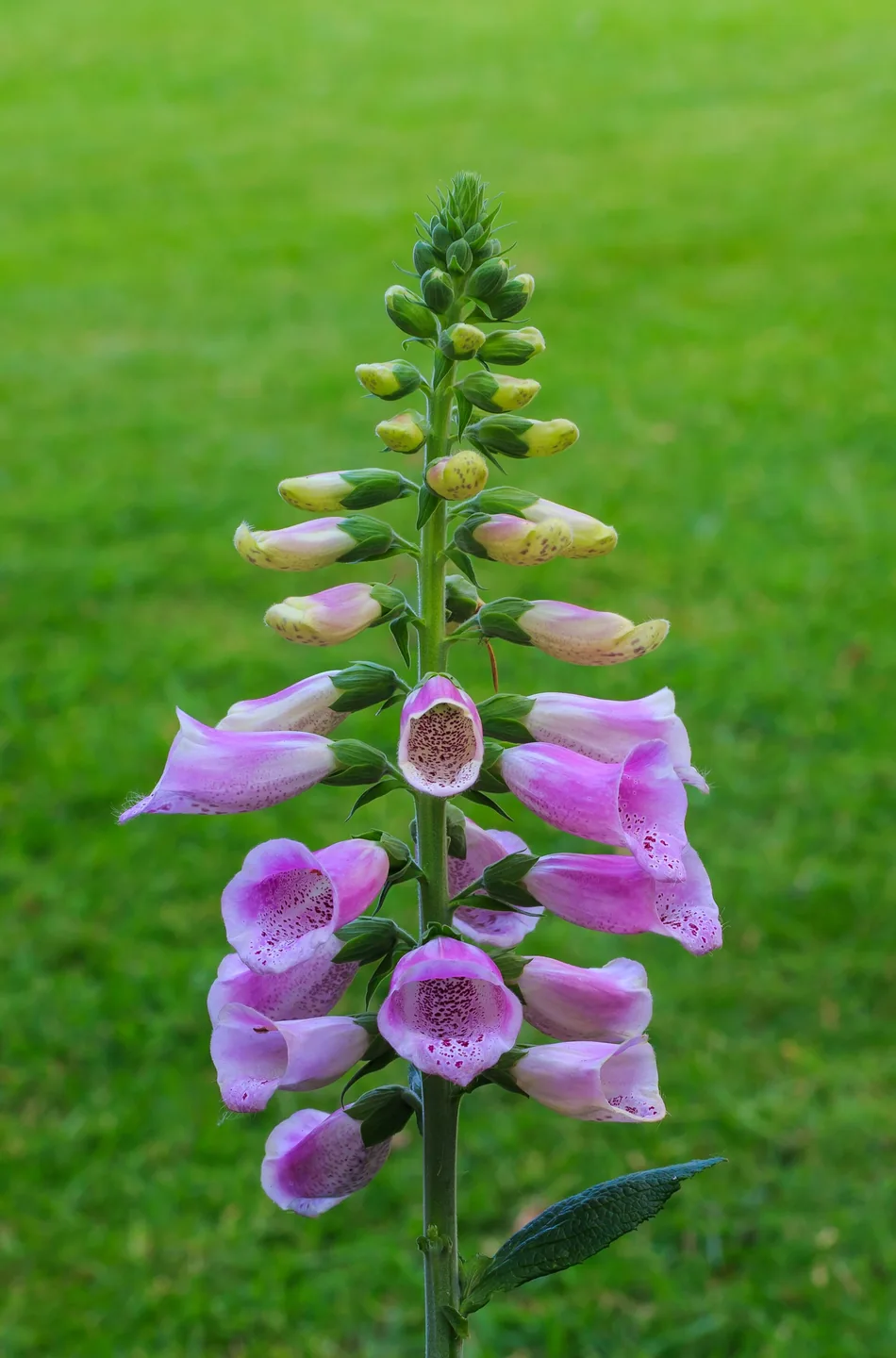
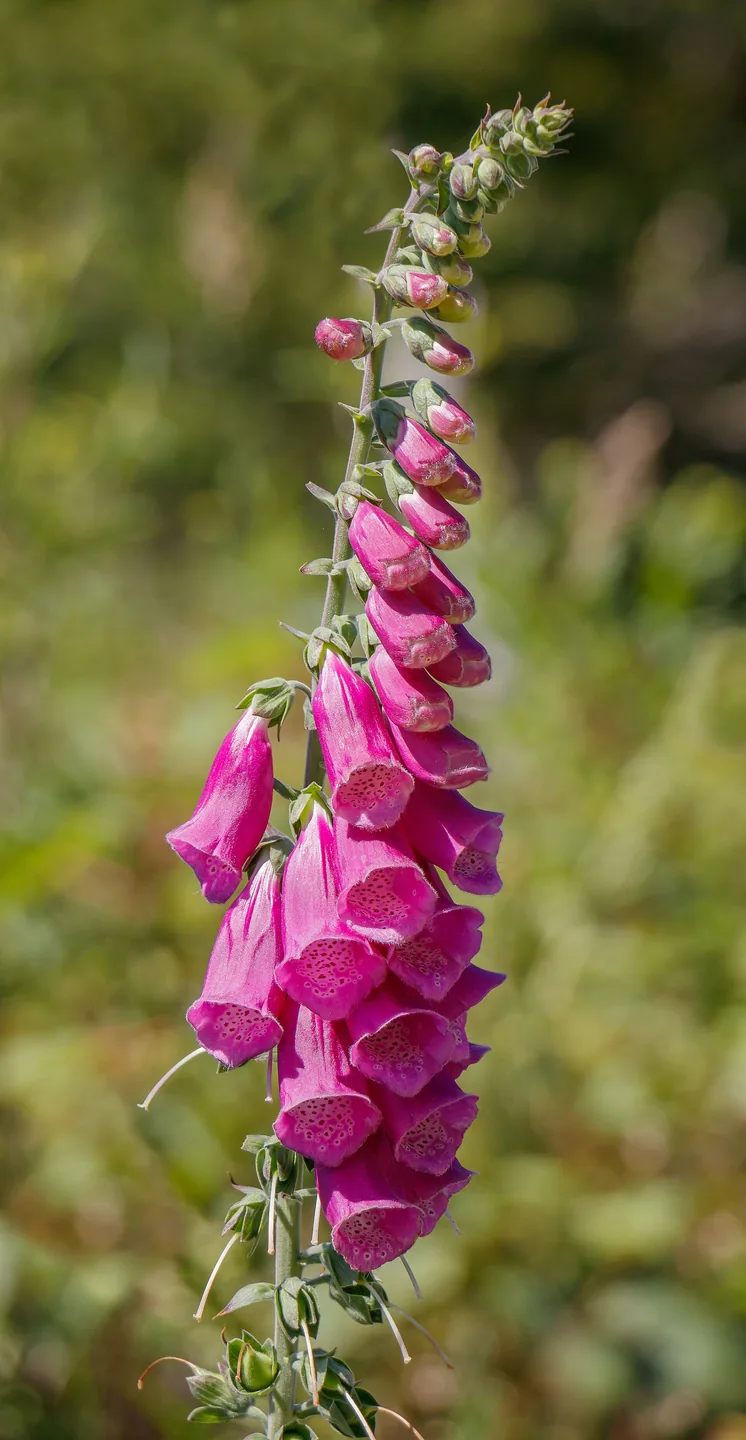
Foxgloves like the woodland edge

Foxglove flowers.
Foxglove flowers.Illustrative photograph
Foxglove in bloom.
Foxglove in bloom.Illustrative photograph
H. Zell
ⓘ

Foxglove in bloom.

Photography: H. Zell · CC BY-SA 3.0

View source

Date given at source: .

Request removal or correct the photo credit

Not all woodland plants seek the forest interior.

Flora-On describes Digitalis purpurea subsp. purpurea at the edges and in clearings of woods and scrub, including some banks and hedges. It prefers cool, shady places. The profile helps explain how light and moisture create different environments even close together. The plant is toxic if swallowed: knowing it does not mean using it as food.

Flora-On distinguishes two subspecies with different ecological descriptions. For subsp. purpurea it mentions a general preference for siliceous substrates. For amandiana it highlights rocky environments and shallow soils, including cliffs, outcrops receiving little sun and banks in abandoned vineyards.

This distinction prevents us from treating all foxgloves as inhabitants of one setting. Finding a flower in a clearing is not enough to assign a subspecies: ecology guides questions but does not replace botanical characteristics. The profile also records possible parasitism by Orobanche amethystea, showing that a plant has relationships with other plants too.

The photograph by João Lima, recorded on 2026-06-15, shows this species in Cavez. Open the observation to compare visible details with the botanical description. The record documents that encounter; it does not mean the plant will always be visible in the same place. The observation identifies Digitalis purpurea without confirming a subspecies.

Look at the whole plant

Open an option and choose the story.

  1. More life on the edge of the woodsMadresilva finds room on the edge →
  2. How to connect environmentsA landscape needs connections →
  3. Explore the relationships of flowersFrom flower to flower, a shared task →
Compare shapes, cycles and environments; links do not add local records.
Return to observation proposal ↑
Source and context

Portuguese Society of Botany, Flora-On — Digitalis purpurea, ecology and toxicity

iNaturalist — Digitalis purpurea, João Lima observation in 2026-06-15

Accessed: . Editorial summary; the date of consultation is not the date of the facts.

Back to index ↑
General biology · mosses, without a local species inventory

A small carpet full of life

Mosses invite a closer look.

Bryophytes are small plants whose life cycle depends heavily on moisture. Their diversity is not only green: there are different shapes, colours and textures. According to the scientific presentation from Serralves, they contribute to nutrient recycling and can colonise surfaces where other plants cannot yet establish themselves, helping soil form. Learning about this group brings new questions to a walk, without needing to pull up specimens.

Mosses have no true roots. Kew describes rhizoids as small filaments whose main role is anchoring the plant to rock, bark or soil. Absorbent surfaces help take up water and minerals from the surroundings. Contact with moisture is therefore part of how they live.

They do not produce flowers either: they reproduce through spores. Spaces between the small plants help retain water, keeping the soil and nearby surroundings moist. These carpets can also shelter small animals.

This does not mean all mosses need the same conditions. Species are adapted to very different environments, and some survive dry periods in a dormant state. A green patch on a wall is not enough to identify a species or explain its whole life cycle.

Small shapes, big differences

Open an option and choose the story.

  1. A fern with an underground stemWhen fetuses occupy the landscape →
  2. Another plant that produces sporesA plant does not need to have flowers →
  3. A lichen is not a mossA lichen is a partnership →
  4. The life that gathers in the groundUnderfoot, a mixed world →
Compare methods of fixation, reproduction and relationship with water.
Source and context

Serralves / MHNC-UP and CIBIO-INBIO — Briophytes, 20 of November 2016

Royal Botanic Gardens, Kew — 7 interesting things about moss, Ellen McHale, 23/05/2020

Accessed: . Editorial summary; the date of consultation is not the date of the facts.

Back to index ↑
Fungi · cultivation conditions, general context

More water is not always better

Fungi need the right conditions, not just rain.

When saprophytic mushrooms are cultivated, moisture in the substrate and air influences their development. The Centro de Competências dos Recursos Silvestres explains that dry conditions can restrict mycelium and deform mushrooms, while excessive moisture encourages contamination. Temperature, available food and ventilation also matter. This explains cultivation; it is neither a forecast for wild mushrooms nor guidance on choosing edible species.

It also helps to distinguish two stages: the mycelium spreading through the substrate and the production of reproductive structures. In the cultivation described by CCRES, temperature and lighting conditions may change between stages. Not carrying out photosynthesis does not make light irrelevant: it can influence the shape and colour of mushrooms.

The substrate provides both support and food. Its composition and acidity help explain why one species grows well on a material while another does not. Giving two substrates the same amount of water does not make them equivalent. These factors interact; a rainy afternoon alone cannot predict fruiting.

From invisible net to mushroom

Open an option and choose the story.

  1. How the body of the fungus is organizedThe mushroom is just a part →
  2. How you get nutrientsA meal prepared outside →
  3. What happens to sporesA journey that hardly anyone sees →
It explores structures, feeding and dispersion in three complementary readings.
Source and context

Centre for Silvestre Resources Skills — production mushrooms

Accessed: . Editorial summary; the date of consultation is not the date of the facts.

Back to index ↑
YOUR LOCAL GUIDE

What would you like to discover?

Take a closer look.